
Rufous-bellied Bolo Mouse
Necromys lactens
Red List assessment
Least Concernon the IUCN Red List
- EXExtinct
- EWExtinct in the Wild
- CRCritically Endangered
- ENEndangered
- VUVulnerable
- NTNear Threatened
- LCLeast Concern
The Rufous-bellied Bolo Mouse is recorded in 3 countries across South America. The IUCN Red List assesses the Rufous-bellied Bolo Mouse as Least Concern. No precise global population estimate exists, but the species is considered locally common to abundant in suitable habitat; overall population trend is believed to be stable.
- Family
- Cricetidae
- Order
- Rodentia
- Genus
- Necromys
- Countries recorded
- 3
- Continents
- South America
- Red List category
- Least Concern
- Data updated
- August 9, 2026
What is the Rufous-bellied Bolo Mouse?
Necromys lactens, commonly known as the Rufous-bellied Bolo Mouse, is a small terrestrial rodent native to the high-altitude grasslands of the central Andes. It inhabits puna and altiplano ecosystems in Peru, Bolivia, and Argentina, often at elevations exceeding 3000 meters. The species is notable for its adaptation to cold, arid highland environments and its role as an important small mammal in Andean grassland food webs. It is generally common within its range and not considered threatened.
Where does the Rufous-bellied Bolo Mouse live?
High Andean regions of Peru, Bolivia, and northwestern Argentina
Distributed through the central Andes, including southern Peru, western Bolivia, and northwestern Argentina (Jujuy, Salta, Catamarca provinces). Populations are patchily distributed following suitable high-altitude grassland corridors along the Andean cordillera.
Altitude and depth
Approximately 2000 to 4500 meters above sea level, with highest population densities typically recorded between 3200 and 4000 meters.
Seasonal movements
No true hibernation, but activity and reproductive output are reduced during the cold, dry Andean winter months (June-August), with breeding peaking during the warmer, wetter season (October-April).
Habitat of the Rufous-bellied Bolo Mouse
Found primarily in high-altitude puna grasslands, altiplano scrub, and rocky bunchgrass habitats. It favors areas with dense tussock grass cover that provides shelter from predators and extreme temperatures. Also occurs in disturbed agricultural edges near native grassland patches.
Adaptations to its environment
Possesses dense, insulating fur to cope with cold high-altitude temperatures and large litters relative to body size to offset high mortality in harsh environments. Behaviorally, it uses burrow systems and grass tussocks for thermoregulation and predator avoidance, and exhibits physiological adaptations for functioning at low oxygen partial pressures characteristic of high elevations.
Conservation status and numbers
Listed as Least Concern (LC) by the IUCN due to its relatively wide distribution across the central Andes and presumed large, stable population without major range-wide declines.
Estimated population
No precise global population estimate exists, but the species is considered locally common to abundant in suitable habitat; overall population trend is believed to be stable.
What threatens the Rufous-bellied Bolo Mouse?
Localized threats include habitat degradation from overgrazing by livestock, agricultural expansion into puna grasslands, and potential impacts of climate change altering high-altitude grassland composition. No major range-wide threats have been documented.
Diseases and parasites
Known to host various ectoparasites (fleas, mites) and endoparasites (nematodes) typical of Andean rodents, some of which have been studied in relation to zoonotic disease surveillance, including hantavirus research in South American sigmodontine rodents.
What is being done to protect it?
No species-specific conservation programs exist, but the species benefits indirectly from protected areas within its range, such as high-altitude national parks and reserves in Peru, Bolivia, and Argentina that preserve puna grassland ecosystems.
Recommended actions
Recommended actions include continued monitoring of puna grassland health, regulation of livestock grazing intensity in key habitat areas, and further taxonomic and ecological research to clarify subspecies boundaries and population trends.
What the Rufous-bellied Bolo Mouse looks like
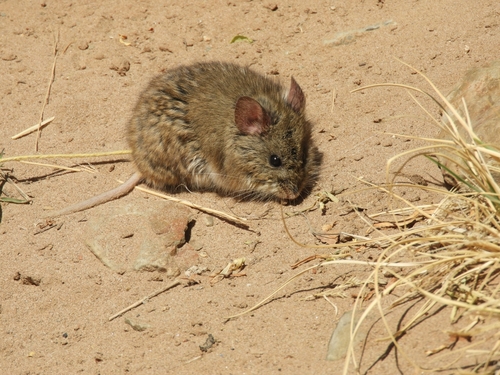
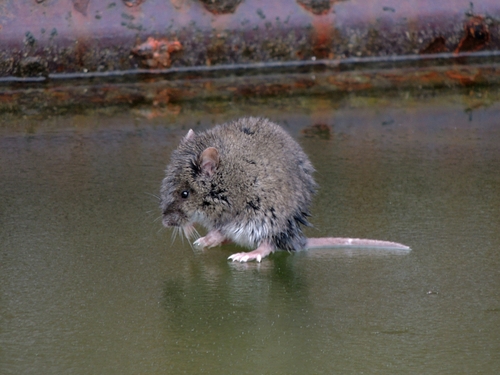
The species has soft, dense dorsal fur that is grayish-brown to olive-brown, contrasting with a distinctly rufous or orange-tinged venter, from which its common name derives. The tail is bicolored, darker above and paler below, and shorter than the head-body length.
Size
Head-body length typically ranges from 85 to 110 mm, with a tail length of approximately 55 to 75 mm.
Weight
Adults typically weigh between 20 and 40 grams, with limited evidence of significant sexual size variation.
Distinctive features
Distinguished from related Necromys and Akodon species by its notably rufous ventral coloration, relatively short tail, and specific cranial features including molar cusp patterns used in taxonomic identification.
Differences between males and females
Minimal sexual dimorphism has been reported, with males and females showing similar body size and coloration.
Behaviour and diet of the Rufous-bellied Bolo Mouse
Generally considered solitary or loosely social, with individuals maintaining overlapping home ranges rather than forming cohesive social groups.
When it is active
Primarily nocturnal to crepuscular, though some diurnal activity may occur, particularly during colder periods when thermoregulatory benefits of daytime warmth are advantageous.
Diet
Omnivorous, feeding on a mix of seeds, grasses, herbaceous vegetation, and invertebrates such as insects and their larvae, adjusting diet seasonally based on availability.
How it feeds and hunts
As an omnivorous forager rather than a predator, it locates food primarily through ground-level foraging among grass tussocks and leaf litter, using well-developed olfactory senses to detect seeds and invertebrate prey.
Communication
Communication likely involves ultrasonic vocalizations typical of small rodents, along with scent marking via urine and glandular secretions to establish territory and convey reproductive status.
Interactions with other species
Serves as prey for Andean predators including foxes, small felids, birds of prey, and snakes; it may also compete for resources with sympatric small mammal species such as other akodontine rodents and cricetids in the same grassland habitats.
Role in its ecosystem
Functions as an important prey species within Andean grassland food webs and contributes to seed dispersal and soil aeration through its foraging and burrowing activities.
Reproduction and lifecycle
Breeding occurs mainly during the warmer, wetter months of the Andean year (spring through summer), with gestation lasting approximately 21-23 days and litter sizes typically ranging from 3 to 6 pups, consistent with other akodontine rodents.
Raising the young
Females provide the primary parental care, nursing and sheltering pups in nest burrows until weaning, which typically occurs within 3-4 weeks after birth; males generally do not participate in direct offspring care.
Maturity and lifespan
Sexual maturity is reached at approximately 2-3 months of age; lifespan in the wild is generally short, estimated at less than one year, though captive individuals may survive somewhat longer.
Taxonomy and naming of the Rufous-bellied Bolo Mouse
Classification
Class Mammalia > Order Rodentia > Family Cricetidae > Genus Necromys > Species Necromys lactens
Scientific synonyms
Bolomys lactens (Thomas, 1918); previously classified under genus Akodon in some older literature
What research says
Recent studies
Recent molecular phylogenetic studies have helped clarify the taxonomic placement of Necromys lactens within the Akodontini tribe, resolving its separation from the genus Bolomys and confirming its status within Necromys.
Genome and DNA
Specific chromosome number data for Necromys lactens is limited in the literature, though related Necromys species have been karyotypically studied with diploid numbers varying among species in the genus.
Compared with similar species
Compared to its close relative Necromys amoenus, N. lactens tends to have a more pronounced rufous venter and occupies somewhat higher elevation habitats; it is generally smaller than lowland akodontine relatives such as Akodon species.
The Rufous-bellied Bolo Mouse and people
Despite its small size, this mouse thrives at elevations above 4000 meters where oxygen levels are significantly reduced. Its vivid rufous belly makes it one of the more visually distinctive small rodents of the Andean highlands, and it plays a quiet but important role in sustaining Andean predator populations.
Where and how to see it
Best observed at dusk or during early morning hours in high-altitude puna grasslands of Peru, Bolivia, or northwestern Argentina, particularly in areas with dense tussock grass; live-trapping surveys by researchers offer the most reliable observation method given the species' cryptic nocturnal habits.
Risks to humans
No notable risk to humans, though as with many wild rodents, caution should be exercised regarding potential zoonotic disease transmission through direct contact.
Countries where the Rufous-bellied Bolo Mouse is recorded
The 3 countries named in the range description of its IUCN Red List assessment.
Questions about the Rufous-bellied Bolo Mouse
Where does the Rufous-bellied Bolo Mouse live?
The Rufous-bellied Bolo Mouse is recorded in Argentina, Bolivia and Peru across South America. These countries come from the range description of its IUCN Red List assessment, and they are what place the species on the interactive map.
Is the Rufous-bellied Bolo Mouse endangered?
The IUCN Red List assesses the Rufous-bellied Bolo Mouse as Least Concern. The species is widespread and abundant enough not to qualify for any threatened category. It does not mean the species is safe forever, only that nothing in the current data raises an alarm.
How many are left in the wild?
No precise global population estimate exists, but the species is considered locally common to abundant in suitable habitat; overall population trend is believed to be stable. This figure comes from the species assessment on the IUCN Red List; population estimates for wild mammals are ranges, not counts, and are revised at each assessment.
What habitat does the Rufous-bellied Bolo Mouse live in?
Found primarily in high-altitude puna grasslands, altiplano scrub, and rocky bunchgrass habitats.
What is the scientific name of the Rufous-bellied Bolo Mouse?
The Rufous-bellied Bolo Mouse is Necromys lactens, in the family Cricetidae, order Rodentia.
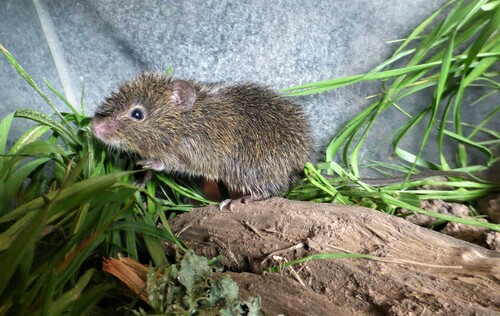
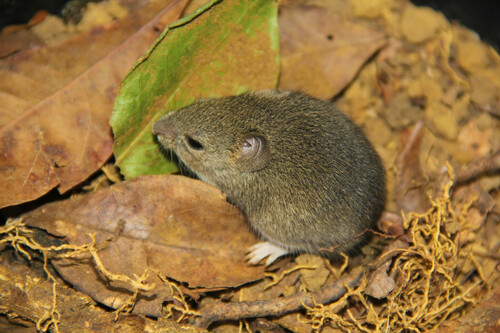
Other species in the genus Necromys
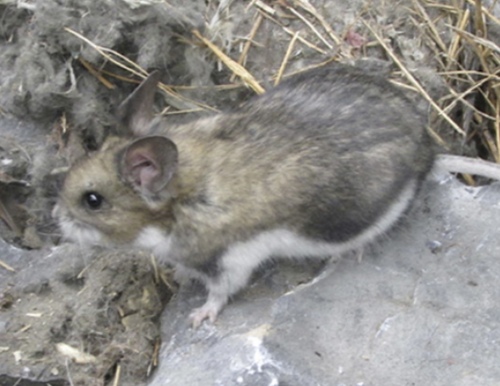
Other species in the family Cricetidae
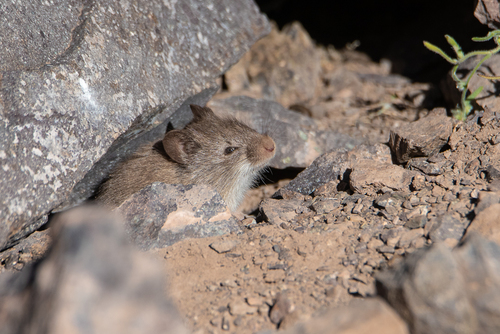
Sources
Conservation status, range description and population estimate come from the IUCN Red List assessment for Necromys lactens. Countries are derived from that range description, not from a mapped country list. Last refreshed on .
The distribution map is drawn from the IUCN Red List spatial data compiled in 2008. IUCN (International Union for Conservation of Nature)