
Red Bald-headed Uakari
Cacajao rubicundus
Red List assessment
Least Concernon the IUCN Red List
- EXExtinct
- EWExtinct in the Wild
- CRCritically Endangered
- ENEndangered
- VUVulnerable
- NTNear Threatened
- LCLeast Concern
The Red Bald-headed Uakari is recorded in 3 countries across South America. The IUCN Red List assesses the Red Bald-headed Uakari as Least Concern. No precise global population estimate exists, but the species is considered relatively common within suitable habitat; overall trend is believed to be stable to slightly declining due to habitat pressures.
- Family
- Pitheciidae
- Order
- Primates
- Genus
- Cacajao
- Countries recorded
- 3
- Continents
- South America
- Red List category
- Least Concern
- Data updated
- August 9, 2026
What is the Red Bald-headed Uakari?
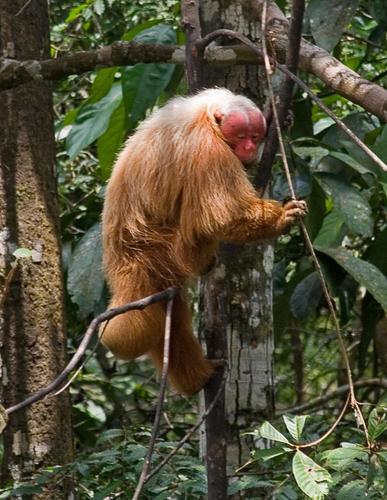
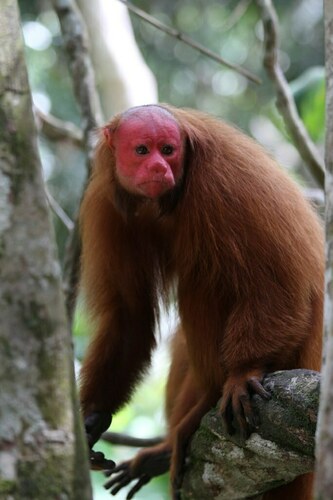
The Red Bald-headed Uakari is a striking New World monkey known for its bright red bald face and long shaggy reddish-orange coat. It inhabits seasonally flooded (várzea) and terra firme forests of the western Amazon basin. This species is remarkable for its unusual facial coloration, which results from thin skin and dense capillary networks rather than pigmentation, and for its short tail relative to other platyrrhine monkeys.
Where does the Red Bald-headed Uakari live?
Western Amazon basin, primarily in Peru, with some range extending into Brazil and Colombia along the upper Amazon tributaries.
Found in the western Amazon basin, mainly in Peru along the Ucayali and Amazon river systems, with populations extending into parts of Brazil and possibly Colombia. Its range is closely tied to river drainage patterns that historically isolated uakari populations.
Altitude and depth
Lowland tropical forest, typically below 500 meters elevation.
Seasonal movements
Movement patterns shift seasonally in response to flooding, with groups moving to higher terra firme forest during high water season and returning to várzea forests when fruit becomes abundant there.
Habitat of the Red Bald-headed Uakari
Primarily found in seasonally flooded várzea forests along whitewater rivers, as well as adjacent terra firme (non-flooded) tropical rainforest. These habitats provide seasonal access to fruiting trees crucial to their diet.
Adaptations to its environment
The bald red face is thought to be an honest signal of health, as pallor indicates illness such as malaria, aiding mate selection. Their short tail and strong limbs aid in the acrobatic locomotion needed to navigate flooded forest canopies, and specialized teeth allow them to crack open hard seeds during fruit scarcity.
Conservation status and numbers
Listed as Least Concern by the IUCN, though populations are patchily distributed and some local declines have been noted due to habitat loss and hunting pressure in parts of its range.
Estimated population
No precise global population estimate exists, but the species is considered relatively common within suitable habitat; overall trend is believed to be stable to slightly declining due to habitat pressures.
What threatens the Red Bald-headed Uakari?
Deforestation for agriculture and logging, hunting for bushmeat by local communities, and habitat fragmentation from infrastructure development are the primary threats.
Diseases and parasites
Susceptible to various parasites including intestinal helminths; malaria-like blood parasites have been studied in relation to facial coloration as a health indicator.
What is being done to protect it?
Some populations occur within protected areas in Peru, such as reserves along the Ucayali River system; CITES Appendix II listing regulates international trade.
Recommended actions
Expanding protected várzea forest corridors, enforcing anti-poaching laws, and conducting population surveys to better assess local threats and population trends are recommended priorities.
What the Red Bald-headed Uakari looks like
The species has a distinctive bright red, hairless face and head, contrasting with a long, shaggy reddish-orange to golden coat covering the body. The tail is notably short compared to most New World monkeys.
Size
Body length ranges from approximately 40-57 cm, with a notably short tail of about 15-18 cm.
Weight
Adults typically weigh between 2.5 and 3.5 kg, with males slightly larger than females.
Distinctive features
Distinguished from the White Bald Uakari (Cacajao calvus calvus) by its reddish rather than white/cream fur coloration; the bald red face is shared among Cacajao calvus group members but fur color separates the forms.
Differences between males and females
Sexual dimorphism is minimal, with males being only slightly larger than females and no significant differences in coloration.
Behaviour and diet of the Red Bald-headed Uakari
Highly social, living in multi-male, multi-female groups that can range from a dozen to over 100 individuals, sometimes fragmenting into smaller subgroups while foraging.
When it is active
Diurnal, active during daylight hours, spending most of the day foraging in the canopy and resting during the hottest midday period.
Diet
Primarily frugivorous, with a strong preference for seeds from unripe fruits, which they access using specialized robust teeth; diet is supplemented with leaves, flowers, and occasional insects.
How it feeds and hunts
Forages by climbing through the canopy to locate fruiting trees, using strong jaws and teeth to crack open tough seed pods that other primates cannot access.
Communication
Communicates through vocalizations including barks and grunts, as well as facial expressions and body postures; the red face may also play a role in visual signaling of health status.
Interactions with other species
Predators include large raptors and wild cats such as jaguars and ocelots; uakaris may also compete with other frugivorous primates and birds for fruit resources.
Role in its ecosystem
Plays an important ecological role as a seed disperser and predator, influencing forest regeneration patterns through selective seed predation and occasional dispersal of intact seeds.
Reproduction and lifecycle
Breeding is not strictly seasonal but may peak with fruit abundance; gestation lasts approximately 5-6 months, typically resulting in a single offspring.
Raising the young
Mothers provide primary care, carrying and nursing infants for several months; infants are weaned around 6-12 months and gradually become independent within the social group.
Maturity and lifespan
Sexual maturity is typically reached around 3-4 years of age; lifespan in the wild is estimated at 15-20 years, with captive individuals sometimes living longer under managed care.
Taxonomy and naming of the Red Bald-headed Uakari
Classification
Class Mammalia > Order Primates > Family Pitheciidae > Genus Cacajao > Species Cacajao rubicundus
Scientific synonyms
Cacajao calvus rubicundus (treated by some authorities as a subspecies of Cacajao calvus rather than a full species)
What research says
Recent studies
Recent research has focused on the genetic and taxonomic relationships among Cacajao calvus subspecies/forms, as well as studies examining facial redness as an indicator of parasite load and health.
Genome and DNA
Limited genetic studies exist; molecular phylogenetics has been used to clarify relationships within the Cacajao calvus species complex, including debates over species versus subspecies status.
Compared with similar species
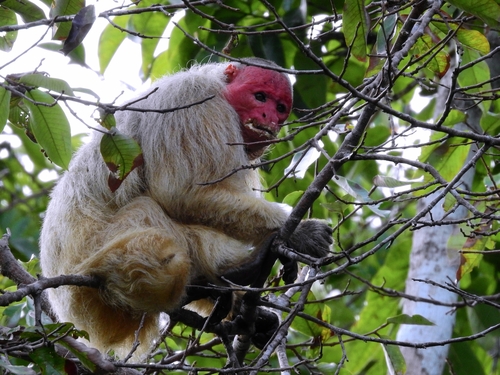
Closely related to the White Bald Uakari (Cacajao calvus calvus), differing mainly in fur color; both share the distinctive bald red face and short tail that separate Cacajao from other pitheciid genera like Pithecia and Chiropotes.
The Red Bald-headed Uakari and people
The bright red face of this uakari can turn pale when the animal is sick, functioning almost like a natural health indicator visible to other group members. Unlike most monkeys, uakaris have unusually short tails, which is rare among New World primates that typically rely on prehensile tails for balance.
Where and how to see it
Best observed in protected várzea forest reserves along Peruvian Amazon tributaries during the dry season when groups congregate near fruiting trees; early morning hours offer the best chance of sightings.
Risks to humans
No notable risk to humans; uakaris are shy and avoid human contact, posing no significant threat.
Human uses
Historically hunted by indigenous communities for bushmeat; the species has limited use in the pet trade, though this is illegal and discouraged due to conservation concerns.
Myths and legends
Local Amazonian communities sometimes associate the striking red face of uakaris with folklore about forest spirits, though specific documented legends are limited compared to other iconic Amazonian species.
Countries where the Red Bald-headed Uakari is recorded
The 3 countries named in the range description of its IUCN Red List assessment.
Questions about the Red Bald-headed Uakari
Where does the Red Bald-headed Uakari live?
The Red Bald-headed Uakari is recorded in Brazil, Colombia and Peru across South America. These countries come from the range description of its IUCN Red List assessment, and they are what place the species on the interactive map.
Is the Red Bald-headed Uakari endangered?
The IUCN Red List assesses the Red Bald-headed Uakari as Least Concern. The species is widespread and abundant enough not to qualify for any threatened category. It does not mean the species is safe forever, only that nothing in the current data raises an alarm.
How many are left in the wild?
No precise global population estimate exists, but the species is considered relatively common within suitable habitat; overall trend is believed to be stable to slightly declining due to habitat pressures. This figure comes from the species assessment on the IUCN Red List; population estimates for wild mammals are ranges, not counts, and are revised at each assessment.
What habitat does the Red Bald-headed Uakari live in?
Primarily found in seasonally flooded várzea forests along whitewater rivers, as well as adjacent terra firme (non-flooded) tropical rainforest.
What is the scientific name of the Red Bald-headed Uakari?
The Red Bald-headed Uakari is Cacajao rubicundus, in the family Pitheciidae, order Primates.
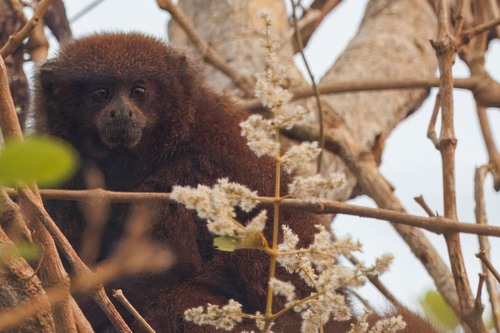
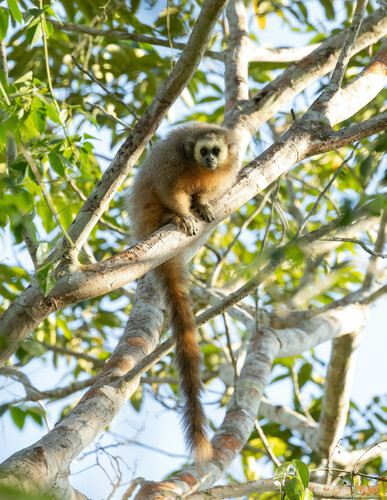
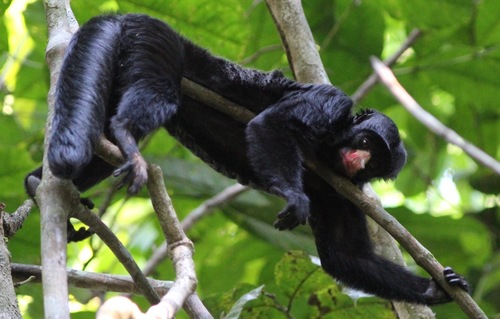
Other species in the genus Cacajao
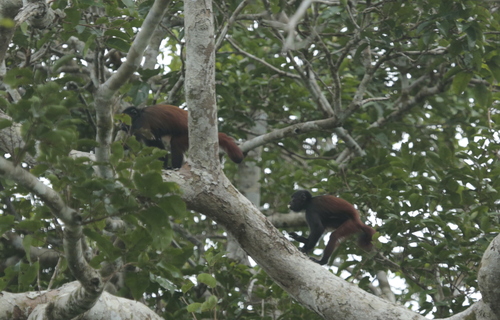
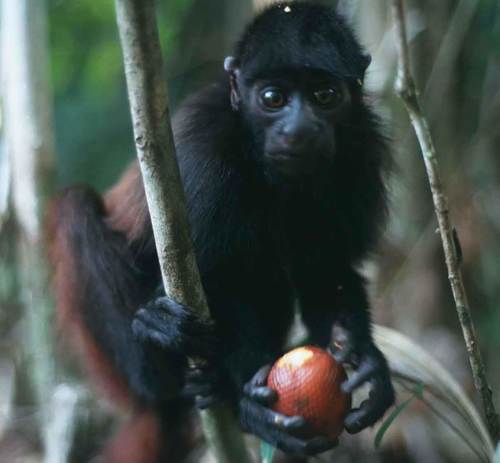
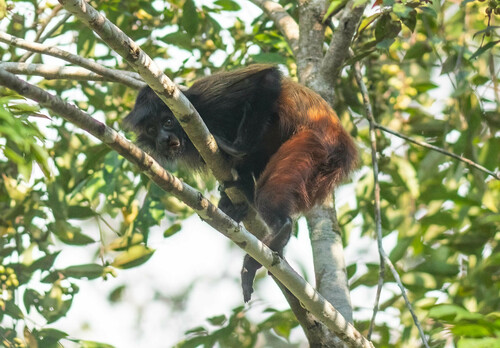
Other species in the family Pitheciidae
Sources
Conservation status, range description and population estimate come from the IUCN Red List assessment for Cacajao rubicundus. Countries are derived from that range description, not from a mapped country list. Last refreshed on .
The distribution map is drawn from the IUCN Red List spatial data compiled in 2024. IUCN (International Union for Conservation of Nature)