
Raccoon Dog
Nyctereutes procyonoides
Red List assessment
Least Concernon the IUCN Red List
- EXExtinct
- EWExtinct in the Wild
- CRCritically Endangered
- ENEndangered
- VUVulnerable
- NTNear Threatened
- LCLeast Concern
The Raccoon Dog is recorded in 8 countries across Asia and Europe. The IUCN Red List assesses the Raccoon Dog as Least Concern. No precise global estimate exists; European invasive population numbers in the hundreds of thousands and is increasing, while native Asian populations are considered stable to declining in some regions.
- Family
- Canidae
- Order
- Carnivora
- Genus
- Nyctereutes
- Countries recorded
- 8
- Continents
- Asia and Europe
- Red List category
- Least Concern
- Data updated
- August 9, 2026
What is the Raccoon Dog?
The raccoon dog is a small, omnivorous canid native to East Asia, notable for its raccoon-like facial mask despite being unrelated to raccoons. It has been widely introduced to Europe for the fur trade and has since become an invasive species across much of the continent. Remarkable for being one of the few canids that hibernates seasonally in colder climates, and for its unusual physical resemblance to procyonids.
Where does the Raccoon Dog live?
Native to East Asia (Japan, Korea, China, far eastern Russia, Vietnam); introduced and now widespread across Northern, Central and Eastern Europe.
Native range spans China, Korea, Japan, and southeastern Russia; introduced populations now established throughout Finland, the Baltic states, Poland, Germany, France, and parts of Scandinavia due to Soviet-era fur farming releases in the mid-20th century.
Altitude and depth
Typically found at low to moderate elevations, from sea level up to around 1000-1500m in mountainous regions of its native range.
Seasonal movements
Undergoes a form of winter dormancy (torpor) in colder regions, reducing activity and living off fat reserves accumulated in autumn; this is unique among canids and true hibernation does not occur but activity drops significantly.
Habitat of the Raccoon Dog
Occupies forested areas, wetlands, riverine habitats, agricultural landscapes, and suburban areas; prefers dense vegetation cover near water sources for foraging and denning.
Adaptations to its environment
Thick, dense fur provides insulation for cold winters; ability to accumulate substantial fat reserves before winter torpor; omnivorous diet allows exploitation of diverse food sources across seasons and habitats.
Conservation status and numbers
Listed as Least Concern by IUCN due to stable to increasing populations, particularly in introduced European ranges where it has become invasive; native populations in some parts of Japan and Russia face localized declines.
Estimated population
No precise global estimate exists; European invasive population numbers in the hundreds of thousands and is increasing, while native Asian populations are considered stable to declining in some regions.
What threatens the Raccoon Dog?
Habitat loss in native range, hunting and trapping for fur, road mortality, and in Europe, active culling programs aimed at controlling this invasive species due to concerns over disease transmission and predation on native wildlife.
Diseases and parasites
Important vector for rabies in parts of Europe and Asia, also carries sarcoptic mange, trichinellosis, and various endoparasites including tapeworms and roundworms, raising public health concerns in invasive range.
What is being done to protect it?
Native range countries have some hunting regulations; in Europe, conservation efforts are paradoxically focused on control and eradication programs rather than protection, given its invasive status and role as rabies/parasite vector.
Recommended actions
In native range: habitat protection and sustainable harvest regulation; in invasive range: continued monitoring, control programs, and public education to prevent further spread and mitigate impacts on native biodiversity.
What the Raccoon Dog looks like
Grizzled brownish-gray to dark brown fur with black facial mask markings resembling a raccoon, black legs, and a bushy tail; body is stocky with short legs and a pointed muzzle.
Size
Body length 45-71 cm, with a relatively short tail of 12-18 cm; shoulder height approximately 20-25 cm, giving it a low, stocky build.
Weight
Typically weighs 3-6 kg in summer, but can reach up to 10 kg in autumn before winter torpor due to fat accumulation; males and females are similar in size.
Distinctive features
Distinguished from true raccoons by its canid dentition and digitigrade gait; distinguished from foxes by shorter legs, stockier build, and the distinctive dark facial mask pattern.
Differences between males and females
Minimal sexual dimorphism; males and females are similar in size, coloration, and overall appearance.
Behaviour and diet of the Raccoon Dog
Generally monogamous and forms pair bonds; family groups consist of a mated pair and their offspring; not highly social beyond the family unit, though loose aggregations may occur in favorable habitats.
When it is active
Primarily nocturnal and crepuscular, most active during dusk, night, and dawn; becomes largely inactive during winter torpor periods in colder climates.
Diet
Highly omnivorous diet including small mammals, birds, eggs, amphibians, insects, fish, carrion, fruits, berries, and agricultural crops; diet varies seasonally based on availability.
How it feeds and hunts
Forages opportunistically by rooting through leaf litter and soil, wading in shallow water for aquatic prey, and scavenging; not a specialized pursuit predator but rather an adaptable generalist forager.
Communication
Communicates through scent marking with urine and feces at latrine sites, various vocalizations including whines and growls, and body postures; less vocal than many other canids.
Interactions with other species
Natural predators include wolves, lynx, and large birds of prey; in introduced range, competes with native carnivores like foxes and badgers for food and den sites, and can prey on ground-nesting birds and amphibians.
Role in its ecosystem
Functions as an omnivorous mesopredator and opportunistic scavenger, playing a role in seed dispersal through fruit consumption and controlling small vertebrate and invertebrate populations.
Reproduction and lifecycle
Mating occurs in late winter to early spring (February-April); gestation lasts approximately 59-64 days; litters typically contain 6-8 pups, though up to 16 have been recorded.
Raising the young
Both parents participate in raising young, with the male assisting in provisioning food; pups are weaned around 8-9 weeks and become independent by autumn of their first year.
Maturity and lifespan
Reaches sexual maturity at around 8-10 months; typical lifespan in the wild is 3-4 years, though captive individuals can live up to 6-11 years.
Taxonomy and naming of the Raccoon Dog
Classification
Class Mammalia > Order Carnivora > Family Canidae > Genus Nyctereutes > Species Nyctereutes procyonoides
Subspecies
Several subspecies recognized including N. p. procyonoides (China), N. p. koreensis (Korea), N. p. viverrinus (Japan, sometimes considered a separate species), N. p. ussuriensis (Russian Far East, introduced to Europe).
Scientific synonyms
Canis procyonoides (original description by Gray, 1834); sometimes Nyctereutes viverrinus is treated as synonym or separate species for the Japanese population.
What research says
Recent studies
Recent research has focused on tracking the invasive spread across Europe using genetic and GPS-tracking methods, and studying its role in rabies epidemiology; some studies debate taxonomic status of Japanese populations as a separate species.
Genome and DNA
Diploid chromosome number is 2n=54; genetic studies have revealed distinct lineages between Japanese (N. p. viverrinus) and continental populations, supporting potential species-level distinction.
Compared with similar species
Often confused with the North American raccoon (Procyon lotor) due to similar facial markings, but is a true canid unrelated to raccoons; differs from foxes by stockier build, shorter legs, and less pointed ears.
The Raccoon Dog and people
Despite its name and appearance, it is not related to raccoons at all but is a true canid closely related to foxes; it is one of the only canid species capable of climbing trees to a limited extent; its introduction to Europe stemmed from Soviet fur farming efforts in the 1920s-1950s.
Where and how to see it
Best observed at dusk or night near wetlands, forest edges, or agricultural areas in its native range in Japan and Korea, or in introduced populations in Finland and Poland; camera traps are often used due to its elusive nocturnal habits.
Risks to humans
Can act as a rabies vector in endemic areas and carries other zoonotic parasites; generally avoids humans and poses minimal direct risk through bites or aggression.
Human uses
Historically and currently farmed extensively for its fur (marketed as 'tanuki' or Asiatic raccoon fur), used in fur trim and traditional garments, particularly in Russia, China, and Finland.
Myths and legends
In Japanese folklore, the raccoon dog is closely associated with the mythical 'tanuki,' a shapeshifting trickster spirit often depicted with exaggerated features and known for mischief and transformation abilities.
Countries where the Raccoon Dog is recorded
The 8 countries named in the range description of its IUCN Red List assessment.
Questions about the Raccoon Dog
Where does the Raccoon Dog live?
The Raccoon Dog is recorded in China, Finland, France, Germany and Japan, among 8 countries in total across Asia and Europe. These countries come from the range description of its IUCN Red List assessment, and they are what place the species on the interactive map.
Is the Raccoon Dog endangered?
The IUCN Red List assesses the Raccoon Dog as Least Concern. The species is widespread and abundant enough not to qualify for any threatened category. It does not mean the species is safe forever, only that nothing in the current data raises an alarm.
How many are left in the wild?
No precise global estimate exists; European invasive population numbers in the hundreds of thousands and is increasing, while native Asian populations are considered stable to declining in some regions. This figure comes from the species assessment on the IUCN Red List; population estimates for wild mammals are ranges, not counts, and are revised at each assessment.
What habitat does the Raccoon Dog live in?
Occupies forested areas, wetlands, riverine habitats, agricultural landscapes, and suburban areas; prefers dense vegetation cover near water sources for foraging and denning.
What is the scientific name of the Raccoon Dog?
The Raccoon Dog is Nyctereutes procyonoides, in the family Canidae, order Carnivora.
Other species in the family Canidae
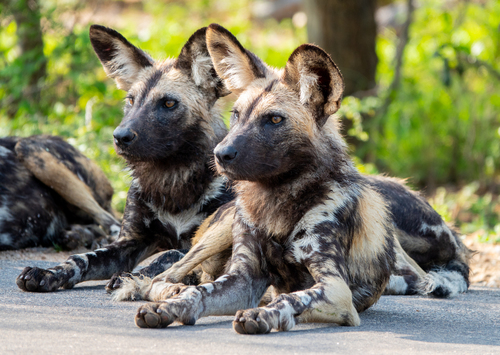
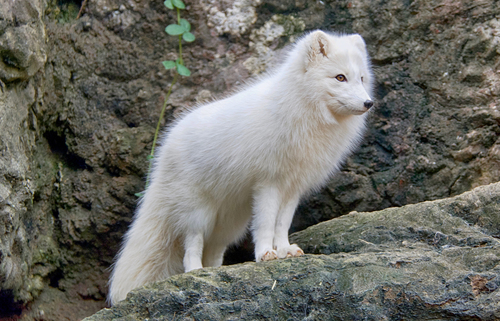
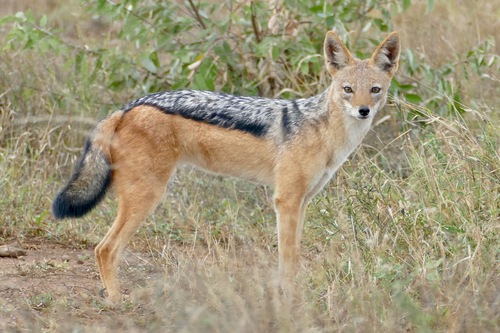
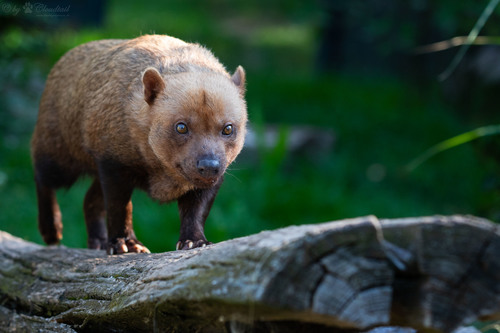
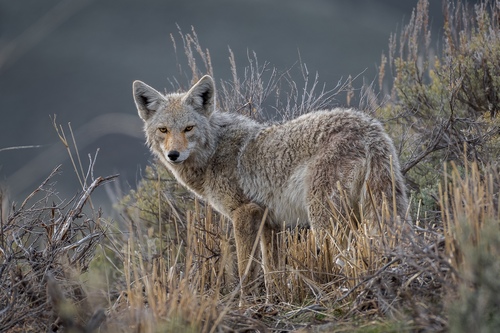
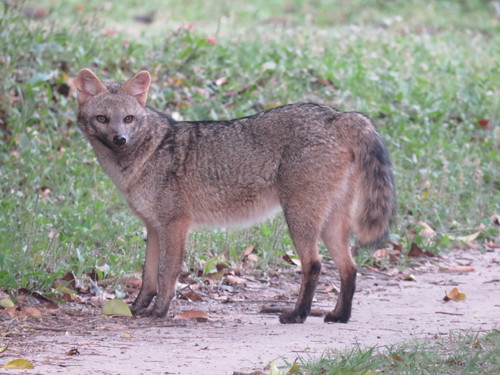
Species that share its range
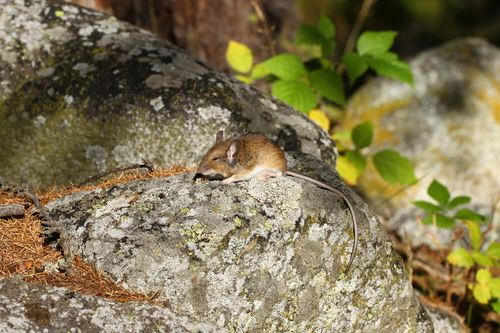
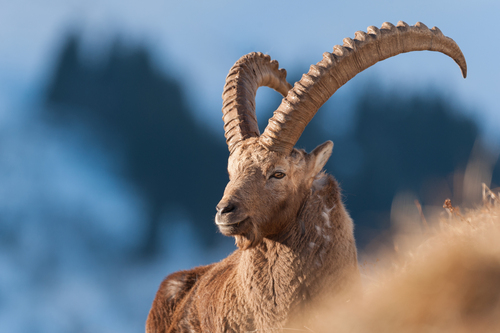

Sources
Conservation status, range description and population estimate come from the IUCN Red List assessment for Nyctereutes procyonoides. Countries are derived from that range description, not from a mapped country list. Last refreshed on .
The distribution map is drawn from the IUCN Red List spatial data compiled in 2016. IUCN (International Union for Conservation of Nature)