
Mountain Tapir
Tapirus pinchaque
Red List assessment
Endangeredon the IUCN Red List
- EXExtinct
- EWExtinct in the Wild
- CRCritically Endangered
- ENEndangered
- VUVulnerable
- NTNear Threatened
- LCLeast Concern
The Mountain Tapir is recorded in 3 countries across South America. The IUCN Red List assesses the Mountain Tapir as Endangered. Estimated fewer than 2500 mature individuals remaining, with a declining population trend
- Family
- Tapiridae
- Order
- Perissodactyla
- Genus
- Tapirus
- Countries recorded
- 3
- Continents
- South America
- Red List category
- Endangered
- Data updated
- August 9, 2026
What is the Mountain Tapir?
The Mountain Tapir, also known as the Andean tapir, is the smallest of the four tapir species and the only one adapted to high-altitude cloud forests and páramo ecosystems. It is found exclusively in the Andes of Colombia, Ecuador, and northern Peru. Notable for its thick woolly coat and prehensile snout, it plays a key ecological role as a seed disperser in fragile montane ecosystems. It is one of the most endangered large mammals in South America.
Where does the Mountain Tapir live?
Andean regions of Colombia, Ecuador, and northern Peru
Found in the Central and Western Andean cordilleras of Colombia and Ecuador, with a small, isolated population in northern Peru. Its range is highly fragmented due to habitat loss and human encroachment.
Altitude and depth
1400–4700 meters above sea level, with core populations typically between 2000–4300 meters
Habitat of the Mountain Tapir
Inhabits high-altitude cloud forests, elfin forests, and páramo grasslands, often in areas with dense vegetation and high humidity. Prefers habitats with access to water sources such as streams and bogs.
Adaptations to its environment
Possesses a thick, woolly coat to withstand cold, high-altitude temperatures, unlike its lowland relatives. Its short, sturdy legs and flexible snout help it navigate steep, forested terrain and browse on vegetation.
Conservation status and numbers
Classified as Endangered by the IUCN due to a population decline exceeding 50% over the past three generations, driven by habitat loss and hunting. Continued fragmentation of Andean forests threatens the species' long-term viability.
Estimated population
Estimated fewer than 2500 mature individuals remaining, with a declining population trend
What threatens the Mountain Tapir?
Major threats include deforestation for agriculture and cattle ranching, poaching for meat, and habitat fragmentation limiting genetic exchange between populations. Human encroachment into páramo ecosystems is intensifying due to agricultural expansion.
Diseases and parasites
Susceptible to various internal parasites and occasional bacterial infections, though comprehensive studies remain limited. Habitat stress from human disturbance can increase vulnerability to disease.
What is being done to protect it?
Conservation efforts include protected areas such as Los Nevados and Sangay National Parks, breeding programs in Ecuadorian and Colombian zoos, and community-based conservation initiatives. Organizations like the Andean Tapir Fund work on habitat protection and local education programs.
Recommended actions
Priority actions include expanding and connecting protected habitat corridors, strengthening anti-poaching enforcement, and involving local communities in sustainable land-use practices. Genetic monitoring of fragmented populations is also recommended to maintain diversity.
What the Mountain Tapir looks like
Covered in a dense, dark brown to blackish woolly coat, with lighter fur around the lips and ear tips. It has a short, flexible proboscis-like snout and small, rounded ears.
Size
Body length of 1.8 to 2.5 meters, with a shoulder height of approximately 75 to 100 cm
Weight
Typically weighs between 150 and 250 kg, with females generally slightly larger than males
Distinctive features
Distinguished from other tapir species by its thick wool-like fur adapted to cold climates and its smaller overall size. Its white-tipped ears and lip markings are also distinctive features.
Differences between males and females
Minimal sexual dimorphism, though females tend to be marginally larger and heavier than males
Behaviour and diet of the Mountain Tapir
Primarily solitary, with individuals maintaining home ranges that may overlap slightly with others. Social interactions are mostly limited to mating encounters or mother-offspring bonds.
When it is active
Mainly crepuscular and nocturnal, though can be active during the day in undisturbed areas with low human presence
Diet
Herbivorous, feeding on a wide variety of páramo and forest vegetation including leaves, shrubs, ferns, and fruits. It plays an important role in seed dispersal within its ecosystem.
Communication
Communicates through vocalizations such as whistles and squeaks, along with scent marking via urine and feces to establish territory. Body posture and movement also convey social signals.
Interactions with other species
Few natural predators exist due to its size, though pumas and spectacled bears may occasionally prey on young or weak individuals. It interacts with various Andean plant species through seed dispersal and grazing.
Role in its ecosystem
Acts as an important seed disperser and ecosystem engineer in Andean forests and páramo habitats, helping maintain plant diversity. Its foraging behavior also influences vegetation structure in these fragile ecosystems.
Reproduction and lifecycle
Breeding can occur year-round, though births may peak during certain seasons depending on region. Gestation lasts approximately 13 months, typically resulting in a single calf.
Raising the young
Calves are cared for solely by the mother, who nurses and protects them for several months. Young tapirs display camouflage-patterned coats with white stripes and spots that fade with age.
Maturity and lifespan
Reaches sexual maturity around 3 to 4 years of age; lifespan in the wild is approximately 25 to 30 years, slightly longer in captivity.
Taxonomy and naming of the Mountain Tapir
Classification
Mammalia > Perissodactyla > Tapiridae > Tapirus > Tapirus pinchaque
Scientific synonyms
Tapirus roulini (historical synonym occasionally used in older literature)
What research says
Recent studies
Recent studies have focused on habitat connectivity modeling and population genetics to guide conservation corridor planning in the Andes. Camera trap surveys have also provided updated population density estimates in key reserves.
Genome and DNA
Diploid chromosome number of 2n=76, similar to other tapir species, though specific genomic studies remain limited
Compared with similar species
Compared to the lowland tapir (Tapirus terrestris), the mountain tapir is smaller and possesses a much thicker, woolly coat suited to cold climates. It also has a more restricted and fragmented range than its lowland relatives.
The Mountain Tapir and people
Mountain tapirs are sometimes called 'living fossils' due to their ancient lineage dating back millions of years with little evolutionary change. Their calves are born with striking white stripes and spots that provide camouflage in dappled forest light.
Where and how to see it
Best observed in protected areas such as Sangay National Park in Ecuador or Los Nevados National Natural Park in Colombia, particularly during early morning or late evening hours. Patience and knowledgeable local guides greatly increase chances of sighting due to the species' elusive nature.
Risks to humans
No notable risk; mountain tapirs are shy and non-aggressive toward humans
Human uses
Historically hunted for meat and hide by local communities, though this practice has significantly declined due to conservation laws. Some ecotourism initiatives now use the species as a flagship for Andean conservation awareness.
Myths and legends
In some Andean indigenous cultures, the tapir is regarded as a guardian spirit of water sources and forests, symbolizing strength and mystery. Local folklore sometimes attributes healing or protective powers to various tapir body parts.
Countries where the Mountain Tapir is recorded
The 3 countries named in the range description of its IUCN Red List assessment.
Questions about the Mountain Tapir
Where does the Mountain Tapir live?
The Mountain Tapir is recorded in Colombia, Ecuador and Peru across South America. These countries come from the range description of its IUCN Red List assessment, and they are what place the species on the interactive map.
Is the Mountain Tapir endangered?
Yes. The IUCN Red List assesses the Mountain Tapir as Endangered, one of the three threatened categories. The species faces a very high risk of extinction in the wild — a step below Critically Endangered, but still on a trajectory that ends badly without intervention.
How many are left in the wild?
Estimated fewer than 2500 mature individuals remaining, with a declining population trend This figure comes from the species assessment on the IUCN Red List; population estimates for wild mammals are ranges, not counts, and are revised at each assessment.
What habitat does the Mountain Tapir live in?
Inhabits high-altitude cloud forests, elfin forests, and páramo grasslands, often in areas with dense vegetation and high humidity.
What is the scientific name of the Mountain Tapir?
The Mountain Tapir is Tapirus pinchaque, in the family Tapiridae, order Perissodactyla.
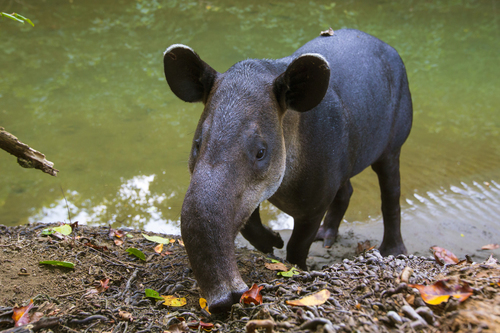
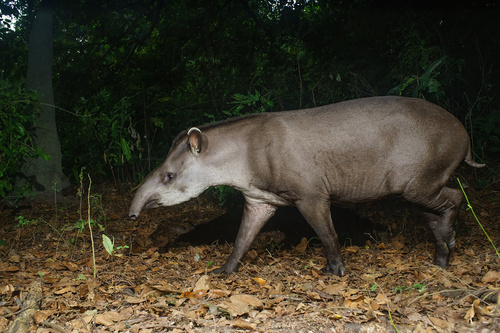
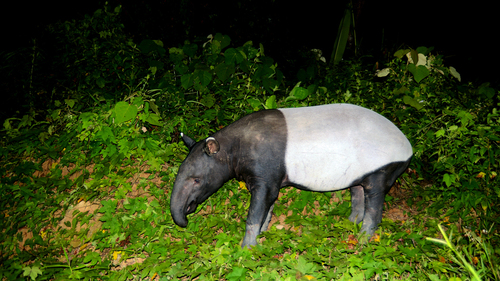
Other species in the genus Tapirus
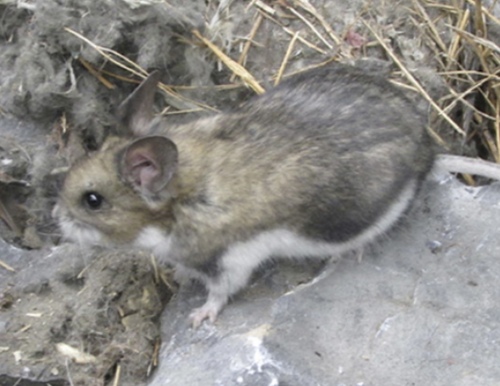
Species that share its range

Sources
Conservation status, range description and population estimate come from the IUCN Red List assessment for Tapirus pinchaque. Countries are derived from that range description, not from a mapped country list. Last refreshed on .
The distribution map is drawn from the IUCN Red List spatial data compiled in 2008. IUCN (International Union for Conservation of Nature)