
Kemp's Spiny Mouse
Acomys kempi
Red List assessment
Least Concernon the IUCN Red List
- EXExtinct
- EWExtinct in the Wild
- CRCritically Endangered
- ENEndangered
- VUVulnerable
- NTNear Threatened
- LCLeast Concern
The Kemp's Spiny Mouse is recorded in 7 countries across Africa. The IUCN Red List assesses the Kemp's Spiny Mouse as Least Concern. No precise global population estimate available; considered locally common across much of its range.
- Family
- Muridae
- Order
- Rodentia
- Genus
- Acomys
- Countries recorded
- 7
- Continents
- Africa
- Red List category
- Least Concern
- Data updated
- August 9, 2026
What is the Kemp's Spiny Mouse?
Kemp's Spiny Mouse is a small rodent endemic to East Africa, characterized by the stiff, spine-like hairs on its dorsal surface that give the genus Acomys its common name. It inhabits rocky, arid, and semi-arid landscapes, frequently sheltering in rock crevices, termite mounds, and scrubby vegetation. Like other spiny mice, it is notable for relatively precocial offspring and an omnivorous diet that allows it to exploit resource-scarce environments. It was first described by Oldfield Thomas in 1906, named in honor of the collector R. Kemp.
Where does the Kemp's Spiny Mouse live?
East Africa, primarily Kenya, Tanzania, Uganda, Ethiopia, and Somalia; extends marginally into Sudan and South Sudan.
Distributed across East Africa, including Kenya (particularly central and northern regions), Tanzania (northern portions), Uganda (eastern areas), Ethiopia (southern and eastern lowlands), and Somalia. Its range partially overlaps with other Acomys species such as A. percivali and A. wilsoni.
Altitude and depth
Typically found from near sea level up to approximately 2,000 m elevation, with the highest densities recorded in semi-arid lowlands between 500–1,500 m.
Seasonal movements
No true hibernation or long-distance migration recorded. Activity patterns and reproductive effort may intensify during and after rainy seasons when food resources are more abundant.
Habitat of the Kemp's Spiny Mouse
Primarily found in rocky outcrops (inselbergs), semi-arid savanna, thornbush scrubland, and dry woodland. It shelters in crevices, under stones, within termite mounds, and occasionally in human structures near its natural range. It shows a strong affinity for rocky substrates that provide protection from predators.
Adaptations to its environment
The stiffened, spine-like dorsal hairs provide a degree of protection against predators. Like several congeners, Acomys kempi has kidneys adapted to concentrate urine efficiently, aiding water conservation in arid environments. Its large eyes suggest adaptation to low-light foraging conditions.
Conservation status and numbers
Least Concern (LC) on the IUCN Red List. The species has a broad distribution across East Africa, tolerates a range of habitats, and faces no immediate major range-wide threat that would qualify it for a threatened category.
Estimated population
No precise global population estimate available; considered locally common across much of its range. Population trend presumed stable.
What threatens the Kemp's Spiny Mouse?
Local habitat degradation through overgrazing, agricultural expansion, and human settlement encroachment. Predation by domestic cats and other introduced predators may exert pressure in areas near human habitation. Localized droughts linked to climate change could affect food availability.
Diseases and parasites
Susceptible to ectoparasites (fleas, ticks, mites) common to East African rodents. Acomys species generally are considered reservoir hosts for various zoonotic pathogens in the region, though specific disease associations for A. kempi are not well documented.
What is being done to protect it?
No specific conservation programs target this species. It benefits from general habitat protections within national parks and reserves across its range, such as Tsavo and Amboseli (Kenya). Listed under CITES Appendix III protections are not applicable; governed by national wildlife laws in range countries.
Recommended actions
Continued monitoring in areas of intensive land-use change; inclusion in broader small mammal biodiversity surveys in East Africa; assessment of genetic diversity across fragmented subpopulations.
What the Kemp's Spiny Mouse looks like
Dorsal fur is greyish-brown to ochre-brown, interspersed with noticeably stiff, flattened spine-like hairs that give the back a bristly texture. The underparts are pale whitish or creamy. The tail is sparsely haired and scaled. Eyes are relatively large and dark; ears are prominent and rounded.
Size
Head-body length approximately 70–110 mm; tail length roughly 60–100 mm (slightly shorter than body); ear length approximately 15–20 mm.
Weight
Typically 15–40 g; slight variation between individuals but no marked size difference between sexes reported.
Distinctive features
Distinguished from the similar A. wilsoni by subtle differences in skull morphology and slightly different coloration; from A. percivali (the Percival's spiny mouse) by smaller overall size and geographic overlap characteristics. The spine-like dorsal hairs are diagnostic at the genus level.
Differences between males and females
Minimal sexual dimorphism; males and females are similar in size and coloration. Females have multiple pairs of mammae typical of the genus.
Behaviour and diet of the Kemp's Spiny Mouse
Thought to be semi-social, as with most Acomys species; may form small family groups or aggregations around shared shelters, particularly in rocky crevices. Not strictly solitary, but large stable social groups have not been well documented for this species specifically.
When it is active
Primarily nocturnal and crepuscular, retreating to sheltered rocky crevices or burrows during the heat of the day. Peak activity occurs after sunset and before sunrise.
Diet
Omnivorous; diet includes seeds, grains, fruits, green plant matter, insects, and other invertebrates. Opportunistic foraging allows flexible exploitation of seasonally variable food sources in semi-arid habitats.
How it feeds and hunts
Forages actively on the ground, using its sensitive vibrissae and large eyes to locate seeds and invertebrates. Insects are captured by quick pouncing movements; seeds are gathered and may be cached near den sites.
Communication
Uses ultrasonic vocalizations for intraspecific communication, including mother-pup contact calls. Scent marking via urine and glandular secretions is likely used for territory and mate signaling. Tactile communication through grooming occurs in group contexts.
Interactions with other species
Predated upon by snakes (particularly nocturnal species), small owls (e.g., Barn Owl, African Scops Owl), and small carnivorous mammals such as genets and mongooses. Competes for resources with sympatric small rodent species including other Acomys and Mus species.
Role in its ecosystem
Functions as a seed disperser and invertebrate predator in semi-arid ecosystems. As prey for multiple vertebrate predators, it plays an important role in savanna food webs. Its burrowing and sheltering behavior may contribute marginally to soil aeration.
Reproduction and lifecycle
Breeding appears to occur year-round with peaks tied to rainfall and food availability. Gestation is approximately 35–42 days, relatively long for a murid of its size, resulting in precocial young. Litter sizes typically range from 1–5 pups.
Raising the young
Young are born with eyes open or opening within a day, fully furred, and capable of locomotion within days — a hallmark of the genus. The female provides nursing; males' role in parental care is not well documented for this species.
Maturity and lifespan
Sexual maturity is reached at approximately 6–8 weeks of age. Lifespan in the wild is estimated at 1–3 years; captive individuals of congeners have lived up to 5–6 years.
Taxonomy and naming of the Kemp's Spiny Mouse
Classification
Mammalia > Rodentia > Muridae > Acomys > Acomys kempi (Thomas, 1906)
Scientific synonyms
Sometimes historically grouped within the Acomys cahirinus species complex; no widely accepted synonyms beyond original description.
What research says
Recent studies
No high-profile recent studies focus specifically on A. kempi. However, the broader genus Acomys has been intensively studied since 2012 for its extraordinary capacity for scar-free skin and ear tissue regeneration, drawing interest in biomedical research; whether A. kempi shares this trait to the same degree as A. cahirinus remains under investigation.
Genome and DNA
Chromosome count not definitively published for A. kempi specifically; related Acomys species typically have diploid numbers of 2n = 36–68 depending on species. The genus has attracted genomic interest due to remarkable skin regeneration abilities documented in related species.
Compared with similar species
Closely related to Acomys wilsoni (Wilson's Spiny Mouse) and Acomys percivali (Percival's Spiny Mouse), all found in East Africa. Distinguished by distributional range and minor morphological differences. Compared to the well-studied A. cahirinus (Cairo Spiny Mouse) of North Africa and the Middle East, A. kempi is less studied but shares the genus's characteristic precocial young and spiny pelage.
The Kemp's Spiny Mouse and people
1) Like their congener A. cahirinus, Kemp's Spiny Mice may be capable of extraordinary skin regeneration — the Acomys genus is one of the only known mammals able to regrow full-thickness skin, complete with hair follicles and glands, without scarring. 2) Despite their small size, spiny mice give birth to remarkably developed young that can run within hours of birth — more like miniature rabbits than typical mice. 3) Their 'spines' are not true quills like a porcupine's, but flattened, stiffened hairs that make them harder to swallow for predators.
Where and how to see it
Best observed in East African semi-arid reserves such as Tsavo East/West National Park (Kenya) or Meru National Park by carefully searching rocky outcrops at dusk and night using a red-light headlamp, which minimizes disturbance. Patience near rocky crevices shortly after sunset offers the best chances of sighting.
Risks to humans
No notable risk. May bite if handled but poses no venom or significant injury risk. As with all wild rodents, there is a theoretical risk of zoonotic pathogen transmission through handling; standard precautions (gloves, hand washing) are recommended.
Human uses
Not commercially exploited. Occasionally kept in captivity by exotic pet enthusiasts or zoological collections as a representative of the spiny mouse genus. The genus Acomys is used as a model organism in biomedical regeneration research, though this primarily involves A. cahirinus rather than A. kempi.
Countries where the Kemp's Spiny Mouse is recorded
The 7 countries named in the range description of its IUCN Red List assessment.
Questions about the Kemp's Spiny Mouse
Where does the Kemp's Spiny Mouse live?
The Kemp's Spiny Mouse is recorded in Ethiopia, Kenya, Somalia, South Sudan and Sudan, among 7 countries in total across Africa. These countries come from the range description of its IUCN Red List assessment, and they are what place the species on the interactive map.
Is the Kemp's Spiny Mouse endangered?
The IUCN Red List assesses the Kemp's Spiny Mouse as Least Concern. The species is widespread and abundant enough not to qualify for any threatened category. It does not mean the species is safe forever, only that nothing in the current data raises an alarm.
How many are left in the wild?
No precise global population estimate available; considered locally common across much of its range. This figure comes from the species assessment on the IUCN Red List; population estimates for wild mammals are ranges, not counts, and are revised at each assessment.
What habitat does the Kemp's Spiny Mouse live in?
Primarily found in rocky outcrops (inselbergs), semi-arid savanna, thornbush scrubland, and dry woodland.
What is the scientific name of the Kemp's Spiny Mouse?
The Kemp's Spiny Mouse is Acomys kempi, in the family Muridae, order Rodentia.
Other species in the genus Acomys
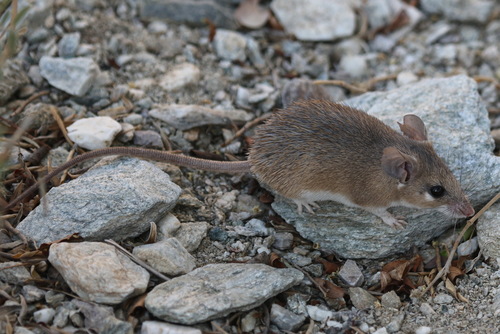
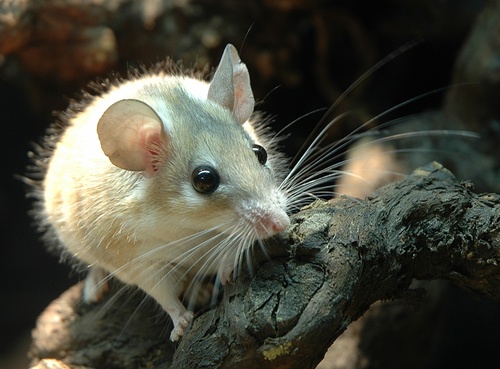
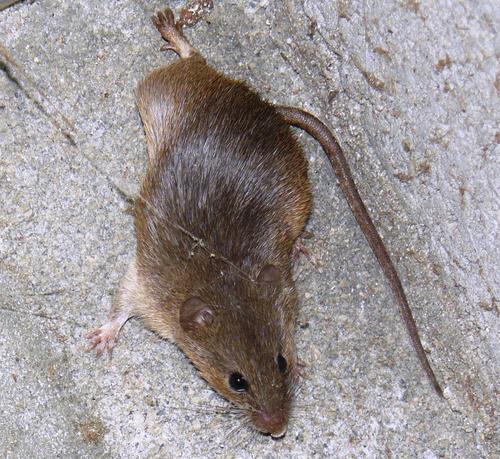
Other species in the family Muridae
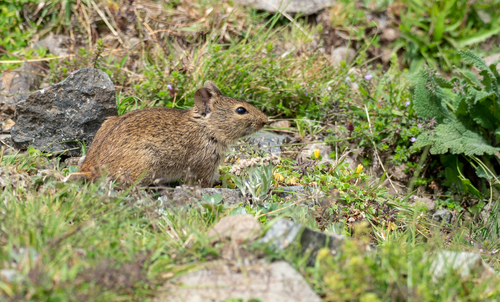
Sources
Conservation status, range description and population estimate come from the IUCN Red List assessment for Acomys kempi. Countries are derived from that range description, not from a mapped country list. Last refreshed on .
The distribution map is drawn from the IUCN Red List spatial data compiled in 2008. IUCN (International Union for Conservation of Nature)