
Cairo Spiny Mouse
Acomys cahirinus
Red List assessment
Least Concernon the IUCN Red List
- EXExtinct
- EWExtinct in the Wild
- CRCritically Endangered
- ENEndangered
- VUVulnerable
- NTNear Threatened
- LCLeast Concern
The Cairo Spiny Mouse is recorded in 19 countries across Africa and Asia. The IUCN Red List assesses the Cairo Spiny Mouse as Least Concern. No precise global population estimate exists; the species is considered abundant and widespread.
- Family
- Muridae
- Order
- Rodentia
- Genus
- Acomys
- Countries recorded
- 19
- Continents
- Africa and Asia
- Red List category
- Least Concern
- Data updated
- August 9, 2026
What is the Cairo Spiny Mouse?
The Cairo Spiny Mouse is a small desert rodent belonging to the family Muridae, named for the stiff, spine-like hairs covering its dorsal surface that provide a degree of protection against predators. It inhabits arid and semi-arid rocky environments across North Africa and the Middle East. The species is scientifically remarkable for its extraordinary capacity to regenerate damaged skin and soft tissues without scarring, a trait almost unprecedented among mammals. It also produces unusually precocial young, born with open eyes and well-developed motor abilities, unlike most rodents.
Where does the Cairo Spiny Mouse live?
North Africa (Egypt, Libya, Algeria, Morocco, Sudan, Chad), Middle East (Israel, Jordan, Saudi Arabia, Yemen, Oman, UAE, Iran, Iraq), and East Africa (Ethiopia, Eritrea, Somalia, Kenya)
Found across a broad arc from Morocco and Mauritania in the west through Algeria, Libya, Egypt, Sudan, and Chad; extends into the Arabian Peninsula (Saudi Arabia, Yemen, Oman, UAE), Levant (Israel, Jordan), Iraq, and Iran; also present in the Horn of Africa (Ethiopia, Eritrea, Somalia) and parts of Kenya. Egypt is considered the core of its historic range.
Altitude and depth
Typically found from sea level to approximately 2,000 m; in mountainous areas of the Middle East and East Africa, it can occur at higher elevations where rocky habitat is present.
Seasonal movements
Active year-round with no hibernation. In extremely hot desert conditions, daytime activity may decrease further in summer months, with increased nocturnal foraging. Breeding can occur throughout the year in favorable conditions, though peaks may align with seasonal resource availability.
Habitat of the Cairo Spiny Mouse
Primarily rocky deserts, semi-arid scrublands, cliff faces, rocky outcrops, wadis (dry riverbeds), and caves. It is highly adaptable and also colonizes human settlements, ruins, and agricultural areas. It avoids dense vegetation and open sandy plains without rocky structure.
Adaptations to its environment
Possesses spine-like dorsal hairs that deter small predators. The kidneys are highly efficient at concentrating urine, minimizing water loss in arid environments. Its remarkable skin regeneration ability — including regrowth of hair follicles, sebaceous glands, and cartilage — is a unique mammalian adaptation. Large eyes enhance nocturnal vision, and pale sandy fur provides camouflage against rocky and desert substrates.
Conservation status and numbers
Least Concern (LC) on the IUCN Red List, assessed due to its wide geographic range, large presumed population, tolerance of habitat degradation, and presence in numerous protected areas. No significant range-wide population decline has been detected.
Estimated population
No precise global population estimate exists; the species is considered abundant and widespread. Population trend is presumed stable across its range, though local populations may fluctuate with resource availability.
What threatens the Cairo Spiny Mouse?
Local habitat loss from urban expansion and agricultural conversion; predation by introduced species (e.g., domestic cats); collection for the pet trade and biomedical research; and potentially climate change altering desert water and food availability, though these threats are currently considered insufficient to threaten the global population.
Diseases and parasites
Known to harbor ectoparasites including fleas, mites, and ticks. Can carry Leishmania parasites and has been implicated as a reservoir host. Also susceptible to various intestinal helminths. Its use in laboratory settings has facilitated study of its immune and tissue-repair responses.
What is being done to protect it?
Benefits from protection within several national parks and reserves across its range, including in Egypt's Eastern Desert and protected areas in Israel and the Arabian Peninsula. No species-specific conservation programs exist given its Least Concern status. It is protected by national wildlife laws in several countries.
Recommended actions
Monitoring of populations in peripheral range areas susceptible to climate-driven desertification; regulation of collection for the pet trade and biomedical research to prevent local overexploitation; and continued surveillance for emerging zoonotic pathogens given its proximity to human settlements.
What the Cairo Spiny Mouse looks like
Dorsal surface covered in coarse, spine-like grayish or sandy-brown hairs that give the back a rough texture. Ventral surface and feet are white to pale gray. The large, prominent eyes are dark and adapted for nocturnal vision. Ears are large and rounded. The tail is scaly, relatively long, and lacks the dense spiny fur of the back.
Size
Body length 7–12 cm; tail length 8–12 cm (approximately equal to body length). Shoulder height approximately 2–3 cm. No wingspan applicable.
Weight
Typically 30–65 g; adults average around 40–50 g with little notable difference between sexes.
Distinctive features
Distinguished from other Acomys species by its slightly larger size, pale sandy-gray dorsal coloration, and geographic range centered on North Africa and Egypt. Compared to the Golden Spiny Mouse (A. russatus), it is smaller and more nocturnal. The spiny dorsal pelage immediately differentiates it from conventional mice (Mus spp.).
Differences between males and females
Sexual dimorphism is minimal. Females may be very slightly heavier, particularly when pregnant, but overall size, coloration, and morphology are nearly identical between sexes.
Behaviour and diet of the Cairo Spiny Mouse
Semi-social; lives in small groups or colonies often centered around rock crevices and shelters. Communal nesting and alloparental care (non-mothers helping to nurse and care for young) have been documented. Dominance hierarchies within groups are relatively mild compared to other murid rodents.
When it is active
Primarily nocturnal, especially during summer heat. Some crepuscular activity recorded, particularly in cooler months or at higher altitudes. Spends daylight hours in rock crevices, burrows, or human structures.
Diet
Omnivorous; diet includes seeds, grains, plant material (leaves, stems, fruit), invertebrates (insects, beetles, larvae), and occasionally small vertebrates or carrion. Foraging is opportunistic and highly adaptable to local food availability in arid environments.
How it feeds and hunts
Forages actively at night across rocky terrain, using its large eyes and whiskers (vibrissae) to detect prey and navigate. Insects and invertebrates are caught opportunistically during foraging routes. It may cache food near shelter during periods of abundance.
Communication
Uses ultrasonic and audible vocalizations for social communication, including contact calls and alarm signals. Scent marking with urine and glandular secretions is used to mark territories and communicate reproductive status. Vibrissae play an important role in tactile communication in dark rocky environments.
Interactions with other species
Predated upon by owls (especially barn owl Tyto alba), small carnivores (mongooses, genets, sand cats), and snakes. Competes with other small rodents for rocky shelter sites and food resources. In areas of sympatry, A. russatus (Golden Spiny Mouse) tends to be diurnal while A. cahirinus is nocturnal, representing classic niche partitioning between sister species.
Role in its ecosystem
Functions as a seed disperser and consumer of invertebrates in desert and semi-arid ecosystems. Acts as an important prey item for a range of predators, contributing to desert food web stability. Its presence near human settlements also places it in a role as a peridomestic commensal.
Reproduction and lifecycle
Can breed year-round in captivity; in the wild, breeding peaks may correlate with seasonal food abundance. Gestation lasts approximately 38–39 days — significantly longer than most murids. Litter size typically 2–5 young (average 3). Females can produce multiple litters per year.
Raising the young
Young are born in an advanced precocial state: fully furred, eyes open, and mobile within hours. Both the mother and communal group females participate in nursing and guarding the young. Weaning occurs at approximately 3–4 weeks. The precocial development sharply reduces the period of vulnerability.
Maturity and lifespan
Sexual maturity is reached at approximately 5–8 weeks in captivity. In the wild, maturity likely occurs at 2–3 months. Lifespan is 3–5 years in captivity; wild lifespan is shorter, typically 1–3 years due to predation and environmental pressures.
Taxonomy and naming of the Cairo Spiny Mouse
Classification
Mammalia > Rodentia > Muridae > Acomys > Acomys cahirinus
Subspecies
Taxonomy is complex and under revision; formerly recognized subspecies include A. c. cahirinus (Egypt), A. c. dimidiatus (Middle East), and A. c. aegyptius, but many have been elevated to full species status in recent literature, making current subspecific boundaries uncertain.
Scientific synonyms
Mus cahirinus Desmarest, 1819 (original description); Acomys dimidiatus (Cretzschmar, 1826) is sometimes treated as a synonym depending on taxonomic authority.
What research says
Recent studies
A landmark 2012 study published in Nature (Seifert et al.) demonstrated that A. cahirinus can fully regenerate ear pinnae — including cartilage, skin, hair follicles, and sebaceous glands — after punch injuries, the first such regenerative capacity documented in a placental mammal. Subsequent research has shown that this regeneration extends to skin wounds, which heal without fibrosis. These findings have major implications for human wound-healing and scar-prevention medicine.
Genome and DNA
Diploid chromosome number is 2n = 36–38, with some variation reported among populations and putative subspecies. The genome of Acomys cahirinus has been sequenced and analyzed specifically in the context of its regenerative biology; studies have identified unique gene expression profiles in skin fibroblasts that suppress scar formation pathways active in non-regenerating mammals.
Compared with similar species
Most closely related to other Acomys species, particularly A. russatus (Golden Spiny Mouse) with which it co-occurs in the Levant and Sinai, and A. dimidiatus (Arabian Spiny Mouse). Unlike Mus musculus (house mouse), A. cahirinus has a longer gestation, precocial young, and extraordinary regenerative capacity. The spiny pelage superficially resembles that of hedgehogs but is far less rigid and serves a different anti-predator function.
The Cairo Spiny Mouse and people
The Cairo Spiny Mouse is one of the only known placental mammals capable of regenerating complete tissue structures — including cartilage, hair follicles, and glands — without scarring, rivaling the regenerative ability of salamanders. Its young are born with their eyes already open and are able to walk and explore within hours of birth, an extraordinary level of development for such a small rodent. When threatened or grabbed by a predator, it can shed large patches of its fragile skin (autotomy-like skin release) and then fully regenerate the lost tissue — an escape mechanism almost unique among mammals.
Where and how to see it
Best observed in rocky wadis and cliff faces of the Egyptian Eastern Desert, Sinai Peninsula, and the Negev Desert (Israel) after sunset. Rocky ruins and old stone structures in North Africa and the Middle East are reliable observation sites. Using a red-light torch minimizes disturbance. Spring and autumn evenings offer the most reliable sightings as temperatures are moderate.
Risks to humans
No notable risk to humans under normal circumstances. Individuals may bite if handled carelessly. As a potential reservoir host for Leishmania and other zoonotic pathogens, handling wild individuals without protective measures is inadvisable. It does not pose a significant disease risk in typical outdoor encounters.
Human uses
Widely used as a laboratory animal in biomedical research, particularly in studies of wound healing, tissue regeneration, and scar-free recovery due to its extraordinary regenerative abilities. Also kept as an exotic pet in some countries. Historically, its close association with human settlements means it has functioned as an unintentional commensal, consuming stored grain, though it is not considered a major agricultural pest.
Myths and legends
No well-documented myths or legends specifically associated with this species have been recorded. In ancient Egypt, small rodents in general were associated with plagues and misfortune but no specific cultural symbolism is attributed to A. cahirinus in historical or contemporary traditions.
Countries where the Cairo Spiny Mouse is recorded
The 19 countries named in the range description of its IUCN Red List assessment.
Questions about the Cairo Spiny Mouse
Where does the Cairo Spiny Mouse live?
The Cairo Spiny Mouse is recorded in Algeria, Chad, Egypt, Eritrea and Ethiopia, among 19 countries in total across Africa and Asia. These countries come from the range description of its IUCN Red List assessment, and they are what place the species on the interactive map.
Is the Cairo Spiny Mouse endangered?
The IUCN Red List assesses the Cairo Spiny Mouse as Least Concern. The species is widespread and abundant enough not to qualify for any threatened category. It does not mean the species is safe forever, only that nothing in the current data raises an alarm.
How many are left in the wild?
No precise global population estimate exists; the species is considered abundant and widespread. This figure comes from the species assessment on the IUCN Red List; population estimates for wild mammals are ranges, not counts, and are revised at each assessment.
What habitat does the Cairo Spiny Mouse live in?
Primarily rocky deserts, semi-arid scrublands, cliff faces, rocky outcrops, wadis (dry riverbeds), and caves.
What is the scientific name of the Cairo Spiny Mouse?
The Cairo Spiny Mouse is Acomys cahirinus, in the family Muridae, order Rodentia.
Other species in the genus Acomys
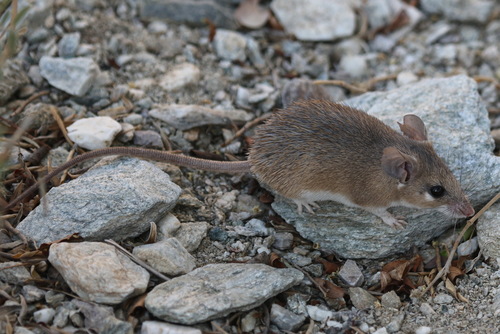
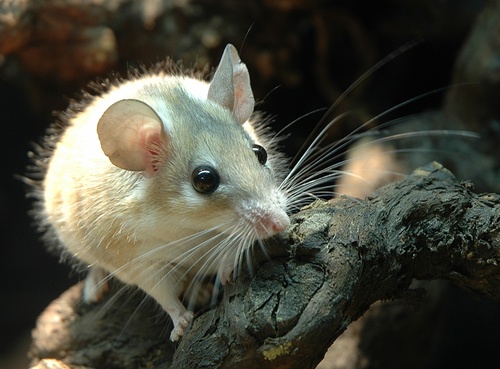
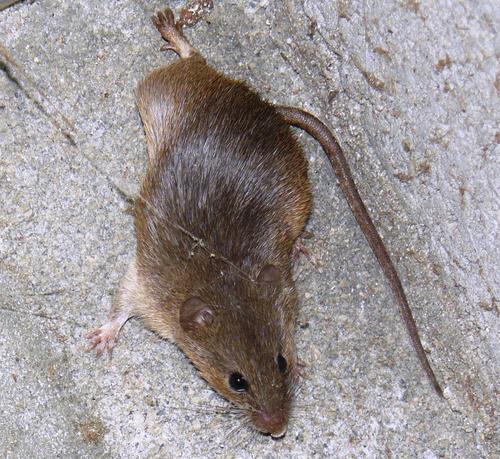
Other species in the family Muridae
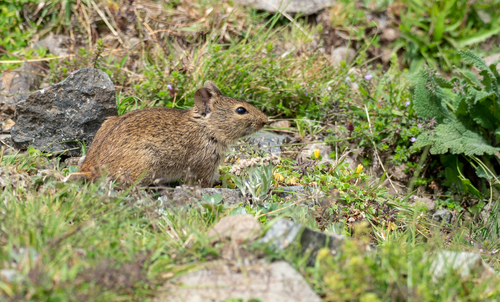
Sources
Conservation status, range description and population estimate come from the IUCN Red List assessment for Acomys cahirinus. Countries are derived from that range description, not from a mapped country list. Last refreshed on .
The distribution map is drawn from the IUCN Red List spatial data compiled in 2008. IUCN (International Union for Conservation of Nature)