
Afghan Mouse-like Hamster
Calomyscus mystax
Red List assessment
Least Concernon the IUCN Red List
- EXExtinct
- EWExtinct in the Wild
- CRCritically Endangered
- ENEndangered
- VUVulnerable
- NTNear Threatened
- LCLeast Concern
The Afghan Mouse-like Hamster is recorded in 3 countries across Asia. The IUCN Red List assesses the Afghan Mouse-like Hamster as Least Concern. No reliable population estimates exist; population trend is presumed stable but this is based on very limited field data
- Family
- Calomyscidae
- Order
- Rodentia
- Genus
- Calomyscus
- Countries recorded
- 3
- Continents
- Asia
- Red List category
- Least Concern
- Data updated
- August 9, 2026
What is the Afghan Mouse-like Hamster?
The Afghan Mouse-like Hamster is a small, poorly-studied rodent native to the mountainous regions of Afghanistan. It belongs to the distinctive family Calomyscidae, sometimes called 'mouse-like hamsters' due to their hamster-like cheek pouches combined with a mouse-like body shape. This species is notable for its restricted range and the limited scientific data available about its biology and ecology. It occupies rocky, arid habitats typical of Central Asian highland ecosystems.
Where does the Afghan Mouse-like Hamster live?
Afghanistan, with possible range extension into adjacent parts of Pakistan and Iran
Endemic to Afghanistan, primarily found in the central and eastern mountainous regions of the country. Some taxonomic uncertainty exists regarding its exact range boundaries relative to other Calomyscus species.
Altitude and depth
Approximately 1000-3000 meters above sea level in mountainous terrain
Seasonal movements
Likely reduces activity during harsh winter months in high-altitude habitats, though detailed seasonal behavioral data is lacking for this species
Habitat of the Afghan Mouse-like Hamster
Arid and semi-arid rocky habitats, including stony slopes, scree, and cliff faces in mountainous terrain. Often found in areas with sparse vegetation and rocky crevices that provide shelter.
Adaptations to its environment
Small body size and efficient kidney function help conserve water in arid environments. Cryptic coloration provides camouflage against rocky substrates, and nocturnal activity helps avoid extreme daytime temperatures and predators.
Conservation status and numbers
Listed as Least Concern by IUCN, though this assessment is based on limited data. The classification reflects presumed stable populations without major documented declines, but the species' restricted range in Afghanistan raises some conservation concern.
Estimated population
No reliable population estimates exist; population trend is presumed stable but this is based on very limited field data
What threatens the Afghan Mouse-like Hamster?
Potential habitat degradation from overgrazing by livestock, human encroachment, and political instability in Afghanistan limiting conservation research and monitoring efforts.
What is being done to protect it?
Minimal specific conservation efforts are documented for this species, largely due to the challenges of conducting research in Afghanistan's political and security climate.
Recommended actions
Increased field surveys to establish accurate population and range data, habitat protection in key mountainous areas, and taxonomic clarification of its relationship to other Calomyscus species.
What the Afghan Mouse-like Hamster looks like
Soft, grayish-brown to sandy fur on the dorsal side with lighter, whitish underparts. Large eyes and prominent whiskers characteristic of nocturnal rodents, with a moderately long, sparsely-haired tail.
Size
Body length approximately 7-9 cm, with a tail length of 5-7 cm
Weight
Estimated 15-25 grams, typical for small Calomyscus species
Distinctive features
Distinguished from other Calomyscus species primarily through subtle cranial and dental morphological features, as well as slight variations in fur coloration and tail length ratios.
Behaviour and diet of the Afghan Mouse-like Hamster
Presumed largely solitary based on behavior of related Calomyscus species, though detailed social behavior data specific to this species is lacking.
When it is active
Nocturnal, likely emerging at dusk to forage and returning to rocky shelters during daylight hours to avoid predators and extreme temperatures.
Diet
Omnivorous diet likely consisting of seeds, plant material, and possibly small invertebrates, consistent with other members of the Calomyscidae family.
Communication
Likely uses a combination of vocalizations, scent marking, and tactile communication typical of small nocturnal rodents, though specific studies on this species are absent.
Interactions with other species
Potential predators include owls, small carnivorous mammals, and snakes native to Afghan mountain ecosystems. May compete with other small rodents for limited food resources in arid habitats.
Role in its ecosystem
Plays a role in local ecosystems as a seed disperser and as a prey species supporting the food web of mountain predators in its native Afghan habitat.
Reproduction and lifecycle
Breeding season likely occurs in spring and summer months; gestation period estimated at 25-30 days based on related species, with litter sizes probably ranging from 2-5 pups.
Raising the young
Presumed maternal care typical of small rodents, with the female nursing and protecting young in a burrow or rock crevice nest until weaning at approximately 3-4 weeks of age.
Maturity and lifespan
Sexual maturity likely reached around 2-3 months of age; lifespan estimated at 2-3 years in the wild, potentially longer in captivity, based on related Calomyscus species.
Taxonomy and naming of the Afghan Mouse-like Hamster
Classification
Class Mammalia > Order Rodentia > Family Calomyscidae > Genus Calomyscus > Species Calomyscus mystax
Scientific synonyms
Previously classified within Calomyscus bailwardi as a subspecies or synonym before being elevated to full species status
What research says
Recent studies
Limited recent research exists on this species specifically; most studies focus on broader Calomyscidae taxonomy and phylogenetics rather than species-specific ecology.
Compared with similar species
Similar in general appearance to other Calomyscus species such as Calomyscus bailwardi and Calomyscus hotsoni, but distinguished by subtle morphological differences and geographic isolation in Afghanistan.
The Afghan Mouse-like Hamster and people
Despite being called a 'hamster,' this species is more closely related structurally to mice in body shape while sharing hamster-like cheek pouches. It belongs to a unique family, Calomyscidae, found only in a limited region of Central Asia and the Middle East.
Where and how to see it
Best observed at dusk or during nighttime hours in rocky mountainous terrain in Afghanistan; however, political instability and lack of accessible wildlife tourism infrastructure make observation extremely challenging for most people.
Risks to humans
No notable risk
Countries where the Afghan Mouse-like Hamster is recorded
The 3 countries named in the range description of its IUCN Red List assessment.
Questions about the Afghan Mouse-like Hamster
Where does the Afghan Mouse-like Hamster live?
The Afghan Mouse-like Hamster is recorded in Afghanistan, Iran and Pakistan across Asia. These countries come from the range description of its IUCN Red List assessment, and they are what place the species on the interactive map.
Is the Afghan Mouse-like Hamster endangered?
The IUCN Red List assesses the Afghan Mouse-like Hamster as Least Concern. The species is widespread and abundant enough not to qualify for any threatened category. It does not mean the species is safe forever, only that nothing in the current data raises an alarm.
How many are left in the wild?
No reliable population estimates exist; population trend is presumed stable but this is based on very limited field data This figure comes from the species assessment on the IUCN Red List; population estimates for wild mammals are ranges, not counts, and are revised at each assessment.
What habitat does the Afghan Mouse-like Hamster live in?
Arid and semi-arid rocky habitats, including stony slopes, scree, and cliff faces in mountainous terrain.
What is the scientific name of the Afghan Mouse-like Hamster?
The Afghan Mouse-like Hamster is Calomyscus mystax, in the family Calomyscidae, order Rodentia.
Other species in the genus Calomyscus
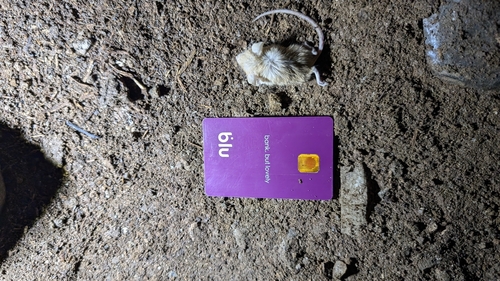
Other species in the family Calomyscidae

Species that share its range
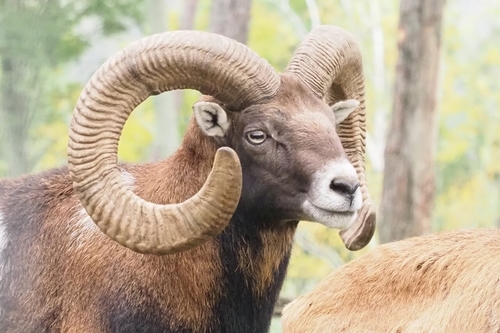
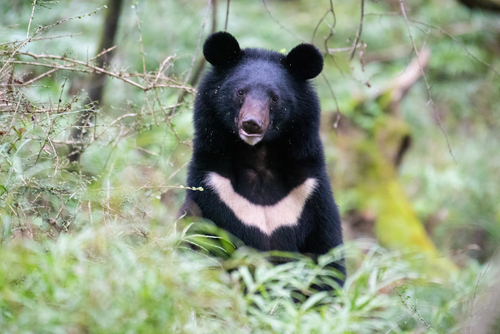
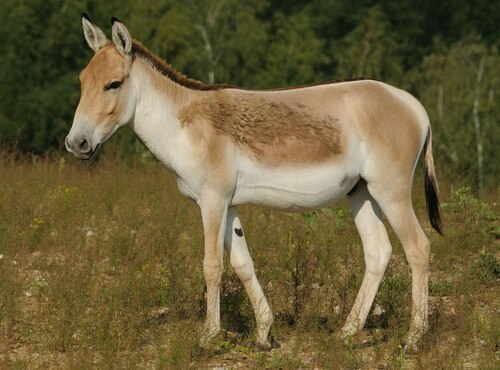
Sources
Conservation status, range description and population estimate come from the IUCN Red List assessment for Calomyscus mystax. Countries are derived from that range description, not from a mapped country list. Last refreshed on .
The distribution map is drawn from the IUCN Red List spatial data compiled in 2008. IUCN (International Union for Conservation of Nature)