
Hartebeest
Alcelaphus buselaphus
Red List assessment
Least Concernon the IUCN Red List
- EXExtinct
- EWExtinct in the Wild
- CRCritically Endangered
- ENEndangered
- VUVulnerable
- NTNear Threatened
- LCLeast Concern
The Hartebeest is recorded in 19 countries across Africa. The IUCN Red List assesses the Hartebeest as Least Concern.
- Family
- Bovidae
- Order
- Artiodactyla
- Genus
- Alcelaphus
- Countries recorded
- 19
- Continents
- Africa
- Red List category
- Least Concern
- Data updated
- August 9, 2026
What is the Hartebeest?
The hartebeest (Alcelaphus buselaphus) is a large, gregarious antelope of African savannas and open woodlands, instantly recognizable by its peculiarly elongated face, high withers sloping sharply to the hindquarters, and uniquely bracket- or lyre-shaped horns borne by both sexes. It ranks among the fastest antelopes on the continent, capable of sustained speeds exceeding 65–70 km/h, and possesses exceptional endurance that allows it to outrun most cursorial predators over long distances. Widely distributed across sub-Saharan Africa, it occupies an important ecological niche as a bulk grazer in open grassland and savanna ecosystems. The species has suffered significant historical range contractions, particularly in North Africa where it is now fully extinct.
Where does the Hartebeest live?
Sub-Saharan Africa, from Senegal and Ethiopia southward to South Africa; formerly also North Africa (now extinct there)
The species has a broad but fragmented distribution across sub-Saharan Africa. It occurs from Senegal and The Gambia east through Mali, Burkina Faso, Chad, and Sudan, then through Ethiopia, South Sudan, Kenya, Uganda, Tanzania, the Democratic Republic of Congo, and southward through Zambia, Malawi, Mozambique, Zimbabwe, Botswana, Namibia, and South Africa. Reintroductions have expanded its range in some southern African countries. It is now regionally extinct in North Africa and much reduced in West Africa.
Altitude and depth
Primarily a lowland to mid-altitude species, typically found from sea level up to approximately 4,000 m in East African highland grasslands (e.g., Ethiopian highlands for Swayne's hartebeest). Most populations occur between 500 and 2,000 m elevation.
Seasonal movements
Hartebeests are not strict long-distance migrants but undertake seasonal movements of tens to hundreds of kilometers following rainfall patterns and grass availability. In East Africa, movements correspond to the long and short rains. In the Serengeti-Mara ecosystem they partially track the wildebeest migration. Resident populations may show less pronounced seasonality. No hibernation occurs.
Habitat of the Hartebeest
Hartebeests primarily inhabit open to lightly wooded savanna grasslands, bushveld, and semi-arid shrublands where grasses are abundant. They tolerate a wide range of habitats from dense Brachystegia (miombo) woodland edges to arid Kalahari thornbush, but avoid true desert, dense forest, and very wet areas. They show a preference for flat or gently rolling terrain that facilitates long-distance vigilance and rapid flight from predators.
Adaptations to its environment
The distinctively high withers and sloping back increase visual range across tall grass, acting as a built-in vantage point. Their elongated, narrow muzzle allows selective grazing of specific grass species and parts. Physiologically, hartebeests are highly heat-tolerant, with efficient nasal cooling mechanisms and a preference for drinking once daily when water is available, though they can go without water for several days on succulent vegetation. Their highly specialized hooves provide traction on both hard savanna soils and softer substrates.
Conservation status and numbers
Listed as Least Concern (LC) by the IUCN (last assessed 2014), reflecting its broad distribution and relatively large total population. However, the overall population trend is decreasing, and several subspecies face far more precarious situations: Swayne's hartebeest (A. b. swaynei) is Endangered, the Tora hartebeest (A. b. tora) is Critically Endangered, and the Bubal hartebeest (A. b. buselaphus) is Extinct. The species-level LC designation masks significant regional and subspecific threats.
What threatens the Hartebeest?
Major threats include habitat loss and fragmentation due to agricultural expansion, human settlement, and livestock competition for grazing resources. Illegal hunting and bushmeat poaching are significant in many areas. Drought exacerbated by climate change reduces grass availability and increases mortality. Disease transmission (especially rinderpest historically, now foot-and-mouth and others) from domestic livestock represents an ongoing risk. Competition with expanding cattle herds leads to range displacement.
Diseases and parasites
Susceptible to rinderpest (now globally eradicated), foot-and-mouth disease, bovine malignant catarrhal fever, and bovine tuberculosis, particularly where they contact domestic livestock. Ectoparasites include various tick species (Amblyomma, Rhipicephalus, Hyalomma), which may transmit theileriosis and other haemoparasitic diseases. Gastrointestinal nematodes, tapeworms, and nasal bot flies (Oestrus spp.) are common endoparasites.
What is being done to protect it?
Hartebeests are protected in numerous national parks and reserves across their range, including the Serengeti (Tanzania), Masai Mara (Kenya), Kruger (South Africa), Etosha (Namibia), Hwange (Zimbabwe), and Bale Mountains NP (Ethiopia for Swayne's hartebeest). CITES Appendix II listing controls international trade. Several subspecies-specific programs exist, notably intensive conservation efforts for Swayne's hartebeest by the Ethiopian Wildlife Conservation Authority. The species breeds well in captivity and has been reintroduced to historical range areas including parts of South Africa.
Recommended actions
Priority actions include expanding and connecting protected areas to allow seasonal movements, intensifying anti-poaching enforcement particularly for critically threatened subspecies, reducing human-wildlife conflict with local communities through co-management schemes, implementing veterinary buffers to reduce livestock-disease interface, monitoring and managing habitat degradation from overgrazing, and establishing ex-situ breeding programs as insurance for the most threatened subspecies.
What the Hartebeest looks like
Hartebeests have a tawny to reddish-brown coat that varies considerably across subspecies—ranging from pale sandy-buff in the red hartebeest to deeper rufous-brown in Coke's hartebeest. The coat is short and glossy, with paler underparts and sometimes a darker saddle on the back. The face is very long and narrow (the longest of any antelope relative to skull size), with a steeply sloping forehead. Both sexes carry heavily ridged, bracket- or lyre-shaped horns that first grow upward before curving outward and then inward or forward depending on subspecies. Legs are long and slender.
Size
Shoulder height 110–150 cm; body length 150–245 cm; tail length 30–70 cm. The high withers (giving a 'front-heavy' silhouette) are a distinctive feature. Males are generally larger than females.
Weight
Males typically 125–200 kg; females 100–160 kg. Red hartebeests tend to be among the largest, while Coke's hartebeests are somewhat smaller.
Distinctive features
The combination of the extremely elongated, horse-like face and the unique double-curved, bracket-shaped horns makes the hartebeest unmistakable among African antelopes. The pronounced hump at the withers and the characteristically sloping topline (withers higher than hindquarters) distinguish it from all other bovids. It is larger and more robustly built than the closely related topi (Damaliscus lunatus), which has a more colorful coat and differently shaped horns.
Differences between males and females
Both sexes bear horns, but males are notably larger and heavier. Male horns tend to be more massive and robust at the base, though horn shape is primarily a subspecific trait. Males also develop a darker, thicker neck and heavier shoulders associated with territorial defense. Females are slightly more lightly built with thinner horns.
Behaviour and diet of the Hartebeest
Hartebeests are highly gregarious, typically forming herds of 20–300 individuals, though aggregations of thousands may occur seasonally. Social structure involves mixed-sex herds (mostly females and young) and bachelor male groups. Mature bulls are intensely territorial, defending territories year-round by standing on elevated termite mounds or anthills to survey their domain and advertise their presence. Territorial males tolerate female herds but challenge and chase rival males vigorously.
When it is active
Primarily diurnal, with peak feeding activity in the early morning and late afternoon. They typically rest during the midday heat, often under sparse shade. Vigilance is maintained continuously; hartebeests are among the most alert of African ungulates and often serve as sentinel species for mixed herds.
Diet
Obligate grazers, feeding almost exclusively on grasses. They prefer medium-height grasses and are known to consume both green and dry grass, giving them an advantage during drought conditions. They may also occasionally browse on herbs and shrubs but grass constitutes over 95% of the diet. Common food plants include Themeda, Pennisetum, Digitaria, and Cenchrus species.
How it feeds and hunts
Strict herbivore; no hunting behavior. Foraging involves selective cropping of grass with the narrow, elongated muzzle, which allows targeting of specific grass blades or seed heads. They often travel significant distances between grazing areas and water sources.
Communication
Hartebeests communicate through a range of vocalizations including snorts, grunts, and loud alarm calls. Scent marking is crucial: males deposit dung middens and urine on territory boundaries and rub secretions from preorbital glands onto vegetation and the ground. Visual signals include stiff-legged displays, head-flagging with horns, and the characteristic sentinel behavior of standing prominently on elevated ground. Tail-flagging signals alarm.
Interactions with other species
Primary predators include lions, leopards, cheetahs, spotted hyenas, and African wild dogs; calves are additionally vulnerable to caracals, baboons, and large raptors. Hartebeests frequently associate with zebras, wildebeest, and other ungulates in mixed grazing aggregations, gaining collective vigilance benefits. Oxpecker birds (Buphagus spp.) remove ticks and ectoparasites from their hides. They compete with domestic cattle for grazing resources in many areas.
Role in its ecosystem
Hartebeests play a significant ecological role as bulk grazers that consume dry, coarse grasses less palatable to other ungulates, thereby modulating grass biomass, reducing fire fuel loads, and facilitating more selective grazers. Through their dung they contribute to nutrient cycling across vast grassland areas. As abundant prey, they form a critical link in the food web supporting large carnivore populations across sub-Saharan Africa.
Reproduction and lifecycle
Births occur year-round in equatorial populations, with peaks associated with rainy seasons (lush grass period). Gestation lasts approximately 240 days (about 8 months). Typically a single calf is born; twins are extremely rare. Females seek seclusion to give birth. Calves are able to stand and run within hours of birth.
Raising the young
Maternal care is provided exclusively by the female. Calves initially lie hidden in vegetation ('hider' strategy) for the first few weeks while the mother returns to nurse several times per day. The calf joins the herd at 2–3 weeks. Weaning occurs at 4–8 months. Females remain protective and alert to predators near calves. Males take no role in parental care.
Maturity and lifespan
Sexual maturity is reached at 1–2 years in females and 3–4 years in males (though males rarely hold territories before age 4–5). Wild lifespan is typically 11–15 years; captive individuals may live up to 19–20 years.
Taxonomy and naming of the Hartebeest
Classification
Mammalia > Artiodactyla > Bovidae > Alcelaphus > Alcelaphus buselaphus
Subspecies
A. b. buselaphus (Bubal hartebeest, North Africa – EXTINCT c.1923); A. b. major (Western hartebeest, West/Central Africa); A. b. lelwel (Lelwel's hartebeest, Central/East Africa); A. b. cokii (Coke's hartebeest/Kongoni, Kenya-Tanzania); A. b. tora (Tora hartebeest, Ethiopia-Sudan); A. b. swaynei (Swayne's hartebeest, Ethiopia-Somalia, Endangered); A. b. caama (Red hartebeest, Southern Africa – sometimes treated as separate species Alcelaphus caama); A. b. lichtensteinii (Lichtenstein's hartebeest, East-Southern Africa – sometimes treated as Alcelaphus lichtensteinii).
Scientific synonyms
Antilope buselaphus de Blainville, 1816; Bubalis buselaphus; Alcelaphus caama (for the red hartebeest form); Alcelaphus lichtensteinii (for the Lichtenstein form). The genus name Bubalis was historically used before Alcelaphus was established.
What research says
Recent studies
Recent studies using mitochondrial and nuclear DNA have revealed deep genetic divergences among hartebeest populations, supporting the elevation of at least two or three forms to full species status. Stable isotope analyses have provided new insights into seasonal dietary shifts and migratory patterns. GPS-collar tracking studies in Kenya and Botswana have mapped previously undocumented long-distance movement corridors critical for conservation planning.
Genome and DNA
Hartebeests have a diploid chromosome number of 2n = 40. Molecular phylogenetic studies have supported the recognition of multiple subspecies or even species-level taxa within the Alcelaphus buselaphus complex, with ongoing debate about the taxonomic status of the red hartebeest (A. caama) and Lichtenstein's hartebeest (A. lichtensteinii). Hybridization has been documented between some subspecies in contact zones.
Compared with similar species
The hartebeest is closely related to the topi (Damaliscus lunatus) and the wildebeest (Connochaetes spp.) within the subfamily Alcelaphinae. Compared to the topi, the hartebeest is generally larger, has a far more elongated face, and less colorful coat. Compared to wildebeest, it is more slender, faster, and less committed to large seasonal migrations. The sassaby (Damaliscus lunatus lunatus) and the bontebok (D. pygargus) are more distantly related alcelaphines with distinctly patterned coats.
The Hartebeest and people
The hartebeest holds the record for one of the longest faces relative to skull size of any living antelope—its nasal passages are exceptionally elongated, possibly to filter or humidify dry savanna air. Despite its ungainly, front-heavy appearance, it is one of the most athletically enduring African antelopes, capable of outrunning a horse over long distances. Male hartebeests have a peculiar habit of standing motionless for hours on prominent termite mounds or rocks as territorial sentinels—behavior so consistent it can be used to locate individuals from kilometers away.
Where and how to see it
Hartebeests are best observed in the open savanna and grassland national parks of East and Southern Africa. Prime locations include the Masai Mara (Kenya), Serengeti NP and Ngorongoro (Tanzania), Etosha NP (Namibia), Kruger NP (South Africa), and Hwange NP (Zimbabwe). The best observation time is early morning or late afternoon when animals are most active. Look for lone males standing prominently on termite mounds—this is one of the most reliable ways to spot territorial bulls. Dry season (June–October in East Africa) concentrates animals near water sources.
Risks to humans
No notable risk to humans under normal circumstances. Cornered or wounded individuals may charge and can cause serious injuries with their heavy, ridged horns. Hartebeests can be carriers of foot-and-mouth disease and other livestock pathogens, representing an indirect risk through disease transmission to domestic animals.
Human uses
Hartebeests have been hunted for millennia across Africa for bushmeat and hides, and remain an important source of protein for rural communities in many countries. They are a popular trophy hunting species, particularly the red hartebeest in southern Africa, which generates significant conservation revenue through legal trophy hunts. Game ranching and ecotourism represent major economic uses. Historically, the Bubal hartebeest was depicted in pharaonic Egyptian art and may have been domesticated or semi-domesticated in ancient times, though this remains debated.
Myths and legends
The Bubal hartebeest of North Africa was depicted in ancient Egyptian art and may have been among the animals used in ritual sacrifices during the pharaonic period. Rock art across the Sahara and southern Africa frequently portrays hartebeests, attesting to their cultural importance to prehistoric and indigenous peoples. In several East African pastoral traditions, the hartebeest's characteristic alertness and ability to detect danger from afar is invoked symbolically as a metaphor for wisdom and vigilance.
Countries where the Hartebeest is recorded
The 19 countries named in the range description of its IUCN Red List assessment.
Questions about the Hartebeest
Where does the Hartebeest live?
The Hartebeest is recorded in Botswana, Burkina Faso, Chad, Democratic Republic of the Congo and Ethiopia, among 19 countries in total across Africa. These countries come from the range description of its IUCN Red List assessment, and they are what place the species on the interactive map.
Is the Hartebeest endangered?
The IUCN Red List assesses the Hartebeest as Least Concern. The species is widespread and abundant enough not to qualify for any threatened category. It does not mean the species is safe forever, only that nothing in the current data raises an alarm.
What habitat does the Hartebeest live in?
Hartebeests primarily inhabit open to lightly wooded savanna grasslands, bushveld, and semi-arid shrublands where grasses are abundant.
What is the scientific name of the Hartebeest?
The Hartebeest is Alcelaphus buselaphus, in the family Bovidae, order Artiodactyla.
Other species in the family Bovidae
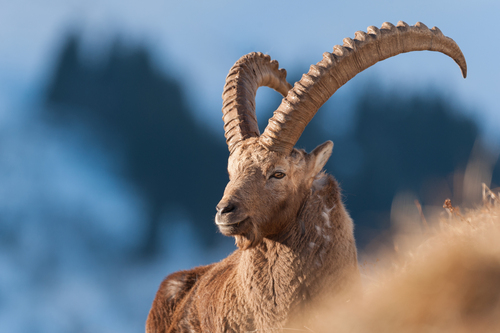
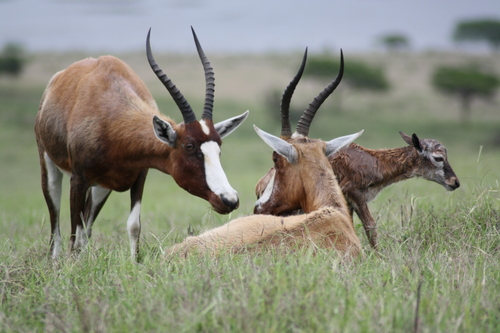
Species that share its range
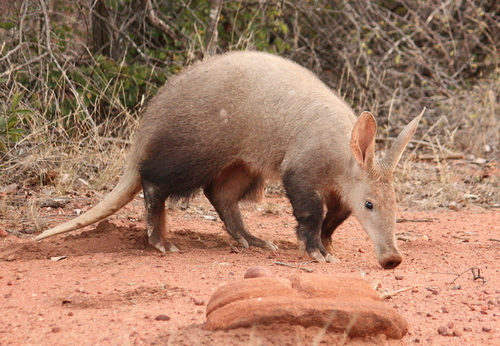
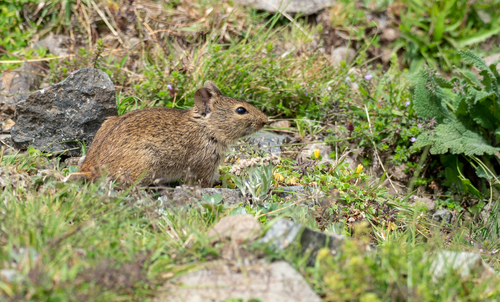

Sources
Conservation status, range description and population estimate come from the IUCN Red List assessment for Alcelaphus buselaphus. Countries are derived from that range description, not from a mapped country list. Last refreshed on .
The distribution map is drawn from the IUCN Red List spatial data compiled in 2016. IUCN (International Union for Conservation of Nature)