
Hairy-footed Flying Squirrel
Belomys pearsonii
Red List assessment
Least Concernon the IUCN Red List
- EXExtinct
- EWExtinct in the Wild
- CRCritically Endangered
- ENEndangered
- VUVulnerable
- NTNear Threatened
- LCLeast Concern
The Hairy-footed Flying Squirrel is recorded in 7 countries across Asia. The IUCN Red List assesses the Hairy-footed Flying Squirrel as Least Concern. No precise global population estimate exists; the species is considered uncommon but not rare, with a presumed stable overall trend despite regional declines.
- Family
- Sciuridae
- Order
- Rodentia
- Genus
- Belomys
- Countries recorded
- 7
- Continents
- Asia
- Red List category
- Least Concern
- Data updated
- August 9, 2026
What is the Hairy-footed Flying Squirrel?
The Hairy-footed Flying Squirrel is a small nocturnal gliding rodent native to montane forests of Asia, notable for the dense hair covering its hind feet, a distinguishing feature among flying squirrels. It uses a furred membrane (patagium) stretched between its limbs to glide between trees. This species plays a role in forest ecosystems as a seed and spore disperser. Despite being classified as Least Concern, habitat loss poses an ongoing threat to local populations.
Where does the Hairy-footed Flying Squirrel live?
Found across the Himalayan region, Southeast Asia, and parts of Taiwan and southern China.
Ranges from the Himalayas (Nepal, India, Bhutan) through northern Myanmar, Vietnam, southern China, and Taiwan, occupying fragmented forest patches across this broad range.
Altitude and depth
Typically found at elevations between 800 and 2400 meters in hill and montane forests.
Seasonal movements
No true hibernation; activity may decrease slightly during colder winter months at higher elevations, with breeding often peaking in spring and autumn.
Habitat of the Hairy-footed Flying Squirrel
Inhabits subtropical and tropical evergreen and mixed broadleaf forests, often in montane and hill regions with dense canopy cover for gliding and nesting.
Adaptations to its environment
Possesses a furred patagium for gliding between trees, reducing energy expenditure and predation risk on the ground. The dense hair on its hind feet may aid in grip and thermoregulation in cooler montane habitats.
Conservation status and numbers
Listed as Least Concern by the IUCN due to its relatively wide distribution and presumed stable population, though it faces localized threats from deforestation.
Estimated population
No precise global population estimate exists; the species is considered uncommon but not rare, with a presumed stable overall trend despite regional declines.
What threatens the Hairy-footed Flying Squirrel?
Habitat loss from logging, agricultural expansion, and forest fragmentation are the primary threats, along with potential hunting pressure in some regions.
Diseases and parasites
Specific data on diseases is limited, but like other rodents it may host ectoparasites such as mites and fleas, as well as internal parasites.
What is being done to protect it?
Protected within various national parks and forest reserves across its range, including protected areas in the Himalayas, Myanmar, and Taiwan; benefits indirectly from broader forest conservation initiatives.
Recommended actions
Continued forest habitat protection, monitoring of population trends in fragmented areas, and further ecological research to clarify subspecies distribution and status.
What the Hairy-footed Flying Squirrel looks like
Soft, dense fur that is generally reddish-brown to grayish on the back with paler, whitish or buff underparts. The tail is bushy and the patagium is furred, blending with the body coloration.
Size
Head-body length typically ranges from 15 to 20 cm, with a tail length of about 12 to 15 cm.
Weight
Average adult body weight ranges from 60 to 120 grams.
Distinctive features
Distinguished from other flying squirrels by the dense tufts of hair covering its hind feet, giving rise to its common name, along with its relatively small size compared to larger gliding squirrel species.
Differences between males and females
Minimal sexual dimorphism; males and females are similar in size and coloration with no pronounced external differences.
Behaviour and diet of the Hairy-footed Flying Squirrel
Generally solitary, coming together only briefly for mating; individuals maintain separate nesting sites within overlapping home ranges.
When it is active
Strictly nocturnal, emerging after dusk to forage and glide between trees, resting in tree hollows or dense foliage during the day.
Diet
Omnivorous diet consisting mainly of nuts, seeds, fruits, buds, and occasionally insects or fungi found in the forest canopy.
How it feeds and hunts
Forages by climbing through the canopy and gliding between trees to reach food sources, using keen night vision and whiskers to locate food in low light.
Communication
Communicates through soft vocalizations, scent marking, and body postures, particularly during mating encounters or territorial interactions.
Interactions with other species
Faces predation from owls, martens, and other forest carnivores; competes with other small nocturnal mammals for similar food resources within its habitat.
Role in its ecosystem
Contributes to forest regeneration through seed dispersal and consumption of fungi, playing a minor but meaningful role in maintaining forest ecosystem health.
Reproduction and lifecycle
Breeding likely occurs in spring and possibly again in autumn, with gestation lasting approximately 40 days and litters typically consisting of 1 to 3 young.
Raising the young
Females raise the young alone in a nest built in a tree hollow, nursing and protecting them until they are capable of independent gliding and foraging, usually within a few months.
Maturity and lifespan
Sexual maturity is likely reached around 1 year of age; lifespan in the wild is estimated at 3 to 5 years, potentially longer in captivity.
Taxonomy and naming of the Hairy-footed Flying Squirrel
Classification
Mammalia > Rodentia > Sciuridae > Belomys > Belomys pearsonii
Subspecies
Several subspecies recognized including B. p. pearsonii (Himalayas), B. p. trichotis (Southeast Asia), and B. p. kaleensis (Taiwan), differing slightly in fur coloration and size.
Scientific synonyms
Pteromys pearsonii (original combination), Sciuropterus pearsonii
What research says
Recent studies
Recent taxonomic studies have focused on clarifying subspecies boundaries and phylogenetic relationships within the genus Belomys using morphological and limited genetic data.
Compared with similar species
Compared to the larger Petaurista flying squirrels, Belomys pearsonii is notably smaller and has furred feet, whereas most other flying squirrel genera lack this dense foot hair.
The Hairy-footed Flying Squirrel and people
Its hairy feet are so distinctive that they give the species its common name, an unusual trait among gliding mammals. It can glide significant distances between trees using its furred membrane, effectively 'flying' through dense forest canopy at night.
Where and how to see it
Best observed at dusk or during the night in montane forests of the Himalayas or Taiwan, using a flashlight to spot movement in the canopy; patience and quiet observation near fruiting trees increase chances of sighting.
Risks to humans
No notable risk to humans; this species is shy, nocturnal, and avoids human contact.
Human uses
No significant documented human use; occasionally noted in local wildlife observation or ecotourism contexts in its native range.
Countries where the Hairy-footed Flying Squirrel is recorded
The 7 countries named in the range description of its IUCN Red List assessment.
Questions about the Hairy-footed Flying Squirrel
Where does the Hairy-footed Flying Squirrel live?
The Hairy-footed Flying Squirrel is recorded in Bhutan, China, India, Myanmar and Nepal, among 7 countries in total across Asia. These countries come from the range description of its IUCN Red List assessment, and they are what place the species on the interactive map.
Is the Hairy-footed Flying Squirrel endangered?
The IUCN Red List assesses the Hairy-footed Flying Squirrel as Least Concern. The species is widespread and abundant enough not to qualify for any threatened category. It does not mean the species is safe forever, only that nothing in the current data raises an alarm.
How many are left in the wild?
No precise global population estimate exists; the species is considered uncommon but not rare, with a presumed stable overall trend despite regional declines. This figure comes from the species assessment on the IUCN Red List; population estimates for wild mammals are ranges, not counts, and are revised at each assessment.
What habitat does the Hairy-footed Flying Squirrel live in?
Inhabits subtropical and tropical evergreen and mixed broadleaf forests, often in montane and hill regions with dense canopy cover for gliding and nesting.
What is the scientific name of the Hairy-footed Flying Squirrel?
The Hairy-footed Flying Squirrel is Belomys pearsonii, in the family Sciuridae, order Rodentia.
Other species in the family Sciuridae
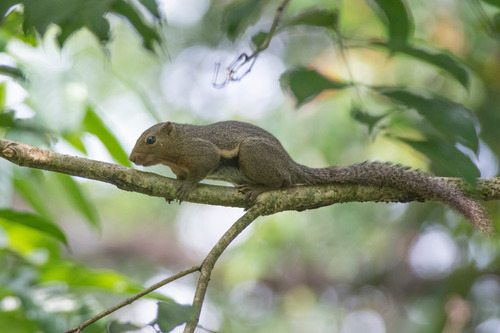
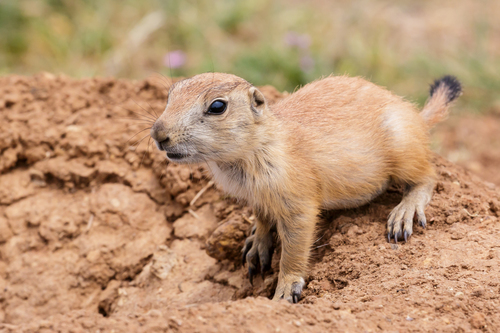
Species that share its range
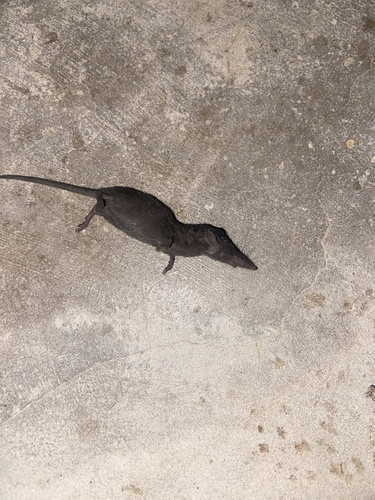
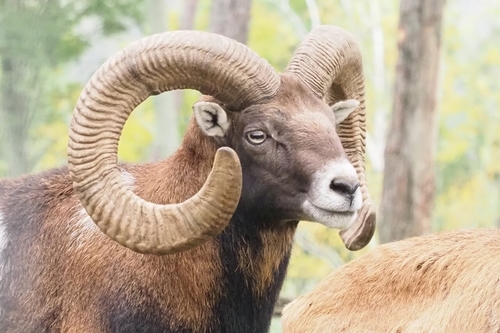
Sources
Conservation status, range description and population estimate come from the IUCN Red List assessment for Belomys pearsonii. Countries are derived from that range description, not from a mapped country list. Last refreshed on .
The distribution map is drawn from the IUCN Red List spatial data compiled in 2016. IUCN (International Union for Conservation of Nature)