
European Rabbit
Oryctolagus cuniculus
Red List assessment
Endangeredon the IUCN Red List
- EXExtinct
- EWExtinct in the Wild
- CRCritically Endangered
- ENEndangered
- VUVulnerable
- NTNear Threatened
- LCLeast Concern
The European Rabbit is recorded in 7 countries across Europe, South America and Oceania. The IUCN Red List assesses the European Rabbit as Endangered. Native Iberian populations have declined by over 80% since the mid-20th century, with estimates suggesting significant ongoing decline, while global introduced populations remain in the hundreds of millions and are often stable or increasing.
- Family
- Leporidae
- Order
- Lagomorpha
- Genus
- Oryctolagus
- Countries recorded
- 7
- Continents
- Europe, South America and Oceania
- Red List category
- Endangered
- Data updated
- August 9, 2026
What is the European Rabbit?
The European Rabbit is a small, burrowing lagomorph native to the Iberian Peninsula, renowned for its highly social burrow systems called warrens. It is the wild ancestor of all domestic rabbit breeds and has been introduced globally, often becoming a major ecological force—both as prey and as an invasive species. Despite its abundance in introduced ranges, native populations have declined dramatically due to disease and habitat loss.
Where does the European Rabbit live?
Native to the Iberian Peninsula (Spain and Portugal) and southern France; introduced widely across Europe, Australia, New Zealand, and South America.
Native range covers Spain, Portugal, and southern France; introduced populations now exist across most of Europe, the UK, Australia, New Zealand, Chile, and various islands worldwide.
Altitude and depth
Typically found from sea level up to about 800-1000 meters, though can occur higher in suitable habitat.
Seasonal movements
Breeding peaks in spring and can continue into summer depending on climate and food availability; no true hibernation occurs, but activity may decrease during extreme heat or cold.
Habitat of the European Rabbit
Prefers open grasslands, scrublands, heathlands, and agricultural edges with sandy, well-drained soils suitable for digging burrows. Also found in coastal dunes, woodland edges, and Mediterranean maquis vegetation.
Adaptations to its environment
Powerful digging forelimbs and claws allow construction of extensive burrow systems (warrens) providing protection from predators and temperature extremes. Large ears aid in heat dissipation and predator detection, while excellent peripheral vision helps spot threats.
Conservation status and numbers
Endangered (EN) in its native range according to IUCN, primarily due to population crashes from myxomatosis and rabbit hemorrhagic disease combined with habitat degradation; paradoxically abundant or invasive in many introduced regions.
Estimated population
Native Iberian populations have declined by over 80% since the mid-20th century, with estimates suggesting significant ongoing decline, while global introduced populations remain in the hundreds of millions and are often stable or increasing.
What threatens the European Rabbit?
Major threats include viral diseases (myxomatosis, RHD), habitat loss from agricultural intensification, predation pressure, and overhunting in native range areas.
Diseases and parasites
Highly susceptible to myxomatosis and rabbit hemorrhagic disease (RHD), both of which have caused massive population crashes; also hosts various parasites including fleas, ticks, and coccidia.
What is being done to protect it?
Conservation programs in Spain and Portugal include habitat restoration, artificial warren construction, and disease monitoring; the species is also protected under certain regional wildlife laws despite being a pest in other countries.
Recommended actions
Priority actions include disease control research, habitat restoration in native range, reducing pesticide use affecting food plants, and balancing conservation in native areas with population control in invasive ranges.
What the European Rabbit looks like
Fur is generally grey-brown on the back with a lighter, often white or cream-colored underside and tail; ears are relatively short compared to hares, lacking black tips.
Size
Body length typically ranges from 34 to 50 cm, with ears measuring 6-7 cm.
Weight
Adults typically weigh between 1.2 and 2.5 kg, with males and females similar in size.
Distinctive features
Distinguished from hares by smaller size, shorter ears without black tips, altricial (blind and naked) young, and communal burrowing behavior rather than solitary surface nesting.
Differences between males and females
Sexual dimorphism is minimal, though males (bucks) may be slightly larger and more robust than females (does) in some populations.
Behaviour and diet of the European Rabbit
Highly social, living in warrens with complex social hierarchies; group sizes can range from a few individuals to over 20, with dominant males and females controlling breeding access and territory.
When it is active
Primarily crepuscular and nocturnal, with peak activity during dawn and dusk, though daytime activity increases in areas with low predation pressure.
Diet
Strict herbivore feeding on grasses, herbs, leaves, bark, and agricultural crops; diet shifts seasonally based on availability of fresh vegetation.
Communication
Communicates through body language including thumping hind legs as an alarm signal, scent marking via chin glands and droppings, and tail-flashing to signal danger to warren members.
Interactions with other species
Serves as primary prey for numerous predators including foxes, birds of prey, mustelids, and wildcats; its decline has caused cascading effects on predator populations, particularly the Iberian lynx and Spanish imperial eagle.
Role in its ecosystem
Functions as a keystone species in Mediterranean ecosystems, shaping vegetation structure through grazing and providing critical prey base for many specialized predators.
Reproduction and lifecycle
Breeding season extends from early spring through summer, with gestation lasting about 28-33 days; females can produce multiple litters per year, each containing 3-7 kits.
Raising the young
Females line nesting chambers with fur and vegetation, nursing kits once daily for a brief period; young are weaned by 3-4 weeks and reach independence shortly after.
Maturity and lifespan
Sexual maturity is reached at 4-6 months; wild lifespan averages 1-2 years due to high predation, while captive individuals can live 8-12 years.
Taxonomy and naming of the European Rabbit
Classification
Class Mammalia > Order Lagomorpha > Family Leporidae > Genus Oryctolagus > Species Oryctolagus cuniculus
Subspecies
Several subspecies have been described, including O. c. cuniculus (mainland Europe) and O. c. algirus (Iberian Peninsula), though taxonomic boundaries remain debated among researchers.
Scientific synonyms
Lepus cuniculus (Linnaeus, 1758) is the original binomial name later reclassified into the genus Oryctolagus.
What research says
Recent studies
Recent research has focused on genetic resistance to RHD and myxomatosis, as well as conservation genetics of declining native Iberian populations to inform breeding and reintroduction programs.
Genome and DNA
Diploid chromosome number is 44; the species has been extensively studied genetically due to its domestication history and use as a model organism.
Compared with similar species
Compared to the European Hare (Lepus europaeus), rabbits are smaller, more social, live in burrows rather than surface forms, and produce altricial young rather than precocial leverets.
The European Rabbit and people
European Rabbits are the sole ancestor of all domestic rabbit breeds worldwide, from Netherland Dwarfs to Flemish Giants. They can dig warrens with tunnel systems extending over 45 meters, and a single female can theoretically produce dozens of offspring in one year.
Where and how to see it
Best observed at dawn or dusk in open grassland or scrubland areas near warren entrances; Iberian native reserves and British countryside parks offer good viewing opportunities during quieter daylight hours in less disturbed populations.
Risks to humans
No notable risk to humans, though wild rabbits can carry diseases transmissible to domestic rabbits and occasionally zoonotic parasites.
Human uses
Widely used in meat and fur production, as laboratory animals in biomedical research, and as popular domesticated pets in countless breed varieties derived from this wild ancestor.
Myths and legends
Rabbits feature prominently in European folklore as symbols of fertility and quick-wittedness, notably in Aesop's fables and as the origin of Easter Bunny traditions in some cultural interpretations.
Countries where the European Rabbit is recorded
The 7 countries named in the range description of its IUCN Red List assessment.
Questions about the European Rabbit
Where does the European Rabbit live?
The European Rabbit is recorded in Australia, Chile, France, New Zealand and Portugal, among 7 countries in total across Europe, South America and Oceania. These countries come from the range description of its IUCN Red List assessment, and they are what place the species on the interactive map.
Is the European Rabbit endangered?
Yes. The IUCN Red List assesses the European Rabbit as Endangered, one of the three threatened categories. The species faces a very high risk of extinction in the wild — a step below Critically Endangered, but still on a trajectory that ends badly without intervention.
How many are left in the wild?
Native Iberian populations have declined by over 80% since the mid-20th century, with estimates suggesting significant ongoing decline, while global introduced populations remain in the hundreds of millions and are often stable or increasing. This figure comes from the species assessment on the IUCN Red List; population estimates for wild mammals are ranges, not counts, and are revised at each assessment.
What habitat does the European Rabbit live in?
Prefers open grasslands, scrublands, heathlands, and agricultural edges with sandy, well-drained soils suitable for digging burrows.
What is the scientific name of the European Rabbit?
The European Rabbit is Oryctolagus cuniculus, in the family Leporidae, order Lagomorpha.
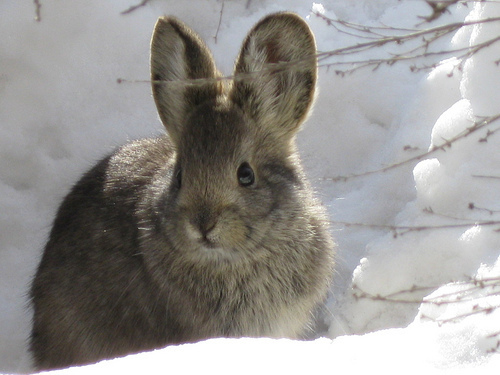
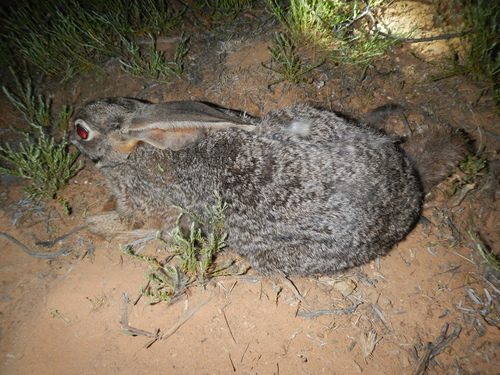
Other species in the family Leporidae
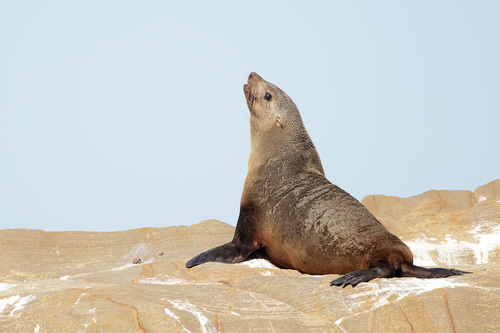
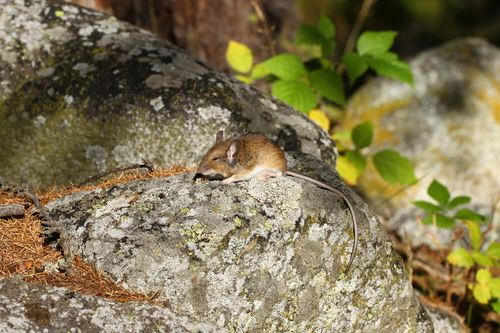
Species that share its range

Sources
Conservation status, range description and population estimate come from the IUCN Red List assessment for Oryctolagus cuniculus. Countries are derived from that range description, not from a mapped country list. Last refreshed on .
The distribution map is drawn from the IUCN Red List spatial data compiled in 2019. IUCN (International Union for Conservation of Nature)