
European Hare
Lepus europaeus
Red List assessment
Least Concernon the IUCN Red List
- EXExtinct
- EWExtinct in the Wild
- CRCritically Endangered
- ENEndangered
- VUVulnerable
- NTNear Threatened
- LCLeast Concern
The European Hare is recorded in 11 countries across Asia, Europe, South America and Oceania. The IUCN Red List assesses the European Hare as Least Concern. Global population is large and stable overall, though exact numbers are unknown; regional populations in Western Europe have declined significantly since the mid-20th century due to land-use changes.
- Family
- Leporidae
- Order
- Lagomorpha
- Genus
- Lepus
- Countries recorded
- 11
- Continents
- Asia, Europe, South America and Oceania
- Red List category
- Least Concern
- Data updated
- August 9, 2026
What is the European Hare?
The European hare is a large, fast-running lagomorph native to open grasslands and farmland across Europe and western Asia. It is renowned for its long ears, powerful hind legs enabling speeds up to 70 km/h, and dramatic 'boxing' courtship displays. Unlike rabbits, hares are born fully furred and mobile, adapting well to agricultural landscapes.
Where does the European Hare live?
Widespread across continental Europe and parts of western Asia, including France, Germany, Poland, Ukraine, and the UK (introduced); also introduced to Argentina, Chile, Australia, New Zealand, and North America.
Native range spans from Western Europe (Spain, France, UK) through Central and Eastern Europe into western Asia (Turkey, Iran, parts of Central Asia). Introduced populations exist in Argentina, Chile, southeastern Australia, New Zealand, and parts of North America.
Altitude and depth
Typically found from sea level up to about 2000 meters in some mountainous farmland regions, though most populations occur below 1000 meters.
Seasonal movements
No true hibernation; hares remain active year-round but show seasonal shifts in diet and breeding intensity, with peak breeding activity from February to September.
Habitat of the European Hare
Prefers open habitats such as farmland, steppe, grassland, meadows, and mixed agricultural-woodland edges; avoids dense forest and mountainous terrain. Thrives in mosaic landscapes offering both cover and open feeding grounds.
Adaptations to its environment
Long muscular hind legs and large lungs/heart enable rapid, sustained sprints to escape predators in open terrain. Large ears aid thermoregulation and predator detection, while a coat that subtly changes density seasonally provides camouflage and insulation.
Conservation status and numbers
Listed as Least Concern by IUCN due to wide distribution and large overall population, though regional declines have been documented, especially in intensively farmed areas of Western Europe.
Estimated population
Global population is large and stable overall, though exact numbers are unknown; regional populations in Western Europe have declined significantly since the mid-20th century due to land-use changes.
What threatens the European Hare?
Agricultural intensification, pesticide use, habitat fragmentation, hunting pressure, and predation by foxes and birds of prey are major threats. Disease outbreaks such as European Brown Hare Syndrome also impact local populations.
Diseases and parasites
Susceptible to European Brown Hare Syndrome (EBHSV), myxomatosis (less commonly than rabbits), and various internal parasites such as coccidia and nematodes.
What is being done to protect it?
Some countries regulate hunting seasons and bag limits, and agri-environment schemes promote hedgerows and set-aside land to benefit hares. Monitoring programs track population trends in the UK, France, and Germany.
Recommended actions
Recommended actions include reducing pesticide use, maintaining field margins and hedgerows, regulating hunting quotas, and expanding habitat connectivity in farmland landscapes.
What the European Hare looks like
The coat is tawny-brown to grayish-brown with a paler underside, black-tipped ears, and a black upper tail surface contrasting with a white underside. The body is lean and muscular with notably long hind legs adapted for speed.
Size
Body length typically ranges from 60 to 75 cm, with ears measuring 9.4 to 11 cm long.
Weight
Adults typically weigh between 2.5 and 5 kg, with females often slightly heavier than males.
Distinctive features
Distinguished from rabbits by larger size, longer ears with black tips, longer hind legs, and solitary above-ground nesting habits (forms). Compared to the mountain hare, it has a longer tail and does not turn white in winter.
Differences between males and females
Sexual dimorphism is minimal, though females (jills) are generally slightly larger and heavier than males (bucks).
Behaviour and diet of the European Hare
Largely solitary or loosely social, though hares may gather in small groups during the breeding season known as 'March madness' displays. No strict social hierarchy is maintained outside of breeding interactions.
When it is active
Primarily crepuscular and nocturnal, resting during the day in shallow depressions called 'forms' and becoming active at dusk and dawn to feed.
Diet
Herbivorous, feeding on grasses, herbs, crops, and agricultural plants; in winter it may consume bark, twigs, and buds when other vegetation is scarce.
Communication
Communication includes body language such as thumping, boxing displays during courtship, and soft vocalizations; scent marking via glands also plays a role in social and reproductive signaling.
Interactions with other species
Predators include foxes, birds of prey (eagles, buzzards), and domestic dogs, while young leverets are vulnerable to a wider range of predators including corvids. Hares often share farmland habitats with rabbits, though direct competition is limited due to differing behaviors.
Role in its ecosystem
As a key herbivore in open grassland and farmland ecosystems, the European hare influences vegetation structure and serves as an important prey species supporting predator populations. It also contributes to nutrient cycling through grazing activity.
Reproduction and lifecycle
Breeding season runs from February to September, with females capable of producing 3-4 litters per year after a gestation period of about 42 days. Litters typically consist of 1-4 leverets, which are born fully furred and mobile.
Raising the young
Females provide minimal direct care, visiting leverets briefly once daily to nurse, as young are precocial and hidden separately to avoid predation. Weaning occurs within about 3-4 weeks, after which juveniles become independent.
Maturity and lifespan
Sexual maturity is reached at around 7-8 months; wild lifespan averages 3-4 years, though individuals can live up to 12 years in favorable conditions with low predation.
Taxonomy and naming of the European Hare
Classification
Class Mammalia > Order Lagomorpha > Family Leporidae > Genus Lepus > Species Lepus europaeus
Subspecies
Several subspecies recognized, including L. e. europaeus (central Europe), L. e. hybridus, L. e. caspicus, and L. e. cyprius (Cyprus), though taxonomy remains debated with some regional forms possibly synonymous.
Scientific synonyms
Lepus timidus var. europaeus (historical usage); occasionally confused taxonomically with Lepus capensis (Cape hare) in older literature.
What research says
Recent studies
Recent research has focused on population decline drivers linked to agricultural intensification and pesticide exposure, as well as genetic studies assessing hybridization between native and introduced hare populations.
Genome and DNA
The European hare has a diploid chromosome number of 2n=48; genetic studies have been used to examine hybridization risks with introduced or related hare species.
Compared with similar species
Compared to the mountain hare (Lepus timidus), the European hare is larger, has longer ears and legs, and does not molt to a white winter coat. It differs from rabbits (Oryctolagus cuniculus) by its solitary lifestyle, larger size, and precocial young.
The European Hare and people
European hares can reach speeds of up to 70 km/h, making them one of the fastest land mammals in Europe. Their famous 'boxing' behavior during breeding season is often between a female fending off an overeager male rather than two competing males.
Where and how to see it
Best observed at dawn or dusk in open farmland or grassland during early spring, when boxing and courtship behaviors are most visible. Quiet, patient observation from a distance with binoculars increases chances of sightings without disturbing the animal.
Risks to humans
No notable risk to humans; European hares are non-aggressive and pose no direct threat aside from minor crop damage in agricultural areas.
Human uses
Hunted historically and currently for meat and sport across much of Europe, and occasionally used in traditional cuisine. It has also been introduced to various countries for game hunting purposes.
Myths and legends
The hare has long been associated with fertility, the moon, and springtime in European folklore, inspiring symbols such as the Easter Bunny tradition. In Celtic mythology, hares were sometimes considered sacred or linked to shape-shifting witches.
Countries where the European Hare is recorded
The 11 countries named in the range description of its IUCN Red List assessment.
Questions about the European Hare
Where does the European Hare live?
The European Hare is recorded in Argentina, Australia, Chile, France and Germany, among 11 countries in total across Asia, Europe, South America and Oceania. These countries come from the range description of its IUCN Red List assessment, and they are what place the species on the interactive map.
Is the European Hare endangered?
The IUCN Red List assesses the European Hare as Least Concern. The species is widespread and abundant enough not to qualify for any threatened category. It does not mean the species is safe forever, only that nothing in the current data raises an alarm.
How many are left in the wild?
Global population is large and stable overall, though exact numbers are unknown; regional populations in Western Europe have declined significantly since the mid-20th century due to land-use changes. This figure comes from the species assessment on the IUCN Red List; population estimates for wild mammals are ranges, not counts, and are revised at each assessment.
What habitat does the European Hare live in?
Prefers open habitats such as farmland, steppe, grassland, meadows, and mixed agricultural-woodland edges; avoids dense forest and mountainous terrain.
What is the scientific name of the European Hare?
The European Hare is Lepus europaeus, in the family Leporidae, order Lagomorpha.
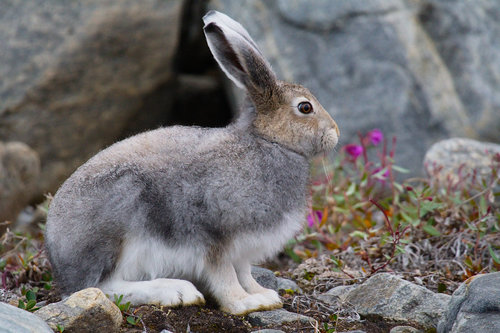
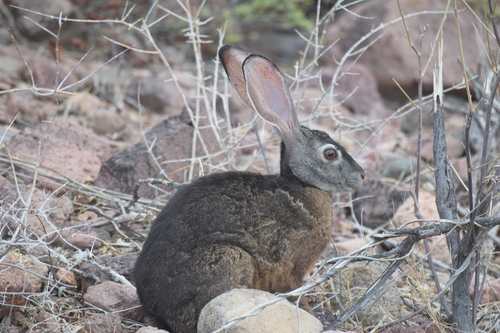
Other species in the genus Lepus
Other species in the family Leporidae
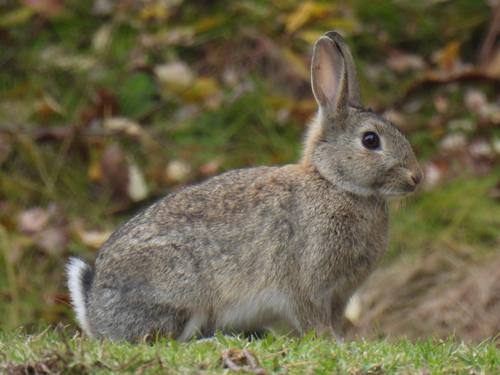
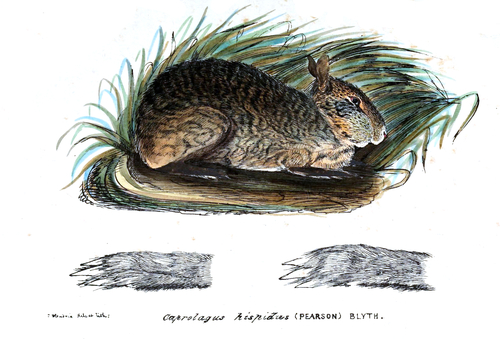
Sources
Conservation status, range description and population estimate come from the IUCN Red List assessment for Lepus europaeus. Countries are derived from that range description, not from a mapped country list. Last refreshed on .
The distribution map is drawn from the IUCN Red List spatial data compiled in 2019. IUCN (International Union for Conservation of Nature)