
Eurasian Lynx
Lynx lynx
Red List assessment
Least Concernon the IUCN Red List
- EXExtinct
- EWExtinct in the Wild
- CRCritically Endangered
- ENEndangered
- VUVulnerable
- NTNear Threatened
- LCLeast Concern
The Eurasian Lynx is recorded in 3 countries across Asia and Europe. The IUCN Red List assesses the Eurasian Lynx as Least Concern. Global population estimated at around 50,000-70,000 individuals, with the majority residing in Russia; overall trend considered stable, though some European subpopulations remain small and vulnerable.
- Family
- Felidae
- Order
- Carnivora
- Genus
- Lynx
- Countries recorded
- 3
- Continents
- Asia and Europe
- Red List category
- Least Concern
- Data updated
- August 9, 2026
What is the Eurasian Lynx?
The Eurasian lynx is the largest of the four lynx species and one of the most widely distributed wild cats in the world, ranging from Western Europe to Siberia and Central Asia. It is a solitary, elusive forest predator known for its tufted ears, short tail, and powerful hind legs adapted for pouncing. Remarkably adaptable, it thrives in dense forests, mountains, and even semi-arid steppe habitats. Conservation reintroduction programs have successfully restored populations in several European countries where it had been extirpated.
Where does the Eurasian Lynx live?
Northern, Central and Eastern Europe, Russia, Central Asia, and parts of East Asia including China and the Himalayan region
Found across Scandinavia, the Baltic states, Eastern Europe, the Carpathians, the Balkans, and extensively throughout Russia and Siberia into Central Asia, Mongolia, China, and the Himalayas. Reintroduced populations exist in the Alps, Jura Mountains, Vosges, and Harz Mountains of Western/Central Europe.
Altitude and depth
Sea level up to approximately 5,500 m in the Himalayas, though most populations occur below 2,000 m.
Seasonal movements
No true hibernation or migration, but lynx may shift home range use seasonally following prey movements, particularly ungulates that migrate to lower elevations in winter.
Habitat of the Eurasian Lynx
Primarily inhabits temperate and boreal forests with dense undergrowth for cover, but also occupies mountainous terrain, rocky areas, and steppe-forest ecotones. Prefers habitats with abundant ungulate prey and low human disturbance.
Adaptations to its environment
Large, padded paws act as natural snowshoes for moving through deep snow, while a thick winter coat provides insulation in cold climates. Ear tufts and facial ruffs enhance hearing, aiding in detecting prey in dense vegetation.
Conservation status and numbers
Listed as Least Concern by the IUCN due to a large overall range and stable-to-increasing population trend in much of its range, though some regional populations (e.g., Western Europe) remain small and fragmented and are of conservation concern.
Estimated population
Global population estimated at around 50,000-70,000 individuals, with the majority residing in Russia; overall trend considered stable, though some European subpopulations remain small and vulnerable.
What threatens the Eurasian Lynx?
Habitat fragmentation and loss due to logging and infrastructure development, illegal poaching for fur, road mortality, and conflict with livestock farmers are the main threats. Genetic isolation in small reintroduced populations is also a concern.
Diseases and parasites
Susceptible to feline diseases such as feline leukemia and various parasites including ticks, mites, and intestinal helminths; mange can be a serious issue in some populations.
What is being done to protect it?
Protected under CITES Appendix II and various national wildlife laws; reintroduction programs have been implemented in Switzerland, Germany, France, Austria, and the Balkans. Habitat corridors and monitoring programs help maintain genetic connectivity between fragmented populations.
Recommended actions
Continued habitat connectivity efforts, stricter anti-poaching enforcement, compensation schemes for livestock losses to reduce human-wildlife conflict, and genetic management of small isolated populations are recommended priorities.
What the Eurasian Lynx looks like
Thick, soft fur ranges from yellowish-brown to grey, often with dark spots that vary in prominence by subspecies and season. Distinctive black ear tufts, a short 'bobbed' black-tipped tail, and long facial ruffs give it a highly recognizable silhouette.
Size
Body length typically 80-130 cm, with shoulder height of 60-75 cm; tail is short, around 11-24.5 cm.
Weight
Males typically weigh 18-30 kg, while females are somewhat smaller at 14-21 kg, though northern populations can be considerably heavier.
Distinctive features
Larger overall size, longer legs, and less prominent spotting compared to other lynx species like the bobcat or Iberian lynx; prominent ear tufts and facial ruff are especially pronounced in this species.
Differences between males and females
Males are generally 20-40% larger and heavier than females, though coloration and markings are similar between sexes.
Behaviour and diet of the Eurasian Lynx
Highly solitary and territorial outside of breeding season, with individuals maintaining exclusive home ranges that may overlap slightly between sexes. Social interactions are limited mainly to mating encounters and mother-offspring bonds.
When it is active
Primarily crepuscular and nocturnal, with peak activity during dawn and dusk hours, though it can be active during the day in undisturbed areas.
Diet
Carnivorous, with roe deer being the primary prey across much of its range, supplemented by other ungulates, hares, rodents, and occasionally birds. In areas with larger ungulates, lynx may also take young red deer or chamois.
How it feeds and hunts
Relies on stealth and stalking, using dense cover to approach prey closely before a short, powerful pounce; does not pursue prey over long distances like some other predators.
Communication
Communicates through scent marking (urine spraying, scratching), visual signals such as body posture, and vocalizations including growls, hisses, and characteristic caterwauling during the mating season.
Interactions with other species
Occasionally competes with wolves and other large carnivores for prey and may have its kills scavenged by these species; adult lynx have few natural predators, though cubs can fall prey to wolves or other lynx.
Role in its ecosystem
Functions as an apex or meso-predator depending on region, playing a key role in regulating ungulate populations, particularly roe deer, which helps maintain forest ecosystem balance.
Reproduction and lifecycle
Mating occurs in late winter (February-April), with a gestation period of about 67-74 days leading to a litter of typically 2-3 kittens born in spring. Kittens are weaned around 5-6 months but may remain with the mother until nearly a year old.
Raising the young
Females raise young entirely alone, providing all care including nursing, protection, and teaching hunting skills until independence at around 10 months of age. Males play no role in rearing offspring.
Maturity and lifespan
Sexual maturity is typically reached at 2-3 years of age; average lifespan in the wild is around 10-15 years, while captive individuals can live up to 20 years.
Taxonomy and naming of the Eurasian Lynx
Classification
Mammalia > Carnivora > Felidae > Lynx > Lynx lynx
Subspecies
Several subspecies recognized including L. l. lynx (Northern Europe/Russia), L. l. carpathicus (Carpathians), L. l. balcanicus (Balkans), L. l. isabellinus (Central Asia), L. l. wrangeli (Siberia/Far East), and L. l. kozlovi (Central Siberia); taxonomy debated with some authorities recognizing fewer subspecies.
Scientific synonyms
Felis lynx (original Linnaean name)
What research says
Recent studies
Recent research has focused on genetic diversity monitoring of reintroduced Western European populations and camera-trap based population estimates, revealing insights into dispersal patterns and habitat connectivity needs.
Genome and DNA
Diploid chromosome number is 2n=38; genetic studies have been used to assess population structure and inform reintroduction and management strategies across fragmented European populations.
Compared with similar species
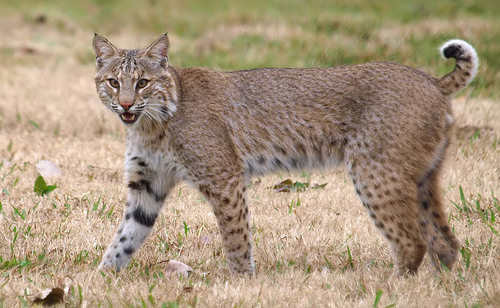
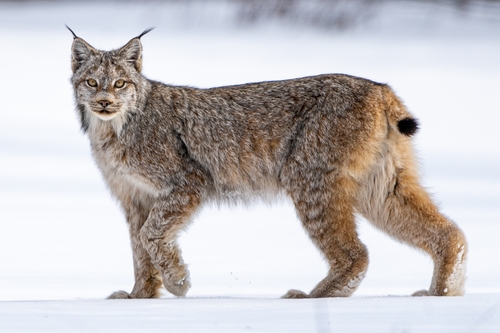
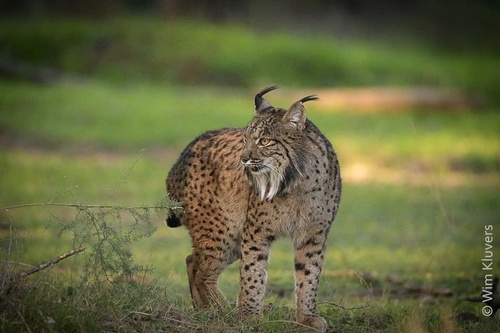
Compared to the smaller Iberian lynx, the Eurasian lynx has less distinct spotting and a wider prey base; it is also notably larger than the North American bobcat and Canada lynx, with longer legs suited for deep snow.
The Eurasian Lynx and people
Eurasian lynx can leap up to several meters in a single bound to ambush prey, and their exceptional hearing allows them to detect prey movement from significant distances. Despite their wide range, they are so elusive that many people who live near lynx populations never see one in the wild.
Where and how to see it
Best observed in areas like the Carpathian Mountains, Scandinavian forests, or Swiss/French Jura reintroduction zones, typically at dawn or dusk during winter when tracks in snow reveal presence. Patience and use of camera traps or guided wildlife tours greatly increase chances of sighting.
Risks to humans
No notable risk; Eurasian lynx are shy and avoid human contact, with no recorded cases of unprovoked attacks on people.
Human uses
Historically hunted for its fur, which was highly valued in the fur trade; today it holds significant value for ecotourism and is a flagship species for rewilding and conservation initiatives in Europe.
Myths and legends
In European folklore, the lynx was historically associated with keen eyesight and secrecy, sometimes believed to have the ability to see through solid objects; it appears in various regional myths as a mysterious forest spirit.
Countries where the Eurasian Lynx is recorded
The 3 countries named in the range description of its IUCN Red List assessment.
Questions about the Eurasian Lynx
Where does the Eurasian Lynx live?
The Eurasian Lynx is recorded in China, Mongolia and Russia across Asia and Europe. These countries come from the range description of its IUCN Red List assessment, and they are what place the species on the interactive map.
Is the Eurasian Lynx endangered?
The IUCN Red List assesses the Eurasian Lynx as Least Concern. The species is widespread and abundant enough not to qualify for any threatened category. It does not mean the species is safe forever, only that nothing in the current data raises an alarm.
How many are left in the wild?
Global population estimated at around 50,000-70,000 individuals, with the majority residing in Russia; overall trend considered stable, though some European subpopulations remain small and vulnerable. This figure comes from the species assessment on the IUCN Red List; population estimates for wild mammals are ranges, not counts, and are revised at each assessment.
What habitat does the Eurasian Lynx live in?
Primarily inhabits temperate and boreal forests with dense undergrowth for cover, but also occupies mountainous terrain, rocky areas, and steppe-forest ecotones.
What is the scientific name of the Eurasian Lynx?
The Eurasian Lynx is Lynx lynx, in the family Felidae, order Carnivora.
Other species in the genus Lynx
Other species in the family Felidae

Species that share its range

Sources
Conservation status, range description and population estimate come from the IUCN Red List assessment for Lynx lynx. Countries are derived from that range description, not from a mapped country list. Last refreshed on .
The distribution map is drawn from the IUCN Red List spatial data compiled in 2015. International Union for the Conservation of Nature