
Bolivian Big-eared Mouse
Auliscomys boliviensis
Red List assessment
Least Concernon the IUCN Red List
- EXExtinct
- EWExtinct in the Wild
- CRCritically Endangered
- ENEndangered
- VUVulnerable
- NTNear Threatened
- LCLeast Concern
The Bolivian Big-eared Mouse is recorded in 4 countries across South America. The IUCN Red List assesses the Bolivian Big-eared Mouse as Least Concern. No precise global population estimate exists.
- Family
- Cricetidae
- Order
- Rodentia
- Genus
- Auliscomys
- Countries recorded
- 4
- Continents
- South America
- Red List category
- Least Concern
- Data updated
- August 9, 2026
What is the Bolivian Big-eared Mouse?
The Bolivian Big-eared Mouse is a medium-sized sigmodontine rodent named for its notably large, rounded pinnae, which are distinctive even among related big-eared mice. It inhabits the extreme high-altitude puna grasslands and rocky slopes of the central Andes, typically above 3,500 meters. This species is remarkable for its physiological and morphological adaptations allowing survival in one of the harshest terrestrial environments on Earth, characterized by low oxygen, intense UV radiation, and freezing nighttime temperatures. It belongs to a small genus (Auliscomys) endemic to the Andes and is considered a model for high-altitude mammalian ecophysiology.
Where does the Bolivian Big-eared Mouse live?
High Andes of Bolivia, southern Peru, and possibly northern Chile and northwestern Argentina
Distributed across the Bolivian altiplano (departments of La Paz, Oruro, and Potosí), extending into the Puno region of southern Peru, and possibly into the Atacama puna of extreme northern Chile and the puna of northwestern Argentina (Jujuy, Salta). The range is centered on the central Andean plateau between approximately 15°S and 23°S latitude.
Altitude and depth
Typically found between 3,500 and 5,000 meters above sea level; most records cluster between 3,800 and 4,800 m, well within the puna and suprapuna zones.
Seasonal movements
No long-distance seasonal migrations are documented. The species may show reduced above-ground activity during the coldest and driest austral winter months (June–August), potentially retreating to burrows or rocky refuges, but true hibernation has not been confirmed.
Habitat of the Bolivian Big-eared Mouse
Primarily puna grasslands (high-altitude South American steppe) dominated by bunch grasses such as Stipa and Festuca (ichu). Also found in rocky outcrops, boulder fields, and shrubby areas with Polylepis or Parastrephia at the margins of high Andean plateaus. The species avoids dense forest and lowland habitats.
Adaptations to its environment
The large ears may enhance acoustic detection of predators in open grassland terrain and could play a role in thermoregulation. The pelage is dense and soft, providing insulation against sub-zero nighttime temperatures. High-altitude rodents in this group are suspected to have hemoglobin variants with increased oxygen affinity, aiding respiration at low partial pressures of O₂. Kidney physiology is likely adapted to conserve water in the dry puna environment.
Conservation status and numbers
Least Concern (LC) on the IUCN Red List. The species has a sufficiently wide distribution across the Bolivian and Peruvian altiplano, and no evidence of rapid population decline has been detected. Its habitat, though harsh, remains relatively intact across large portions of its range.
Estimated population
No precise global population estimate exists. The species is considered locally common within suitable habitat patches; population trend is presumed stable based on the absence of significant habitat loss across most of its range.
What threatens the Bolivian Big-eared Mouse?
Overgrazing by domestic livestock (llamas, alpacas, sheep) degrades puna grassland structure and reduces food and cover availability. Agricultural expansion at altitude and changes in land use near human settlements pose localized threats. Climate change may alter precipitation patterns and vegetation composition in the puna, potentially affecting food resources over the long term.
Diseases and parasites
Like other Andean sigmodontine rodents, it is likely host to a variety of ectoparasites (fleas, mites, lice) and endoparasites (nematodes, cestodes). Some South American sigmodontines serve as reservoir hosts for hantaviruses, though specific records for A. boliviensis are not confirmed in the literature.
What is being done to protect it?
Portions of the species' range fall within protected areas such as Sajama National Park (Bolivia), Lauca National Park (Chile), and the Titicaca National Reserve (Peru). Bolivia and Peru have general wildlife protection legislation covering native rodents, though enforcement is limited in remote altiplano areas.
Recommended actions
Long-term population monitoring using standardized live-trapping surveys is needed to detect trends. Reduction of overgrazing pressure through sustainable pastoralism programs would benefit habitat quality. Research into the species' physiological adaptations and genetic diversity across its range is recommended to inform conservation planning under climate change scenarios.
What the Bolivian Big-eared Mouse looks like
The dorsal pelage is soft and dense, ranging from ochre-brown to grayish-brown, often with a buffy or tawny wash; the venter is paler, whitish to creamy. The ears are large, rounded, and only lightly furred. The tail is bicolored (darker above, paler below) and moderately haired. The hindfeet are broad and well-padded, suited to rocky terrain.
Size
Head-body length approximately 100–145 mm; tail length approximately 70–110 mm (shorter than or subequal to body length); ear length notably large at 22–30 mm.
Weight
Typically 50–110 g; no marked sexual size dimorphism has been documented, with both sexes falling within a similar weight range.
Distinctive features
The combination of very large, rounded ears, a relatively short bicolored tail, broad hindfeet, and dense ochre-brown dorsal fur distinguishes Auliscomys boliviensis from sympatric rodents. Compared to the closely related A. micropus, A. boliviensis tends to have warmer, more brownish dorsal coloration and occurs at overlapping but typically higher altitudes.
Differences between males and females
Sexual dimorphism is minimal in this species; males and females are similar in body size, weight, and coloration. Females have multiple pairs of mammae consistent with potential for moderate litter sizes.
Behaviour and diet of the Bolivian Big-eared Mouse
Believed to be primarily solitary outside of the breeding season, as is typical for most sigmodontine rodents. Individuals maintain individual home ranges within suitable grassland or rocky habitat patches. No evidence of complex social hierarchies or colonial living has been documented.
When it is active
Predominantly nocturnal to crepuscular, with peak activity occurring after dusk and before dawn. This pattern likely reduces exposure to diurnal avian predators and extreme daytime UV radiation in the open puna.
Diet
Strictly herbivorous; the diet consists of seeds, green plant material (grasses, forbs, and herbs), and possibly roots and tubers. Bunch grasses of the genera Stipa and Festuca are likely primary food sources, supplemented by high-Andean forbs and possibly dried plant material during the dry season.
How it feeds and hunts
Not applicable; the species is a strict herbivore. Foraging involves searching among grass tussocks and rocky crevices for seeds and plant material, likely using olfaction and memory of productive patches.
Communication
Communication likely involves ultrasonic vocalizations (common among small rodents) for social and reproductive signaling, as well as scent marking using urine and glandular secretions to demarcate home ranges and signal reproductive status. Body postures and tactile interactions may occur during agonistic or mating encounters.
Interactions with other species
Natural predators include Andean foxes (Lycalopex culpaeus), pampas cats (Leopardus colocola), various diurnal raptors such as the Andean hawk (Geranoaetus melanoleucus), and owls including the barn owl (Tyto alba). The species competes for resources with other co-occurring sigmodontine rodents such as Akodon spp. and Phyllotis spp.
Role in its ecosystem
As an herbivore, the Bolivian Big-eared Mouse contributes to seed dispersal and may influence vegetation structure through selective grazing. It serves as an important prey item for mid- and apex-level predators in the high Andean food web, linking primary production to higher trophic levels.
Reproduction and lifecycle
Reproductive seasonality is not precisely documented but likely peaks during the austral summer (November–March) when food resources are most abundant. Litter sizes in closely related Auliscomys species range from 2 to 5 young; gestation is estimated at approximately 21–28 days as typical for sigmodontine rodents.
Raising the young
Altricial young are born in a nest constructed in a rock crevice or burrow and are cared for primarily by the mother. Weaning likely occurs at 3–4 weeks of age. Paternal involvement, if any, is not well documented.
Maturity and lifespan
Sexual maturity is probably reached at approximately 2–3 months of age, consistent with other sigmodontine rodents of similar body size. Wild lifespan is estimated at 1–2 years; captive individuals of related species have survived up to 3–4 years.
Taxonomy and naming of the Bolivian Big-eared Mouse
Classification
Mammalia > Rodentia > Cricetidae (Sigmodontinae) > Auliscomys > Auliscomys boliviensis (Waterhouse, 1846)
Scientific synonyms
Originally described as Phyllotis boliviensis Waterhouse, 1846; also referred to under the broader Phyllotis complex before Auliscomys was recognized as a distinct genus by Osgood, 1915.
What research says
Recent studies
A 2015 molecular phylogenetic study of Phyllotini confirmed the monophyly of Auliscomys and clarified its relationship to genera such as Phyllotis and Loxodontomys. Research into high-altitude adaptations in Andean sigmodontines has highlighted this genus as relevant to understanding convergent evolution of physiological traits. Distributional surveys in Bolivia and Peru have periodically confirmed the species' presence across the altiplano.
Genome and DNA
The diploid chromosome number for Auliscomys boliviensis has been reported as 2n = 52, with a fundamental number (NF) of approximately 52–56, but published karyological data remain limited. Molecular phylogenetic studies place Auliscomys within the tribe Phyllotini of Sigmodontinae.
Compared with similar species
Auliscomys boliviensis is most closely related to A. micropus (Southern Big-eared Mouse) of Argentina and Chile, which has grayer dorsal coloration and a slightly more southerly distribution. A. pictus (Painted Big-eared Mouse) of coastal Peru is more strikingly patterned. Compared to the superficially similar Phyllotis species, Auliscomys generally has broader hindfeet, a shorter tail relative to body length, and softer fur.
The Bolivian Big-eared Mouse and people
The Bolivian Big-eared Mouse lives at altitudes where human mountaineers require supplemental oxygen, yet thrives without any technological assistance. Its large ears are not just for hearing — in cold Andean nights, blood vessel networks in the ear pinnae may help fine-tune heat exchange. As a member of the exclusively Andean genus Auliscomys, it is part of a radiation that evolved entirely within one of the world's most recently uplifted mountain systems, the Andes having reached their current height only in the last few million years.
Where and how to see it
The best chances of encountering this species are on the Bolivian altiplano near Sajama, around Lake Titicaca's Peruvian shores (Puno region), or in the puna zones of the Lauca National Park in Chile. Nighttime surveys with headlamps along rocky grassland edges are most productive. Live-trapping with Sherman traps baited with oats or seeds, set at dusk and checked at dawn, is the standard method used by field researchers.
Risks to humans
No notable risk to humans under normal circumstances. As with all wild rodents in the Andes, precautionary hygiene is advisable when handling individuals due to the theoretical risk of rodent-borne pathogens, but no confirmed disease transmission from this species to humans has been documented.
Human uses
No known commercial, agricultural, or traditional medicinal use. The species occasionally appears in scientific collections as a museum specimen for taxonomic and ecological research. It has no documented use in the pet trade.
Myths and legends
No specific myths or legends have been documented for this species among Andean indigenous cultures. Small rodents as a group, however, occasionally appear in Andean oral traditions as clever or resourceful animals, and their burrowing behavior has been associated symbolically with the underworld (ukhu pacha) in Quechua cosmology.
Countries where the Bolivian Big-eared Mouse is recorded
The 4 countries named in the range description of its IUCN Red List assessment.
Questions about the Bolivian Big-eared Mouse
Where does the Bolivian Big-eared Mouse live?
The Bolivian Big-eared Mouse is recorded in Argentina, Bolivia, Chile and Peru across South America. These countries come from the range description of its IUCN Red List assessment, and they are what place the species on the interactive map.
Is the Bolivian Big-eared Mouse endangered?
The IUCN Red List assesses the Bolivian Big-eared Mouse as Least Concern. The species is widespread and abundant enough not to qualify for any threatened category. It does not mean the species is safe forever, only that nothing in the current data raises an alarm.
How many are left in the wild?
No precise global population estimate exists. This figure comes from the species assessment on the IUCN Red List; population estimates for wild mammals are ranges, not counts, and are revised at each assessment.
What habitat does the Bolivian Big-eared Mouse live in?
Primarily puna grasslands (high-altitude South American steppe) dominated by bunch grasses such as Stipa and Festuca (ichu).
What is the scientific name of the Bolivian Big-eared Mouse?
The Bolivian Big-eared Mouse is Auliscomys boliviensis, in the family Cricetidae, order Rodentia.
Other species in the genus Auliscomys
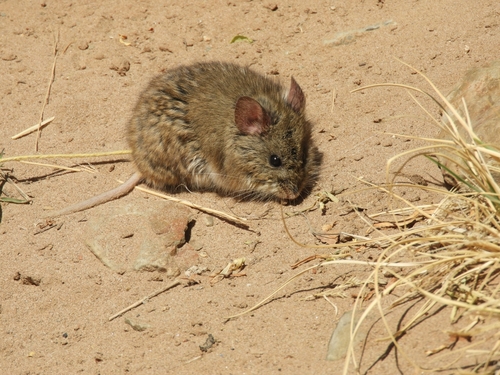
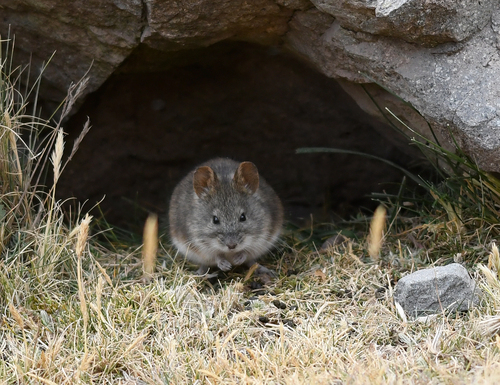
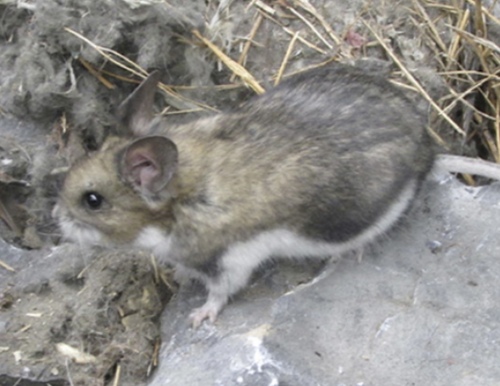
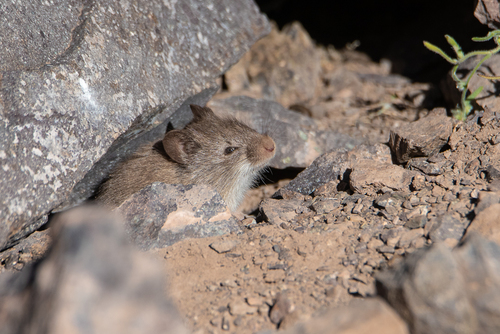
Other species in the family Cricetidae
Species that share its range

Sources
Conservation status, range description and population estimate come from the IUCN Red List assessment for Auliscomys boliviensis. Countries are derived from that range description, not from a mapped country list. Last refreshed on .
The distribution map is drawn from the IUCN Red List spatial data compiled in 2008. IUCN (International Union for Conservation of Nature)