
White-bellied Grass Mouse
Akodon albiventer
Red List assessment
Least Concernon the IUCN Red List
- EXExtinct
- EWExtinct in the Wild
- CRCritically Endangered
- ENEndangered
- VUVulnerable
- NTNear Threatened
- LCLeast Concern
The White-bellied Grass Mouse is recorded in 4 countries across South America. The IUCN Red List assesses the White-bellied Grass Mouse as Least Concern. No precise global population estimate exists.
- Family
- Cricetidae
- Order
- Rodentia
- Genus
- Akodon
- Countries recorded
- 4
- Continents
- South America
- Red List category
- Least Concern
- Data updated
- August 9, 2026
What is the White-bellied Grass Mouse?
Akodon albiventer is a small sigmodontine rodent endemic to the high-altitude Andean puna zone of South America. It is characterized by a brownish-gray dorsal pelage that contrasts sharply with a distinctly white or whitish ventral surface, which gives the species its common name. It inhabits one of the harshest environments occupied by any small mammal, surviving in the cold, hypoxic, and arid conditions of the puna above 3,000 m. As a member of the large and ecologically diverse genus Akodon, it plays an important role in Andean food webs as both a consumer and prey species.
Where does the White-bellied Grass Mouse live?
High Andes of southern Peru, Bolivia, northwestern Argentina (Jujuy, Salta, Catamarca provinces), and northern Chile
The species ranges across the central Andes: southern Peru (Puno region), Bolivia (Oruro, Potosí, La Paz, Cochabamba departments), northwestern Argentina (Jujuy and Salta provinces, extending south to Catamarca), and likely the extreme north of Chile (Atacama and Tarapacá regions).
Altitude and depth
Typically found between 3,000 and 4,800 m above sea level, well within the puna and upper puna zones. It represents one of the highest-altitude small rodents in South America.
Seasonal movements
Active year-round with no hibernation. Reproductive activity likely peaks during the austral spring and summer (October–March), coinciding with warmer temperatures and higher invertebrate and seed availability.
Habitat of the White-bellied Grass Mouse
High-altitude puna grasslands dominated by ichu grasses (Festuca, Stipa, and Deyeuxia spp.) are the primary habitat. It also uses rocky outcrops, shrubby areas, and the margins of high Andean wetlands (bofedales) within the puna biome.
Adaptations to its environment
Dense, fine fur provides effective insulation against extreme cold and nocturnal temperature drops that can reach below 0°C. Like other high-altitude sigmodontines, it likely possesses physiological adaptations for enhanced oxygen extraction in hypoxic conditions, including high-affinity hemoglobin. Its compact body shape and relatively short extremities minimize heat loss.
Conservation status and numbers
Least Concern (LC) on the IUCN Red List. The species has a relatively wide distribution across the central Andes and is considered locally common in suitable habitat. No evidence of significant population decline has been documented, and it tolerates a degree of human-modified landscapes.
Estimated population
No precise global population estimate exists. The species is believed to be relatively common within its range, and the overall population trend is considered stable based on IUCN assessments.
What threatens the White-bellied Grass Mouse?
Primary threats include habitat degradation from overgrazing by domestic livestock (llamas, alpacas, sheep, and cattle), which reduces grass cover and alters soil structure. Burning of puna grasslands for pasture renewal is also a concern. Long-term climate change poses a risk by shifting and compressing the altitudinal range of suitable habitat.
Diseases and parasites
Like other Akodon species, it likely hosts a range of ectoparasites (fleas, ticks, mites) and endoparasites (intestinal helminths, cestodes). Members of the genus Akodon are known reservoirs for hantaviruses in South America, and A. albiventer may similarly harbor such pathogens, though specific studies on this species are limited.
What is being done to protect it?
The species occurs within several protected areas across its range, including Lauca National Park (Chile), Sajama National Park (Bolivia), and Reserva de Biósfera de las Yungas (Argentina). No targeted conservation programs exist specifically for this species, but general protection of the puna ecosystem benefits it indirectly.
Recommended actions
Priority actions include long-term population monitoring to detect any trend changes, enforcement of sustainable grazing practices in puna habitats, and research into the impacts of climate change on high-altitude rodent communities. Additional taxonomic and genetic surveys would help clarify the full extent of its range.
What the White-bellied Grass Mouse looks like
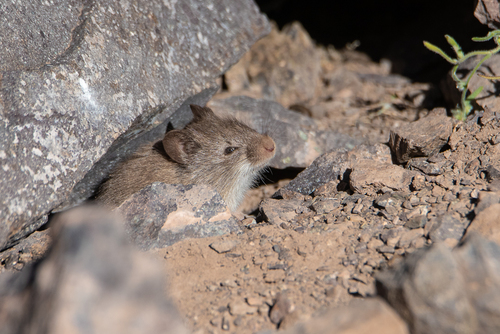
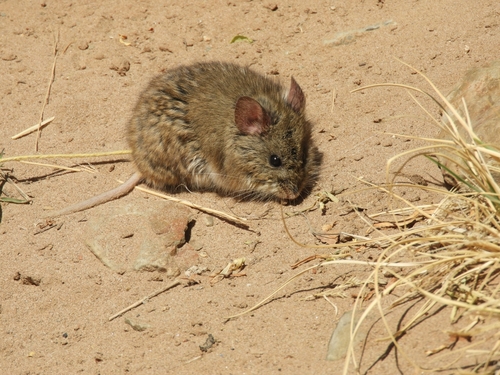
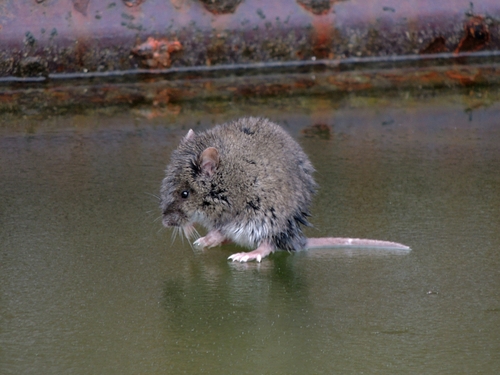
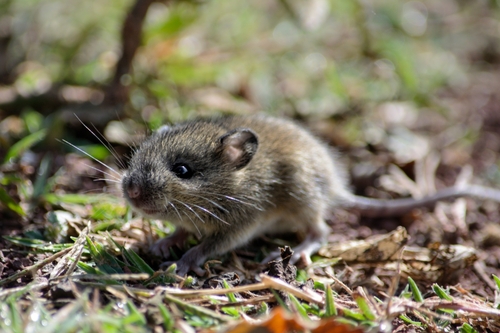
The dorsal fur is brownish-gray to olivaceous-brown with some intermixed darker hairs, giving a slightly grizzled appearance. The ventral fur is strikingly white or cream-white, sometimes with a faint gray base visible through the coat. The tail is relatively short and bicolored (darker above, paler below). Ears are moderate in size and thinly haired.
Size
Head-body length approximately 70–110 mm; tail length 50–80 mm (shorter than the body). Hind foot length approximately 18–22 mm.
Weight
Typically 15–35 g; no strong sexual dimorphism in weight is documented.
Distinctive features
The sharply defined white belly is the most distinctive feature, setting it apart from many Andean congeners such as Akodon boliviensis, which has a grayish or dull whitish venter. Cranial features, including a relatively narrow braincase and specific molar morphology, further differentiate it at the species level.
Differences between males and females
Sexual dimorphism is minimal. Males may be marginally larger and heavier than females on average, but the difference is not pronounced and overlap is extensive.
Behaviour and diet of the White-bellied Grass Mouse
Primarily solitary outside of the breeding season. Individuals maintain overlapping home ranges, though territorial interactions may occur, particularly among males. It does not form stable social groups.
When it is active
Primarily nocturnal and crepuscular. Peak activity occurs during the hours after sunset and before sunrise, allowing it to avoid diurnal predators and the most extreme temperature fluctuations of the puna.
Diet
Omnivorous, with a diet composed mainly of seeds (especially from puna grasses), green plant material, roots, and invertebrates (insects, larvae). The proportion of animal material likely increases during the austral summer when invertebrates are more abundant.
How it feeds and hunts
Forages by moving through grass tussocks and along rocky edges, gleaning seeds and invertebrates from the ground and low vegetation. It uses its sensitive vibrissae and olfaction to locate food items in dim-light conditions.
Communication
Like other sigmodontine rodents, it likely uses ultrasonic vocalizations for mother-offspring and mate communication, though detailed studies are lacking. Scent marking via urine and glands probably plays an important role in territory advertisement and mate attraction.
Interactions with other species
Major predators include the Andean fox (Lycalopex culpaeus), Andean cat (Leopardus jacobita), birds of prey such as the Black-chested buzzard-eagle (Geranoaetus melanoleucus), and several owl species. It likely competes for resources with other sympatric small rodents such as Phyllotis xanthopygus and Eligmodontia spp.
Role in its ecosystem
As a granivore and invertebrate consumer, it contributes to seed dispersal and nutrient cycling in puna ecosystems. As a small rodent abundant in its habitat, it is a critical prey base for mid- and apex-level predators in Andean food webs.
Reproduction and lifecycle
Breeding is seasonal, primarily during the austral spring and summer. Gestation lasts approximately 20–23 days, typical for the genus Akodon. Litter sizes range from 3 to 6 young, and females may produce multiple litters per season under favorable conditions.
Raising the young
Young are altricial at birth (born blind, hairless, and helpless). The mother provides all direct parental care, nursing and protecting the young in a grass or burrow nest. Weaning occurs at approximately 3 weeks of age, after which juveniles become independent.
Maturity and lifespan
Sexual maturity is reached at approximately 2–3 months of age, consistent with other Akodon species. Wild lifespan is likely 1–2 years due to heavy predation and harsh environmental conditions; potential lifespan in captivity may reach 3–4 years.
Taxonomy and naming of the White-bellied Grass Mouse
Classification
Mammalia > Rodentia > Cricetidae (subfamily Sigmodontinae) > Akodon > Akodon albiventer (Thomas, 1901)
What research says
Recent studies
Molecular phylogenetic studies of the genus Akodon have helped clarify the taxonomic boundaries of A. albiventer relative to other high-Andean congeners such as A. boliviensis and A. subfuscus. Ongoing biodiversity surveys in the puna occasionally document its presence and microhabitat preferences, though species-specific ecological studies remain scarce.
Genome and DNA
The genus Akodon is notable for considerable chromosomal variation across species and even within some species. The specific karyotype of A. albiventer has not been definitively characterized in widely available literature; null is appropriate pending formal cytogenetic study.
Compared with similar species
Akodon albiventer is most closely related to other high-Andean Akodon species, particularly A. boliviensis and A. subfuscus. It differs from A. boliviensis primarily in the cleaner white coloration of its venter. It occupies a similar ecological niche to Phyllotis xanthopygus (leaf-eared mouse) in the puna but is distinguished by its shorter tail, more terrestrial habits, and omnivorous diet.
The White-bellied Grass Mouse and people
The White-bellied Grass Mouse survives at altitudes where oxygen levels are approximately 40–50% lower than at sea level, making it one of the most altitude-tolerant small rodents on Earth. Its striking white belly, which inspired its common and scientific names, provides a dramatic ventral-dorsal contrast unusual among similar-sized rodents. Despite living in one of the world's most extreme environments, it does not hibernate and must remain active and foraging throughout the bitter Andean winter.
Where and how to see it
Best observed at night with a red-light headlamp in puna grasslands of Bolivia (around Potosí and Oruro) and northwestern Argentina (Jujuy province). Rocky areas near ichu grass tussocks and bofedal edges are particularly productive. The austral summer months (November–February) offer the best conditions, with longer nights and higher activity levels.
Risks to humans
No notable direct risk to humans. As with other Akodon species that may serve as hantavirus reservoirs, handling wild individuals without protective gear is inadvisable. Individuals should avoid contact with rodent urine, feces, or nesting material in puna habitats.
Countries where the White-bellied Grass Mouse is recorded
The 4 countries named in the range description of its IUCN Red List assessment.
Questions about the White-bellied Grass Mouse
Where does the White-bellied Grass Mouse live?
The White-bellied Grass Mouse is recorded in Argentina, Bolivia, Chile and Peru across South America. These countries come from the range description of its IUCN Red List assessment, and they are what place the species on the interactive map.
Is the White-bellied Grass Mouse endangered?
The IUCN Red List assesses the White-bellied Grass Mouse as Least Concern. The species is widespread and abundant enough not to qualify for any threatened category. It does not mean the species is safe forever, only that nothing in the current data raises an alarm.
How many are left in the wild?
No precise global population estimate exists. This figure comes from the species assessment on the IUCN Red List; population estimates for wild mammals are ranges, not counts, and are revised at each assessment.
What habitat does the White-bellied Grass Mouse live in?
High-altitude puna grasslands dominated by ichu grasses (Festuca, Stipa, and Deyeuxia spp.) are the primary habitat.
What is the scientific name of the White-bellied Grass Mouse?
The White-bellied Grass Mouse is Akodon albiventer, in the family Cricetidae, order Rodentia.
Other species in the genus Akodon

Other species in the family Cricetidae
Sources
Conservation status, range description and population estimate come from the IUCN Red List assessment for Akodon albiventer. Countries are derived from that range description, not from a mapped country list. Last refreshed on .
The distribution map is drawn from the IUCN Red List spatial data compiled in 2008. IUCN (International Union for Conservation of Nature)