
Sunda Clouded Leopard
Neofelis diardi
Red List assessment
Vulnerableon the IUCN Red List
- EXExtinct
- EWExtinct in the Wild
- CRCritically Endangered
- ENEndangered
- VUVulnerable
- NTNear Threatened
- LCLeast Concern
The Sunda Clouded Leopard is recorded in 3 countries across Asia. The IUCN Red List assesses the Sunda Clouded Leopard as Vulnerable. Estimated at fewer than 10,000 mature individuals globally, with a declining population trend due to continued habitat destruction.
- Family
- Felidae
- Order
- Carnivora
- Genus
- Neofelis
- Countries recorded
- 3
- Continents
- Asia
- Red List category
- Vulnerable
- Data updated
- August 9, 2026
What is the Sunda Clouded Leopard?
The Sunda Clouded Leopard is a medium-sized wild cat endemic to the islands of Borneo and Sumatra, distinguished from the mainland clouded leopard by genetic and morphological differences. It is the largest predator on both islands, playing a crucial apex predator role in tropical rainforest ecosystems. Known for its striking cloud-like fur pattern and exceptional climbing ability, it remains elusive and rarely observed in the wild. It is considered one of the most enigmatic and poorly studied big cats in the world.
Where does the Sunda Clouded Leopard live?
Borneo and Sumatra (Indonesia, Malaysia, Brunei)
Endemic to the Sundaic region of Southeast Asia, found exclusively on the islands of Borneo (Indonesia, Malaysia, Brunei) and Sumatra (Indonesia). Population is fragmented across remaining forest blocks on both islands.
Altitude and depth
0-2000m, with most sightings occurring below 1000m in lowland forests.
Habitat of the Sunda Clouded Leopard
Primarily found in lowland and montane tropical rainforests, including primary and selectively logged secondary forests. Also inhabits peat swamp forests and mangrove areas in coastal regions of Borneo.
Adaptations to its environment
Exceptionally adapted for arboreal life with flexible ankle joints that rotate for headfirst descent from trees, long tail for balance, and short powerful limbs for climbing. Large paws and retractable claws aid in gripping branches and prey in dense forest environments.
Conservation status and numbers
Classified as Vulnerable by IUCN due to ongoing habitat loss and fragmentation from deforestation, with population declines suspected to exceed 30% over the past three generations. Small, fragmented populations increase vulnerability to local extinction.
Estimated population
Estimated at fewer than 10,000 mature individuals globally, with a declining population trend due to continued habitat destruction.
What threatens the Sunda Clouded Leopard?
Deforestation for palm oil plantations and logging is the primary threat, along with habitat fragmentation isolating populations. Poaching for skins, teeth, and bones for illegal wildlife trade, plus retaliatory killing for livestock predation, also threaten survival.
Diseases and parasites
Limited data exists, but like other wild felids, it is likely susceptible to feline diseases such as feline leukemia and various internal/external parasites including ticks and intestinal worms.
What is being done to protect it?
Protected under national laws in Indonesia, Malaysia, and Brunei, and listed on CITES Appendix I. Conservation efforts include camera trap monitoring programs, protected areas like Danum Valley and Gunung Leuser National Park, and habitat corridor initiatives.
Recommended actions
Priority actions include strengthening anti-poaching enforcement, expanding and connecting protected forest areas, and reducing deforestation from palm oil expansion. Continued population monitoring and community engagement to reduce human-wildlife conflict are also critical.
What the Sunda Clouded Leopard looks like
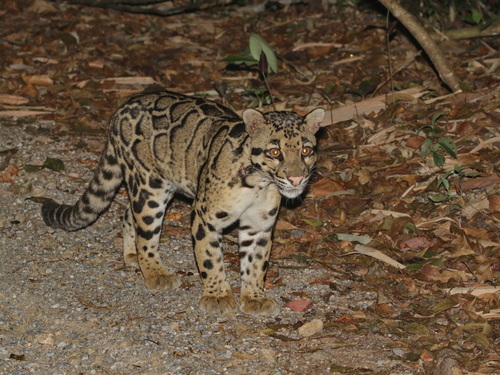
Thick, dark grey to ochre fur covered with large, irregular cloud-shaped dark blotches with black edges, giving it its name. The underside is pale, and the tail is long, thick, and marked with dark rings toward the tip.
Size
Body length ranges from 69-108 cm, with an additional tail length of 61-91 cm; shoulder height is approximately 50-56 cm.
Weight
Males typically weigh 17-25 kg, while females are smaller at 11-20 kg.
Distinctive features
Distinguished from the mainland clouded leopard by smaller, more distinct cloud markings, darker coat coloration, and a double dorsal stripe. Its molecular and cranial differences confirm separate species status despite superficial similarity.
Differences between males and females
Males are notably larger and heavier than females, though coat pattern and coloration are similar between sexes.
Behaviour and diet of the Sunda Clouded Leopard
Primarily solitary, coming together only briefly for mating; individuals maintain and defend home ranges that may overlap between sexes.
When it is active
Considered largely nocturnal and crepuscular, though some camera trap data suggests cathemeral (both day and night) activity depending on prey availability and human disturbance.
Diet
Carnivorous, preying on a variety of forest animals including deer, wild boar, primates (such as macaques and gibbons), birds, and smaller mammals. Also known to take arboreal prey given its climbing prowess.
How it feeds and hunts
Uses stealth and ambush tactics, often stalking prey on the ground or dropping from trees; strong jaw and long canines allow it to deliver a powerful killing bite to the neck.
Communication
Communicates through vocalizations including growls, hisses, and meows, as well as scent marking via urine spraying and scratching to establish territory. Body language and facial expressions also play a role in intraspecific signaling.
Interactions with other species
As the apex predator on Borneo and Sumatra, it has no natural predators as an adult, though cubs may be vulnerable to other carnivores or raptors. It competes for prey with other carnivores like sun bears and reticulated pythons.
Role in its ecosystem
Functions as an apex predator, regulating populations of medium-sized mammals and helping maintain ecological balance within rainforest ecosystems. Its presence indicates a relatively intact and healthy forest habitat.
Reproduction and lifecycle
Breeding can occur year-round with gestation lasting approximately 85-95 days, producing litters of 1-5 cubs, typically 2. Cubs are born blind and helpless, dependent on maternal care.
Raising the young
Females raise cubs alone without male involvement, nursing and protecting them in a den until they are mobile. Cubs remain with the mother for around 10 months to learn hunting skills before becoming independent.
Maturity and lifespan
Sexual maturity is reached around 2 years of age; lifespan in the wild is estimated at 11 years, while captive individuals can live up to 17 years.
Taxonomy and naming of the Sunda Clouded Leopard
Classification
Mammalia > Carnivora > Felidae > Neofelis > Neofelis diardi
Subspecies
Two recognized subspecies: Neofelis diardi diardi (Sumatra) and Neofelis diardi borneensis (Borneo).
Scientific synonyms
Formerly classified as a subspecies of Neofelis nebulosa until genetic studies in 2006 confirmed it as a distinct species.
What research says
Recent studies
Recent camera trap studies have provided new insights into population density and activity patterns, revealing lower densities than previously estimated in some logged forest areas. Genetic research continues to explore subspecies divergence between Bornean and Sumatran populations.
Genome and DNA
Genetic studies using mitochondrial DNA and microsatellite analysis in 2006 confirmed Neofelis diardi as a distinct species from Neofelis nebulosa, with significant divergence estimated at around 1.4 million years ago.
Compared with similar species
Compared to the mainland clouded leopard (Neofelis nebulosa), the Sunda species has smaller, more numerous cloud markings and a darker overall coat. It is also generally smaller in body size than its mainland counterpart.
The Sunda Clouded Leopard and people
The Sunda Clouded Leopard has the largest canine teeth relative to skull size of any living cat, proportionally longer than those of a tiger. It can descend trees headfirst thanks to specially adapted ankle joints, a rare trait among cats.
Where and how to see it
Best observed through camera trap footage or guided night safaris in protected reserves like Danum Valley (Borneo) or Gunung Leuser National Park (Sumatra), as direct sightings are extremely rare due to its elusive nature. Patience and expert local guides greatly increase chances of any sighting.
Risks to humans
No notable risk to humans as it is shy and avoids human contact, with no confirmed unprovoked attacks recorded.
Human uses
Historically hunted for its pelt and body parts used in traditional medicine and ornamental purposes, though this is now illegal and heavily discouraged. It holds value today primarily as an ecotourism attraction in select conservation areas.
Myths and legends
In some indigenous Bornean and Sumatran cultures, the clouded leopard is considered a spiritually significant animal, sometimes associated with forest spirits or ancestral guardianship. It appears in local folklore as a symbol of stealth and power.
Countries where the Sunda Clouded Leopard is recorded
The 3 countries named in the range description of its IUCN Red List assessment.
Questions about the Sunda Clouded Leopard
Where does the Sunda Clouded Leopard live?
The Sunda Clouded Leopard is recorded in Brunei, Indonesia and Malaysia across Asia. These countries come from the range description of its IUCN Red List assessment, and they are what place the species on the interactive map.
Is the Sunda Clouded Leopard endangered?
Yes. The IUCN Red List assesses the Sunda Clouded Leopard as Vulnerable, one of the three threatened categories. The species faces a high risk of extinction in the wild. It is the first of the three threatened categories: numbers are falling, the range is shrinking, or the population is small enough that a single bad event could do lasting damage.
How many are left in the wild?
Estimated at fewer than 10,000 mature individuals globally, with a declining population trend due to continued habitat destruction. This figure comes from the species assessment on the IUCN Red List; population estimates for wild mammals are ranges, not counts, and are revised at each assessment.
What habitat does the Sunda Clouded Leopard live in?
Primarily found in lowland and montane tropical rainforests, including primary and selectively logged secondary forests.
What is the scientific name of the Sunda Clouded Leopard?
The Sunda Clouded Leopard is Neofelis diardi, in the family Felidae, order Carnivora.
Other species in the genus Neofelis
Other species in the family Felidae
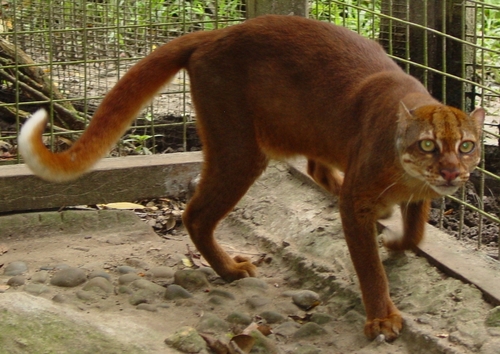
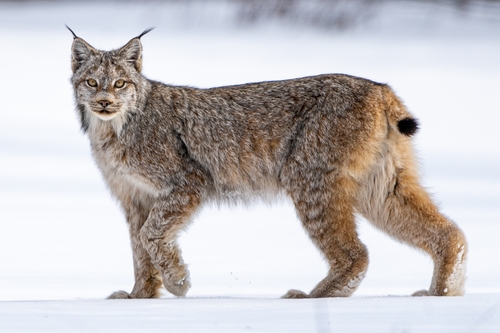
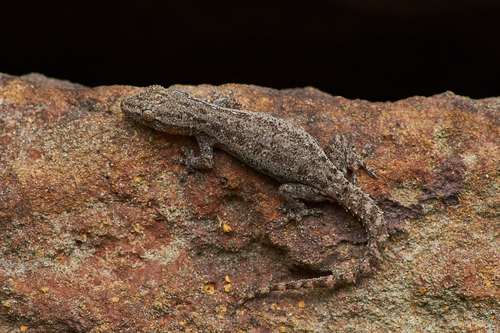
Species that share its range
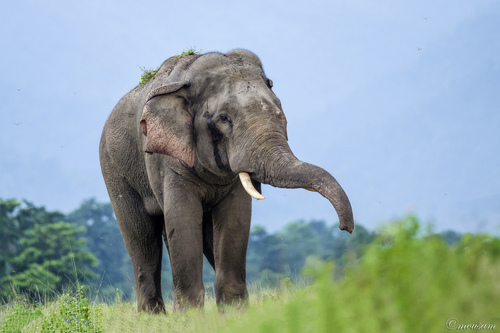
Sources
Conservation status, range description and population estimate come from the IUCN Red List assessment for Neofelis diardi. Countries are derived from that range description, not from a mapped country list. Last refreshed on .
The distribution map is drawn from the IUCN Red List spatial data compiled in 2015. IUCN (International Union for Conservation of Nature)