
Sokolov's Dwarf Hamster
Cricetulus sokolovi
Red List assessment
Least Concernon the IUCN Red List
- EXExtinct
- EWExtinct in the Wild
- CRCritically Endangered
- ENEndangered
- VUVulnerable
- NTNear Threatened
- LCLeast Concern
The Sokolov's Dwarf Hamster is recorded in 2 countries across Asia. The IUCN Red List assesses the Sokolov's Dwarf Hamster as Least Concern. No precise population estimates exist; the species is presumed to have a stable population given its LC status and the extent of suitable habitat across Mongolia and northern China.
- Family
- Cricetidae
- Order
- Rodentia
- Genus
- Cricetulus
- Countries recorded
- 2
- Continents
- Asia
- Red List category
- Least Concern
- Data updated
- August 9, 2026
What is the Sokolov's Dwarf Hamster?
Sokolov's Dwarf Hamster is a small, little-studied rodent native to the arid steppes of Mongolia and adjacent parts of northern China. It was formally described in 1988 and named in honor of Russian zoologist Vladimir Sokolov. Like other dwarf hamsters, it is adapted to harsh continental climates with extreme temperature swings, burrowing underground to escape both heat and cold. Its taxonomy remains somewhat debated due to close morphological similarity with other Cricetulus species.
Where does the Sokolov's Dwarf Hamster live?
Mongolia and northern China (Inner Mongolia autonomous region)
Found primarily in Mongolia, with its range extending into Inner Mongolia in northern China. Its distribution is limited to specific steppe and desert-steppe zones of Central Asia.
Altitude and depth
Typically found at moderate elevations ranging from approximately 900 to 1500 meters above sea level, consistent with the Mongolian plateau steppe habitats.
Seasonal movements
Exhibits reduced activity during the harsh Mongolian winters, likely entering periods of torpor or reduced metabolic activity, though it is not known to undergo true hibernation like some other rodents.
Habitat of the Sokolov's Dwarf Hamster
Inhabits arid and semi-arid steppe, semi-desert, and desert-steppe ecosystems, often in areas with sparse vegetation and sandy or loamy soils suitable for burrowing. It favors open grasslands and scrubby vegetation zones where digging is easy.
Adaptations to its environment
Possesses a compact body, short limbs, and dense fur suited to insulate against extreme temperature fluctuations typical of continental steppe climates. Burrowing behavior provides shelter from predators and extreme weather, while efficient kidneys allow water conservation in arid conditions.
Conservation status and numbers
Listed as Least Concern (LC) by the IUCN due to its relatively wide distribution and presumed stable population, though detailed population studies are limited. The species does not appear to face significant range-wide threats at this time.
Estimated population
No precise population estimates exist; the species is presumed to have a stable population given its LC status and the extent of suitable habitat across Mongolia and northern China.
What threatens the Sokolov's Dwarf Hamster?
Potential threats include habitat degradation from overgrazing by livestock, agricultural expansion, and climate change affecting steppe ecosystems. However, no major population declines have been documented.
What is being done to protect it?
No species-specific conservation programs are known to exist, though it may benefit indirectly from broader steppe habitat protection efforts and protected areas in Mongolia such as national parks and nature reserves.
Recommended actions
Recommended actions include conducting population surveys to better understand distribution and abundance, monitoring habitat quality in the face of grazing pressure, and including the species in broader steppe biodiversity conservation planning.
What the Sokolov's Dwarf Hamster looks like
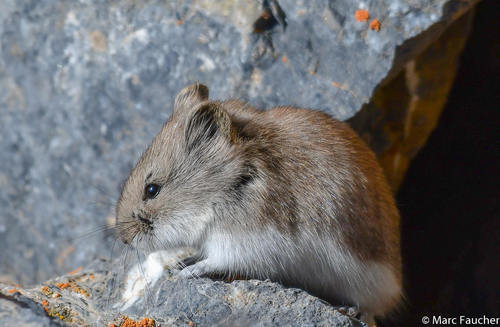
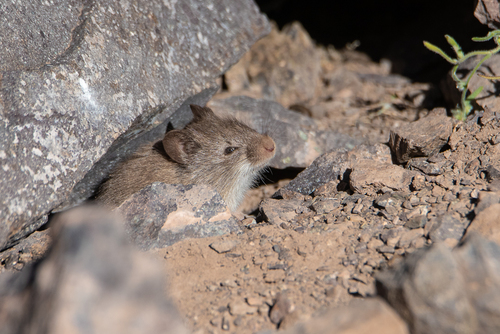
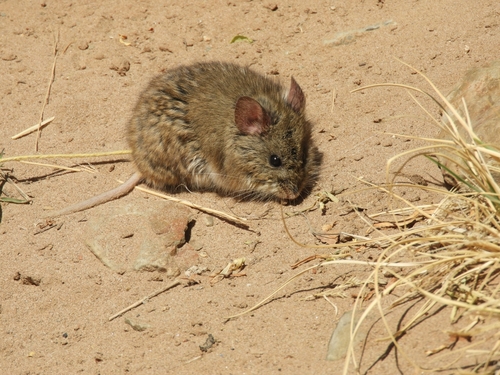
Has a small, rounded body covered in soft grayish-brown to sandy fur on the dorsal side, with a lighter, often whitish or cream-colored underside. The tail is short and sparsely furred, and the ears are relatively small and rounded.
Size
Body length typically ranges from 8 to 11 cm, with a short tail measuring approximately 1.5 to 2.5 cm, consistent with other dwarf hamster species.
Weight
Adults typically weigh between 15 and 30 grams, similar to other small Cricetulus species; no significant sexual size dimorphism has been documented.
Distinctive features
Distinguished from closely related Cricetulus species primarily through subtle cranial and dental morphology, as well as karyotype differences, making field identification difficult without genetic or skeletal analysis.
Behaviour and diet of the Sokolov's Dwarf Hamster
Generally solitary, like most dwarf hamster species, coming together only briefly for mating. Individuals maintain separate burrow systems and show territorial behavior toward conspecifics.
When it is active
Primarily nocturnal, emerging at night to forage while spending daylight hours sheltered in underground burrows to avoid predators and extreme daytime temperatures.
Diet
Omnivorous diet consisting mainly of seeds, grasses, and other plant material, supplemented opportunistically with insects and other small invertebrates when available.
Communication
Likely relies on scent marking via specialized glands and some vocalizations for communication, particularly during mating encounters and territorial disputes, though specific studies on this species are lacking.
Interactions with other species
Serves as prey for small steppe predators such as foxes, raptors, and snakes. May compete with other small rodents for food resources and burrow sites within the same habitat.
Role in its ecosystem
Plays a role in steppe ecosystems as a seed disperser and as a prey species supporting local predator populations, contributing to the food web dynamics of Central Asian grasslands.
Reproduction and lifecycle
Breeding likely occurs during warmer months, with females producing litters of several pups after a gestation period typical of dwarf hamsters, estimated around 18-22 days based on related species. Litter sizes are presumed to range from 4 to 8 young.
Raising the young
As in other hamster species, the female is primarily responsible for raising the young, nursing and protecting them in the burrow until weaning, which likely occurs within 3-4 weeks after birth.
Maturity and lifespan
Sexual maturity is likely reached within 2-3 months, consistent with other small Cricetulus species. Lifespan in the wild is probably short, around 1-2 years, while captive dwarf hamsters of related species can live up to 2-3 years.
Taxonomy and naming of the Sokolov's Dwarf Hamster
Classification
Class Mammalia > Order Rodentia > Family Cricetidae > Genus Cricetulus > Species Cricetulus sokolovi
Scientific synonyms
Originally described as a subspecies or closely related to Cricetulus barabensis; some early literature listed it under Cricetulus barabensis sokolovi before being elevated to full species status.
What research says
Genome and DNA
Karyotype studies have been used to help distinguish this species from closely related Cricetulus taxa, though comprehensive genomic sequencing data remains limited.
Compared with similar species
Closely resembles Cricetulus barabensis and Cricetulus migratorius in size and general appearance, but differs in karyotype and subtle skull morphology, which were key factors in its original species description.
The Sokolov's Dwarf Hamster and people
This species was only formally recognized as distinct from other dwarf hamsters in the late 1980s. Despite being classified as a full species, it remains one of the least-studied hamsters in the genus Cricetulus, with much of its biology inferred from related species.
Where and how to see it
Best observed at night in steppe habitats of Mongolia, particularly in areas with sandy soils suitable for burrowing; patience and a red-filtered flashlight are recommended to avoid disturbing this shy, nocturnal rodent.
Risks to humans
No notable risk
Countries where the Sokolov's Dwarf Hamster is recorded
The 2 countries named in the range description of its IUCN Red List assessment.
Questions about the Sokolov's Dwarf Hamster
Where does the Sokolov's Dwarf Hamster live?
The Sokolov's Dwarf Hamster is recorded in China and Mongolia across Asia. These countries come from the range description of its IUCN Red List assessment, and they are what place the species on the interactive map.
Is the Sokolov's Dwarf Hamster endangered?
The IUCN Red List assesses the Sokolov's Dwarf Hamster as Least Concern. The species is widespread and abundant enough not to qualify for any threatened category. It does not mean the species is safe forever, only that nothing in the current data raises an alarm.
How many are left in the wild?
No precise population estimates exist; the species is presumed to have a stable population given its LC status and the extent of suitable habitat across Mongolia and northern China. This figure comes from the species assessment on the IUCN Red List; population estimates for wild mammals are ranges, not counts, and are revised at each assessment.
What habitat does the Sokolov's Dwarf Hamster live in?
Inhabits arid and semi-arid steppe, semi-desert, and desert-steppe ecosystems, often in areas with sparse vegetation and sandy or loamy soils suitable for burrowing.
What is the scientific name of the Sokolov's Dwarf Hamster?
The Sokolov's Dwarf Hamster is Cricetulus sokolovi, in the family Cricetidae, order Rodentia.
Other species in the genus Cricetulus
Other species in the family Cricetidae
Species that share its range
Sources
Conservation status, range description and population estimate come from the IUCN Red List assessment for Cricetulus sokolovi. Countries are derived from that range description, not from a mapped country list. Last refreshed on .
The distribution map is drawn from the IUCN Red List spatial data compiled in 2008. IUCN (International Union for Conservation of Nature)