
Long-tailed Dwarf Hamster
Cricetulus longicaudatus
Red List assessment
Least Concernon the IUCN Red List
- EXExtinct
- EWExtinct in the Wild
- CRCritically Endangered
- ENEndangered
- VUVulnerable
- NTNear Threatened
- LCLeast Concern
The Long-tailed Dwarf Hamster is recorded in 3 countries across Asia and Europe. The IUCN Red List assesses the Long-tailed Dwarf Hamster as Least Concern. No precise global population estimate exists, but the species is considered common and stable throughout most of its range based on regional surveys.
- Family
- Cricetidae
- Order
- Rodentia
- Genus
- Cricetulus
- Countries recorded
- 3
- Continents
- Asia and Europe
- Red List category
- Least Concern
- Data updated
- August 9, 2026
What is the Long-tailed Dwarf Hamster?
The Long-tailed Dwarf Hamster is a small rodent native to the steppes and semi-arid regions of Central Asia and China. It is notable for its relatively long tail compared to other dwarf hamster species, which aids in identification. This species is well adapted to cold, arid grassland environments and plays a role in local ecosystems as a seed disperser and prey species.
Where does the Long-tailed Dwarf Hamster live?
Central and northern China, Mongolia, and parts of southern Siberia (Russia)
Found across central and northern China including Gansu, Qinghai, and Inner Mongolia provinces, extending into Mongolia and southern Siberia in Russia. The species occupies a broad range across the Central Asian steppe biome.
Altitude and depth
Typically found at elevations ranging from 1000 to 3500 meters, with populations adapted to the high-altitude plateaus of the Tibetan-Qinghai region.
Seasonal movements
Exhibits seasonal changes in activity, with reduced surface activity during harsh winter months; may enter periods of torpor in extreme cold, though true hibernation is not well documented.
Habitat of the Long-tailed Dwarf Hamster
Inhabits steppe grasslands, semi-desert areas, agricultural fields, and mountain meadows. Prefers areas with loose, sandy soils suitable for burrowing and sparse vegetation cover.
Adaptations to its environment
Possesses cheek pouches for efficient food transport and storage, and burrowing behavior for thermoregulation and predator avoidance. Its dense fur provides insulation against cold steppe temperatures.
Conservation status and numbers
Listed as Least Concern (LC) by IUCN due to its wide distribution and presumed large population, with no significant evidence of rapid decline across its range.
Estimated population
No precise global population estimate exists, but the species is considered common and stable throughout most of its range based on regional surveys.
What threatens the Long-tailed Dwarf Hamster?
Agricultural expansion and pest control measures targeting rodents in farmland areas pose localized threats. Habitat degradation from overgrazing may also affect populations in some regions.
Diseases and parasites
Known to host various ectoparasites such as fleas and mites, and may carry pathogens relevant to zoonotic disease surveillance in the region.
What is being done to protect it?
No specific conservation programs target this species directly, as it is not considered threatened; general habitat protection in Chinese and Mongolian nature reserves may incidentally benefit populations.
Recommended actions
Continued monitoring of population trends in agricultural zones and assessment of impacts from rodenticide use are recommended to ensure long-term stability.
What the Long-tailed Dwarf Hamster looks like
The fur is grayish-brown to sandy on the back with a lighter, often white or gray, underside. The tail is relatively long and lightly furred, a key distinguishing feature from related species.
Size
Body length ranges from 7 to 12 cm, with a notably long tail measuring 3 to 5 cm, which is proportionally longer than in most other dwarf hamster species.
Weight
Adults typically weigh between 20 and 35 grams, with minimal difference between sexes.
Distinctive features
Distinguished from other Cricetulus species primarily by its notably longer tail relative to body size, as well as subtle differences in skull morphology and dental structure.
Differences between males and females
Minimal sexual dimorphism is observed; males and females are similar in size and coloration.
Behaviour and diet of the Long-tailed Dwarf Hamster
Generally solitary and territorial outside of breeding season, though some tolerance of conspecifics has been observed in favorable habitat conditions.
When it is active
Primarily nocturnal, with peak activity during dusk and nighttime hours to avoid predators and extreme daytime temperatures.
Diet
Omnivorous diet consisting mainly of seeds, grains, grasses, and occasionally insects or other small invertebrates when available.
Communication
Communication includes scent marking via glandular secretions and vocalizations such as squeaks, particularly during aggressive or mating encounters.
Interactions with other species
Serves as prey for various raptors, foxes, and small carnivorous mammals native to the steppe ecosystem; competes with other small rodents for food resources.
Role in its ecosystem
Functions as an important prey species in steppe food webs and contributes to seed dispersal and soil aeration through its burrowing activities.
Reproduction and lifecycle
Breeding occurs mainly in warmer months from spring to autumn, with gestation lasting approximately 18-22 days. Litters typically contain 4-8 pups, and females may produce multiple litters per season.
Raising the young
Females provide all parental care, nursing and protecting pups in the burrow until weaning at around 3 weeks of age, after which juveniles become independent.
Maturity and lifespan
Reaches sexual maturity at approximately 6-8 weeks of age; lifespan in the wild is typically 1-2 years, while captive individuals may live up to 2-3 years.
Taxonomy and naming of the Long-tailed Dwarf Hamster
Classification
Class Mammalia > Order Rodentia > Family Cricetidae > Genus Cricetulus > Species Cricetulus longicaudatus
Subspecies
Several subspecies have been proposed, including C. l. longicaudatus and C. l. potanini, distinguished mainly by slight variations in coat color and size across their range in China and Mongolia, though taxonomy remains debated.
Scientific synonyms
Cricetulus griseus longicaudatus has been used historically; some authors have also included it under a broader Cricetulus complex.
What research says
Recent studies
Recent genetic studies have focused on clarifying phylogenetic relationships within the genus Cricetulus, helping to resolve taxonomic uncertainties regarding this species and its relatives.
Genome and DNA
The species has a diploid chromosome number of 2n=44, which has been used in comparative studies within the Cricetulus genus.
Compared with similar species
Similar in size to the Chinese Hamster (Cricetulus griseus) but distinguished by its longer tail and different fur coloration patterns; less commonly kept as a pet compared to other dwarf hamster species.
The Long-tailed Dwarf Hamster and people
Despite being called a 'dwarf hamster,' it has one of the longest tails relative to body size among hamster species. It is remarkably cold-tolerant, thriving in some of the harshest steppe environments in Asia.
Where and how to see it
Best observed at dusk in steppe or agricultural habitats of Gansu or Inner Mongolia using quiet observation techniques and possibly a red-filtered flashlight to avoid disturbing nocturnal activity.
Risks to humans
No notable risk to humans; however, as with many wild rodents, caution should be taken to avoid handling due to potential parasite or disease transmission.
Human uses
Occasionally used in scientific research as a model organism for studies related to rodent physiology and genetics, though less common than its relative the Chinese Hamster.
Countries where the Long-tailed Dwarf Hamster is recorded
The 3 countries named in the range description of its IUCN Red List assessment.
Questions about the Long-tailed Dwarf Hamster
Where does the Long-tailed Dwarf Hamster live?
The Long-tailed Dwarf Hamster is recorded in China, Mongolia and Russia across Asia and Europe. These countries come from the range description of its IUCN Red List assessment, and they are what place the species on the interactive map.
Is the Long-tailed Dwarf Hamster endangered?
The IUCN Red List assesses the Long-tailed Dwarf Hamster as Least Concern. The species is widespread and abundant enough not to qualify for any threatened category. It does not mean the species is safe forever, only that nothing in the current data raises an alarm.
How many are left in the wild?
No precise global population estimate exists, but the species is considered common and stable throughout most of its range based on regional surveys. This figure comes from the species assessment on the IUCN Red List; population estimates for wild mammals are ranges, not counts, and are revised at each assessment.
What habitat does the Long-tailed Dwarf Hamster live in?
Inhabits steppe grasslands, semi-desert areas, agricultural fields, and mountain meadows.
What is the scientific name of the Long-tailed Dwarf Hamster?
The Long-tailed Dwarf Hamster is Cricetulus longicaudatus, in the family Cricetidae, order Rodentia.
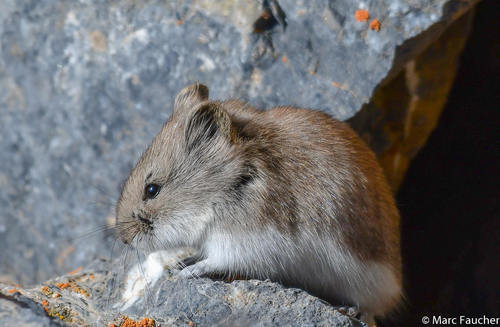
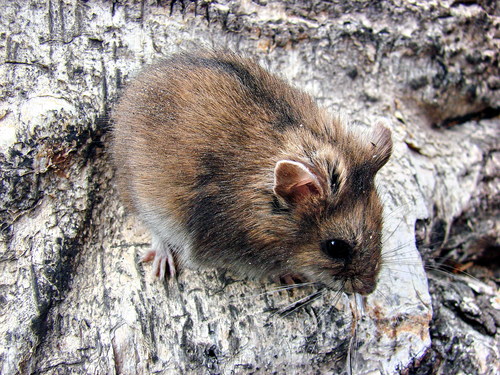
Other species in the genus Cricetulus
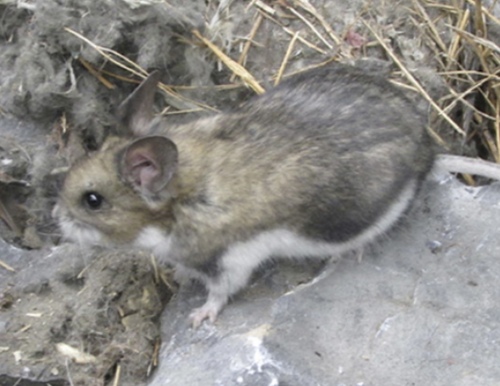
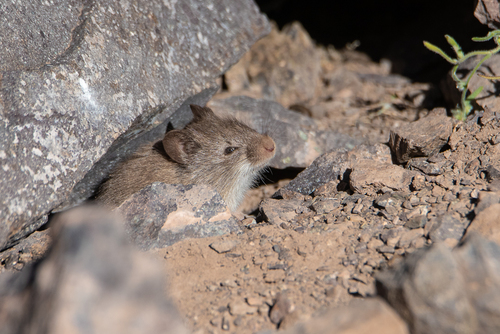
Other species in the family Cricetidae
Species that share its range
Sources
Conservation status, range description and population estimate come from the IUCN Red List assessment for Cricetulus longicaudatus. Countries are derived from that range description, not from a mapped country list. Last refreshed on .
The distribution map is drawn from the IUCN Red List spatial data compiled in 2008. IUCN (International Union for Conservation of Nature)