
Sea Otter
Enhydra lutris
Red List assessment
Endangeredon the IUCN Red List
- EXExtinct
- EWExtinct in the Wild
- CRCritically Endangered
- ENEndangered
- VUVulnerable
- NTNear Threatened
- LCLeast Concern
The Sea Otter is recorded in 4 countries across Asia, Europe and North America. The IUCN Red List assesses the Sea Otter as Endangered. Approximately 125,000-150,000 individuals globally, with populations stable to increasing in most regions but the California population remains small (~3,000) and slow to recover
- Family
- Mustelidae
- Order
- Carnivora
- Genus
- Enhydra
- Countries recorded
- 4
- Continents
- Asia, Europe and North America
- Red List category
- Endangered
- Data updated
- August 9, 2026
What is the Sea Otter?
The sea otter is the largest member of the weasel family and among the smallest marine mammals, uniquely adapted to a fully aquatic lifestyle in nearshore Pacific waters. It is famous for using rocks as tools to crack open shellfish and for its extraordinarily dense fur, the thickest of any mammal. As a keystone species, it plays a critical role in maintaining kelp forest ecosystems by controlling sea urchin populations.
Where does the Sea Otter live?
North Pacific coasts including Russia (Kamchatka, Kuril Islands), Alaska, British Columbia (Canada), Washington, Oregon, and California (USA)
Found along the North Pacific Rim from northern Japan and the Kuril Islands through Kamchatka, the Aleutian Islands, coastal Alaska, British Columbia, down to central California; historically ranged from Baja California to Japan before near-extinction from fur trade.
Altitude and depth
0-100m, primarily foraging in nearshore waters less than 30m deep, though capable of diving to over 100m
Seasonal movements
No true migration; some local movements tied to storm patterns, prey availability, and breeding season, but generally sedentary within home ranges year-round
Habitat of the Sea Otter
Nearshore marine environments including kelp forests, rocky reefs, and sheltered bays with soft sediment; rarely ventures far from coastlines. Prefers areas with abundant benthic invertebrate prey and kelp canopy for resting and refuge.
Adaptations to its environment
Possesses the densest fur of any mammal (up to 1 million hairs per square inch) with no blubber layer, relying instead on fur and high metabolism for insulation. Has loose skin under forelimbs forming pouches to store food and tools while diving, and uses rocks as anvils to break open shells.
Conservation status and numbers
Endangered (EN) according to IUCN Red List, with the southern subspecies (California) listed as Threatened under the US Endangered Species Act; populations remain fragmented and below historic numbers despite recovery since 20th-century fur trade devastation.
Estimated population
Approximately 125,000-150,000 individuals globally, with populations stable to increasing in most regions but the California population remains small (~3,000) and slow to recover
What threatens the Sea Otter?
Oil spills, entanglement in fishing gear, pollution and contaminants, disease transmission from domestic animals, predation by killer whales and great white sharks, and climate change effects on kelp forest ecosystems
Diseases and parasites
Susceptible to Toxoplasma gondii infection from land runoff, morbillivirus, and various parasites including nematodes and protozoan pathogens; disease is a significant mortality factor in California populations
What is being done to protect it?
Protected under the US Marine Mammal Protection Act and Endangered Species Act, with recovery programs, marine protected areas, oil spill response planning, and international agreements; captive breeding and rehabilitation programs exist in California and Alaska
Recommended actions
Expand marine protected areas along the Pacific coast, strengthen oil spill prevention and response infrastructure, reduce fishing gear entanglement risks, monitor and mitigate disease transmission, and support kelp forest restoration efforts
What the Sea Otter looks like
Dense brown to reddish-brown fur, often with lighter, grizzled fur on the head and neck in older individuals; robust body with a blunt face, small ears, and long whiskers used for sensing prey. Forepaws are small and dexterous while hind feet are large, flipper-like, and adapted for swimming.
Size
Body length 100-150cm including tail; males are generally larger than females
Weight
Males 22-45kg, females 14-33kg
Distinctive features
Distinguished from river otters by its more marine-adapted body, larger size, flipper-like hind feet, and habit of floating on its back at the surface; lacks a fatty blubber layer unlike seals, relying entirely on fur for insulation
Differences between males and females
Males are notably larger and heavier than females, with thicker necks and more robust builds, though coloration is similar between sexes
Behaviour and diet of the Sea Otter
Generally social, forming single-sex groups called rafts that can range from a few individuals to over a hundred; males often patrol territories during breeding season while females and pups gather in nursery rafts
When it is active
Primarily diurnal with peak foraging activity in morning and late afternoon, though can be active at night depending on tidal and prey conditions
Diet
Carnivorous, feeding primarily on benthic invertebrates including sea urchins, clams, mussels, crabs, abalone, and occasionally fish; consumes 20-30% of its body weight daily to maintain metabolism
How it feeds and hunts
Dives to the seafloor to forage using tactile search with forepaws, often using a rock as a tool to crack open hard-shelled prey while floating on its back at the surface
Communication
Uses vocalizations including whistles, screams, and coos for mother-pup contact and distress signaling; relies heavily on scent marking and body posture within rafts for social communication
Interactions with other species
Preyed upon by killer whales, great white sharks, and occasionally bald eagles (on pups); competes with humans for shellfish resources; plays a mutualistic ecological role by controlling sea urchin populations that would otherwise overgraze kelp forests
Role in its ecosystem
Functions as a keystone species and apex predator in kelp forest ecosystems, indirectly supporting biodiversity by preventing urchin barrens through predation, thereby preserving kelp canopy habitat for numerous other marine species
Reproduction and lifecycle
Breeding occurs year-round with regional peaks; gestation lasts 4-12 months due to delayed implantation, resulting in a single pup born after roughly 6 months of active development; pups are weaned around 6-8 months
Raising the young
Mothers provide extensive solo parental care, carrying pups on their chest, grooming them constantly to maintain buoyant fur, and teaching foraging skills over several months; males play no role in raising offspring
Maturity and lifespan
Sexual maturity at 3-5 years for females and 5-6 years for males; lifespan averages 10-20 years in the wild for females (shorter for males) and up to 20-25 years in captivity
Taxonomy and naming of the Sea Otter
Classification
Class Mammalia > Order Carnivora > Family Mustelidae > Genus Enhydra > Species Enhydra lutris
Subspecies
Enhydra lutris lutris (Russia/Kuril Islands), Enhydra lutris kenyoni (Alaska to Washington), Enhydra lutris nereis (California, the southern sea otter)
Scientific synonyms
Lutra marina (historical synonym used in early taxonomic descriptions)
What research says
Recent studies
Recent research has documented tool use complexity and cultural transmission of foraging techniques between individuals, as well as studies on the cascading ecological effects of otter recovery on kelp forest carbon sequestration
Genome and DNA
Diploid chromosome number of 2n=38; genomic studies have revealed low genetic diversity in some populations, particularly the southern sea otter, due to historic population bottlenecks from the fur trade
Compared with similar species
Unlike river otters (Lontra canadensis), sea otters are larger, more marine-adapted, lack a fatty tail for propulsion, and rarely come ashore; compared to seals and sea lions, they lack blubber and rely on fur alone for thermoregulation
The Sea Otter and people
Sea otters hold hands while sleeping in rafts to prevent drifting apart; they are one of the few animals known to use tools consistently; a sea otter's fur contains up to 1 million hairs per square inch, far denser than any other mammal
Where and how to see it
Best observed in California's Monterey Bay, Elkhorn Slough, or Alaska's Kachemak Bay during calm morning hours when otters are actively foraging and resting in kelp beds; boat tours and shoreline viewpoints offer excellent opportunities
Risks to humans
No notable risk to humans under normal circumstances, though wild otters can bite if cornered or handled; primary human risk is indirect through oil spill cleanup exposure or shellfish fishery conflicts
Human uses
Historically hunted extensively for their luxurious fur during the 18th and 19th century maritime fur trade, nearly driving the species to extinction; today otters have no legal commercial use and are primarily valued for ecotourism and ecological research
Myths and legends
Indigenous coastal peoples of the Pacific Northwest, including the Aleut and Chugach, have long regarded sea otters as spiritually significant and central to traditional subsistence and fur trade economies, sometimes symbolizing balance between humans and the sea
Countries where the Sea Otter is recorded
The 4 countries named in the range description of its IUCN Red List assessment.
Questions about the Sea Otter
Where does the Sea Otter live?
The Sea Otter is recorded in Canada, Japan, Russia and United States across Asia, Europe and North America. These countries come from the range description of its IUCN Red List assessment, and they are what place the species on the interactive map.
Is the Sea Otter endangered?
Yes. The IUCN Red List assesses the Sea Otter as Endangered, one of the three threatened categories. The species faces a very high risk of extinction in the wild — a step below Critically Endangered, but still on a trajectory that ends badly without intervention.
How many are left in the wild?
Approximately 125,000-150,000 individuals globally, with populations stable to increasing in most regions but the California population remains small (~3,000) and slow to recover This figure comes from the species assessment on the IUCN Red List; population estimates for wild mammals are ranges, not counts, and are revised at each assessment.
What habitat does the Sea Otter live in?
Nearshore marine environments including kelp forests, rocky reefs, and sheltered bays with soft sediment; rarely ventures far from coastlines.
What is the scientific name of the Sea Otter?
The Sea Otter is Enhydra lutris, in the family Mustelidae, order Carnivora.
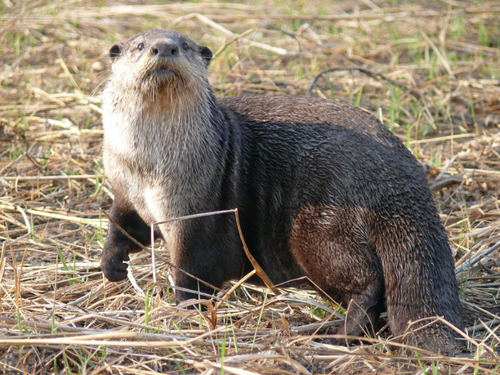
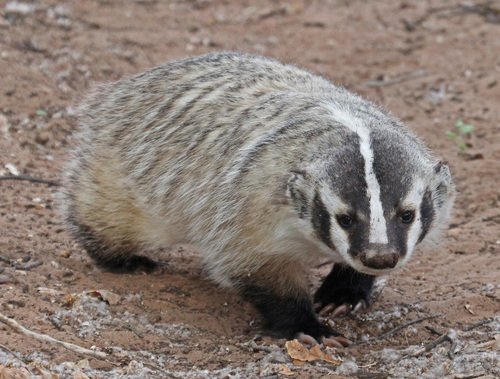
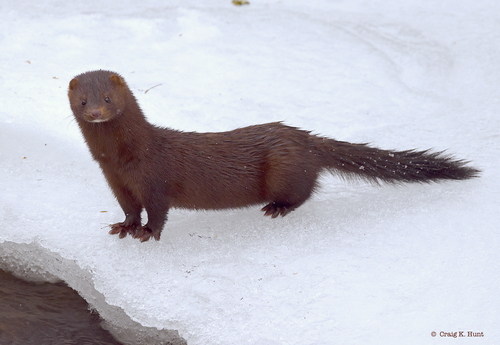
Other species in the family Mustelidae
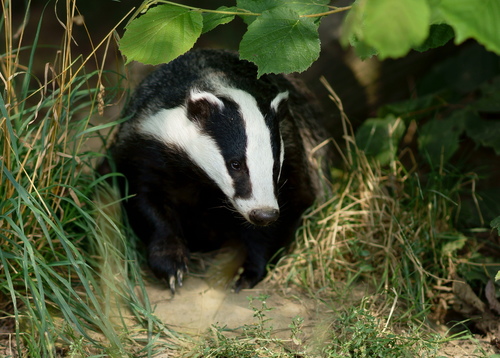

Species that share its range

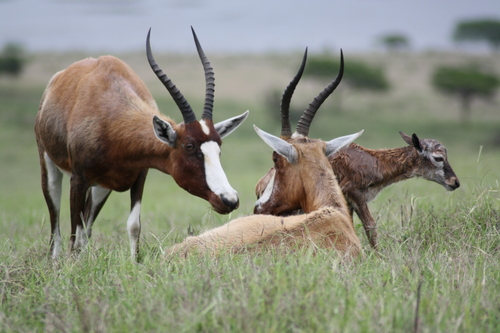
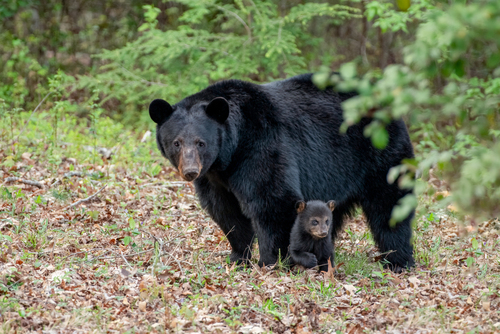
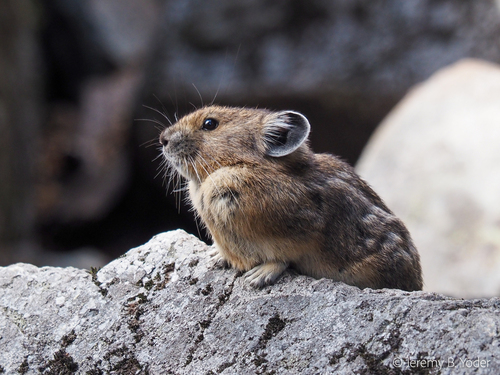
Sources
Conservation status, range description and population estimate come from the IUCN Red List assessment for Enhydra lutris. Countries are derived from that range description, not from a mapped country list. Last refreshed on .
The distribution map is drawn from the IUCN Red List spatial data compiled in 2008. IUCN (International Union for Conservation of Nature)