
Red Rock Rat
Aethomys chrysophilus
Red List assessment
Least Concernon the IUCN Red List
- EXExtinct
- EWExtinct in the Wild
- CRCritically Endangered
- ENEndangered
- VUVulnerable
- NTNear Threatened
- LCLeast Concern
The Red Rock Rat is recorded in 7 countries across Africa. The IUCN Red List assesses the Red Rock Rat as Least Concern. No precise global population estimate exists.
- Family
- Muridae
- Order
- Rodentia
- Genus
- Aethomys
- Countries recorded
- 7
- Continents
- Africa
- Red List category
- Least Concern
- Data updated
- August 9, 2026
What is the Red Rock Rat?
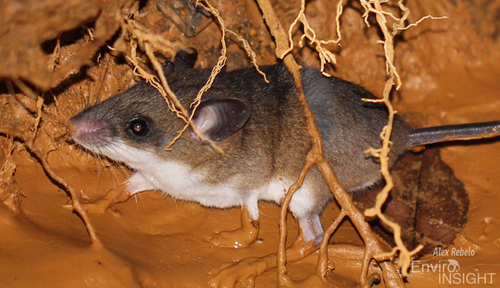
The Red Rock Rat is a medium-sized murid rodent distinguished by its striking reddish-orange to golden-brown dorsal pelage, from which both its common and scientific names derive ('chrysophilus' means 'gold-loving' in Greek). It is strongly associated with granite kopjes, rocky outcrops, and boulder-strewn hillsides within savanna and woodland ecosystems of southern and east-central Africa. It uses rock crevices extensively for shelter, nesting, and predator avoidance, making it a characteristic component of the rocky outcrop fauna. It plays an important ecological role as a prey species for numerous raptors, snakes, and small carnivores.
Where does the Red Rock Rat live?
Southern and east-central Africa: Zimbabwe, Mozambique, northeastern South Africa (Limpopo, Mpumalanga, KwaZulu-Natal), Zambia, Malawi, southern Tanzania, and marginally in Botswana
Distributed from the Zimbabwe Highveld and Mozambique southward into the Limpopo and Mpumalanga provinces of South Africa, and northward through Zambia, Malawi, and into southern Tanzania. The core of its range lies on the Zimbabwe plateau and surrounding escarpments. Isolated populations occur in suitable rocky habitats in eastern Botswana.
Altitude and depth
Found from near sea level along the Mozambique coastal lowlands to approximately 2,000 m on the central African plateau and escarpments. Most abundant at mid-elevations between 900 and 1,500 m, where rocky outcrops are prevalent.
Seasonal movements
No significant seasonal migrations are known. Breeding activity peaks during the wet season (November–April in southern Africa) when food resources are most abundant. Activity levels and home range use may contract during the dry season when foraging resources are scarce.
Habitat of the Red Rock Rat
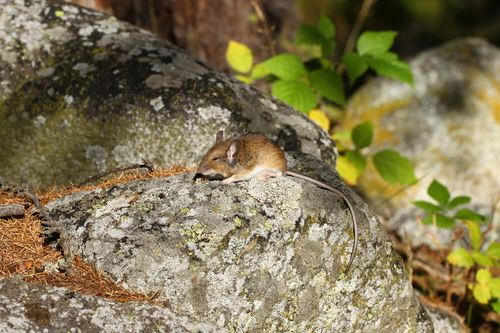
Primarily rocky outcrops (kopjes), granite inselbergs, boulder piles, and escarpment rock faces embedded within savanna, bushveld, and miombo woodland. Rock crevices and spaces between boulders are essential for shelter and nesting. Also found in rocky areas within thornbush scrub and dry broadleaf woodland, rarely venturing far from rocky substrates.
Adaptations to its environment
Highly agile on rocky terrain, with strong claws and a long tail that aids balance while navigating vertical and uneven rock surfaces. Nocturnal habits reduce exposure to diurnal predators and daytime heat. Physiologically capable of surviving dry season food and water scarcity. Dense fur provides insulation against temperature extremes on exposed rocky outcrops.
Conservation status and numbers
Least Concern (LC) on the IUCN Red List. The species has a wide geographic distribution, occurs in numerous protected areas, and is relatively common within suitable rocky habitat. No significant range-wide population declines have been documented, and it does not approach the thresholds for any threatened category.
Estimated population
No precise global population estimate exists. The species is considered common to locally abundant throughout its range wherever suitable rocky habitat is present. The overall population trend is assessed as stable.
What threatens the Red Rock Rat?
Localized habitat degradation through agricultural encroachment on rocky outcrops, overgrazing that reduces vegetation cover around kopjes, and bush clearing. Predation by feral and domestic cats may impact populations near human settlements. Climate change poses a potential long-term threat through alteration of savanna vegetation composition around rocky habitats.
Diseases and parasites
Hosts a diversity of ectoparasites including ixodid ticks, fleas, and mites. Internal helminth parasites (nematodes, cestodes) have been recorded in related Aethomys species. As a wild rodent, it may harbor zoonotic pathogens including Leptospira spp. and hantaviruses, though specific high-risk associations for this species are not well documented.
What is being done to protect it?
Present and presumably well-protected within numerous reserves across its range, including Hwange National Park and Matobo National Park (Zimbabwe), Kruger National Park and associated private reserves (South Africa), and South Luangwa National Park (Zambia). No specific targeted conservation programs are considered necessary given its Least Concern status.
Recommended actions
Continued monitoring of population trends within rocky outcrop ecosystems, particularly near agricultural frontiers. Protection of granite kopjes from overgrazing and encroachment. Further taxonomic and genetic research to resolve species boundaries within the Aethomys chrysophilus complex and identify any cryptic taxa warranting separate conservation attention.
What the Red Rock Rat looks like
Dorsal fur is rich reddish-orange to golden-brown, relatively coarse in texture. The ventral surface is pale whitish to cream or pale buff, with a reasonably sharp demarcation from the dorsal coloration. The long, bicolored tail is thinly furred, darker above and paler below. Eyes are moderately large and dark; ears are well developed and rounded; feet are pale.
Size
Head and body length: 100–175 mm; tail length: 120–200 mm (typically equal to or slightly longer than the body). Total length approximately 220–375 mm.
Weight
Typically 40–115 g; most adults weigh between 55 and 90 g. No marked sexual size dimorphism has been reported.
Distinctive features
Distinguished from the closely related Namaqua Rock Rat (Aethomys namaquensis) by its markedly deeper reddish-orange dorsal coloration (versus grayish-brown in namaquensis) and generally larger body size. The combination of vivid reddish fur, long tail, and strict association with rocky outcrops in woodland savanna separates it from most sympatric murids.
Differences between males and females
Minimal sexual dimorphism; males and females are similar in size and coloration. Females possess multiple pairs of mammae to nurse their litters.
Behaviour and diet of the Red Rock Rat
Lives in small family groups or loose colonies centered on communal rock crevice shelters. Group sizes typically range from 2 to about 10 individuals sharing a home rock system. Some degree of territoriality around core shelter sites has been inferred. Social grooming reinforces group cohesion.
When it is active
Predominantly nocturnal; foraging activity commences shortly after dark and peaks in the first few hours of the night. Individuals remain sheltered in rock crevices during daylight hours to avoid heat and aerial predators.
Diet
Omnivorous with a strong bias toward plant material. The diet includes seeds of grasses and forbs (which dominate), fruits, green vegetation, and invertebrates (insects, other arthropods). Invertebrate consumption may increase during the breeding season to meet elevated protein requirements.
How it feeds and hunts
Forages opportunistically on the ground surface and among rocks, using olfaction and vibrissae (whiskers) to locate seeds and invertebrates in low-light conditions. May cache seeds near shelter entrances. Insects are captured by active pursuit or gleaning from rock surfaces and vegetation.
Communication
Communicates via ultrasonic and audible vocalizations, particularly during social interactions and between mother and pups. Scent marking with urine and possibly ventral gland secretions conveys information on territory boundaries and reproductive condition. Tactile communication through social grooming is important in group cohesion.
Interactions with other species
Constitutes significant prey for barn owls (Tyto alba), spotted eagle owls (Bubo africanus), African rock pythons (Python natalensis), black mambas (Dendroaspis polylepis), and small carnivores including genets, mongooses, and servals. Competes with Aethomys namaquensis and other small murids for rocky habitat and granivorous food resources. May contribute modestly to seed dispersal.
Role in its ecosystem
Forms a foundational component of the small mammal fauna associated with granite kopje ecosystems. As a granivore and occasional seed cacher, it may influence plant community structure locally. Its high population density in suitable habitat makes it a critical prey base sustaining populations of numerous predators in rocky savanna landscapes.
Reproduction and lifecycle
Breeding is seasonal, peaking during the warm wet season (approximately October–April). Gestation lasts approximately 25–28 days. Litter size ranges from 2 to 6 young, with an average of about 3–4. Multiple litters per year are possible under favorable nutritional conditions.
Raising the young
Young are altricial at birth (blind, hairless, helpless). The female provides primary parental care, nursing and thermoregulating pups within a nest built in a protected rock crevice. Weaning occurs at approximately 3–4 weeks of age, after which juveniles gain independence relatively quickly.
Maturity and lifespan
Sexual maturity is reached at approximately 6–8 weeks of age, consistent with other small murids. Lifespan in the wild is typically 1–2 years due to intense predation pressure. Captive individuals may survive 3–4 years under managed conditions.
Taxonomy and naming of the Red Rock Rat
Classification
Mammalia > Rodentia > Muridae > Aethomys > Aethomys chrysophilus
Subspecies
Several subspecies have been proposed: A. c. chrysophilus (nominate; Zimbabwe and northeastern South Africa), A. c. granti (Wroughton, 1906; Zambia and Malawi), and A. c. silindensis (Roberts, 1938; eastern Zimbabwe escarpment, sometimes elevated to full species). Taxonomic revision of the complex is ongoing.
Scientific synonyms
Originally described as Mus chrysophilus de Winton, 1897, based on specimens from the Umzingwani River, Zimbabwe. Also formerly placed in genus Rattus (Rattus chrysophilus). Aethomys ineptus (Thomas & Wroughton, 1908) is sometimes treated as a synonym or sister species.
What research says
Recent studies
Recent molecular studies have highlighted cryptic diversity within the A. chrysophilus species complex, suggesting that eastern African populations may represent genetically distinct lineages warranting separate species status. Phylogeographic analyses have also been used to reconstruct how rocky outcrop specialists colonized southern Africa during Plio-Pleistocene climatic fluctuations.
Genome and DNA
A diploid chromosome number of 2n = 50 has been reported for Aethomys chrysophilus. Molecular phylogenetic studies (including Steppan et al., 2004, and Lack et al., 2012) have confirmed placement of Aethomys within the tribe Arvicanthini and revealed the genus to be potentially paraphyletic, prompting ongoing reassessment of species relationships.
Compared with similar species
Most closely related to Aethomys namaquensis (Namaqua Rock Rat), which occupies a more westerly, arid-adapted range in Namibia, western Botswana, and South Africa's Karoo; A. namaquensis is greyer and somewhat smaller. Also related to A. nyikae (Nyika Rock Rat) from montane Malawi and Zambia, and the possibly synonymous A. silindensis from the Zimbabwe eastern highlands. All Aethomys species share the characteristic association with rocky substrates.
The Red Rock Rat and people
The species name 'chrysophilus' — meaning 'gold-loving' in Greek — was inspired by its vivid golden-reddish pelage, one of the most distinctive coat colors among African murids. Despite weighing under 100 g, Red Rock Rats will aggressively defend their rock crevice dens by adopting a threat posture and vocalizing loudly at intruders many times their size. Their tails, which can exceed their body length, function like a balancing pole, allowing them to navigate near-vertical rock faces with remarkable sure-footedness.
Where and how to see it
Best observed at night on granite kopjes and boulder-strewn hillsides in Zimbabwe (Matobo and Hwange National Parks are excellent), northeastern South Africa (Limpopo and Kruger areas), and Zambia. Use a dim red-filtered headlamp or spotlight after dusk and scan exposed rock surfaces near crevice openings. Rocky outcrops in Matobo National Park are particularly productive and also offer scenic value.
Risks to humans
Low risk to humans under normal circumstances. May bite if cornered or handled, as with any wild rodent. General precautions regarding rodent-borne zoonotic diseases (avoiding contact with droppings or urine) are advisable, but no specific high-risk disease associations have been confirmed for this species.
Human uses
Occasionally taken as bushmeat in rural communities across its range, though not systematically harvested. Has been used as a study subject in comparative mammalian biology and parasitology research. Not subject to significant commercial wildlife trade.
Countries where the Red Rock Rat is recorded
The 7 countries named in the range description of its IUCN Red List assessment.
Questions about the Red Rock Rat
Where does the Red Rock Rat live?
The Red Rock Rat is recorded in Botswana, Malawi, Mozambique, South Africa and Tanzania, among 7 countries in total across Africa. These countries come from the range description of its IUCN Red List assessment, and they are what place the species on the interactive map.
Is the Red Rock Rat endangered?
The IUCN Red List assesses the Red Rock Rat as Least Concern. The species is widespread and abundant enough not to qualify for any threatened category. It does not mean the species is safe forever, only that nothing in the current data raises an alarm.
How many are left in the wild?
No precise global population estimate exists. This figure comes from the species assessment on the IUCN Red List; population estimates for wild mammals are ranges, not counts, and are revised at each assessment.
What habitat does the Red Rock Rat live in?
Primarily rocky outcrops (kopjes), granite inselbergs, boulder piles, and escarpment rock faces embedded within savanna, bushveld, and miombo woodland.
What is the scientific name of the Red Rock Rat?
The Red Rock Rat is Aethomys chrysophilus, in the family Muridae, order Rodentia.
Other species in the genus Aethomys
Other species in the family Muridae
Sources
Conservation status, range description and population estimate come from the IUCN Red List assessment for Aethomys chrysophilus. Countries are derived from that range description, not from a mapped country list. Last refreshed on .
The distribution map is drawn from the IUCN Red List spatial data compiled in 2008. IUCN (International Union for Conservation of Nature)