
Kaiser's Rock Rat
Aethomys kaiseri
Red List assessment
Least Concernon the IUCN Red List
- EXExtinct
- EWExtinct in the Wild
- CRCritically Endangered
- ENEndangered
- VUVulnerable
- NTNear Threatened
- LCLeast Concern
The Kaiser's Rock Rat is recorded in 6 countries across Africa. The IUCN Red List assesses the Kaiser's Rock Rat as Least Concern. No precise global population estimate exists.
- Family
- Muridae
- Order
- Rodentia
- Genus
- Aethomys
- Countries recorded
- 6
- Continents
- Africa
- Red List category
- Least Concern
- Data updated
- August 9, 2026
What is the Kaiser's Rock Rat?
Kaiser's Rock Rat is a medium-sized murid rodent endemic to the Great Lakes region of central-eastern Africa, first described by Noack in 1887. It belongs to the genus Aethomys, commonly referred to as 'rock rats' due to their frequent association with rocky outcrops and stony terrain. The species occupies a mosaic of woodland, forest margins, and rocky habitats near the Albertine Rift and Lake Tanganyika basin. Though understudied, it plays an important ecological role as a seed disperser and prey item for larger predators in its range.
Where does the Kaiser's Rock Rat live?
Central and East-Central Africa, primarily the Democratic Republic of Congo, Uganda, Rwanda, Burundi, western Tanzania, and northern Zambia
The species' range is centered on the Great Lakes region of central-eastern Africa. It occurs in the eastern Democratic Republic of Congo, southwestern Uganda, Rwanda, Burundi, western Tanzania (particularly around Lake Tanganyika), and the northern tip of Zambia. The distribution closely follows the Albertine Rift ecoregion.
Altitude and depth
Recorded from approximately 700 m to over 2000 m above sea level, with the highest densities typically found between 1000 and 1800 m in montane woodland and rocky highland areas.
Seasonal movements
No significant seasonal migrations are documented. Activity and reproductive patterns may shift slightly in response to seasonal rainfall cycles, with increased foraging activity during the wet season when food resources are more abundant.
Habitat of the Kaiser's Rock Rat
Kaiser's Rock Rat primarily inhabits rocky outcrops, miombo and other dry woodlands, forest edges, and montane grassland-forest mosaics. It is often found in areas where rocky substrate provides refugia from predators. It can also occur in secondary vegetation near human settlements at the forest-agricultural interface.
Adaptations to its environment
Like other Aethomys species, Kaiser's Rock Rat has strong limbs suited for navigating rocky terrain and crevices, which serve as shelter from predators. Its cryptic brownish coloration provides camouflage in woodland and rocky settings. Its generalist omnivorous diet allows it to exploit a wide range of food sources across variable habitats.
Conservation status and numbers
Assessed as Least Concern (LC) by the IUCN Red List. The species has a reasonably wide distribution across the Great Lakes region, is presumed to exist in several protected areas, and faces no major range-wide threats currently causing rapid population decline.
Estimated population
No precise global population estimate exists. The species is considered locally common within suitable habitat and the overall population trend is presumed stable, though detailed survey data are lacking.
What threatens the Kaiser's Rock Rat?
Localized habitat loss due to agricultural expansion, charcoal production, and deforestation around the Great Lakes region represent potential threats. Human encroachment and associated habitat fragmentation may reduce connectivity between populations. Subsistence trapping may occur locally but is not considered a major threat at the species level.
Diseases and parasites
Likely hosts a range of ectoparasites (fleas, ticks, mites) and endoparasites (helminths, protozoans) common to African murids. Aethomys species in general may serve as reservoir hosts for arboviruses or bacterial pathogens, but specific records for A. kaiseri are lacking.
What is being done to protect it?
The species benefits from incidental protection within several national parks and reserves within its range, including Virunga National Park (DRC), Bwindi Impenetrable National Park (Uganda), and Gombe Stream National Park (Tanzania). No species-specific conservation programs are currently in place.
Recommended actions
Field surveys to better characterize population size and distribution are a priority. Monitoring of habitat quality in the Albertine Rift ecoregion should be maintained. Integration of small mammal conservation into regional land-use planning and biodiversity assessments is recommended.
What the Kaiser's Rock Rat looks like
The dorsal fur is medium brown to grayish-brown, often with a slightly darker mid-dorsal stripe or region. The ventral surface is pale gray to whitish-buff. The tail is bicolored—darker above and paler below—and relatively long. Eyes are moderately large and ears are rounded.
Size
Head-body length approximately 115–160 mm; tail length approximately 130–185 mm, typically equal to or slightly longer than the body.
Weight
Typically 55–120 g; adults generally range between 70–100 g with limited documented sexual size dimorphism.
Distinctive features
Compared to the closely related Aethomys nyikae and A. hindei, Kaiser's Rock Rat tends to be slightly larger and is distinguished by subtle pelage color differences and its specific geographic range. Precise morphological separation from congeners often requires cranial and dental measurements. The relatively long, scaly tail and robust build are characteristic of the genus.
Differences between males and females
Sexual dimorphism is minimal. Males and females are similar in size and coloration, as is typical for most Aethomys species. Adult males may be marginally heavier on average.
Behaviour and diet of the Kaiser's Rock Rat
Kaiser's Rock Rat is thought to be semi-social, potentially living in small family groups or loose aggregations near rocky shelters, similar to other rock rats in the genus. Group sizes are likely small (2–6 individuals). Detailed social structure data are lacking for this species.
When it is active
Primarily nocturnal, with peak activity occurring in the hours after dusk and before dawn. It shelters in rock crevices, dense vegetation, or burrows during the day.
Diet
Omnivorous. The diet consists primarily of seeds, grains, and other plant material including fruits and green vegetation. Invertebrates such as insects and larvae supplement the diet, especially during the dry season when plant food may be scarce.
How it feeds and hunts
Forages opportunistically on the ground and among rocks, using its vibrissae and olfaction to locate seeds and invertebrates. It may cache food items in rocky crevices. No specialized hunting behavior is documented.
Communication
Likely uses ultrasonic vocalizations for mother-offspring communication. Scent marking via urine and specialized glands is probable, consistent with other murids and used for territory delineation and mate recognition. Tactile and olfactory signals are important in social interactions.
Interactions with other species
Serves as prey for a variety of raptors (e.g., owls, hawk-eagles), medium-sized carnivores (genets, mongooses, servals), and larger snakes within its range. Competes with other sympatric small rodents for seeds and shelter sites. May act as a host for ectoparasites shared with other small mammals.
Role in its ecosystem
As a seed consumer and occasional seed hoarder, Kaiser's Rock Rat contributes to seed dispersal and plant community dynamics. It represents an important prey base for mesopredators and raptors in Great Lakes ecosystems, linking primary production to higher trophic levels.
Reproduction and lifecycle
Breeding is likely year-round with peaks during or after the rainy season when food is plentiful. Gestation is estimated at approximately 21–25 days, typical for murids. Litter size is estimated at 2–6 young, consistent with congeners.
Raising the young
The female provides primary parental care, nursing and protecting the altricial young in a sheltered nest within rock crevices or dense cover. Weaning occurs at approximately 3–4 weeks. The father's role in parental care is not well documented.
Maturity and lifespan
Sexual maturity is likely reached at 6–10 weeks of age, typical for small murids. Wild lifespan is estimated at 1–3 years due to predation pressure. In captivity, similar species may live up to 4–5 years.
Taxonomy and naming of the Kaiser's Rock Rat
Classification
Mammalia > Rodentia > Muridae > Aethomys > Aethomys kaiseri
Scientific synonyms
Originally described as Mus kaiseri Noack, 1887; later placed in genus Aethomys. Some earlier references use Rattus kaiseri.
What research says
Recent studies
No high-profile recent studies are specifically focused on Aethomys kaiseri. It has been included in broader phylogeographic and taxonomic revisions of the genus Aethomys and the tribe Arvicanthini, which have clarified generic boundaries and species relationships in African murids.
Genome and DNA
Detailed genomic data for Aethomys kaiseri are not published. Chromosome number is not confirmed in the literature; other Aethomys species show 2n values ranging from 44 to 56. Phylogenetic studies of Aethomys as a genus have been conducted using mitochondrial and nuclear markers.
Compared with similar species
Within the genus Aethomys, Kaiser's Rock Rat is most similar to A. nyikae (Nyika Rock Rat) and A. hindei (Hinde's Rock Rat), sharing similar size, coloration, and rocky-woodland habitat preferences. It differs from the more widespread A. namaquensis of southern Africa, which occupies more arid habitats. The genus Aethomys is part of the broader Arvicanthini tribe alongside Arvicanthis and Lemniscomys.
The Kaiser's Rock Rat and people
The genus name Aethomys derives from the Greek 'Aethos' (unusual) and 'mys' (mouse), reflecting the distinctive characteristics that set rock rats apart from common mice. Like many rock-dwelling rodents across continents, Kaiser's Rock Rat independently evolved the same rocky-crevice lifestyle seen in hyraxes and pikas — a remarkable case of niche convergence. Despite being described in 1887, Kaiser's Rock Rat remains one of the least-studied mammals in the Great Lakes biodiversity hotspot.
Where and how to see it
The best opportunities to observe Kaiser's Rock Rat are at night around rocky outcrops and boulder fields within protected areas of the Albertine Rift, such as Virunga National Park (DRC) or in the highlands of Burundi and Rwanda. Using a red-light headlamp near rocky areas after dusk during the rainy season improves detection chances. Camera traps set near rock crevices and animal runways are an effective survey method.
Risks to humans
No notable risk to humans. Like all wild rodents, individuals may bite if handled and could theoretically carry zoonotic parasites or pathogens, but Kaiser's Rock Rat is not associated with any known significant public health concern.
Human uses
Occasionally taken in subsistence small-mammal trapping for local consumption, as is common for many murid rodents in rural central Africa. Not commercially traded or used in traditional medicine in any documented manner specific to this species.
Myths and legends
No specific myths, legends, or cultural symbolism are documented for Kaiser's Rock Rat among the peoples of the Great Lakes region. Small rodents in general across central Africa are sometimes associated with crop pests in local agricultural traditions, though this species is not particularly notable in this regard.
Countries where the Kaiser's Rock Rat is recorded
The 6 countries named in the range description of its IUCN Red List assessment.
Questions about the Kaiser's Rock Rat
Where does the Kaiser's Rock Rat live?
The Kaiser's Rock Rat is recorded in Burundi, Democratic Republic of the Congo, Rwanda, Tanzania and Uganda, among 6 countries in total across Africa. These countries come from the range description of its IUCN Red List assessment, and they are what place the species on the interactive map.
Is the Kaiser's Rock Rat endangered?
The IUCN Red List assesses the Kaiser's Rock Rat as Least Concern. The species is widespread and abundant enough not to qualify for any threatened category. It does not mean the species is safe forever, only that nothing in the current data raises an alarm.
How many are left in the wild?
No precise global population estimate exists. This figure comes from the species assessment on the IUCN Red List; population estimates for wild mammals are ranges, not counts, and are revised at each assessment.
What habitat does the Kaiser's Rock Rat live in?
Kaiser's Rock Rat primarily inhabits rocky outcrops, miombo and other dry woodlands, forest edges, and montane grassland-forest mosaics.
What is the scientific name of the Kaiser's Rock Rat?
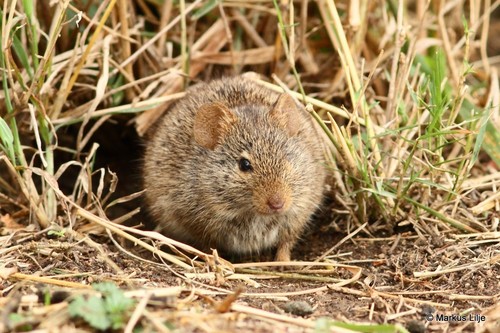
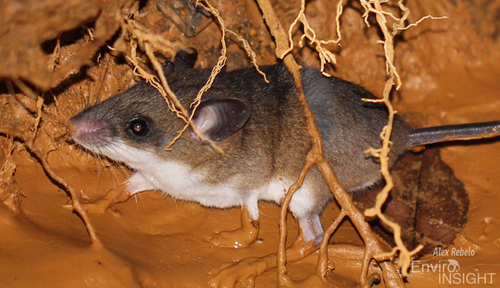
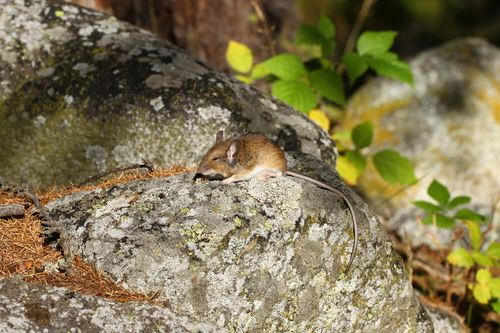
The Kaiser's Rock Rat is Aethomys kaiseri, in the family Muridae, order Rodentia.
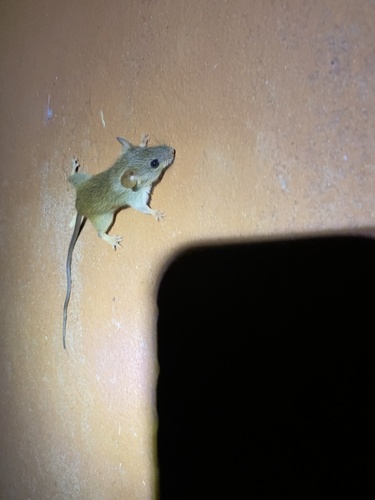
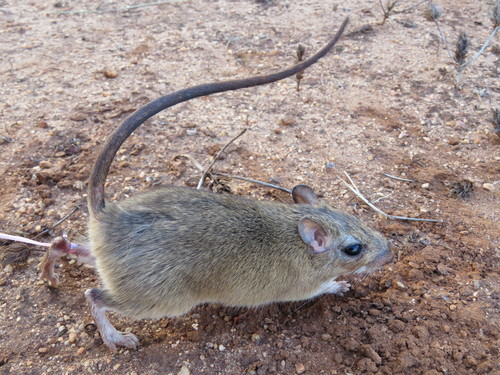
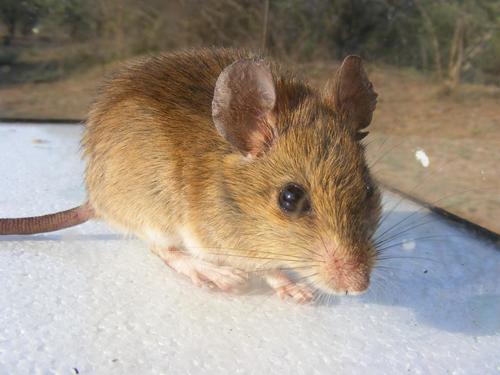
Other species in the genus Aethomys
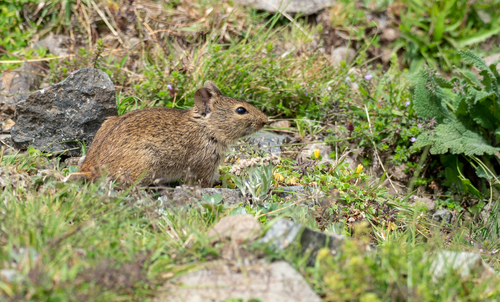
Other species in the family Muridae
Sources
Conservation status, range description and population estimate come from the IUCN Red List assessment for Aethomys kaiseri. Countries are derived from that range description, not from a mapped country list. Last refreshed on .
The distribution map is drawn from the IUCN Red List spatial data compiled in 2008. IUCN (International Union for Conservation of Nature)