
Nyika Rock Rat
Aethomys nyikae
Red List assessment
Least Concernon the IUCN Red List
- EXExtinct
- EWExtinct in the Wild
- CRCritically Endangered
- ENEndangered
- VUVulnerable
- NTNear Threatened
- LCLeast Concern
The Nyika Rock Rat is recorded in 5 countries across Africa. The IUCN Red List assesses the Nyika Rock Rat as Least Concern. No precise global population estimate exists.
- Family
- Muridae
- Order
- Rodentia
- Genus
- Aethomys
- Countries recorded
- 5
- Continents
- Africa
- Red List category
- Least Concern
- Data updated
- August 9, 2026
What is the Nyika Rock Rat?
The Nyika Rock Rat is a medium-sized murid rodent first described from the Nyika Plateau, a high montane plateau straddling the Malawi-Zambia border. It belongs to the genus Aethomys, a group of sub-Saharan African rats associated with rocky, rugged terrain. Like others in its genus, it is a semi-saxicolous species that shelters among boulders and rocky outcrops in highland and miombo woodland environments. It is notable for its association with high-altitude rocky habitats and represents an ecologically specialized lineage within the diverse African Muridae.
Where does the Nyika Rock Rat live?
East-central Africa, primarily on the Nyika Plateau (northern Malawi, northeastern Zambia) and surrounding highland regions of Tanzania, Mozambique, and Zimbabwe.
The species is distributed across the highlands of east-central Africa, centered on the Nyika Plateau in northern Malawi and northeastern Zambia. Its range extends into parts of southwestern Tanzania, northern Mozambique, and possibly eastern Zimbabwe. Distribution is patchy, tied closely to the availability of suitable rocky highland habitat.
Altitude and depth
Typically found between 1,500 and 2,600 m above sea level, with stronghold populations on the Nyika Plateau at approximately 2,200–2,600 m. Occasional records exist at lower elevations near suitable rocky terrain.
Seasonal movements
No long-distance seasonal migrations are known. Activity and reproductive effort may peak during or after the wet season (November–April) when food resources such as seeds and invertebrates are most abundant.
Habitat of the Nyika Rock Rat
Rocky outcrops and boulder-strewn hillsides within montane grassland and miombo (Brachystegia) woodland are its primary habitats. It is also found at the ecotones between rocky areas and scrubby savanna vegetation at mid-to-high elevations. Rocky crevices and talus slopes provide essential shelter and nesting sites.
Adaptations to its environment
Its robust limbs and well-developed claws are adapted for navigating rocky terrain and crevices. The relatively large ears likely enhance predator detection in open rocky environments. Its cryptic brownish-grey pelage provides camouflage against the granite and rock surfaces it inhabits.
Conservation status and numbers
Least Concern (LC) on the IUCN Red List. The species has a sufficiently wide distribution and is not believed to be experiencing significant population declines. No thresholds for threatened categories are currently met.
Estimated population
No precise global population estimate exists. The species is considered relatively common within suitable habitat on the Nyika Plateau and associated highlands; population trend is presumed stable.
What threatens the Nyika Rock Rat?
Localized habitat degradation from agricultural encroachment onto highland margins and overgrazing by livestock, which can reduce vegetation cover around rocky outcrops. Climate change poses a potential long-term threat by altering montane grassland ecosystems. Bush burning for land clearing may also affect local populations.
Diseases and parasites
Likely hosts ectoparasites including fleas, ticks, and mites, as well as endoparasites such as nematodes and cestodes, consistent with other African murid rodents. Specific parasite fauna for A. nyikae has not been thoroughly documented.
What is being done to protect it?
The core of its range falls within protected areas, most notably Nyika National Park in Malawi (one of the largest national parks in the country) and Nyika National Park in Zambia. These reserves provide significant habitat protection. No species-specific conservation programs are known to target A. nyikae directly.
Recommended actions
Continued protection and management of Nyika National Park and adjacent highland reserves. Monitoring of population trends via standardized small-mammal trapping surveys. Assessment of the impact of climate change on montane habitat quality. Taxonomic and genetic studies to clarify population structure across its range.
What the Nyika Rock Rat looks like
Dorsal fur is brownish-grey to warm tawny-brown, often darker along the midline. The ventral surface is distinctly paler, creamy-white to buff. The ears are moderately large, sparsely furred, and rounded. The tail is scaly, roughly unicolored (dark above, slightly paler below), and approximately equal in length to the head-body.
Size
Head-body length approximately 100–145 mm; tail length approximately 100–145 mm (roughly equal to body length). Total length typically 200–290 mm.
Weight
Approximately 40–85 g; adults commonly fall in the 50–75 g range. No strongly documented sexual dimorphism in weight.
Distinctive features
Distinguished from the closely related Aethomys chrysophilus (Red Veld Rat) by its generally smaller size, more montane distribution, and less richly rufous dorsal coloration. Differs from A. silindensis by range and subtle cranial morphology. The combination of rocky highland habitat and moderate body size helps distinguish it in the field.
Differences between males and females
Sexual dimorphism is minimal. Males and females are similar in size and coloration. Females have multiple pairs of mammae as typical for murids.
Behaviour and diet of the Nyika Rock Rat
Likely semi-social or loosely colonial, as is common in saxicolous Aethomys species. Small family groups or pairs may share rock crevice refuges. Specific social structure in this species has not been well studied.
When it is active
Primarily nocturnal, with peak activity shortly after sunset. Daytime hours are spent sheltering in rock crevices, under boulders, or in burrows beneath rocks. Crepuscular activity has also been noted in some Aethomys species.
Diet
Omnivorous, with a diet based primarily on seeds, plant material (leaves, shoots), and supplemented by insects and other small invertebrates when available. Foraging typically occurs on and around rocky outcrops and adjacent vegetation patches.
How it feeds and hunts
Forages opportunistically among rocks, leaf litter, and low vegetation; uses its sensitive vibrissae to locate food items. Seeds may be stored in caches within rocky crevices, though hoarding behavior has not been specifically confirmed for this species.
Communication
Communicates via ultrasonic vocalizations, audible squeaks, and likely scent marking using urine and glandular secretions to demarcate territories and communicate reproductive status. Vibrissae play an important role in tactile communication and environmental sensing in dark rocky crevices.
Interactions with other species
Predators likely include barn owls (Tyto alba), African rock pythons, small carnivorous mammals (genets, mongooses), and diurnal raptors. Competes with other small mammals (e.g., Mastomys, Mus species) for food and shelter in rocky highland habitats. May serve as a secondary host for ectoparasites and helminths shared with other co-occurring rodents.
Role in its ecosystem
Functions as a secondary consumer and seed disperser within montane grassland and miombo woodland ecosystems. As a prey item for several predators, it is an important link in highland food webs. Seed caching behavior, if present, may contribute modestly to plant dispersal.
Reproduction and lifecycle
Breeding likely peaks during or after the rainy season (approximately November–April) when food is most abundant. Gestation period is estimated at approximately 21–25 days, as typical for murids. Litter size is estimated at 2–6 pups, consistent with related Aethomys species.
Raising the young
The female provides primary parental care, nursing and protecting the altricial young in a nest within a rock crevice or burrow. Pups are weaned at approximately 3 weeks of age. Paternal involvement is not well documented.
Maturity and lifespan
Sexual maturity is likely reached at 6–10 weeks of age, as in related Aethomys species. Wild lifespan is estimated at 1–2 years due to high predation pressure; captive individuals of related species can live 3–4 years.
Taxonomy and naming of the Nyika Rock Rat
Classification
Mammalia > Rodentia > Muridae > Aethomys > Aethomys nyikae
Scientific synonyms
Historically sometimes referenced under Rattus nyikae (De Winton, 1897) before the genus Aethomys was widely separated from Rattus.
What research says
Recent studies
Phylogenetic studies of the genus Aethomys using mitochondrial and nuclear markers have helped clarify species boundaries and biogeographic history within east-central Africa. A. nyikae has been included in broader African murid systematic revisions, though targeted ecological studies remain sparse.
Genome and DNA
Exact diploid chromosome number (2n) has not been widely published for A. nyikae specifically. Related Aethomys species typically have 2n = 46–56. No prominent genomic studies specific to this species are known.
Compared with similar species
Most closely related to other montane and rocky-habitat specialists within Aethomys. Compared to the widespread A. chrysophilus (Red Veld Rat), A. nyikae is more restricted in range, has a less rufous pelage, and is associated with higher elevations. It is larger and more robustly built than the smaller Mus species sharing its habitat, and lacks the highly social behavior of genera such as Mastomys.
The Nyika Rock Rat and people
1) The species is named after the Nyika Plateau, where 'nyika' in several Bantu languages means 'wilderness' or 'uninhabited place,' reflecting the remote highland landscape it calls home. 2) Despite living at altitudes exceeding 2,400 m, it remains active year-round without hibernating, enduring cold montane nights by sheltering deep within rocky crevices. 3) The Nyika Plateau, its heartland, hosts one of Africa's most spectacular highland grassland ecosystems, sharing its rocky habitat with leopards, hyenas, and reedbuck — an unusually large-charisma neighborhood for a small rat.
Where and how to see it
The best place to observe A. nyikae is Nyika National Park in northern Malawi, particularly around rocky outcrops and boulder fields on the plateau above 2,000 m. Spotlight surveys or live-trapping transects at night offer the best chances of detection. The dry season (May–October) provides easier access to the plateau roads, though the wet season may yield higher activity levels.
Risks to humans
No notable risk to humans. Like all wild rodents, it may theoretically carry zoonotic pathogens or ectoparasites, but no specific public health concerns are associated with this species. Handling should follow standard small-mammal biosafety precautions.
Countries where the Nyika Rock Rat is recorded
The 5 countries named in the range description of its IUCN Red List assessment.
Questions about the Nyika Rock Rat
Where does the Nyika Rock Rat live?
The Nyika Rock Rat is recorded in Malawi, Mozambique, Tanzania, Zambia and Zimbabwe across Africa. These countries come from the range description of its IUCN Red List assessment, and they are what place the species on the interactive map.
Is the Nyika Rock Rat endangered?
The IUCN Red List assesses the Nyika Rock Rat as Least Concern. The species is widespread and abundant enough not to qualify for any threatened category. It does not mean the species is safe forever, only that nothing in the current data raises an alarm.
How many are left in the wild?
No precise global population estimate exists. This figure comes from the species assessment on the IUCN Red List; population estimates for wild mammals are ranges, not counts, and are revised at each assessment.
What habitat does the Nyika Rock Rat live in?
Rocky outcrops and boulder-strewn hillsides within montane grassland and miombo (Brachystegia) woodland are its primary habitats.
What is the scientific name of the Nyika Rock Rat?
The Nyika Rock Rat is Aethomys nyikae, in the family Muridae, order Rodentia.
Other species in the genus Aethomys
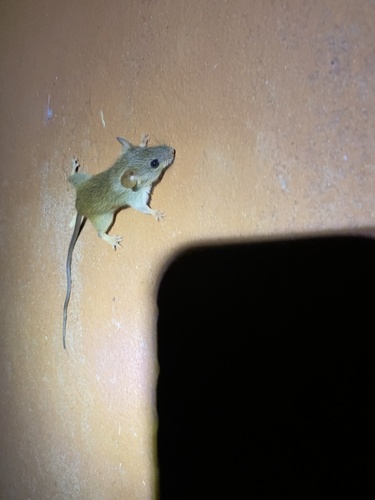
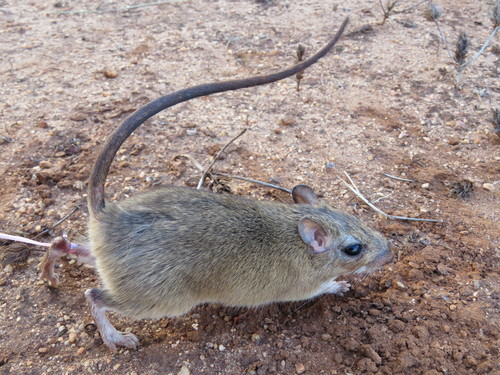
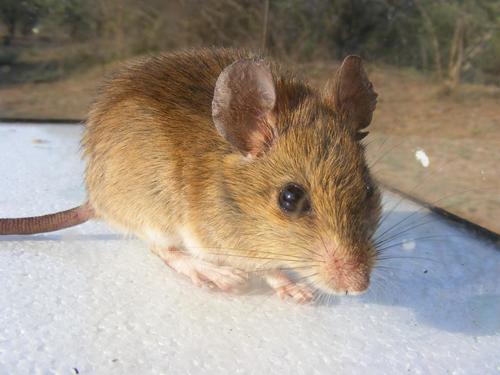
Other species in the family Muridae
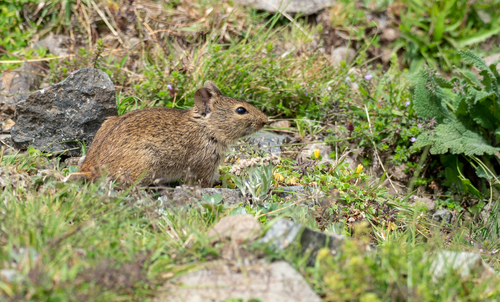
Sources
Conservation status, range description and population estimate come from the IUCN Red List assessment for Aethomys nyikae. Countries are derived from that range description, not from a mapped country list. Last refreshed on .
The distribution map is drawn from the IUCN Red List spatial data compiled in 2008. IUCN (International Union for Conservation of Nature)