
Selinda Veld Rat
Aethomys silindensis
Red List assessment
Data Deficienton the IUCN Red List
- EXExtinct
- EWExtinct in the Wild
- CRCritically Endangered
- ENEndangered
- VUVulnerable
- NTNear Threatened
- LCLeast Concern
Data Deficient has no position on the scale above — it records the absence of an assessment, not a degree of risk.
The Selinda Veld Rat is recorded in 2 countries across Africa. The IUCN Red List records the Selinda Veld Rat as Data Deficient. Completely unknown; no population estimate exists.
- Family
- Muridae
- Order
- Rodentia
- Genus
- Aethomys
- Countries recorded
- 2
- Continents
- Africa
- Red List category
- Data Deficient
- Data updated
- August 9, 2026
What is the Selinda Veld Rat?
Aethomys silindensis is a poorly known murid rodent apparently endemic to the Silinda (Mount Silinda) area of the eastern Zimbabwe highlands, near the Chimanimani Mountains. It belongs to the genus Aethomys, a diverse group of medium-sized African rats commonly called veld rats. The species is listed as Data Deficient by the IUCN due to critically limited specimen records and the near-total absence of dedicated field surveys. It remains one of the scientifically least-documented small mammals in southern Africa, known largely from a handful of museum type specimens collected nearly a century ago.
Where does the Selinda Veld Rat live?
Eastern Zimbabwe (Silinda/Chimanimani highlands area), possibly extending marginally into adjacent western Mozambique
Known primarily from the type locality at Mount Silinda, Chimanimani District, Manicaland Province, eastern Zimbabwe. A possible range extension into adjacent Manica Province of western Mozambique has not been confirmed by surveys. The species' total distribution may be extremely restricted, potentially spanning only a few hundred square kilometers.
Altitude and depth
Estimated between 700 and 1,200 m elevation, consistent with the Silinda plateau and the surrounding Chimanimani highlands where afromontane conditions prevail.
Habitat of the Selinda Veld Rat
Likely inhabits the ecotonal zones between afromontane forest and miombo woodland, as well as rocky slopes and forest edges at moderate elevations. The Silinda Forest Reserve, one of Zimbabwe's last significant montane forest fragments, represents the core of its presumed habitat. Rocky terrain with dense ground cover and leaf litter likely provides essential shelter and foraging microhabitats.
Adaptations to its environment
Likely possesses robust, agile limbs suited for navigating rocky forest floor terrain and forested hillsides. As a likely inhabitant of the cooler, more humid montane zone, it may have physiological adaptations for thermoregulation compared to lowland Aethomys congeners. Dense vibrissae likely aid nocturnal navigation in low-light forest and rocky environments.
Conservation status and numbers
Listed as Data Deficient (DD) on the IUCN Red List, indicating insufficient data to make a reliable assessment of extinction risk. The extremely restricted and poorly documented range, combined with the absence of population surveys, prevents any confident categorization. Some conservation biologists suspect it may qualify as Vulnerable or Endangered if properly assessed.
Estimated population
Completely unknown; no population estimate exists. Trend is undetermined due to the total absence of systematic surveys targeting this species.
What threatens the Selinda Veld Rat?
Potential threats include deforestation and agricultural encroachment into the Chimanimani highlands, which reduces available montane forest habitat. Climate change poses a long-term risk by shrinking afromontane forest zones at higher elevations. Given its apparently restricted range, even localised habitat degradation could be severely detrimental to the species.
What is being done to protect it?
The Silinda Forest Reserve provides partial habitat protection within the species' known range. The adjacent Chimanimani National Park and Transfrontier Conservation Area (shared with Mozambique) offer broader landscape-level protection. No species-specific conservation program currently exists for A. silindensis.
Recommended actions
Priority actions include targeted live-trapping surveys in and around Silinda Forest Reserve and the broader Chimanimani highlands to establish the species' true distribution and abundance. Genetic and morphological studies are needed to resolve its taxonomic status within the Aethomys genus, and ecological assessments should evaluate habitat quality and connectivity across its suspected range.
What the Selinda Veld Rat looks like
Likely displays brownish to reddish-brown dorsal pelage and pale cream to whitish underparts, consistent with the typical Aethomys body plan. The eyes are moderately large and the ears rounded, adapted for nocturnal sensory perception. The tail is approximately equal in length to the head-body and is lightly haired.
Size
Estimated head-body length of 120–180 mm, with a tail of approximately 120–170 mm, based on body plan norms for medium-sized Aethomys species. Hind foot length estimated at 20–28 mm.
Weight
Estimated 50–120 g, based on closely related congeners; species-specific weight data are unavailable.
Distinctive features
Distinguished from related Aethomys species primarily by subtle cranial morphology and dental characteristics identified in museum specimens. Precise external distinguishing features remain poorly documented due to the scarcity of collected individuals and the absence of comparative field descriptions.
Behaviour and diet of the Selinda Veld Rat
Unknown; likely semi-social or loosely colonial as is typical for many Aethomys species, possibly living as solitary foragers that share overlapping home ranges or form small loose family groups.
When it is active
Presumed nocturnal, consistent with the activity pattern of all well-studied Aethomys species. Peak activity likely occurs during the first few hours after sunset when foraging risk from diurnal predators is minimised.
Diet
Likely omnivorous, consuming seeds, fruits, plant material, invertebrates, and possibly small insects or larvae, consistent with the broad dietary ecology documented for the Aethomys genus. Seeds probably form the dietary staple, supplemented seasonally by invertebrates.
How it feeds and hunts
Likely forages by systematic ground-level searching among leaf litter, rocky crevices, and forest floor debris. Uses its prominent vibrissae to detect food items by touch in low-light conditions. No active predatory hunting is expected.
Communication
Likely relies on ultrasonic vocalizations for intraspecific communication, as well as urine-based scent marking to delineate territories or signal reproductive status. Tactile whisker-based communication during close social interactions is also probable.
Interactions with other species
Likely subject to predation by barn owls, other raptors, and small carnivores (genets, mongooses) within its montane habitat. May compete with other small rodents sympatric in the Silinda ecosystem. No documented symbiotic or mutualistic relationships are known.
Role in its ecosystem
As a small omnivorous rodent, likely plays a modest role in seed dispersal and nutrient cycling within the montane forest ecosystem. It may also serve as an important prey item for higher trophic levels, linking primary productivity to mesopredator and raptor populations.
Reproduction and lifecycle
Specific data unavailable. Based on genus-level ecology, breeding likely peaks during the warm wet season (November–April), with a gestation period of approximately 21–28 days and litter sizes of 2–6 altricial pups.
Raising the young
Presumed standard murid pattern where altricial young are nursed by the female in a concealed nest within rocky crevices or dense vegetation. Weaning likely occurs at 3–4 weeks of age; specific parental care details are undocumented for this species.
Maturity and lifespan
Unknown for this species specifically; related Aethomys species reach sexual maturity at approximately 2–3 months of age and have estimated wild lifespans of 1–3 years, with captive individuals potentially living up to 4–5 years.
Taxonomy and naming of the Selinda Veld Rat
Classification
Mammalia > Rodentia > Muridae > Aethomys > Aethomys silindensis
Scientific synonyms
Likely originally described as Rattus silindensis Roberts, 1931; historically subsumed by some authors into the broader Aethomys chrysophilus species complex before separation as a distinct taxon.
What research says
Genome and DNA
No published karyotypic or molecular genetic data are available for Aethomys silindensis. Diploid chromosome counts across the Aethomys genus range from 2n = 44 to 2n = 50 in well-studied species, and similar values may apply here.
Compared with similar species
Most phylogenetically proximate to other southern African Aethomys species such as A. chrysophilus (Red Veld Rat) and A. ineptus (Tete Veld Rat). Unlike the widespread and ecologically generalist A. chrysophilus, A. silindensis appears to be a range-restricted montane specialist. It differs from A. namaquensis (Namaqua Rock Rat) in its afromontane forest habitat preference rather than arid rocky escarpments.
The Selinda Veld Rat and people
Aethomys silindensis is so rarely collected that only a tiny number of museum specimens have ever been formally documented, making it one of Africa's most elusive small mammals nearly a century after its scientific description. The species name 'silindensis' commemorates Mount Silinda, one of Zimbabwe's most biologically significant and ancient montane forest fragments, which harbours numerous range-restricted endemic species. Despite the genus name Aethomys meaning 'Ethiopian mouse' in Greek, none of the Aethomys species actually occur in Ethiopia, highlighting how historical taxonomic naming conventions have not always reflected modern biogeographic knowledge.
Where and how to see it
The best opportunities to encounter this species would involve systematic live-trapping surveys in the Silinda Forest Reserve, Chimanimani District, Zimbabwe, ideally conducted during the wet season (November–April) when rodent activity and trap success rates are highest. Approaching local forest rangers for access permits and collaborating with institutions such as the Natural History Museum of Zimbabwe (Bulawayo) is strongly recommended for any research effort.
Risks to humans
No notable risk to humans. Like most small murids, it may bite defensively if handled, but poses no significant danger. Standard precautions when handling wild rodents (gloves, mask) are advisable due to potential zoonotic disease transmission common to the Muridae family.
Countries where the Selinda Veld Rat is recorded
The 2 countries named in the range description of its IUCN Red List assessment.
Questions about the Selinda Veld Rat
Where does the Selinda Veld Rat live?
The Selinda Veld Rat is recorded in Mozambique and Zimbabwe across Africa. These countries come from the range description of its IUCN Red List assessment, and they are what place the species on the interactive map.
Is the Selinda Veld Rat endangered?
The IUCN Red List assesses the Selinda Veld Rat as Data Deficient. There is not enough information to judge the risk of extinction, usually because the species is rarely seen or has never been surveyed. It is not a reassuring category: several species were Data Deficient right up to the point they were found to be Critically Endangered.
How many are left in the wild?
Completely unknown; no population estimate exists. This figure comes from the species assessment on the IUCN Red List; population estimates for wild mammals are ranges, not counts, and are revised at each assessment.
What habitat does the Selinda Veld Rat live in?
Likely inhabits the ecotonal zones between afromontane forest and miombo woodland, as well as rocky slopes and forest edges at moderate elevations.
What is the scientific name of the Selinda Veld Rat?
The Selinda Veld Rat is Aethomys silindensis, in the family Muridae, order Rodentia.
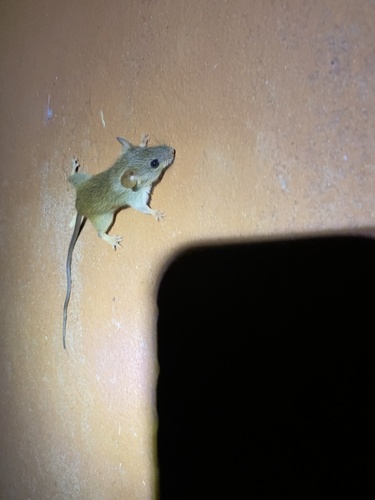
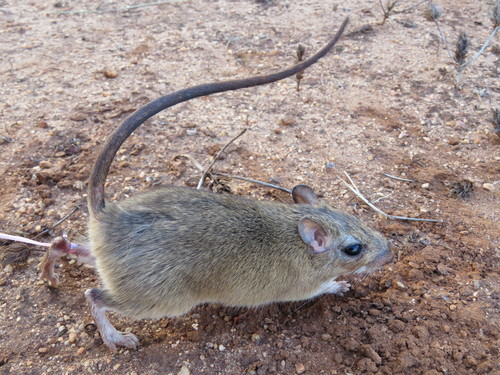
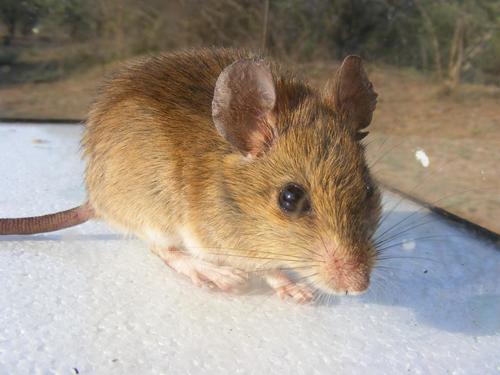
Other species in the genus Aethomys
Other species in the family Muridae
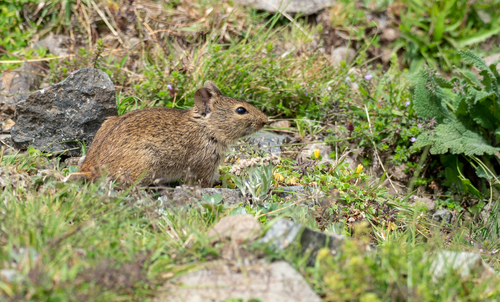
Sources
Conservation status, range description and population estimate come from the IUCN Red List assessment for Aethomys silindensis. Countries are derived from that range description, not from a mapped country list. Last refreshed on .
The distribution map is drawn from the IUCN Red List spatial data compiled in 2008. IUCN (International Union for Conservation of Nature)