
Bocage's Rock Rat
Aethomys bocagei
Red List assessment
Least Concernon the IUCN Red List
- EXExtinct
- EWExtinct in the Wild
- CRCritically Endangered
- ENEndangered
- VUVulnerable
- NTNear Threatened
- LCLeast Concern
The Bocage's Rock Rat is recorded in 3 countries across Africa. The IUCN Red List assesses the Bocage's Rock Rat as Least Concern. No precise global population estimate is available.
- Family
- Muridae
- Order
- Rodentia
- Genus
- Aethomys
- Countries recorded
- 3
- Continents
- Africa
- Red List category
- Least Concern
- Data updated
- August 9, 2026
What is the Bocage's Rock Rat?
Bocage's Rock Rat is a medium-sized murid rodent endemic to the Angola region of southwestern Africa, named in honor of the Portuguese naturalist José Vicente Barbosa du Bocage. It belongs to the genus Aethomys, a group of African rock rats characterized by their association with rocky outcrops and savanna woodland habitats. Like other members of its genus, it is a nocturnal, terrestrial rodent with a relatively long tail and large eyes adapted to low-light conditions. Though not well-studied, it plays a role in seed dispersal and serves as prey for various predators in its ecosystem.
Where does the Bocage's Rock Rat live?
Primarily found in Angola, with possible range extension into the Democratic Republic of Congo and Zambia
The species is primarily known from Angola, with records from the central and western plateau regions. Its range may marginally extend into adjacent border areas of the Democratic Republic of Congo and northwestern Zambia, though confirmed records outside Angola are limited.
Altitude and depth
Typically found between 500 and 1800 m above sea level, consistent with the Angolan central plateau and highland savanna zones.
Seasonal movements
No significant seasonal migration is documented. Activity and reproduction may be influenced by the seasonal wet/dry cycle of the Angolan savanna, with increased foraging activity during and after the wet season when food resources are more abundant.
Habitat of the Bocage's Rock Rat
Bocage's Rock Rat occupies rocky outcrops (inselbergs), miombo woodland, and dry savanna habitats typical of the Angolan plateau region. It is associated with areas offering rocky shelter and nearby vegetation for foraging, similar to other Aethomys species. It likely avoids dense equatorial forest and very arid desert zones.
Adaptations to its environment
Like other Aethomys rock rats, this species likely shelters in rock crevices and boulders, providing protection from predators and thermal buffering. Its large eyes are adapted for nocturnal activity, and its generalist diet allows it to exploit variable seasonal food availability in savanna and rocky habitats.
Conservation status and numbers
Listed as Least Concern (LC) by the IUCN Red List. The species is presumed to have a stable population with no evidence of rapid decline, and it occurs across a range that, while not extensively documented, includes areas not under immediate severe threat.
Estimated population
No precise global population estimate is available. The population trend is presumed stable based on IUCN assessment, as there is no evidence of major ongoing declines.
What threatens the Bocage's Rock Rat?
Potential threats include localized habitat degradation through agricultural expansion, charcoal production, and bush fires in the Angolan savanna. Political instability in Angola has historically limited detailed survey work, so cryptic local declines cannot be fully excluded.
Diseases and parasites
As a wild murid, it is likely host to various ectoparasites (fleas, mites, ticks) and endoparasites (helminths). Its potential role as a reservoir for zoonotic diseases has not been studied specifically, though wild Aethomys species in general can harbor hantaviruses and other pathogens.
What is being done to protect it?
The species benefits indirectly from protected areas in Angola such as Bicuar National Park and Cameia National Park. No species-specific conservation programs are currently documented for Bocage's Rock Rat.
Recommended actions
Priority actions include systematic field surveys to clarify the full geographic range and population status, genetic studies to assess diversity, and monitoring of habitat integrity in the Angolan plateau. Improved protection and management of Angolan national parks would benefit this and many co-occurring species.
What the Bocage's Rock Rat looks like
The dorsal fur is typically brownish to tawny-brown, often with a grizzled appearance due to dark-tipped guard hairs. The underparts are paler, often whitish or buff. The tail is long and thinly haired. The eyes are relatively large and the ears are prominent and rounded.
Size
Head-body length estimated at 110–170 mm; tail length approximately equal to or slightly longer than body length, roughly 120–180 mm, consistent with the Aethomys genus.
Weight
Estimated weight in the range of 40–100 g; specific data for this species are lacking but inferred from closely related Aethomys species.
Distinctive features
Bocage's Rock Rat can be distinguished from sympatric Aethomys species by subtle differences in pelage coloration, skull morphology, and body proportions. Precise differentiation from species such as Aethomys silindensis or Aethomys nyikae requires cranial and dental measurements.
Differences between males and females
Sexual dimorphism is minimal, as is typical of the genus Aethomys. Males may be marginally larger than females on average, but there are no striking color or morphological differences.
Behaviour and diet of the Bocage's Rock Rat
Likely semi-social, as many Aethomys species live in small groups or family clusters, particularly when sharing rocky shelter sites. Specific social structure data for A. bocagei are not available.
When it is active
Nocturnal, with peak activity occurring during the night. During daylight hours, individuals shelter in rock crevices or dense vegetation. Activity patterns may vary seasonally.
Diet
Omnivorous, feeding primarily on seeds, grains, plant material, and invertebrates such as insects. The diet likely shifts with seasonal availability of food resources in the savanna environment.
How it feeds and hunts
Forages on the ground and possibly in low vegetation, using olfaction and whiskers (vibrissae) to locate seeds and invertebrate prey. No specialized hunting technique; typical opportunistic murid foraging behavior.
Communication
Likely uses ultrasonic vocalizations (as typical of murids) for intraspecific communication, particularly during mating and mother-offspring interactions. Scent marking via urine and glandular secretions probably plays a role in territorial and social signaling.
Interactions with other species
Predators likely include owls (especially barn owls and eagle owls), small carnivorous mammals (genets, mongooses, small felids), and snakes. It may compete with other sympatric small rodents for rocky shelter sites and food resources.
Role in its ecosystem
Functions as a secondary consumer and prey species within the savanna food web. As a seed consumer and possible scatter-hoarder, it may contribute modestly to seed dispersal. It serves as an important prey item for mesopredators and raptors.
Reproduction and lifecycle
Reproductive details are not well documented for this species specifically. By analogy with other Aethomys species, breeding likely peaks during or after the wet season. Litter size is estimated at 2–6 pups, with a gestation period of approximately 22–28 days.
Raising the young
As with most murids, the female provides the primary parental care, nursing pups in a sheltered nest within rock crevices. Weaning likely occurs at around 3–4 weeks of age. The male's role in parental care is not well documented.
Maturity and lifespan
Sexual maturity is likely reached at 2–3 months of age, consistent with related Aethomys species. Wild lifespan is estimated at 1–3 years; captive individuals may live longer, potentially 4–5 years.
Taxonomy and naming of the Bocage's Rock Rat
Classification
Mammalia > Rodentia > Muridae > Aethomys > Aethomys bocagei
Scientific synonyms
Originally described as Mus bocagei Thomas, 1904; also referred to under Epimys bocagei before reclassification into the genus Aethomys.
What research says
Recent studies
Bocage's Rock Rat remains one of the least-studied members of its genus due to the historical difficulty of conducting fieldwork in Angola. Recent mammal surveys in Angola have begun to clarify species distributions, but specific publications on A. bocagei remain scarce.
Genome and DNA
Detailed genomic or chromosomal data specific to Aethomys bocagei are not available in published literature. The genus Aethomys has been subject to phylogenetic studies using mitochondrial and nuclear markers, which have helped clarify species boundaries.
Compared with similar species
Bocage's Rock Rat is closely related to other southern African Aethomys species such as A. chrysophilus (Red Rock Rat) and A. namaquensis (Namaqua Rock Rat). It differs from these in its more westerly Angolan distribution and subtle morphological features. It should not be confused with entirely different 'rock rat' genera such as Petromus (Dassie Rat) found in Namibia.
The Bocage's Rock Rat and people
Bocage's Rock Rat is named after José Vicente Barbosa du Bocage, a pioneering 19th-century Portuguese zoologist who described many African species — making this rodent a living tribute to early natural history exploration. Like many rock rats, it likely uses the same rock crevice shelters generation after generation, essentially inheriting real estate. Despite being listed as Least Concern, it remains scientifically mysterious, with many aspects of its biology yet to be formally documented.
Where and how to see it
The best chances of observing Bocage's Rock Rat are on the Angolan central plateau, particularly around rocky outcrops in miombo woodland at night using a spotlight or torch. Areas near Huambo, Bié, and Moxico provinces may be productive. Patience and a quiet approach near rocky shelters at dusk are recommended.
Risks to humans
No notable direct risk to humans. As with all wild rodents, there is a theoretical risk of disease transmission through bites or contact with excreta, but no specific zoonotic risk has been documented for this species.
Countries where the Bocage's Rock Rat is recorded
The 3 countries named in the range description of its IUCN Red List assessment.
Questions about the Bocage's Rock Rat
Where does the Bocage's Rock Rat live?
The Bocage's Rock Rat is recorded in Angola, Democratic Republic of the Congo and Zambia across Africa. These countries come from the range description of its IUCN Red List assessment, and they are what place the species on the interactive map.
Is the Bocage's Rock Rat endangered?
The IUCN Red List assesses the Bocage's Rock Rat as Least Concern. The species is widespread and abundant enough not to qualify for any threatened category. It does not mean the species is safe forever, only that nothing in the current data raises an alarm.
How many are left in the wild?
No precise global population estimate is available. This figure comes from the species assessment on the IUCN Red List; population estimates for wild mammals are ranges, not counts, and are revised at each assessment.
What habitat does the Bocage's Rock Rat live in?
Bocage's Rock Rat occupies rocky outcrops (inselbergs), miombo woodland, and dry savanna habitats typical of the Angolan plateau region.
What is the scientific name of the Bocage's Rock Rat?
The Bocage's Rock Rat is Aethomys bocagei, in the family Muridae, order Rodentia.
Other species in the genus Aethomys
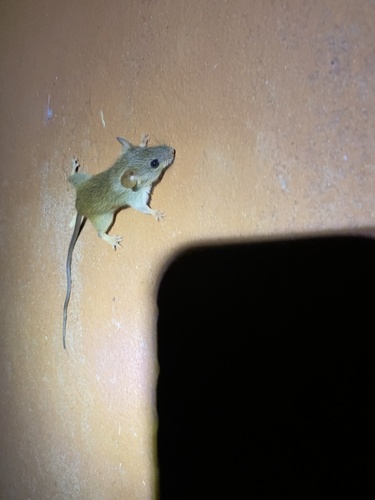
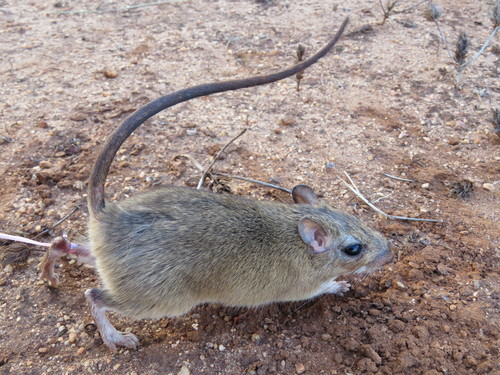
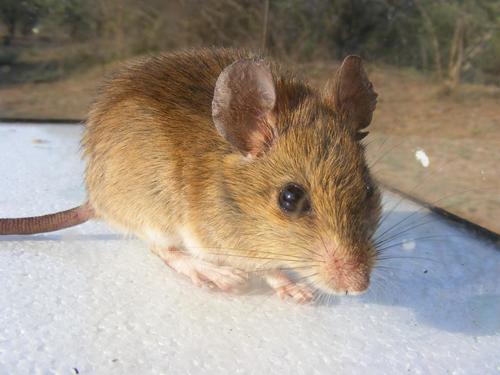
Other species in the family Muridae
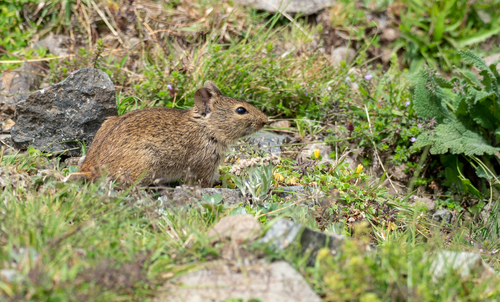
Sources
Conservation status, range description and population estimate come from the IUCN Red List assessment for Aethomys bocagei. Countries are derived from that range description, not from a mapped country list. Last refreshed on .
The distribution map is drawn from the IUCN Red List spatial data compiled in 2008. IUCN (International Union for Conservation of Nature)