
Red Deer
Cervus elaphus
Red List assessment
Least Concernon the IUCN Red List
- EXExtinct
- EWExtinct in the Wild
- CRCritically Endangered
- ENEndangered
- VUVulnerable
- NTNear Threatened
- LCLeast Concern
The Red Deer is recorded in 4 countries across South America and Oceania. The IUCN Red List assesses the Red Deer as Least Concern. Global population estimated in the millions, with stable to increasing trends in most of Europe due to conservation and hunting management, though some isolated subspecies (e.g., Corsican Red Deer) remain low in number.
- Family
- Cervidae
- Order
- Artiodactyla
- Genus
- Cervus
- Countries recorded
- 4
- Continents
- South America and Oceania
- Red List category
- Least Concern
- Data updated
- August 9, 2026
What is the Red Deer?
The Red Deer is one of the largest deer species native to Europe, western Asia, and North Africa, inhabiting a wide range of forested and open habitats. It is renowned for the impressive branching antlers of males, used in dominance displays and combat during the autumn rut. Highly adaptable, this species thrives from lowland woodlands to mountainous terrain, making it one of the most widespread and culturally significant deer in the world.
Where does the Red Deer live?
Europe, parts of North Africa, and temperate Asia, with introduced populations in New Zealand, Australia, and Argentina
Native range spans most of Europe, the Caucasus, Asia Minor, and parts of Central Asia and North Africa (Atlas Mountains); introduced populations thrive in New Zealand, Australia, Argentina, and Chile.
Altitude and depth
Sea level up to approximately 2500m in mountainous regions such as the Alps and Pyrenees
Seasonal movements
Seasonal altitudinal migration occurs in mountainous populations, moving to lower elevations in winter; the rutting season peaks in September-October with males becoming highly vocal and territorial.
Habitat of the Red Deer
Deciduous and coniferous forests, moorlands, mountain grasslands, and open woodland edges; also found in agricultural mosaics bordering forests.
Adaptations to its environment
Thick winter coat that molts to a lighter reddish-brown summer coat for thermoregulation; large body size and efficient digestion allow survival on fibrous vegetation in harsh winters; antler growth and shedding cycle synchronized with seasonal testosterone changes.
Conservation status and numbers
Listed as Least Concern by IUCN due to widespread distribution, large overall population, and successful management/reintroduction programs across much of its range, though some localized subspecies face greater risk.
Estimated population
Global population estimated in the millions, with stable to increasing trends in most of Europe due to conservation and hunting management, though some isolated subspecies (e.g., Corsican Red Deer) remain low in number.
What threatens the Red Deer?
Habitat fragmentation, hybridization with introduced sika deer, overhunting in unregulated areas, and human-wildlife conflict from crop damage.
Diseases and parasites
Susceptible to bovine tuberculosis, chronic wasting disease (in some regions), liver flukes, and various tick-borne illnesses.
What is being done to protect it?
Protected under various national wildlife laws in Europe; managed through regulated hunting quotas, reintroduction programs (e.g., Corsican red deer recovery), and habitat protection within national parks and reserves.
Recommended actions
Continued genetic monitoring to prevent hybridization with sika deer, habitat connectivity projects, and sustainable population management balancing agriculture and wildlife needs.
What the Red Deer looks like
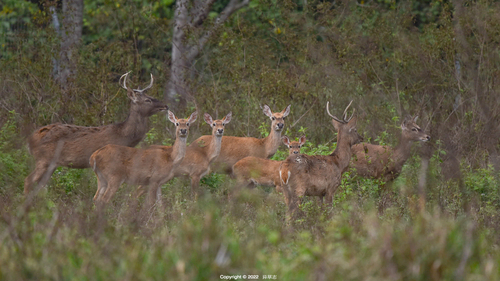
Reddish-brown coat in summer turning greyish-brown in winter, with a pale rump patch; males possess large multi-tined antlers that regrow annually.
Size
Body length 1.6-2.6m; shoulder height 0.75-1.5m depending on subspecies and sex
Weight
Males (stags) 90-240kg; females (hinds) 60-120kg
Distinctive features
Distinguished from similar species like the sika deer by larger body size, more robust antlers with more branching tines, and lack of white spotting in adult coat.
Differences between males and females
Males are significantly larger, possess antlers (absent in females), and develop a thick neck mane during the rut; females are smaller and antlerless.
Behaviour and diet of the Red Deer
Highly social, forming single-sex groups outside the breeding season; females and young form matriarchal herds while males form bachelor groups, coming together only during the rut when males compete for harems.
When it is active
Primarily crepuscular, most active at dawn and dusk, though can be active at various times depending on human disturbance and season.
Diet
Herbivorous, grazing on grasses, sedges, and herbs while also browsing on shrubs, tree bark, and shoots, especially in winter when preferred forage is scarce.
Communication
Males produce loud roaring calls during the rut to assert dominance and attract females; scent marking through wallowing and glandular secretions, along with body postures, also convey social status.
Interactions with other species
Natural predators include wolves, lynx, and brown bears in parts of their range; competes with other deer species like sika deer and can hybridize with them, posing conservation concerns.
Role in its ecosystem
Plays an important ecological role as a keystone herbivore shaping forest and grassland vegetation structure through grazing and browsing, and serves as a key prey species for large carnivores.
Reproduction and lifecycle
Breeding season (rut) occurs in autumn, typically September to November; gestation lasts about 240 days (8 months), usually resulting in a single calf born in late spring.
Raising the young
Calves are cared for solely by the mother, remaining hidden in vegetation for the first weeks of life before joining the herd; weaning occurs around 7-9 months, though calves may stay with mothers up to a year.
Maturity and lifespan
Sexual maturity reached around 2-3 years for females and 4-5 years for males; lifespan averages 10-13 years in the wild, up to 18-20 years in captivity.
Taxonomy and naming of the Red Deer
Classification
Class Mammalia > Order Artiodactyla > Family Cervidae > Genus Cervus > Species Cervus elaphus
Subspecies
Numerous subspecies recognized including C. e. elaphus (Western Europe), C. e. hispanicus (Iberian Peninsula), C. e. corsicanus (Corsica/Sardinia), C. e. maral (Caucasus/Anatolia), and C. e. barbarus (North Africa, Atlas Mountains); taxonomy debated with some Asian forms now split into Cervus canadensis (Wapiti/Elk).
Scientific synonyms
Cervus barbarus, Cervus corsicanus, formerly grouped with Cervus canadensis (Wapiti) before genetic splitting
What research says
Recent studies
Recent research using genomic tools has clarified subspecies boundaries and hybridization patterns with sika deer, aiding targeted conservation of genetically pure populations in the UK and Europe.
Genome and DNA
Diploid chromosome number 2n=68; genetic studies have been used extensively to distinguish red deer from wapiti (Cervus canadensis) and to track hybridization with sika deer.
Compared with similar species
Closely related to the Wapiti/Elk (Cervus canadensis), from which it was once considered conspecific; red deer are generally smaller with different antler morphology and vocalizations compared to wapiti.
The Red Deer and people
A stag's antlers can grow up to 2.5cm per day during peak growth season, one of the fastest-growing tissues in mammals; the loud roaring of rutting stags can be heard over a kilometer away.
Where and how to see it
Best observed at dawn or dusk during the autumn rut in places like Scotland's Highlands, England's Richmond Park, or continental European forests; binoculars and quiet observation from a distance are recommended.
Risks to humans
No notable risk under normal circumstances, though stags can become aggressive during the rut and vehicle collisions are a concern in areas with high deer density.
Human uses
Historically and currently hunted for venison and sport; farmed in some regions for meat production, and antlers are used decoratively or in traditional crafts.
Myths and legends
The Red Deer stag has long been a symbol of nobility, virility, and the wild hunt in European folklore, notably associated with Celtic mythology and the legend of Herne the Hunter in English tradition.
Countries where the Red Deer is recorded
The 4 countries named in the range description of its IUCN Red List assessment.
Questions about the Red Deer
Where does the Red Deer live?
The Red Deer is recorded in Argentina, Australia, Chile and New Zealand across South America and Oceania. These countries come from the range description of its IUCN Red List assessment, and they are what place the species on the interactive map.
Is the Red Deer endangered?
The IUCN Red List assesses the Red Deer as Least Concern. The species is widespread and abundant enough not to qualify for any threatened category. It does not mean the species is safe forever, only that nothing in the current data raises an alarm.
How many are left in the wild?
Global population estimated in the millions, with stable to increasing trends in most of Europe due to conservation and hunting management, though some isolated subspecies (e.g., Corsican Red Deer) remain low in number. This figure comes from the species assessment on the IUCN Red List; population estimates for wild mammals are ranges, not counts, and are revised at each assessment.
What habitat does the Red Deer live in?
Deciduous and coniferous forests, moorlands, mountain grasslands, and open woodland edges; also found in agricultural mosaics bordering forests.
What is the scientific name of the Red Deer?
The Red Deer is Cervus elaphus, in the family Cervidae, order Artiodactyla.
Other species in the genus Cervus
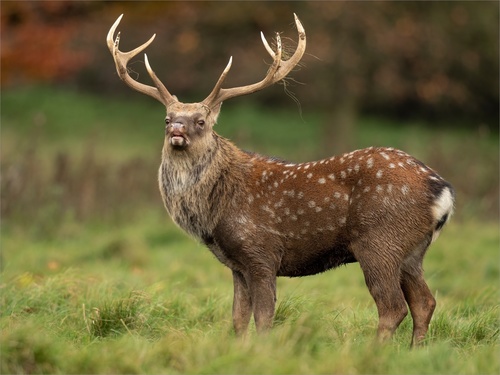
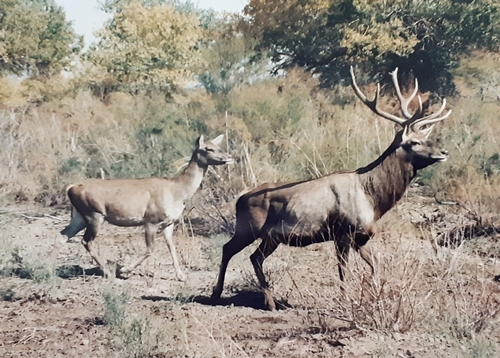
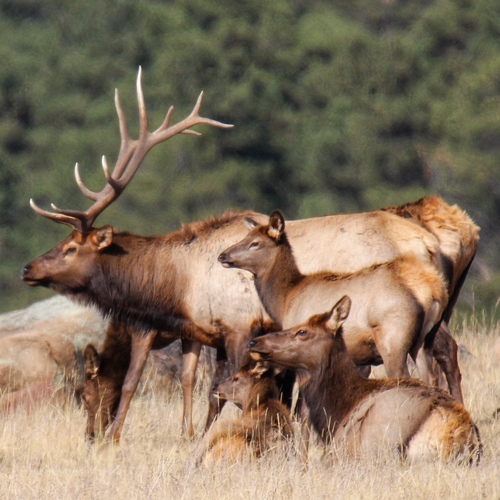
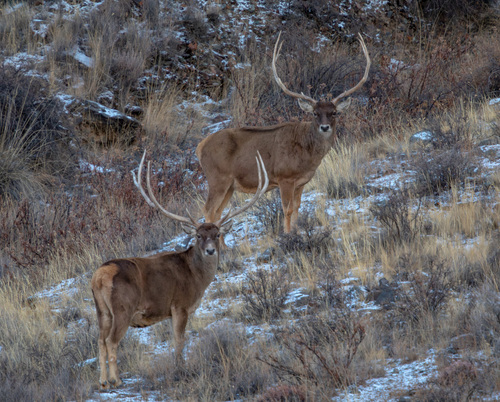
Other species in the family Cervidae
Species that share its range

Sources
Conservation status, range description and population estimate come from the IUCN Red List assessment for Cervus elaphus. Countries are derived from that range description, not from a mapped country list. Last refreshed on .
The distribution map is drawn from the IUCN Red List spatial data compiled in 2018. IUCN (International Union for Conservation of Nature)