
Northern Chinese Flying Squirrel
Aeretes melanopterus
Red List assessment
Least Concernon the IUCN Red List
- EXExtinct
- EWExtinct in the Wild
- CRCritically Endangered
- ENEndangered
- VUVulnerable
- NTNear Threatened
- LCLeast Concern
The Northern Chinese Flying Squirrel is recorded in one country, China across Asia. The IUCN Red List assesses the Northern Chinese Flying Squirrel as Least Concern. No reliable global population estimate exists.
- Family
- Sciuridae
- Order
- Rodentia
- Genus
- Aeretes
- Countries recorded
- 1
- Continents
- Asia
- Red List category
- Least Concern
- Data updated
- August 9, 2026
What is the Northern Chinese Flying Squirrel?
The Northern Chinese Flying Squirrel is a medium-to-large arboreal rodent belonging to the flying squirrel tribe (Pteromyinae), endemic to northern and central China. It possesses a patagium — a furred gliding membrane stretched between the fore and hind limbs — allowing it to glide considerable distances between trees. The species name 'melanopterus' (black-winged) refers to the distinctively dark-edged margins of its patagium. It is considered a remarkable and poorly studied representative of Asian forest biodiversity.
Where does the Northern Chinese Flying Squirrel live?
Northern and central China, primarily in Hebei Province (Yanshan and Taihang Mountains), Liaoning Province, Shanxi, and isolated populations possibly in Sichuan Province.
Restricted to northern and central China. Core range includes the Yanshan Mountains and Taihang Mountains of Hebei Province, parts of Liaoning Province, and possibly Shanxi and Beijing municipality. A disjunct population may exist in Sichuan Province in the southwest. The species has a fragmented and relatively limited overall distribution.
Altitude and depth
Typically found between 500 and 2,500 meters above sea level, with the densest populations in montane zones between 800 and 1,800 m where mature mixed forest is well developed.
Seasonal movements
Does not hibernate, remaining active year-round, though activity levels likely decrease during the coldest winter months. No known seasonal migrations are documented. Food caching behavior may intensify in autumn in preparation for winter scarcity.
Habitat of the Northern Chinese Flying Squirrel
Primarily inhabits temperate montane mixed forests dominated by oak (Quercus), pine (Pinus), and other conifers interspersed with deciduous broadleaf trees. It shows a preference for mature forests with large trees that provide cavities for nesting and abundant food sources. Rocky forested slopes and forest edges near cliff faces are also used.
Adaptations to its environment
The well-developed patagium extending from wrists to ankles enables efficient gliding of up to 50–100 meters, reducing predation risk and energy costs of travel through the forest canopy. Large, forward-facing eyes adapted for low-light conditions support its nocturnal lifestyle. Dense, soft fur provides insulation in cold montane winters. A flattened, bushy tail acts as a rudder and stabilizer during gliding.
Conservation status and numbers
Listed as Least Concern (LC) on the IUCN Red List. The species is not considered to be declining rapidly enough or to have a restricted enough range to qualify for a threatened category, though its naturally fragmented distribution and dependence on mature forest make it potentially sensitive to habitat loss.
Estimated population
No reliable global population estimate exists. The species is considered uncommon to rare across its range, and population trend data are insufficient. It is assumed to be declining moderately due to ongoing habitat degradation, though this is not quantified.
What threatens the Northern Chinese Flying Squirrel?
Primary threats include deforestation and logging of mature montane forests, agricultural encroachment reducing habitat connectivity, illegal collection for the wildlife trade, and forest degradation through firewood harvesting. Climate change may alter the composition and extent of suitable montane forest habitat over the long term.
Diseases and parasites
No specific diseases or parasites have been documented for this species in the literature. Like other sciurids, it is likely host to ectoparasites such as fleas and ticks, as well as endoparasites including nematodes and cestodes, but no targeted studies have been published.
What is being done to protect it?
The species occurs within several protected areas in northern China, including nature reserves in Hebei Province such as Wulingshan and Xiaowutai Mountain National Nature Reserve. It is listed under China's national wildlife protection regulations. General forest protection policies in China provide some indirect benefit.
Recommended actions
Priority actions include systematic population surveys to establish baseline data, protection and expansion of mature forest reserves within its range, improved enforcement against illegal logging and wildlife collection, and habitat corridor creation to connect fragmented forest patches. Further taxonomic and ecological research is urgently needed.
What the Northern Chinese Flying Squirrel looks like
Dorsal fur is brownish-gray to grayish-brown, often with a slightly rufous tinge. The ventral surface is whitish to pale cream. The patagium has distinctly dark to blackish margins, which is the basis for the species' name. The eyes are large and dark, adapted for nocturnal vision. The tail is long, bushy, and somewhat flattened.
Size
Head-body length approximately 27–38 cm; tail length approximately 25–35 cm. Total length can reach up to 70 cm. No wingspan per se, but patagium spread can approach 40–50 cm laterally.
Weight
Estimated body weight between 300 and 700 g, though precise measurements from wild individuals are scarce. Females may be slightly larger than males, consistent with patterns in other flying squirrel species.
Distinctive features
Distinguished from the sympatric Chinese Giant Flying Squirrel (Petaurista xanthotis) by its smaller size, distinctly dark-edged patagium, and less richly colored dorsal pelage. Compared to the Siberian Flying Squirrel (Pteromys volans), it is substantially larger. The monotypic genus Aeretes is set apart by unique skull morphology and dental characteristics identified by Milne-Edwards.
Differences between males and females
Sexual dimorphism is not well documented in this species. Females may be slightly larger than males, as seen in other Pteromyinae, but no significant differences in coloration or external morphology have been reported.
Behaviour and diet of the Northern Chinese Flying Squirrel
Presumed to be largely solitary outside the breeding season, consistent with most flying squirrel species. Individuals likely maintain home ranges and may use communal dens in tree cavities during particularly cold periods, a strategy documented in related species.
When it is active
Strictly nocturnal. Active from shortly after dusk until before dawn. During daylight hours, individuals rest in tree hollows, dense vegetation, or rock crevices. Activity peaks in the first few hours after dark when foraging and gliding are most frequent.
Diet
Omnivorous with a predominantly herbivorous diet. Primary foods include seeds, nuts (especially acorns and pine seeds), bark, buds, leaves, fungi, and fruits. Like other flying squirrels, it may also occasionally consume insects, bird eggs, or other animal matter to supplement nutritional needs.
How it feeds and hunts
Forages arboreally by moving through the canopy and gliding between trees to locate food sources. Seeds and nuts may be cached in tree crevices or underground for later retrieval during winter. Foraging is guided primarily by olfaction and sharp nocturnal vision.
Communication
Communicates through high-pitched vocalizations and ultrasonic calls, particularly during the breeding season. Scent marking using facial glands and urine may demarcate territories or signal reproductive status. Tail posturing and body position likely serve as visual signals during intraspecific encounters.
Interactions with other species
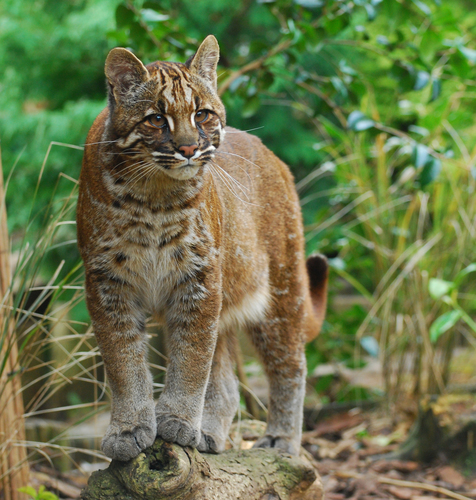
Natural predators likely include large owls (e.g., Bubo bubo), martens (Martes spp.), and large felids such as the Amur leopard cat. It competes with other arboreal seed-eaters including squirrels (Sciurus spp.) and other flying squirrel species where ranges overlap. It may play a role as a seed disperser for the tree species it feeds upon.
Role in its ecosystem
Plays an ecological role as a seed disperser and food source for forest predators within montane mixed-forest ecosystems. Caching behavior contributes to forest regeneration by burying and forgetting seeds. As a mid-level consumer, it connects plant productivity to predator food webs.
Reproduction and lifecycle
Breeding biology is poorly documented. Based on related species, it likely breeds once or twice per year, with litters of 2–4 young. Gestation is estimated at approximately 40 days. Birth timing may coincide with spring and early summer to maximize food availability during the weaning period.
Raising the young
Pups are born altricial (helpless, eyes closed) and raised in a nest within a tree hollow, primarily by the female. Weaning likely occurs at 6–8 weeks. The male's involvement in parental care is unknown but is likely minimal, consistent with other sciurids.
Maturity and lifespan
Age at sexual maturity is estimated at approximately 1 year, based on related flying squirrel species. Lifespan in the wild is unknown but likely 4–7 years; captive individuals of related species can live up to 10–15 years under optimal conditions.
Taxonomy and naming of the Northern Chinese Flying Squirrel
Classification
Mammalia > Rodentia > Sciuridae (subfamily Pteromyinae) > Aeretes > Aeretes melanopterus. Aeretes is a monotypic genus, making this species unique within its lineage.
Subspecies
Some authorities recognize two subspecies: Aeretes melanopterus melanopterus (northern populations in Hebei and Liaoning) and Aeretes melanopterus szechuanensis (isolated Sichuan population), though the validity of these designations remains uncertain pending further taxonomic review.
Scientific synonyms
Pteromys melanopterus Milne-Edwards, 1867 (original description); Sciuropterus melanopterus. The species was originally placed in Pteromys before being assigned its own monotypic genus Aeretes.
What research says
Recent studies
Phylogenomic studies on the tribe Pteromyini have shed light on the evolutionary placement of Aeretes within flying squirrels, suggesting it represents an ancient lineage. Camera trap and field surveys in Hebei and Liaoning reserves conducted in the 2010s have provided new locality records, though comprehensive ecological studies remain lacking.
Genome and DNA
Chromosome number and detailed genomic data for Aeretes melanopterus are not published in accessible literature. Phylogenetic studies of Pteromyinae using mitochondrial and nuclear markers have helped confirm the monotypic genus Aeretes as a distinct and early-diverging lineage within Asian flying squirrels.
Compared with similar species
Aeretes melanopterus occupies a phylogenetically isolated position among Asian flying squirrels. It is larger than the Siberian Flying Squirrel (Pteromys volans) but considerably smaller than the giant flying squirrels of genus Petaurista. Unlike Petaurista, Aeretes has dark patagium margins and lacks the rich chestnut coloration typical of giant flying squirrels. Its monotypic genus status highlights its distinctiveness from all other flying squirrel genera.
The Northern Chinese Flying Squirrel and people
The name 'melanopterus' means 'black-winged' in Greek, a direct reference to the dramatically dark edges of its gliding membrane that contrast with its otherwise gray-brown fur. As the sole member of genus Aeretes, this squirrel is a living evolutionary relict with no close living relatives. Despite being capable of spectacular glides between trees, almost nothing is known about its day-to-day life, making it one of the least-studied mammals of northern China.
Where and how to see it
Best observed at night in mature montane forests of the Yanshan Mountains in Hebei Province, particularly within Xiaowutai Mountain or Wulingshan Nature Reserves. Spotlighting after dusk is the most effective method, as the animal's large eyes produce a strong eyeshine. Late spring through early autumn provides optimal conditions when deciduous foliage is full and food is abundant.
Risks to humans
No notable risk to humans. Like all rodents, it could theoretically bite if handled, but it is a shy, elusive species that avoids human contact. No venomous properties or documented disease transmission to humans has been recorded.
Human uses
No significant documented human uses. It may occasionally be captured for the illegal wildlife trade, but it is not known to be a major target. Traditional Chinese medicine does not appear to specifically utilize this species. It holds potential value for ecotourism in the context of biodiversity-rich montane forest reserves.
Myths and legends
No specific myths or legends directly associated with Aeretes melanopterus have been documented in the literature. Flying squirrels in general hold a place in East Asian folklore as mystical nocturnal creatures of the forest, sometimes associated with forest spirits, but no cultural symbolism specific to this species has been recorded.
Countries where the Northern Chinese Flying Squirrel is recorded
The 1 countries named in the range description of its IUCN Red List assessment.
Questions about the Northern Chinese Flying Squirrel
Where does the Northern Chinese Flying Squirrel live?
The Northern Chinese Flying Squirrel is recorded in China across Asia. These countries come from the range description of its IUCN Red List assessment, and they are what place the species on the interactive map.
Is the Northern Chinese Flying Squirrel endangered?
The IUCN Red List assesses the Northern Chinese Flying Squirrel as Least Concern. The species is widespread and abundant enough not to qualify for any threatened category. It does not mean the species is safe forever, only that nothing in the current data raises an alarm.
How many are left in the wild?
No reliable global population estimate exists. This figure comes from the species assessment on the IUCN Red List; population estimates for wild mammals are ranges, not counts, and are revised at each assessment.
What habitat does the Northern Chinese Flying Squirrel live in?
Primarily inhabits temperate montane mixed forests dominated by oak (Quercus), pine (Pinus), and other conifers interspersed with deciduous broadleaf trees.
What is the scientific name of the Northern Chinese Flying Squirrel?
The Northern Chinese Flying Squirrel is Aeretes melanopterus, in the family Sciuridae, order Rodentia.
Other species in the family Sciuridae
Species that share its range
Sources
Conservation status, range description and population estimate come from the IUCN Red List assessment for Aeretes melanopterus. Countries are derived from that range description, not from a mapped country list. Last refreshed on .
The distribution map is drawn from the IUCN Red List spatial data compiled in 2024. IUCN (International Union for Conservation of Nature)