
New Zealand Long-tailed Bat
Chalinolobus tuberculatus
Red List assessment
Critically Endangeredon the IUCN Red List
- EXExtinct
- EWExtinct in the Wild
- CRCritically Endangered
- ENEndangered
- VUVulnerable
- NTNear Threatened
- LCLeast Concern
The New Zealand Long-tailed Bat is recorded in one country, New Zealand across Oceania. The IUCN Red List assesses the New Zealand Long-tailed Bat as Critically Endangered. Population estimates are difficult to determine precisely but are believed to be in the tens of thousands, with a declining trend across much of its range, though some protected populations remain locally stable.
- Family
- Vespertilionidae
- Order
- Chiroptera
- Genus
- Chalinolobus
- Countries recorded
- 1
- Continents
- Oceania
- Red List category
- Critically Endangered
- Data updated
- August 9, 2026
What is the New Zealand Long-tailed Bat?
The New Zealand long-tailed bat is one of only two extant native land mammals in New Zealand, the other being the short-tailed bat. It is a small, fast-flying insectivorous bat found in forests, farmland, and urban areas throughout the country. Despite its wide historical range, it has suffered severe population declines due to habitat loss and introduced predators, making it a flagship species for New Zealand conservation efforts.
Where does the New Zealand Long-tailed Bat live?
New Zealand (North Island, South Island, and some offshore islands)
Found throughout mainland New Zealand, including North Island, South Island, and Stewart Island, though populations are now fragmented and localized to remaining forest remnants and protected areas.
Altitude and depth
Sea level up to approximately 1200 meters elevation, depending on region and forest availability.
Seasonal movements
Exhibits seasonal torpor during colder months (autumn-winter) to conserve energy; mating occurs in autumn with delayed fertilization, and births occur in early summer (November-December).
Habitat of the New Zealand Long-tailed Bat
Inhabits native forests, exotic plantations, farmland, riverbanks, and urban parks; roosts in tree hollows, under bark, in caves, and occasionally in buildings. Prefers areas with large old-growth trees for roosting and open or edge habitats for foraging.
Adaptations to its environment
Uses echolocation for nocturnal navigation and insect hunting; capable of torpor to survive cold periods and food scarcity; strong, agile flight allows exploitation of forest and open-air insect prey.
Conservation status and numbers
Critically Endangered (IUCN); listed as Nationally Critical under New Zealand's Threatened Species Classification System due to severe ongoing population decline, especially from introduced predators.
Estimated population
Population estimates are difficult to determine precisely but are believed to be in the tens of thousands, with a declining trend across much of its range, though some protected populations remain locally stable.
What threatens the New Zealand Long-tailed Bat?
Predation by introduced mammals (rats, stoats, possums, cats); habitat loss from deforestation and land conversion; loss of roost trees; pesticide use reducing insect prey availability.
Diseases and parasites
Susceptible to ectoparasites such as bat flies and mites; specific disease studies are limited but monitoring for emerging pathogens like white-nose syndrome equivalents is ongoing.
What is being done to protect it?
Protected under the New Zealand Wildlife Act; predator control programs (trapping, aerial 1080 poison drops) in key habitats; monitoring via acoustic surveys; some populations protected within DOC-managed reserves and sanctuaries.
Recommended actions
Expand predator control across more habitat, protect and restore old-growth roost trees, increase acoustic monitoring to track population trends, and raise public awareness of bat conservation needs.
What the New Zealand Long-tailed Bat looks like
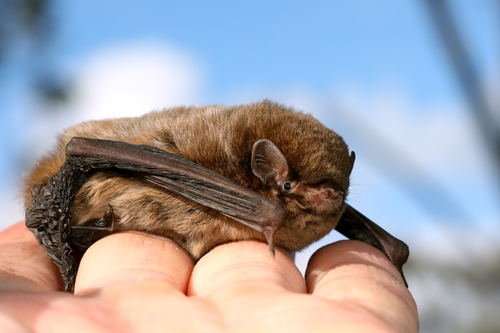
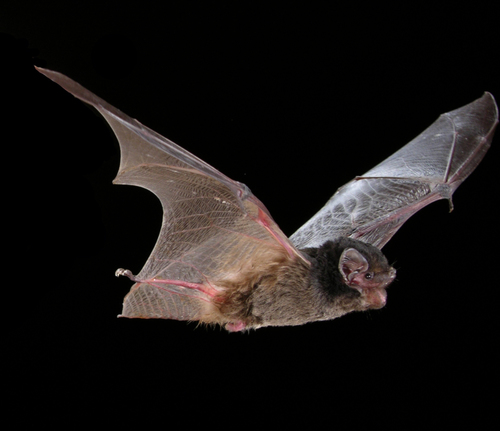
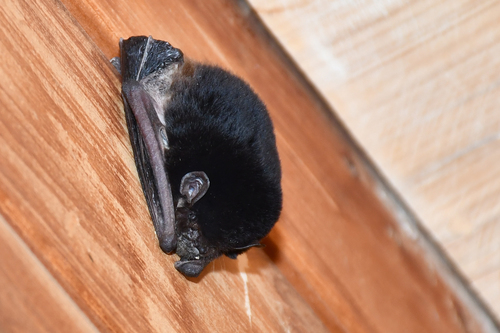
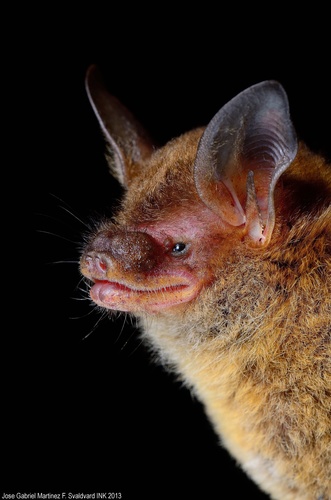
Small bat with dark brown to blackish fur, pale underside, large rounded ears, and a distinctive long tail enclosed in the tail membrane (uropatagium). Wings are dark and membranous.
Size
Body length approximately 4-5 cm, with wingspan of 25-30 cm.
Weight
Approximately 8-11 grams for adults.
Distinctive features
Distinguished from the New Zealand short-tailed bat by its longer tail fully enclosed in the flight membrane and more typical vespertilionid bat appearance and flight style.
Differences between males and females
Minimal sexual dimorphism; males and females are similar in size and coloration.
Behaviour and diet of the New Zealand Long-tailed Bat
Roosts in maternity colonies of dozens to hundreds of females during breeding season; males are often more solitary; forms communal roosts that may shift regularly between multiple tree hollows.
When it is active
Nocturnal, emerging at dusk to forage and returning to roost before dawn; activity levels influenced by temperature and insect availability.
Diet
Insectivorous, feeding on moths, beetles, flies, and other flying insects caught in flight.
How it feeds and hunts
Uses echolocation to detect and capture flying insects in open air or forest edges via aerial hawking; may also glean insects from foliage.
Communication
Communicates via ultrasonic echolocation calls for navigation and hunting, as well as social calls within roosts for group cohesion.
Interactions with other species
Preyed upon by introduced predators such as rats, stoats, and cats; competes with other insectivorous species for prey; plays a role in controlling insect populations.
Role in its ecosystem
Functions as an insectivorous predator, helping regulate populations of night-flying insects within forest and farmland ecosystems.
Reproduction and lifecycle
Mating occurs in autumn (March-May) with sperm storage and delayed fertilization; single pup born typically in November-December after gestation of about 11 weeks post-fertilization.
Raising the young
Females raise young in maternity colonies, nursing pups until they are capable of flight and independent foraging at around 5-6 weeks old.
Maturity and lifespan
Sexual maturity typically reached at 1-2 years; lifespan can exceed 20 years in the wild under favorable conditions.
Taxonomy and naming of the New Zealand Long-tailed Bat
Classification
Class Mammalia > Order Chiroptera > Family Vespertilionidae > Genus Chalinolobus > Species Chalinolobus tuberculatus
Scientific synonyms
Formerly placed in genus Vespertilio; also referenced historically as Chalinolobus morio tuberculatus in some older texts, though this is not widely accepted.
What research says
Recent studies
Recent studies have used acoustic monitoring and radio-tracking to map roost site selection and movement patterns, informing predator control strategies in key conservation areas.
Genome and DNA
Limited specific genomic studies published; genetic research has focused on population structure and diversity to guide conservation management.
Compared with similar species
Similar in general form to other vespertilionid bats worldwide but ecologically distinct as one of New Zealand's only native terrestrial mammals; compared to the short-tailed bat, it is more aerial and less terrestrial in foraging behavior.
The New Zealand Long-tailed Bat and people
It is one of only two native land mammal species in New Zealand; despite its tiny size, it can travel several kilometers each night while foraging; some populations roost in single ancient trees for generations.
Where and how to see it
Best observed at dusk near forest edges or waterways in areas with known roost sites, such as Pureora Forest or Eglinton Valley, using bat detectors to hear echolocation calls.
Risks to humans
No notable risk to humans; extremely unlikely to bite unless handled, and does not pose disease transmission concerns under normal circumstances.
Countries where the New Zealand Long-tailed Bat is recorded
The 1 countries named in the range description of its IUCN Red List assessment.
Questions about the New Zealand Long-tailed Bat
Where does the New Zealand Long-tailed Bat live?
The New Zealand Long-tailed Bat is recorded in New Zealand across Oceania. These countries come from the range description of its IUCN Red List assessment, and they are what place the species on the interactive map.
Is the New Zealand Long-tailed Bat endangered?
Yes. The IUCN Red List assesses the New Zealand Long-tailed Bat as Critically Endangered, one of the three threatened categories. The species faces an extremely high risk of extinction in the wild. This is the last category before extinction, and it is reached through a very small or steeply declining population, a tiny range, or both.
How many are left in the wild?
Population estimates are difficult to determine precisely but are believed to be in the tens of thousands, with a declining trend across much of its range, though some protected populations remain locally stable. This figure comes from the species assessment on the IUCN Red List; population estimates for wild mammals are ranges, not counts, and are revised at each assessment.
What habitat does the New Zealand Long-tailed Bat live in?
Inhabits native forests, exotic plantations, farmland, riverbanks, and urban parks; roosts in tree hollows, under bark, in caves, and occasionally in buildings.
What is the scientific name of the New Zealand Long-tailed Bat?
The New Zealand Long-tailed Bat is Chalinolobus tuberculatus, in the family Vespertilionidae, order Chiroptera.
Other species in the genus Chalinolobus
Other species in the family Vespertilionidae
Species that share its range

Sources
Conservation status, range description and population estimate come from the IUCN Red List assessment for Chalinolobus tuberculatus. Countries are derived from that range description, not from a mapped country list. Last refreshed on .
The distribution map is drawn from the IUCN Red List spatial data compiled in 2021. IUCN (International Union for Conservation of Nature)