
Pallid Bat
Antrozous pallidus
Red List assessment
Least Concernon the IUCN Red List
- EXExtinct
- EWExtinct in the Wild
- CRCritically Endangered
- ENEndangered
- VUVulnerable
- NTNear Threatened
- LCLeast Concern
The Pallid Bat is recorded in 4 countries across North America. The IUCN Red List assesses the Pallid Bat as Least Concern. No reliable global population estimate exists.
- Family
- Vespertilionidae
- Order
- Chiroptera
- Genus
- Antrozous
- Countries recorded
- 4
- Continents
- North America
- Red List category
- Least Concern
- Data updated
- August 9, 2026
What is the Pallid Bat?
The Pallid Bat is a large, distinctively pale insectivorous bat native to the arid and semi-arid regions of western North America. It is remarkable for its ability to hunt prey on the ground, walking on all four limbs to capture scorpions, beetles, crickets, and even small vertebrates — highly unusual behavior among bats. Rather than relying solely on echolocation, it uses large ears to passively detect sounds generated by prey, such as rustling and stridulation. It is the only member of its genus and is considered a flagship species of desert bat communities.
Where does the Pallid Bat live?
Western North America from southern British Columbia (Canada) through the western United States to central Mexico; isolated records from Cuba
From southern British Columbia and Idaho south through California, Nevada, Utah, Arizona, New Mexico, and Texas (USA), continuing into northwestern and central Mexico including Baja California, Sonora, and Chihuahua. Isolated populations are documented on Cuba. Absent from eastern North America and densely forested regions.
Altitude and depth
Typically found from sea level up to approximately 2,700 m (8,900 ft); most abundant at lower elevations in desert basins and foothill zones below 1,500 m.
Seasonal movements
In northern portions of the range, individuals enter torpor or hibernation from approximately November through March. Southern populations may remain active year-round. Females form maternity colonies from April through August; males roost separately during this period. Fall swarming behavior occurs at hibernacula before winter torpor.
Habitat of the Pallid Bat
Primarily occupies arid and semi-arid habitats: desert scrub, chaparral, grassland, open woodland, rocky canyons, and dry washes. Roosts in rock crevices, caves, abandoned mines, old buildings, bridges, and hollow trees. Requires open foraging terrain with low vegetation near the ground and reliable water sources nearby.
Adaptations to its environment
The exceptionally large ears allow passive detection of prey-generated sounds (rustling, stridulation), enabling stealth hunting without alerting prey with echolocation. Pale cream fur provides thermoregulation in hot, sun-exposed desert environments and cryptic coloration against pale substrates. Voltage-gated sodium channel (Nav1.8) mutations confer significant resistance to bark scorpion venom, a unique physiological adaptation. Strong limb musculature facilitates terrestrial locomotion on the ground.
Conservation status and numbers
Least Concern (LC) on the IUCN Red List. The species is broadly distributed and locally common; however, regional declines have been documented in California, Oregon, and other parts of the Pacific coast, primarily attributed to roost disturbance, pesticide contamination, and habitat alteration.
Estimated population
No reliable global population estimate exists. The species is considered locally common across much of its core desert range but shows concerning regional declines in coastal California and the Pacific Northwest. Population trend is considered stable to slightly declining in parts of its range.
What threatens the Pallid Bat?
Principal threats include roost destruction (vandalism at caves and mines, renovation of old buildings), agricultural and urban pesticide use reducing prey availability and causing secondary poisoning, habitat fragmentation across arid landscapes, and light pollution near roost sites disrupting emergence behavior. Climate change is an emerging long-term threat through altered prey phenology and roost microclimate shifts.
Diseases and parasites
Can carry and transmit rabies virus, though documented natural transmission to humans is rare; any direct contact should be treated with medical caution. Known ectoparasites include bat flies (family Streblidae and Nycteribiidae), mites (Spinturnix spp., Macronyssidae), and bat fleas (Siphonaptera). Internal parasites include nematodes and trematodes. Accumulations of guano at roost sites harbor Histoplasma capsulatum fungal spores, posing inhalation risk to humans disturbing roosts.
What is being done to protect it?
Protected under various U.S. state wildlife laws; listed as a Species of Special Concern in California. Bat Conservation International (BCI) has promoted bat-friendly mine closures using steel gates that preserve access for bats. Population monitoring is conducted within several national parks and wildlife refuges (e.g., Joshua Tree, Big Bend). Roost protection programs exist at some managed sites.
Recommended actions
Priority actions include installing bat-friendly gates at abandoned mines and caves across the range, reducing pesticide use in agricultural areas within bat foraging zones, establishing systematic long-term population monitoring networks, protecting critical roost sites through conservation easements, educating the public on coexistence with building-roosting colonies, and studying climate change impacts on prey availability.
What the Pallid Bat looks like
Dorsal fur is pale cream to light yellowish-brown; ventral fur is nearly white to pale gray. The broad, pinkish face bears very large, thin, translucent ears joined at their base by a low interaural membrane. Eyes are conspicuously large for a bat. The muzzle is blunt with visible glandular swellings flanking the nostrils. Wing membranes are thin and pale brownish.
Size
Body length: 60–85 mm; tail length: 40–60 mm; wingspan: 350–395 mm; ear length: 25–35 mm (exceptionally large relative to body size). Forearm length: 48–60 mm.
Weight
Typically 14–25 g under normal conditions; females can exceed 30 g during late pregnancy. Females are slightly larger than males on average.
Distinctive features
Distinguished from all other North American bats by the combination of very large ears joined at the base, uniformly very pale cream coloration, large eyes, and a characteristic musky-skunky odor from muzzle glands. As the sole member of genus Antrozous, it has no congeners. Larger than the big-eared bats (Corynorhinus), with undivided (non-bifid) ears.
Differences between males and females
Females are slightly larger than males, most notably during pregnancy. Males possess more prominent muzzle glands that produce stronger musky secretions used in scent communication. No significant differences in fur color or ear morphology between sexes.
Behaviour and diet of the Pallid Bat
Colonial, forming roost groups ranging from a few individuals to several hundred. Maternity colonies (adult females and young) are spatially segregated from bachelor male groups during the reproductive season. Outside the breeding season, mixed-sex groups may form at hibernation sites. Within roosts, individuals engage in audible social vocalizations and maintain loose individual space.
When it is active
Strictly nocturnal. Typically emerges 30–60 minutes after sunset, with peak foraging activity in the first two to three hours after dusk and sometimes again in the hours before dawn. Foraging occurs at low altitudes (often under 3 m) over open ground within a few kilometers of the roost.
Diet
Primarily carnivorous, with a diverse diet of large arthropods and occasional small vertebrates. Documented prey includes bark scorpions (Centruroides), beetles, sphinx moth caterpillars (hawkmoths), grasshoppers, crickets, solpugids (camel spiders), Jerusalem crickets, and centipedes. Also takes small lizards, frogs, and occasionally small birds or rodents. One of the very few bat species that regularly consumes venomous scorpions.
How it feeds and hunts
Uses a dual foraging strategy: echolocation for spatial orientation and obstacle avoidance, combined with passive listening to detect prey-generated sounds (rustling, stridulation, crawling). Gleaning from ground and low vegetation is common. After detection, the bat lands and pursues prey on foot, walking on all four limbs. Large prey items are carried by flight to a dedicated feeding roost before being consumed.
Communication
Produces audible social vocalizations within roosts including hissing, chattering, and tonal directive calls. Echolocation pulses are low-frequency (approximately 20–50 kHz), frequency-modulated, and relatively loud. Muzzle glands secrete species-specific odors used for social and sexual signaling. Pups emit high-pitched isolation calls recognized individually by their mothers.
Interactions with other species
Natural predators include Great Horned Owls (Bubo virginianus), Barn Owls (Tyto alba), Cooper's Hawks, rat snakes, and domestic cats near human habitation. Competes for rock crevice roost sites with other bat species and small vertebrates. As a predator of bark scorpions (Centruroides sculpturatus), it may play a locally important role in regulating populations of one of North America's most medically significant venomous arthropods.
Role in its ecosystem
A key insectivore and arthropod predator in arid and semi-arid ecosystems. Provides biological pest control services for agricultural areas by consuming crop-damaging beetles, moths, and grasshoppers. Its predation on venomous scorpions may indirectly benefit human communities in the Sonoran Desert. Guano deposits at roost sites enrich cave and crevice microhabitat nutrient cycles.
Reproduction and lifecycle
Mating occurs in autumn and early winter; females store sperm over winter with fertilization and implantation delayed until spring (delayed fertilization). Gestation lasts approximately 60–70 days. Females give birth in maternity colonies from May to June, typically to twins (1–2 pups per litter). Pups are born naked, pink, and helpless.
Raising the young
Mothers nurse pups exclusively during the first several weeks of life. Pups are left clustered at the roost while the mother forages nightly and are retrieved upon her return. Individual recognition between mother and pup is mediated by unique vocalizations and scent. Young begin flying at 4–6 weeks of age and are fully weaned by 6–8 weeks.
Maturity and lifespan
Sexual maturity is typically reached at approximately 1 year of age for both sexes. Wild lifespan is generally 6–10 years; the maximum recorded age in the wild is approximately 10 years. Captive lifespan data are limited but consistent with wild records.
Taxonomy and naming of the Pallid Bat
Classification
Mammalia > Chiroptera > Vespertilionidae (subfamily Antrozoinae; sometimes elevated to family Antrozoidae) > Antrozous > Antrozous pallidus
Subspecies
Several subspecies are recognized: A. p. pallidus (Great Basin and Mojave regions), A. p. pacificus (Pacific coastal California), A. p. cantwelli (northwestern range, Washington/Idaho), A. p. minor (Baja California), and A. p. koopmani (Cuba). Subspecific boundaries vary by taxonomic authority.
Scientific synonyms
Vespertilio pallidus Le Conte, 1856 (original basionym); Antrozous bunkeri Schwartz, 1954 (synonymized). The genus Antrozous is monotypic, with no other recognized species.
What research says
Recent studies
A key 2013 study in PLOS ONE (Rowe et al.) demonstrated that Pallid Bats have evolved specific mutations in Nav1.8 sodium channels conferring resistance to Centruroides scorpion venom, making them a model species for venom-resistance evolution. Recent acoustic monitoring research has refined understanding of call structure variability across its geographic range. Studies on colony thermal ecology have highlighted the importance of roost microclimate quality for pup survival.
Genome and DNA
The karyotype comprises 2n = 28 chromosomes. Molecular phylogenetic analyses have consistently supported Antrozous as a highly divergent lineage within bat systematics, sometimes meriting family-level recognition (Antrozoidae). A landmark study (Rowe et al., 2013) identified specific amino acid substitutions in the voltage-gated sodium channel Nav1.8 that reduce sensitivity to scorpion alpha-toxins — findings with implications for pain pharmacology.
Compared with similar species
The only member of its genus, most closely related to Van Gelder's bat (Bauerus dubiaquercus) of Central America, which is smaller and darker. Among North American bats, big-eared bats (Corynorhinus spp.) superficially resemble the Pallid Bat in ear size but have deeply bifurcated ears and do not forage on the ground. The Pallid Bat's combination of ground foraging, scorpion predation, passive acoustic hunting, and extreme paleness is unique in North American Chiroptera.
The Pallid Bat and people
The Pallid Bat is one of the only bats in North America that regularly hunts and eats highly venomous Arizona bark scorpions — a feat enabled by genetic mutations in its pain receptors that make it largely insensitive to the venom. Unlike virtually all other bats, it will land and walk on all four limbs across desert ground to chase down its prey. Colonies are detectable by their distinctive skunky-musky odor long before the bats are visible, produced by prominent muzzle glands used in social communication.
Where and how to see it
Best observed in the American Southwest during warm months (May–October) near rocky desert landscapes, canyon walls, and desert washes. Prime locations include Joshua Tree National Park (California), Saguaro National Park (Arizona), Big Bend National Park (Texas), and Anza-Borrego Desert State Park (California). Emerge 30–60 minutes after sunset; watch for low, slow flight over open ground. A bat detector tuned to 25–40 kHz can confirm identification by call.
Risks to humans
Low risk to humans under normal circumstances. Like all bats, the Pallid Bat is a potential vector for rabies; any direct handling of a wild individual or suspected bite or scratch warrants immediate medical consultation. Disturbing roosts and inhaling dust from guano-laden sites can risk histoplasmosis infection; protective masks should be worn. No venom or direct attack risk.
Human uses
Not commercially harvested or exploited. Highly valued for ecosystem services, including biological control of agricultural pest insects and venomous scorpions, potentially reducing economic and medical impacts in desert communities. Serves as an important model organism in biomedical research on venom resistance, sodium channel pharmacology, and pain biology, with potential applications in the development of novel analgesic therapies.
Myths and legends
Bats in general hold significant cultural roles throughout the Indigenous peoples of the American Southwest; some Pueblo and Tohono O'odham traditions incorporate bat imagery in ceremonial art and oral traditions, often associated with rain, twilight, and the boundary between worlds. The Pallid Bat is not the subject of specific documented mythology distinct from general Southwestern bat lore. In Western popular culture, its pale, large-eyed appearance and nocturnal desert habits have lent it a somewhat ghostly reputation.
Countries where the Pallid Bat is recorded
The 4 countries named in the range description of its IUCN Red List assessment.
Questions about the Pallid Bat
Where does the Pallid Bat live?
The Pallid Bat is recorded in Canada, Cuba, Mexico and United States across North America. These countries come from the range description of its IUCN Red List assessment, and they are what place the species on the interactive map.
Is the Pallid Bat endangered?
The IUCN Red List assesses the Pallid Bat as Least Concern. The species is widespread and abundant enough not to qualify for any threatened category. It does not mean the species is safe forever, only that nothing in the current data raises an alarm.
How many are left in the wild?
No reliable global population estimate exists. This figure comes from the species assessment on the IUCN Red List; population estimates for wild mammals are ranges, not counts, and are revised at each assessment.
What habitat does the Pallid Bat live in?
Primarily occupies arid and semi-arid habitats: desert scrub, chaparral, grassland, open woodland, rocky canyons, and dry washes.
What is the scientific name of the Pallid Bat?
The Pallid Bat is Antrozous pallidus, in the family Vespertilionidae, order Chiroptera.
Other species in the family Vespertilionidae
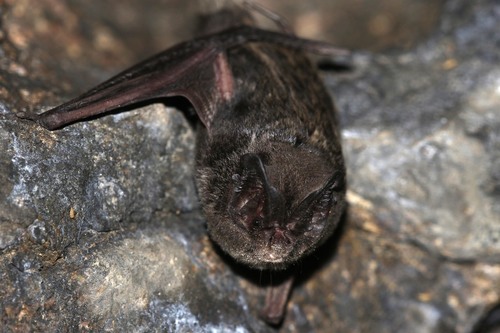
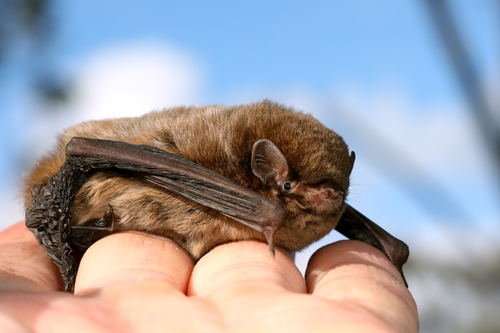
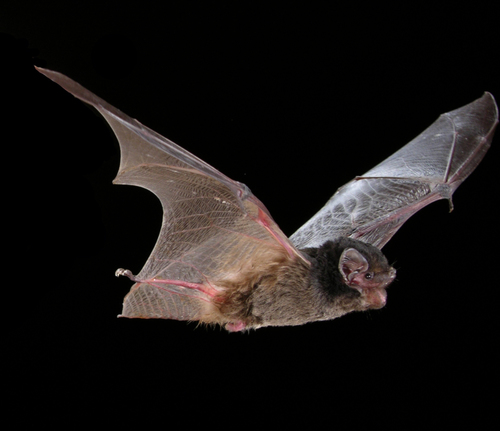
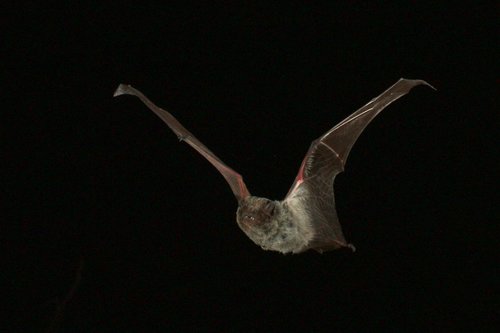
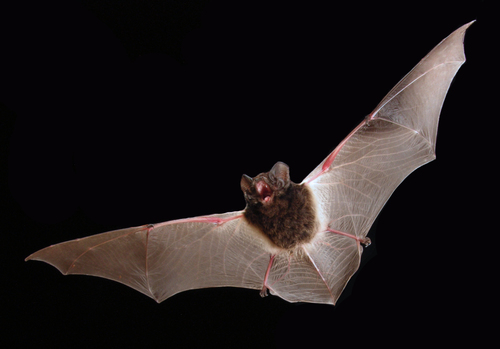
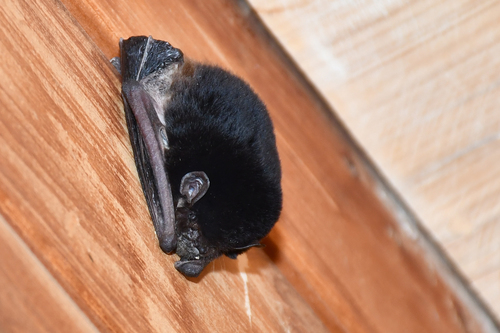
Species that share its range
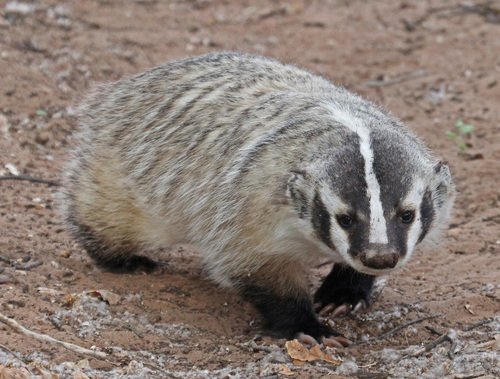
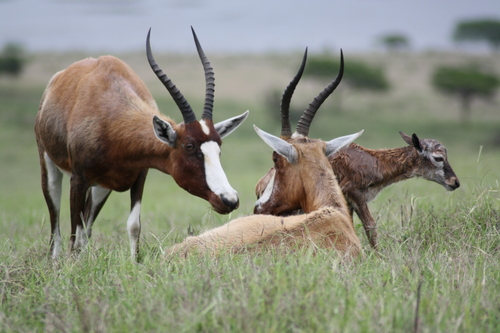
Sources
Conservation status, range description and population estimate come from the IUCN Red List assessment for Antrozous pallidus. Countries are derived from that range description, not from a mapped country list. Last refreshed on .
The distribution map is drawn from the IUCN Red List spatial data compiled in 2008. IUCN (International Union for Conservation of Nature)