
Arnoux's Beaked Whale
Berardius arnuxii
Red List assessment
Least Concernon the IUCN Red List
- EXExtinct
- EWExtinct in the Wild
- CRCritically Endangered
- ENEndangered
- VUVulnerable
- NTNear Threatened
- LCLeast Concern
The Arnoux's Beaked Whale is recorded in 6 countries across Africa, South America, Oceania and Antarctica. The IUCN Red List assesses the Arnoux's Beaked Whale as Least Concern. Population size is unknown due to difficulty in surveying this deep-diving, offshore species; trend is presumed stable but data are insufficient for precise estimates.
- Family
- Ziphiidae
- Order
- Cetartiodactyla
- Genus
- Berardius
- Countries recorded
- 6
- Continents
- Africa, South America, Oceania and Antarctica
- Red List category
- Least Concern
- Data updated
- August 9, 2026
What is the Arnoux's Beaked Whale?
Arnoux's Beaked Whale is one of the largest members of the beaked whale family, found only in the cold circumpolar waters of the Southern Hemisphere. It is closely related to Baird's beaked whale of the North Pacific and shares a similar robust body shape with a long beak. Little is known about its biology due to its remote, offshore habitat and deep-diving behavior. It is notable for its resilience in some of the most extreme and remote marine environments on Earth.
Where does the Arnoux's Beaked Whale live?
Southern Ocean, circumpolar in cold sub-Antarctic and Antarctic waters, including waters off Chile, Argentina, South Africa, New Zealand, and Antarctica
Circumpolar distribution in the Southern Hemisphere, recorded from southern South America (Chile, Argentina), South Africa, southern Australia, New Zealand, and Antarctic waters, generally south of 30°S.
Altitude and depth
Deep diver, capable of reaching depths of over 1000m; typically found in oceanic waters over 1000m deep.
Seasonal movements
Some evidence suggests seasonal movements linked to sea ice extent and prey availability, with possible shifts toward ice-covered areas in summer months.
Habitat of the Arnoux's Beaked Whale
Deep offshore pelagic waters, often near the Antarctic ice edge, continental slopes, and areas of high productivity in cold sub-Antarctic and Antarctic seas.
Adaptations to its environment
Possesses a thick layer of blubber for insulation in frigid Antarctic waters, along with a highly efficient diving physiology including elevated myoglobin levels for extended breath-holds during deep dives.
Conservation status and numbers
Listed as Least Concern by the IUCN, primarily due to lack of evidence for significant population decline, though data are limited given the species' remote and elusive nature.
Estimated population
Population size is unknown due to difficulty in surveying this deep-diving, offshore species; trend is presumed stable but data are insufficient for precise estimates.
What threatens the Arnoux's Beaked Whale?
Potential threats include entanglement in fishing gear, ship strikes, noise pollution from seismic surveys and naval sonar, and impacts of climate change on Southern Ocean ecosystems.
Diseases and parasites
Known to host external parasites such as barnacles and cyamids (whale lice), though comprehensive disease studies are lacking.
What is being done to protect it?
Protected under the International Whaling Commission moratorium on commercial whaling and covered by various national marine protected areas in the Southern Ocean, though species-specific conservation programs are minimal.
Recommended actions
Increased research on population size and distribution, mitigation of noise pollution from naval and seismic activities, and expansion of marine protected areas in Southern Ocean habitats.
What the Arnoux's Beaked Whale looks like
Dark bluish-black to brown coloration on the back, often with lighter scarring and blotches from intraspecific interactions or cookiecutter shark bites, with a long, robust beak and small dorsal fin set far back on the body.
Size
Body length ranges from approximately 7.8 to 9.75 meters, with females generally slightly larger than males.
Weight
Estimated weight between 7,000 and 10,000 kg (7-10 tonnes).
Distinctive features
Distinguished from other beaked whales by its large size, bulbous forehead, long tubular beak, and two pairs of teeth at the tip of the lower jaw visible in adults; closely resembles Baird's beaked whale but occurs in the opposite hemisphere.
Differences between males and females
Minimal sexual dimorphism, though females tend to be slightly larger than males, which is unusual among most whale species but consistent with other beaked whales.
Behaviour and diet of the Arnoux's Beaked Whale
Typically found in small groups of 6-10 individuals, sometimes up to 25, exhibiting tight social bonds and coordinated diving behavior.
When it is active
Diurnal and nocturnal activity patterns are not well documented, but the species is known for long, deep dives followed by shorter surface intervals for breathing.
Diet
Primarily feeds on deep-sea squid and fish, likely including species found near the seafloor or in the deep scattering layer.
How it feeds and hunts
Uses suction feeding, drawing prey into the mouth via rapid throat expansion, aided by echolocation to locate prey in dark, deep waters.
Communication
Uses echolocation clicks for navigation and prey detection, along with other vocalizations for social communication within pods, though detailed acoustic studies are limited.
Interactions with other species
Occasionally observed alongside other cetacean species; killer whales (Orcinus orca) are a potential predator, and scarring patterns suggest interactions with cookiecutter sharks.
Role in its ecosystem
Functions as a mid-to-upper trophic level predator in Southern Ocean ecosystems, helping regulate populations of deep-sea squid and fish.
Reproduction and lifecycle
Breeding season is not well documented; gestation is estimated to last around 17 months based on related species, typically resulting in a single calf.
Raising the young
Calves are cared for primarily by the mother, who provides nursing and protection during the vulnerable early months of life, though specific behaviors remain poorly studied.
Maturity and lifespan
Sexual maturity is estimated to occur around 7-10 years of age; lifespan in the wild is thought to exceed 30-40 years based on related Berardius species.
Taxonomy and naming of the Arnoux's Beaked Whale
Classification
Mammalia > Cetartiodactyla > Ziphiidae > Berardius > Berardius arnuxii
Scientific synonyms
Berardius kraussii, Berardius arnouxii (orthographic variant)
What research says
Recent studies
Recent satellite tagging and acoustic monitoring studies in the Southern Ocean have begun to reveal dive depths and durations, though comprehensive behavioral data remain scarce.
Genome and DNA
Genetic studies have helped confirm taxonomic distinction from Berardius bairdii, with mitochondrial DNA analysis supporting separate species status; a possible undescribed third Berardius species has been noted in some genetic research.
Compared with similar species
Closely resembles Baird's beaked whale (Berardius bairdii) of the North Pacific but is found exclusively in the Southern Hemisphere; both species share similar body shape, robust size for beaked whales, and deep-diving behavior.
The Arnoux's Beaked Whale and people
Arnoux's beaked whales can dive for over an hour in search of deep-sea squid; they are among the least studied large whale species due to their remote habitat; their scarred skin patterns are thought to result from social interactions and squid battles.
Where and how to see it
Best observed during expedition cruises to the Antarctic Peninsula and Southern Ocean during the austral summer (November to March), though sightings remain rare and unpredictable due to the species' elusive, deep-diving nature.
Risks to humans
No notable risk to humans; this species is not aggressive and interactions with humans are exceedingly rare due to its offshore, deep-water habitat.
Human uses
Historically hunted in small numbers by Soviet whaling fleets in the mid-20th century, but there is no significant modern commercial use of this species.
Countries where the Arnoux's Beaked Whale is recorded
The 6 countries named in the range description of its IUCN Red List assessment.
Questions about the Arnoux's Beaked Whale
Where does the Arnoux's Beaked Whale live?
The Arnoux's Beaked Whale is recorded in Antarctica, Argentina, Australia, Chile and New Zealand, among 6 countries in total across Africa, South America, Oceania and Antarctica. These countries come from the range description of its IUCN Red List assessment, and they are what place the species on the interactive map.
Is the Arnoux's Beaked Whale endangered?
The IUCN Red List assesses the Arnoux's Beaked Whale as Least Concern. The species is widespread and abundant enough not to qualify for any threatened category. It does not mean the species is safe forever, only that nothing in the current data raises an alarm.
How many are left in the wild?
Population size is unknown due to difficulty in surveying this deep-diving, offshore species; trend is presumed stable but data are insufficient for precise estimates. This figure comes from the species assessment on the IUCN Red List; population estimates for wild mammals are ranges, not counts, and are revised at each assessment.
What habitat does the Arnoux's Beaked Whale live in?
Deep offshore pelagic waters, often near the Antarctic ice edge, continental slopes, and areas of high productivity in cold sub-Antarctic and Antarctic seas.
What is the scientific name of the Arnoux's Beaked Whale?
The Arnoux's Beaked Whale is Berardius arnuxii, in the family Ziphiidae, order Cetartiodactyla.
Other species in the genus Berardius
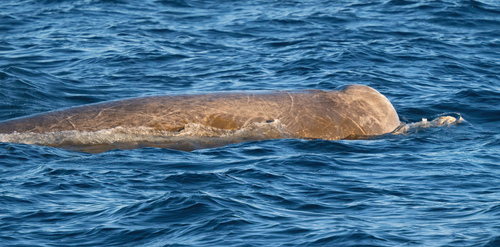
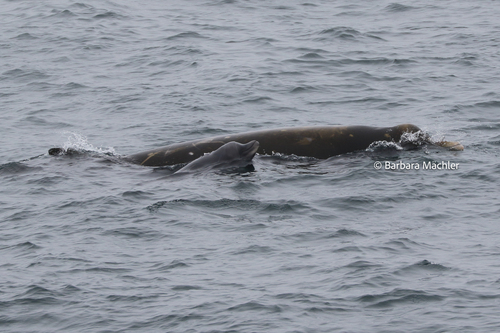
Species that share its range
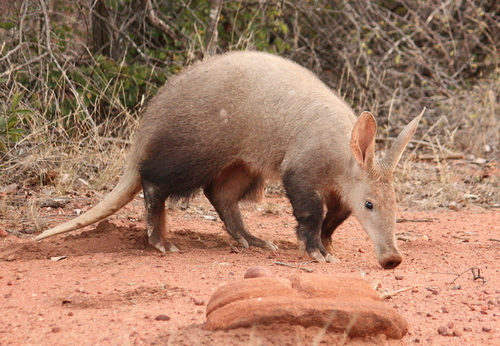
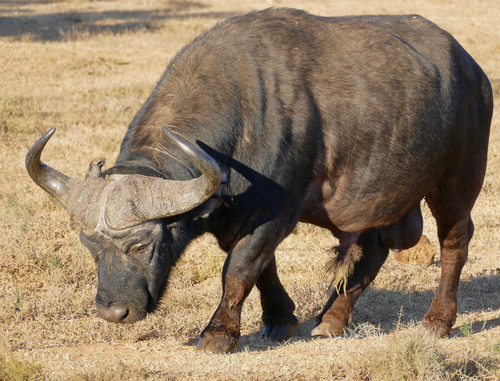
Sources
Conservation status, range description and population estimate come from the IUCN Red List assessment for Berardius arnuxii. Countries are derived from that range description, not from a mapped country list. Last refreshed on .
The distribution map is drawn from the IUCN Red List spatial data compiled in 2012. IUCN (International Union for Conservation of Nature)