
Little Pied Bat
Chalinolobus picatus
Red List assessment
Near Threatenedon the IUCN Red List
- EXExtinct
- EWExtinct in the Wild
- CRCritically Endangered
- ENEndangered
- VUVulnerable
- NTNear Threatened
- LCLeast Concern
The Little Pied Bat is recorded in 2 countries across Europe and Oceania. The IUCN Red List assesses the Little Pied Bat as Near Threatened. No precise global population estimate exists; the population is considered fragmented and likely in slow decline due to ongoing habitat loss.
- Family
- Vespertilionidae
- Order
- Chiroptera
- Genus
- Chalinolobus
- Countries recorded
- 2
- Continents
- Europe and Oceania
- Red List category
- Near Threatened
- Data updated
- August 9, 2026
What is the Little Pied Bat?
The Little Pied Bat is a small insectivorous vespertilionid bat endemic to semi-arid inland Australia. It is notable for its striking black-and-white pied coloration, which distinguishes it from most other Australian microbats. It roosts in tree hollows, caves, and abandoned buildings and forages over woodland and shrubland habitats. Its patchy and poorly documented distribution makes it a species of conservation interest.
Where does the Little Pied Bat live?
Inland eastern Australia, primarily New South Wales, Queensland, Victoria and South Australia
Endemic to Australia, found across inland New South Wales, southern Queensland, north-western Victoria, and eastern South Australia, mainly within the semi-arid and arid zone transition belt.
Altitude and depth
Typically found at low elevations, from near sea level up to around 500 m.
Seasonal movements
Exhibits torpor during cooler months to conserve energy; may show local seasonal movements linked to insect prey availability and temperature, though not a long-distance migrant.
Habitat of the Little Pied Bat
Inhabits semi-arid woodlands, mallee, brigalow scrub, and riparian woodland, often near ephemeral water sources. Roosts in tree hollows, deep rock crevices, caves, mine shafts, and occasionally man-made structures.
Adaptations to its environment
Uses torpor to survive cold nights and periods of low food availability, an important adaptation to the variable semi-arid climate. Its echolocation calls are adapted for detecting prey in relatively open woodland habitats, and its small size allows access to narrow roosting crevices.
Conservation status and numbers
Listed as Near Threatened by the IUCN due to a fragmented distribution, ongoing habitat loss, and suspected population decline, though not yet meeting thresholds for a more threatened category.
Estimated population
No precise global population estimate exists; the population is considered fragmented and likely in slow decline due to ongoing habitat loss.
What threatens the Little Pied Bat?
Habitat clearing for agriculture, loss of hollow-bearing trees, degradation of roosting sites (caves, mines), and pesticide-driven declines in insect prey are the main threats.
Diseases and parasites
Susceptible to ectoparasites such as mites and bat flies; specific disease studies are limited, though general bat-borne pathogens common to Australian microbats may occur.
What is being done to protect it?
Protected under Australian state and federal wildlife legislation; some populations occur within protected woodland reserves and national parks. Roost site protection and monitoring programs are conducted in parts of its range.
Recommended actions
Protect and restore hollow-bearing trees and roosting caves, conduct further population surveys to clarify distribution and trends, and manage agricultural landscapes to retain woodland connectivity.
What the Little Pied Bat looks like
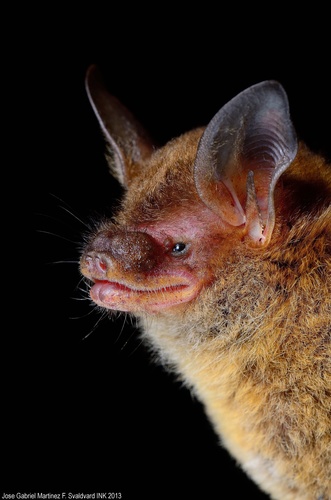
Distinctive pied (black-and-white) fur pattern, with dark blackish-brown dorsal fur contrasting with white or pale underparts and white patches on the sides of the body. Wings and ears are dark brown to black, and the face has a somewhat wrinkled, folded appearance typical of Chalinolobus species.
Size
Body length approximately 4.5–5.5 cm, with a wingspan of about 22–25 cm.
Weight
Adults typically weigh between 4 and 8 grams.
Distinctive features
The bold black-and-white coloration is unique among Australian vespertilionid bats, easily separating it from the more uniformly brown or grey species in the same genus, such as the Gould's Wattled Bat.
Differences between males and females
Minimal sexual dimorphism; males and females are similar in size and coloration, though females may be marginally larger.
Behaviour and diet of the Little Pied Bat
Roosts in small to moderate-sized colonies, sometimes mixed with other bat species, typically numbering from a few individuals to several dozen.
When it is active
Strictly nocturnal, emerging after dusk to forage and returning to roost before dawn.
Diet
Insectivorous, feeding mainly on small flying insects such as moths, beetles, and other soft-bodied arthropods caught on the wing.
How it feeds and hunts
Uses echolocation to detect and capture flying insects in open or semi-open woodland airspace, typically hunting at low to medium heights above the ground or vegetation.
Communication
Communicates primarily through ultrasonic echolocation calls used for navigation and prey detection, as well as social vocalizations within roosts for contact and coordination.
Interactions with other species
Preyed upon by owls and other nocturnal predators; may share roost sites with other microbat species, leading to some competition for suitable hollows and crevices.
Role in its ecosystem
Plays an important ecological role as an insect predator, helping regulate populations of nocturnal flying insects within semi-arid woodland ecosystems.
Reproduction and lifecycle
Breeding occurs in spring, with females typically giving birth to a single pup (occasionally twins) after a gestation period of around 2-3 months, timed to coincide with peak insect abundance.
Raising the young
Females form maternity colonies to raise young communally, nursing pups until they are able to fly and forage independently, usually within 4-6 weeks.
Maturity and lifespan
Sexual maturity is generally reached within the first year; lifespan in the wild is estimated at around 5-10 years, though precise data are limited.
Taxonomy and naming of the Little Pied Bat
Classification
Mammalia > Chiroptera > Vespertilionidae > Chalinolobus > Chalinolobus picatus
Scientific synonyms
Nyctophilus picatus (historical placement in some older classifications)
What research says
Recent studies
Recent acoustic and genetic surveys have aimed to clarify the species' distribution and roosting ecology, given its patchy detection records across inland Australia.
Compared with similar species
Similar in size to other Chalinolobus species like the Gould's Wattled Bat, but distinguished by its striking pied coloration versus the more uniform brown tones of its relatives.
The Little Pied Bat and people
Its striking black-and-white 'tuxedo' pattern makes it one of the most visually distinctive bats in Australia; it is one of the few Australian bats capable of true seasonal torpor to survive cold desert nights.
Where and how to see it
Best observed at dusk near semi-arid woodland water sources in inland New South Wales or southern Queensland during warmer months when activity is highest; bat detectors are useful for confirming presence via echolocation calls.
Risks to humans
No notable risk; like most microbats, direct contact is rare, though as with all bats, handling should be avoided due to potential for rare pathogen transmission.
Countries where the Little Pied Bat is recorded
The 2 countries named in the range description of its IUCN Red List assessment.
Questions about the Little Pied Bat
Where does the Little Pied Bat live?
The Little Pied Bat is recorded in Australia and United Kingdom across Europe and Oceania. These countries come from the range description of its IUCN Red List assessment, and they are what place the species on the interactive map.
Is the Little Pied Bat endangered?
The IUCN Red List assesses the Little Pied Bat as Near Threatened. The species does not qualify as threatened today, but it is close to the thresholds and likely to cross them soon. It is the category that most often changes at the next assessment.
How many are left in the wild?
No precise global population estimate exists; the population is considered fragmented and likely in slow decline due to ongoing habitat loss. This figure comes from the species assessment on the IUCN Red List; population estimates for wild mammals are ranges, not counts, and are revised at each assessment.
What habitat does the Little Pied Bat live in?
Inhabits semi-arid woodlands, mallee, brigalow scrub, and riparian woodland, often near ephemeral water sources.
What is the scientific name of the Little Pied Bat?
The Little Pied Bat is Chalinolobus picatus, in the family Vespertilionidae, order Chiroptera.
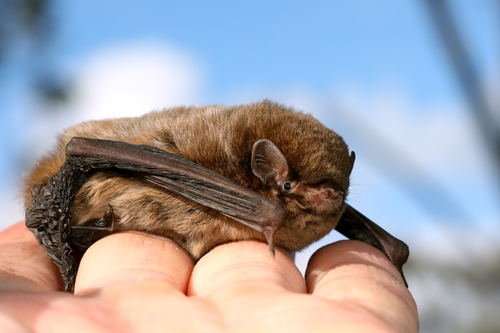
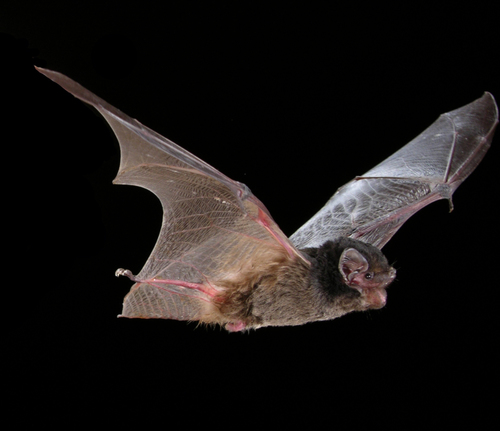
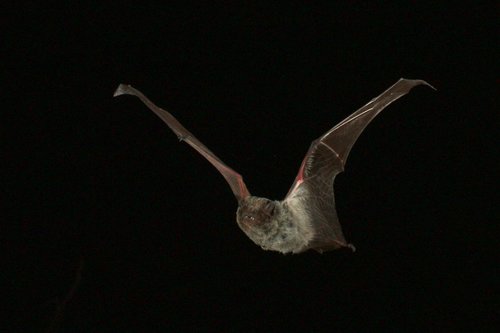
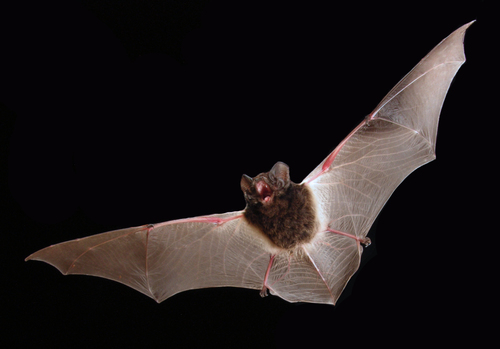
Other species in the genus Chalinolobus
Other species in the family Vespertilionidae
Species that share its range

Sources
Conservation status, range description and population estimate come from the IUCN Red List assessment for Chalinolobus picatus. Countries are derived from that range description, not from a mapped country list. Last refreshed on .
The distribution map is drawn from the IUCN Red List spatial data compiled in 2008. IUCN (International Union for Conservation of Nature)