
Montane Guinea Pig
Cavia tschudii
Red List assessment
Least Concernon the IUCN Red List
- EXExtinct
- EWExtinct in the Wild
- CRCritically Endangered
- ENEndangered
- VUVulnerable
- NTNear Threatened
- LCLeast Concern
The Montane Guinea Pig is recorded in 4 countries across South America. The IUCN Red List assesses the Montane Guinea Pig as Least Concern. No precise global population estimate exists; population is presumed stable given its wide range and adaptability to disturbed habitats
- Family
- Caviidae
- Order
- Rodentia
- Genus
- Cavia
- Countries recorded
- 4
- Continents
- South America
- Red List category
- Least Concern
- Data updated
- August 9, 2026
What is the Montane Guinea Pig?
Cavia tschudii, the Montane Guinea Pig, is a small wild cavy native to the arid highlands and coastal valleys of western South America. It is widely regarded as the probable wild ancestor of the domesticated guinea pig (Cavia porcellus). The species inhabits rocky slopes, grasslands, and shrubby areas at a range of elevations from coastal lowlands to high Andean plateaus. It is remarkable for its close genetic relationship to one of the world's most common domesticated pets and laboratory animals.
Where does the Montane Guinea Pig live?
Andean regions of Peru, northern Chile, and parts of western Bolivia and Argentina
Distributed along the western slopes of the Andes from southern Peru through northern Chile, with populations extending into western Bolivia and possibly northwestern Argentina. Found in coastal desert valleys as well as highland plateaus of the central Andes.
Altitude and depth
Ranges from sea level to approximately 4,000 meters in the Andes, though most commonly found between 1,000 and 3,500 meters elevation
Seasonal movements
No true hibernation or long-distance migration; breeding activity may increase during periods of greater food availability following rains
Habitat of the Montane Guinea Pig
Found in arid and semi-arid habitats including rocky outcrops, grasslands, scrublands, agricultural field margins, and stony slopes with dense low vegetation for cover. Prefers areas with grasses and herbaceous plants for both food and shelter.
Adaptations to its environment
Possesses a compact, low-slung body ideal for moving through dense grass and rocky crevices to avoid predators. Its coloration provides camouflage against rocky and grassy backgrounds, and it has efficient kidneys adapted to arid conditions with limited water intake.
Conservation status and numbers
Listed as Least Concern (LC) by the IUCN due to its relatively wide distribution and presumed large population, though comprehensive population data remain limited in some regions.
Estimated population
No precise global population estimate exists; population is presumed stable given its wide range and adaptability to disturbed habitats
What threatens the Montane Guinea Pig?
Habitat degradation from agriculture and livestock grazing, predation by domestic and feral animals, and localized hunting for food in some rural areas
Diseases and parasites
Susceptible to various ectoparasites such as mites and fleas, as well as endoparasites including nematodes; specific disease studies in wild populations are limited
What is being done to protect it?
No species-specific conservation programs are known; benefits indirectly from protected areas within its Andean range such as national parks and reserves in Peru and Chile
Recommended actions
Further population surveys and genetic studies to clarify taxonomic boundaries with related Cavia species, habitat monitoring in agricultural expansion zones, and research into its role as ancestor to domestic guinea pigs
What the Montane Guinea Pig looks like
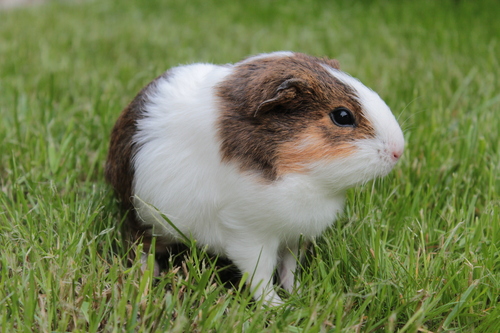
Coarse, short fur usually agouti-colored in shades of brown, grey, or yellowish-brown providing camouflage; underparts are typically paler, often cream or grey. The body is stocky and rounded with short limbs, small rounded ears, and no visible tail.
Size
Body length typically 20-25 cm, with no external tail
Weight
Adults typically weigh between 400-600 grams
Distinctive features
Distinguished from domestic guinea pigs by leaner build, more uniform agouti coat coloration, and greater wariness; differs from other wild Cavia species primarily through subtle skull and dental morphology as well as genetic markers
Differences between males and females
Minimal sexual dimorphism; males and females are similar in size and coloration, though males may be slightly larger
Behaviour and diet of the Montane Guinea Pig
Lives in small family groups or loose colonies, often sharing burrows or nest sites with several individuals; social structure is less rigid than some other rodents but includes some dominance interactions among males
When it is active
Primarily crepuscular and nocturnal, though some daytime activity occurs, especially in cooler highland areas or during overcast conditions
Diet
Herbivorous, feeding on grasses, herbs, seeds, and other available vegetation; opportunistically consumes agricultural crops when available near human settlements
Communication
Communicates through a range of vocalizations including squeaks, chirps, and whistles used for alarm calls and social interaction, along with scent marking via glandular secretions
Interactions with other species
Preyed upon by foxes, birds of prey, and small wild cats; competes with other rodents for food resources and may share habitat with viscachas and other Andean small mammals
Role in its ecosystem
Serves as an important prey species within Andean food webs, supporting populations of raptors and carnivorous mammals, while also contributing to seed dispersal and vegetation cycling through grazing
Reproduction and lifecycle
Breeding can occur throughout the year with peaks tied to resource availability; gestation lasts approximately 60-70 days, and litters typically contain 1-4 precocial young
Raising the young
Young are born well-developed with fur and open eyes, able to move and eat solid food within days of birth; mothers provide nursing and protection for a few weeks before independence
Maturity and lifespan
Reaches sexual maturity at around 2-3 months of age; lifespan in the wild is estimated at 2-4 years, while captive relatives (domestic guinea pigs) can live 4-8 years
Taxonomy and naming of the Montane Guinea Pig
Classification
Class Mammalia > Order Rodentia > Family Caviidae > Genus Cavia > Species Cavia tschudii
Scientific synonyms
Cavia cutleri; sometimes considered conspecific with or ancestral to Cavia porcellus (domestic guinea pig)
What research says
Recent studies
Genetic studies using mitochondrial DNA have reinforced the hypothesis that Cavia tschudii is the primary wild progenitor of the domestic guinea pig, with ongoing research examining regional genetic variation across its range
Genome and DNA
Diploid chromosome number of 2n=64, similar to domestic guinea pigs, supporting close evolutionary relationship and likely ancestral status to Cavia porcellus
Compared with similar species
Closely resembles other wild cavies such as Cavia aperea and Cavia fulgida but differs in cranial morphology, geographic range, and specific genetic markers linking it uniquely to domestic guinea pig lineages
The Montane Guinea Pig and people
This unassuming wild rodent is the direct ancestor of one of the most popular pets in the world; it can thrive from sea-level deserts to elevations over 4,000 meters, showcasing remarkable ecological flexibility; despite being wild, its close relatives were domesticated over 5,000 years ago by Andean peoples.
Where and how to see it
Best observed at dawn or dusk in rocky Andean grasslands or scrubland areas of Peru and northern Chile; patience and quiet movement near burrow entrances increase chances of sighting these shy, well-camouflaged rodents.
Risks to humans
No notable risk
Human uses
Not commonly used directly by humans, though it holds significant indirect importance as the likely wild ancestor of the domesticated guinea pig, which is widely used for food, pets, and biomedical research
Myths and legends
Wild guinea pig ancestors held cultural and ritual significance in ancient Andean societies, where domesticated guinea pigs were used in traditional ceremonies, folk medicine, and as a food source, though the wild species itself carries less distinct mythology.
Countries where the Montane Guinea Pig is recorded
The 4 countries named in the range description of its IUCN Red List assessment.
Questions about the Montane Guinea Pig
Where does the Montane Guinea Pig live?
The Montane Guinea Pig is recorded in Argentina, Bolivia, Chile and Peru across South America. These countries come from the range description of its IUCN Red List assessment, and they are what place the species on the interactive map.
Is the Montane Guinea Pig endangered?
The IUCN Red List assesses the Montane Guinea Pig as Least Concern. The species is widespread and abundant enough not to qualify for any threatened category. It does not mean the species is safe forever, only that nothing in the current data raises an alarm.
How many are left in the wild?
No precise global population estimate exists; population is presumed stable given its wide range and adaptability to disturbed habitats This figure comes from the species assessment on the IUCN Red List; population estimates for wild mammals are ranges, not counts, and are revised at each assessment.
What habitat does the Montane Guinea Pig live in?
Found in arid and semi-arid habitats including rocky outcrops, grasslands, scrublands, agricultural field margins, and stony slopes with dense low vegetation for cover.
What is the scientific name of the Montane Guinea Pig?
The Montane Guinea Pig is Cavia tschudii, in the family Caviidae, order Rodentia.
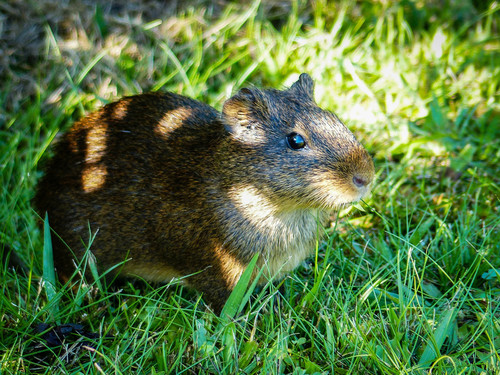
Other species in the genus Cavia
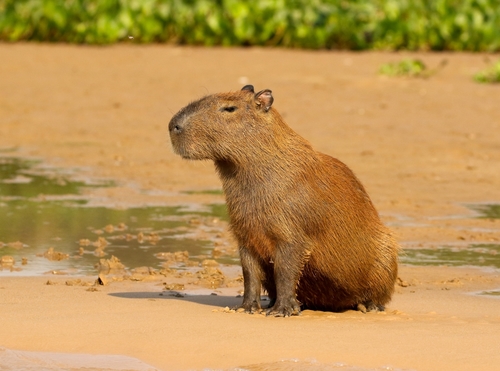
Other species in the family Caviidae
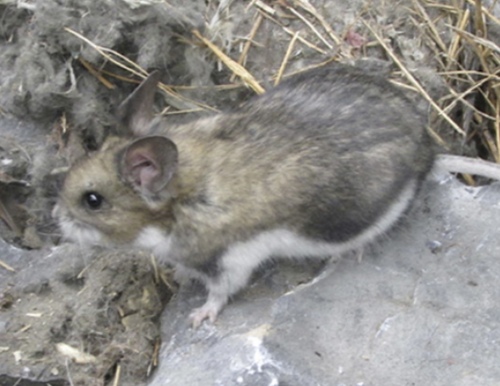
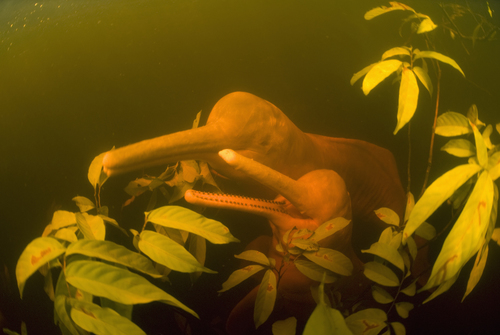
Species that share its range
Sources
Conservation status, range description and population estimate come from the IUCN Red List assessment for Cavia tschudii. Countries are derived from that range description, not from a mapped country list. Last refreshed on .
The distribution map is drawn from the IUCN Red List spatial data compiled in 2016. IUCN SSC Small Mammal Specialist Group