
Luis Manuel's Tailless Bat
Anoura luismanueli
Red List assessment
Least Concernon the IUCN Red List
- EXExtinct
- EWExtinct in the Wild
- CRCritically Endangered
- ENEndangered
- VUVulnerable
- NTNear Threatened
- LCLeast Concern
The Luis Manuel's Tailless Bat is recorded in 2 countries across South America. The IUCN Red List assesses the Luis Manuel's Tailless Bat as Least Concern. No precise population estimate is available.
- Family
- Phyllostomidae
- Order
- Chiroptera
- Genus
- Anoura
- Countries recorded
- 2
- Continents
- South America
- Red List category
- Least Concern
- Data updated
- August 9, 2026
What is the Luis Manuel's Tailless Bat?
Anoura luismanueli is a small, specialized nectar-feeding bat of the family Phyllostomidae, formally described by Molinari in 1994 and named in honor of Venezuelan biologist Luis Manuel Velásquez. It inhabits montane cloud forests of the Venezuelan Andes and, like all members of the genus Anoura, possesses an elongated rostrum and a highly extensible, brush-tipped tongue adapted for extracting nectar from deep tubular flowers. Despite being called 'tailless,' it retains a vestigial tail enclosed within the uropatagium. It is a regionally endemic species of considerable ecological importance as a cloud-forest pollinator.
Where does the Luis Manuel's Tailless Bat live?
Primarily the Venezuelan Andes (Cordillera de Mérida and associated ranges in western Venezuela); possibly extending into adjacent northwestern Colombia.
Principally recorded from the Venezuelan Andes, including the Cordillera de Mérida and adjacent ranges in Mérida, Barinas, and Táchira states of western Venezuela. The range may extend westward into the Serranía del Perijá and northeastern Colombia, but confirmed records from Colombia are limited. It is considered a regionally restricted species within the broader Anoura distribution.
Altitude and depth
Typically found between approximately 1,000 and 2,800 m above sea level, occupying the montane and cloud forest belt of the Venezuelan Andes. It avoids lowland tropical forest and the high-altitude páramo zone.
Seasonal movements
Likely a year-round resident within its altitudinal range. Seasonal altitudinal shifts may occur in response to the phenology of key flowering plants, but no formal migration has been documented. Activity levels may fluctuate with seasonal rainfall and floral resource availability.
Habitat of the Luis Manuel's Tailless Bat
Primarily montane cloud forests and humid subtropical montane forests of the northern Andes. It favors areas with dense floral diversity supporting night-blooming, tubular flowers adapted for bat pollination (chiropterophilous plants). Forest edges adjacent to shrubland and secondary growth may also be used for foraging.
Adaptations to its environment
The greatly elongated rostrum and extraordinarily long, extensible, brush-tipped tongue allow efficient extraction of nectar from deep floral corollas. Its relatively short, broad wings enable highly maneuverable flight in dense cloud-forest understory. Reduced external tail and a well-developed uropatagium assist flight agility. Enhanced olfactory sensitivity helps locate flowers by scent in total darkness.
Conservation status and numbers
Least Concern (LC) on the IUCN Red List. The species does not currently meet threshold criteria for a threatened category, as there is no evidence of rapid population decline and it occupies a reasonably broad altitudinal band within its Andean range. Monitoring remains limited, however, and its restricted distribution warrants continued observation.
Estimated population
No precise population estimate is available. Based on the IUCN LC assessment, the population is considered not immediately threatened, but long-term trends are poorly monitored and the actual number of individuals is unknown.
What threatens the Luis Manuel's Tailless Bat?
Primary threats include deforestation and degradation of montane cloud forests driven by agricultural expansion (particularly cattle ranching and crop cultivation), logging, and human settlement in the Venezuelan Andes. Climate change poses an emerging long-term threat by forcing upslope displacement of both the bat's habitat and the flowering plants it depends upon, potentially compressing its viable range.
Diseases and parasites
As with other Neotropical bats, likely hosts ectoparasites such as batflies (family Streblidae) and mites (Acari), as well as endoparasites including nematodes and trypanosomes. May harbor diverse viruses common in Neotropical bat communities. No pathogen surveys specific to this species have been published.
What is being done to protect it?
The species benefits indirectly from Venezuelan national parks within its range, most notably Parque Nacional Sierra Nevada and Parque Nacional Sierra de La Culata in Mérida state. Venezuelan national biodiversity legislation provides a general framework for bat protection. No species-specific conservation program is known to exist.
Recommended actions
Priority actions include systematic field surveys to accurately define the species' full geographic range and population size, long-term monitoring of population trends, protection and reforestation of montane cloud forests in key areas, and targeted research into its pollination ecology and habitat requirements. Climate vulnerability assessments should be conducted as a precaution.
What the Luis Manuel's Tailless Bat looks like
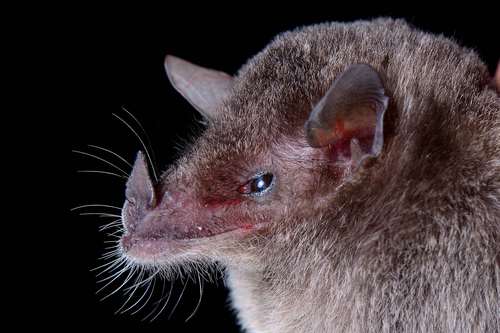
Dorsal fur is dark brownish to grayish-brown; the ventral surface is paler, often grayish-buff. The face is characterized by a narrow, highly elongated rostrum and a small, reduced noseleaf typical of glossophagine bats. The ears are small and rounded; wing and tail membranes are dark brown to blackish.
Size
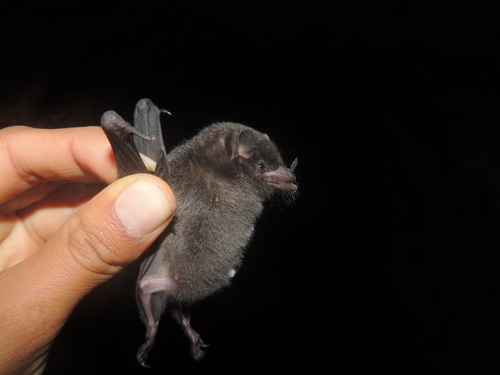
Head-body length approximately 55–75 mm; forearm length approximately 36–44 mm; wingspan roughly 25–30 cm. No free external tail is visible externally.
Weight
Estimated body mass approximately 9–16 g, consistent with comparably sized Anoura species. Gravid females may temporarily exceed the upper end of this range.
Distinctive features
Distinguished from sympatric Anoura species by a combination of cranial measurements (notably condylobasal length and zygomatic width), dental morphology, and subtle fur coloration differences. It is smaller on average than Anoura geoffroyi and differs from Anoura caudifer in specific skull proportions. The complete absence of a visible free tail is a consistent genus-level character.
Differences between males and females
Sexual dimorphism is minimal, as is typical for glossophagine bats. Females may be marginally heavier during pregnancy and lactation, but overall body size, coloration, and morphology are very similar between the sexes.
Behaviour and diet of the Luis Manuel's Tailless Bat
Likely largely solitary while foraging, as is typical for nectar-feeding glossophagines with large individual foraging territories. May form small, loose aggregations at communal roost sites (caves, hollow trees, or rock crevices), potentially mixed with other bat species.
When it is active
Strictly nocturnal. Foraging activity begins shortly after sunset and may continue in bouts throughout the night. Peak activity periods likely coincide with the opening times of preferred nocturnal flowers.
Diet
Primarily nectarivorous and pollinivorous, feeding on nectar and pollen from a range of cloud-forest flowering plants. May supplement its diet with soft fruit pulp and small arthropods to obtain additional protein, particularly during reproductive periods.
How it feeds and hunts
Hovers in front of flowers—much like a hummingbird—using rapid wingbeats, then inserts its elongated tongue to lap up nectar. Uses echolocation to navigate in darkness and may use olfaction to locate flowers by scent. Arthropods may be gleaned from foliage during slow, searching flight.
Communication
Echolocates using low-amplitude, frequency-modulated (FM) ultrasonic calls suited to navigating cluttered forest environments. Social vocalizations are likely used in roost interactions. Chemical signals via facial and body glands may play a role in mate recognition and territory signaling.
Interactions with other species
Acts as a significant pollinator of chiropterophilous cloud-forest plants, facilitating gene flow between plant populations. Likely competes with other nectar-feeding bats (e.g., Anoura caudifer, Glossophaga species) and possibly hummingbirds for floral resources. Natural predators likely include owls (Strigiformes) and arboreal snakes.
Role in its ecosystem
Plays a key ecological role as a nocturnal pollinator and potential seed disperser in Venezuelan Andean cloud forests. Its mutualistic relationships with flowering plants are essential to the reproductive ecology of multiple plant species and highlight its disproportionate importance relative to its small body size.
Reproduction and lifecycle
Reproductive biology is not thoroughly documented for this species. Based on closely related Anoura species, breeding is likely seasonal and tied to peaks in floral resource availability. Litter size is typically one pup per reproductive event, which may occur once or twice per year.
Raising the young
Maternal care is primary: the mother nurses and transports the pup, leaving it in the roost as it grows. Weaning likely occurs at approximately 4–6 weeks of age. As in most phyllostomid bats, paternal care is not expected.
Maturity and lifespan
Sexual maturity is likely reached within the first year of life, consistent with most small glossophagine bats. Wild lifespan is estimated at 5–10 years based on data from congeners; no captivity longevity records exist for this species.
Taxonomy and naming of the Luis Manuel's Tailless Bat
Classification
Mammalia > Chiroptera > Phyllostomidae (subfamily Glossophaginae) > Anoura > Anoura luismanueli
What research says
Recent studies
The species was formally described by Molinari (1994) in Zeitschrift für Säugetierkunde, based on specimens from the Venezuelan Andes. Subsequent molecular phylogenetic work on the genus Anoura has confirmed the validity of this species and its evolutionary relationships. No major discoveries specific to its ecology or biology have been published in recent years.
Genome and DNA
No published genome sequence or chromosome count is available specifically for A. luismanueli. It has been included in molecular phylogenetic analyses of the genus Anoura (e.g., Mantilla-Meluk 2014, 2016), which consistently support its placement within the Glossophaginae clade and clarify its relationships with congeners.
Compared with similar species
Most morphologically similar to Anoura caudifer, from which it differs in cranial dimensions and body size. Compared to the larger Anoura geoffroyi—the most widespread Anoura species—it is smaller and more range-restricted. A striking congener is Anoura fistulata of Ecuador, which holds the record for the longest tongue relative to body size of any mammal (extending to 150% of body length), illustrating the extreme specialization possible within this genus.
The Luis Manuel's Tailless Bat and people
1) Though called 'tailless,' Luis Manuel's Tailless Bat is not truly without a tail—it has a tiny vestigial tail hidden inside the uropatagium, invisible from the outside. 2) This bat effectively performs the same ecological function at night that hummingbirds perform by day, hovering in front of flowers and acting as a flying pollen courier across the cloud forest. 3) The species is one of relatively few mammals to be named in honor of a Venezuelan scientist, making it a point of national biological heritage in Venezuela.
Where and how to see it
Best encountered at dusk and into the night in montane cloud forests of Mérida state, Venezuela, particularly within Parque Nacional Sierra Nevada or Parque Nacional Sierra de La Culata at elevations above 1,500 m. Observing flowering plants with tubular nocturnal blossoms at forest edges maximizes the chances of a sighting. Formal bat mist-netting surveys conducted by licensed researchers represent the most reliable detection method.
Risks to humans
No notable risk to humans. This small, nectarivorous bat is non-aggressive and poses no direct physical threat. As a precautionary measure, direct handling of any wild bat should be avoided due to the general potential for zoonotic disease transmission; standard biosafety protocols apply to researchers.
Myths and legends
No myths or legends are specifically documented for this species. Across Venezuelan and broader Latin American cultures, bats generally carry ambivalent symbolism—sometimes regarded as omens of ill fortune or associated with the supernatural, yet increasingly celebrated by naturalists and local communities for their essential role as pollinators and pest controllers.
Countries where the Luis Manuel's Tailless Bat is recorded
The 2 countries named in the range description of its IUCN Red List assessment.
Questions about the Luis Manuel's Tailless Bat
Where does the Luis Manuel's Tailless Bat live?
The Luis Manuel's Tailless Bat is recorded in Colombia and Venezuela across South America. These countries come from the range description of its IUCN Red List assessment, and they are what place the species on the interactive map.
Is the Luis Manuel's Tailless Bat endangered?
The IUCN Red List assesses the Luis Manuel's Tailless Bat as Least Concern. The species is widespread and abundant enough not to qualify for any threatened category. It does not mean the species is safe forever, only that nothing in the current data raises an alarm.
How many are left in the wild?
No precise population estimate is available. This figure comes from the species assessment on the IUCN Red List; population estimates for wild mammals are ranges, not counts, and are revised at each assessment.
What habitat does the Luis Manuel's Tailless Bat live in?
Primarily montane cloud forests and humid subtropical montane forests of the northern Andes.
What is the scientific name of the Luis Manuel's Tailless Bat?
The Luis Manuel's Tailless Bat is Anoura luismanueli, in the family Phyllostomidae, order Chiroptera.
Other species in the genus Anoura
Other species in the family Phyllostomidae
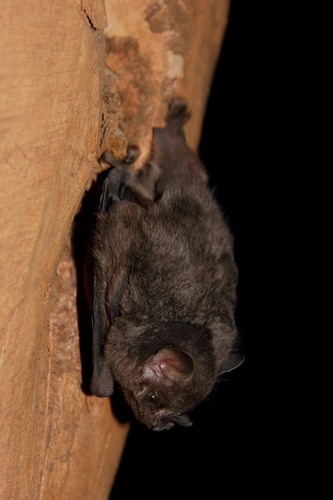
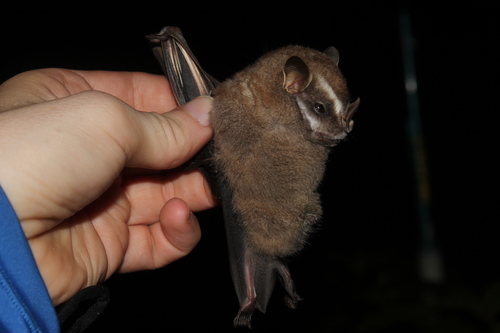
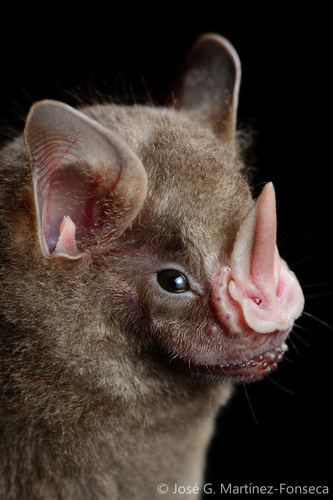
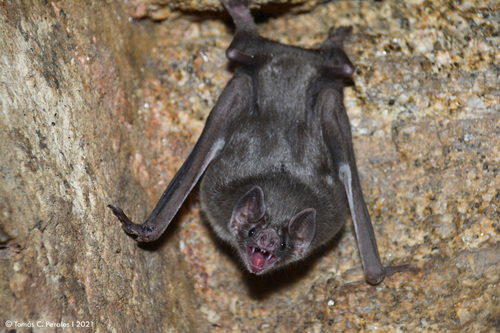
Sources
Conservation status, range description and population estimate come from the IUCN Red List assessment for Anoura luismanueli. Countries are derived from that range description, not from a mapped country list. Last refreshed on .
The distribution map is drawn from the IUCN Red List spatial data compiled in 2018. IUCN (International Union for Conservation of Nature)