
Handley's Tailless Bat
Anoura cultrata
Red List assessment
Least Concernon the IUCN Red List
- EXExtinct
- EWExtinct in the Wild
- CRCritically Endangered
- ENEndangered
- VUVulnerable
- NTNear Threatened
- LCLeast Concern
The Handley's Tailless Bat is recorded in 5 countries across South America. The IUCN Red List assesses the Handley's Tailless Bat as Least Concern. No precise global population estimate is available.
- Family
- Phyllostomidae
- Order
- Chiroptera
- Genus
- Anoura
- Countries recorded
- 5
- Continents
- South America
- Red List category
- Least Concern
- Data updated
- August 9, 2026
What is the Handley's Tailless Bat?
Handley's Tailless Bat is a medium-sized nectarivorous bat belonging to the glossophagine subfamily of leaf-nosed bats. It inhabits Andean cloud forests and montane zones at mid-to-high elevations across northwestern South America. The species is named in honor of the American mammalogist Charles O. Handley Jr. Like other Anoura bats, it is remarkable for its highly elongated tongue and rostrum, both specializations for feeding on nectar from tubular flowers. It plays a critical ecological role as a pollinator of cloud forest plant communities.
Where does the Handley's Tailless Bat live?
Andean regions of Colombia, Venezuela, Ecuador, Peru, and Bolivia
Found along the Andes cordilleras from the Sierra Nevada de Santa Marta and central Andes of Colombia southward through Venezuela (Andes), Ecuador, Peru, and into Bolivia. Known records also come from the Colombian departments of Quindío, Risaralda, Antioquia, and surrounding regions.
Altitude and depth
Typically found between approximately 1,000 and 3,200 m above sea level, with most records clustered in the 1,500–2,800 m range within cloud forest zones.
Seasonal movements
No long-distance seasonal migrations are documented. Foraging activity and reproductive timing may shift in response to seasonal peaks in flowering phenology within the cloud forest. Torpor or hibernation has not been reported.
Habitat of the Handley's Tailless Bat
Primary habitat is Andean montane and cloud forests (bosque de niebla), including areas with dense epiphytic vegetation, bromeliads, and flowering plants with tubular corollas. It also occurs in secondary forest edges and forest-agriculture interfaces where flowering plants are abundant.
Adaptations to its environment
Possesses a long, highly extensible tongue equipped with papillae for efficient nectar extraction from deep tubular flowers. The rostrum is elongated compared to most phyllostomids. The uropatagium is greatly reduced, consistent with the 'tailless' condition of the genus. Keen olfactory and echolocatory abilities help locate flowers in dim forest conditions.
Conservation status and numbers
Least Concern (LC) on the IUCN Red List. The species has a reasonably wide Andean distribution and, despite habitat pressures, does not meet the threshold for a threatened category. However, data on population trends remain limited.
Estimated population
No precise global population estimate is available. The population trend is presumed stable, though locally it may be declining in areas of intensive forest loss.
What threatens the Handley's Tailless Bat?
Deforestation and conversion of Andean cloud forests to agriculture (particularly coffee, cattle, and crops) represent the primary threats. Selective logging and habitat fragmentation reduce flower availability and roosting sites. Climate change may shift the altitudinal distribution of both the bat and its host plants.
Diseases and parasites
Like most phyllostomid bats, it is likely host to various ectoparasites (mites, streblid bat flies) and endoparasites (helminths, trypanosomes). It may be a reservoir or host for various viral agents, though specific disease studies on A. cultrata are limited.
What is being done to protect it?
The species benefits from presence within several protected areas across its range, including national parks in Colombia (e.g., Los Nevados, Serranía de los Yariguíes), Ecuador, and Peru. General Andean biodiversity programs and bat conservation networks in Latin America help monitor the species.
Recommended actions
Priority actions include protecting and restoring Andean cloud forest corridors, improving population monitoring through standardized mist-netting surveys, and researching its specific plant–pollinator relationships to identify key floral resources for conservation.
What the Handley's Tailless Bat looks like
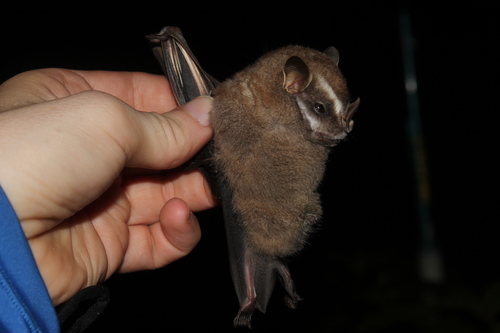
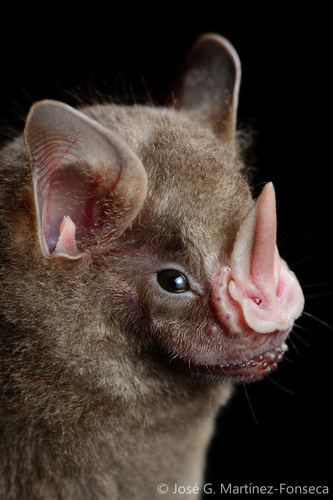
Fur is typically dense and dark brown to blackish-brown on the dorsum, slightly paler or grayish on the ventral surface. The face features a well-developed triangular nose-leaf, large eyes relative to many bats, and a noticeably elongated snout. The uropatagium (tail membrane) is greatly reduced and lacks a projecting tail, giving the genus its 'tailless' common name.
Size
Head-body length approximately 60–75 mm; forearm length approximately 38–44 mm; wingspan estimated at 250–300 mm. No visible tail.
Weight
Approximately 9–15 g; slight sexual variation may exist but significant dimorphism in weight is not well documented.
Distinctive features
Distinguished from the closely related Anoura geoffroyi by its generally larger size and more robust dental structure; the specific epithet 'cultrata' (from Latin cultratus, knife-shaped) alludes to the distinctive morphology of its teeth. It also tends to have a slightly longer forearm and darker overall pelage than A. geoffroyi.
Differences between males and females
Sexual dimorphism is minimal and not well characterized. Females may be marginally larger than males, as is common in many bat species, but no striking differences in color or structure have been reported.
Behaviour and diet of the Handley's Tailless Bat
Roosts in small to moderately sized colonies, often in caves, rock crevices, hollow trees, or dense foliage. May share roost sites with other bat species. Social interactions within the roost are not extensively studied for this species.
When it is active
Strictly nocturnal. Foraging activity begins shortly after dusk and continues through the night, with peak activity tied to the opening times of its preferred floral resources.
Diet
Primarily nectarivorous, feeding on the nectar of a variety of Andean cloud forest flowers, particularly those with tubular or bell-shaped corollas adapted for bat pollination (chiropterophily). Also consumes pollen, which provides important protein, and may supplement diet with small insects.
How it feeds and hunts
Forages by hovering briefly in front of flowers to insert its elongated tongue and lap up nectar, similar to hummingbirds. Uses echolocation (low-duty-cycle frequency-modulated calls) to navigate the forest and may use olfactory cues to locate nectar-producing flowers.
Communication
Uses ultrasonic echolocation calls for navigation and prey/flower detection. Social vocalizations within roosts likely exist but are poorly documented. Scent glands may play a role in individual recognition or mate selection.
Interactions with other species
Serves as a pollinator for numerous cloud forest plant species, forming mutualistic relationships with chiropterophilous plants. Potential predators include owls (Strigiformes) and arboreal snakes. It may compete with other nectar-feeding bats and hummingbirds for floral resources.
Role in its ecosystem
Functions as an important nocturnal pollinator in Andean cloud forest ecosystems, complementing the diurnal pollination carried out by hummingbirds and insects. May also contribute to seed dispersal if it consumes soft fruits opportunistically.
Reproduction and lifecycle
Reproductive timing is likely linked to flowering seasons and may show bimodal peaks corresponding to two rainy seasons in equatorial regions. Females typically give birth to a single pup per reproductive event. Gestation period is estimated around 3–4 months, consistent with other glossophagines.
Raising the young
Maternal care is provided solely by the mother. The pup is carried or left at the roost while the mother forages. Weaning occurs over several weeks as the pup develops flight capability, generally within 1–2 months.
Maturity and lifespan
Sexual maturity is likely reached within the first year of life, consistent with other small glossophagines. Wild lifespan is not well documented but is estimated at 5–10 years; similar species in captivity can live over 10 years.
Taxonomy and naming of the Handley's Tailless Bat
Classification
Mammalia > Chiroptera > Phyllostomidae (subfamily Glossophaginae) > Anoura > Anoura cultrata
What research says
Recent studies
Phylogenetic revisions of the genus Anoura using molecular data have helped clarify the species boundaries and relationships within the group. Studies on cloud forest bat communities in the Colombian Andes have documented A. cultrata as part of important pollinator assemblages, though species-specific autecological research remains sparse.
Genome and DNA
No published chromosome count or whole-genome sequence is specifically available for A. cultrata. Molecular phylogenetic studies placing the species within Anoura have been conducted using mitochondrial and nuclear markers.
Compared with similar species
Anoura cultrata is most closely related to other Andean members of the genus, particularly A. geoffroyi (Geoffroy's Tailless Bat), which has a wider distribution and is more commonly encountered at lower elevations. The extraordinary Anoura fistulata of Ecuador is famous for possessing the longest tongue relative to body size of any mammal (extending up to 150% of its body length), a specialization even more extreme than in A. cultrata.
The Handley's Tailless Bat and people
1) Like all Anoura bats, Handley's Tailless Bat is an inadvertent 'flying florist': pollen from flowers sticks to its fur and face as it hovers to feed, transferring it to the next flower visited and effectively acting as a nocturnal pollinator rivaling hummingbirds. 2) The genus Anoura includes Anoura fistulata, a relative with the longest tongue relative to body size of any known mammal—a dramatic illustration of how flower–bat coevolution can drive extreme morphological specialization. 3) Despite its common name, Handley's Tailless Bat does possess rudimentary tail vertebrae; it simply lacks the elongated tail that extends beyond the uropatagium seen in many other bats.
Where and how to see it
Best observed in Andean cloud forests of Colombia, Ecuador, or Peru between 1,500 and 2,800 m elevation. The reserve areas around the Eje Cafetero (Coffee Region) in Colombia, such as near Salento or within the Los Nevados National Natural Park buffer zone, offer good opportunities. Surveys using mist-nets near flowering plants at dusk yield the best results; bat detectors tuned to frequency-modulated calls can also help detect presence.
Risks to humans
No notable risk to humans under normal circumstances. As with any wild bat, it should not be handled without appropriate protective equipment and vaccinations, as bats can carry rabies virus. The risk of disease transmission is extremely low outside of direct physical contact.
Myths and legends
Bats in general are associated with the supernatural in many Andean indigenous cultures, sometimes linked to the underworld or to liminal spaces between life and death. The Muisca people of Colombia, within whose ancestral territory this species occurs, regarded caves—typical bat roosts—as sacred portals. However, no specific myths are recorded for A. cultrata in particular.
Countries where the Handley's Tailless Bat is recorded
The 5 countries named in the range description of its IUCN Red List assessment.
Questions about the Handley's Tailless Bat
Where does the Handley's Tailless Bat live?
The Handley's Tailless Bat is recorded in Bolivia, Colombia, Ecuador, Peru and Venezuela across South America. These countries come from the range description of its IUCN Red List assessment, and they are what place the species on the interactive map.
Is the Handley's Tailless Bat endangered?
The IUCN Red List assesses the Handley's Tailless Bat as Least Concern. The species is widespread and abundant enough not to qualify for any threatened category. It does not mean the species is safe forever, only that nothing in the current data raises an alarm.
How many are left in the wild?
No precise global population estimate is available. This figure comes from the species assessment on the IUCN Red List; population estimates for wild mammals are ranges, not counts, and are revised at each assessment.
What habitat does the Handley's Tailless Bat live in?
Primary habitat is Andean montane and cloud forests (bosque de niebla), including areas with dense epiphytic vegetation, bromeliads, and flowering plants with tubular corollas.
What is the scientific name of the Handley's Tailless Bat?
The Handley's Tailless Bat is Anoura cultrata, in the family Phyllostomidae, order Chiroptera.
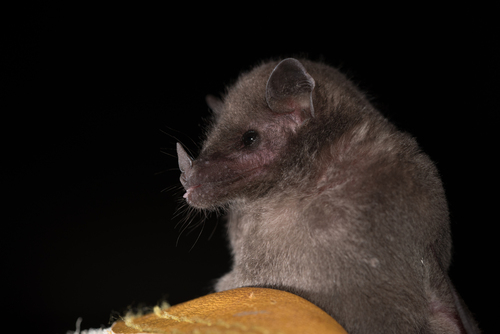
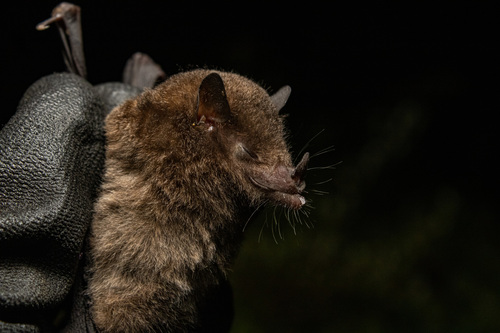
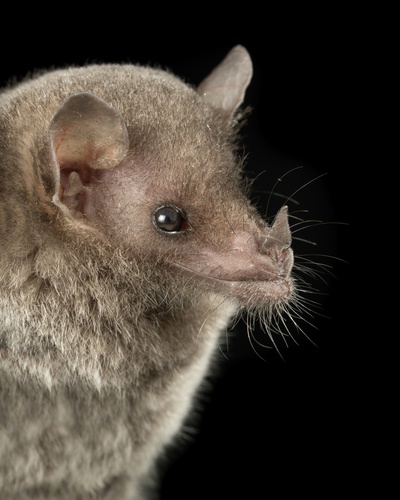
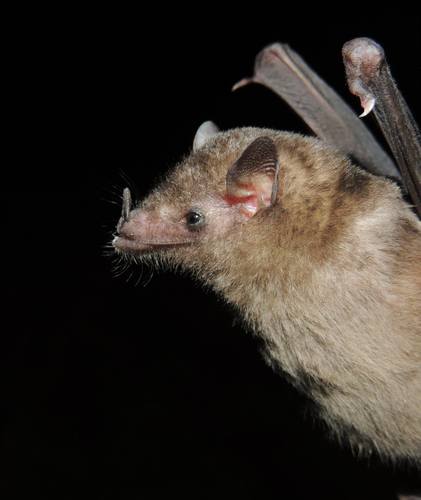
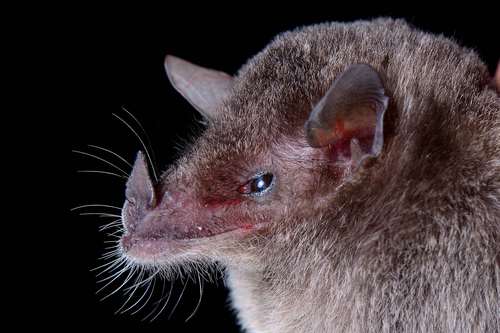
Other species in the genus Anoura

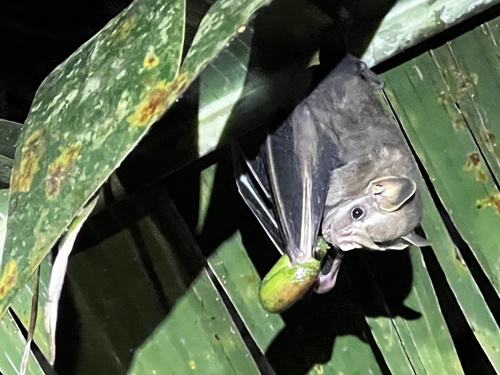
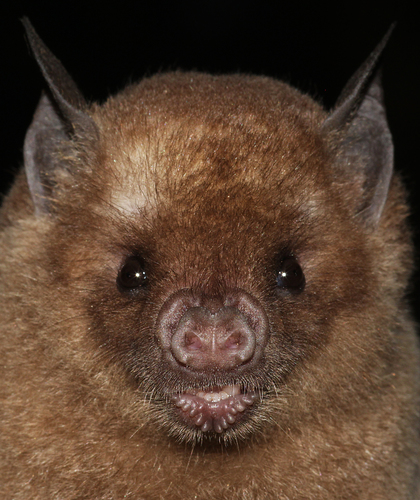
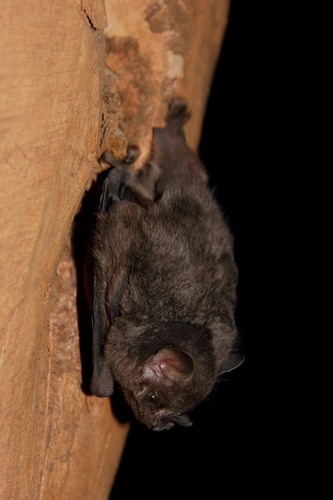
Other species in the family Phyllostomidae
Sources
Conservation status, range description and population estimate come from the IUCN Red List assessment for Anoura cultrata. Countries are derived from that range description, not from a mapped country list. Last refreshed on .
The distribution map is drawn from the IUCN Red List spatial data compiled in 2008. IUCN (International Union for Conservation of Nature)