
Kloss's Squirrel
Callosciurus albescens
Red List assessment
Data Deficienton the IUCN Red List
- EXExtinct
- EWExtinct in the Wild
- CRCritically Endangered
- ENEndangered
- VUVulnerable
- NTNear Threatened
- LCLeast Concern
Data Deficient has no position on the scale above — it records the absence of an assessment, not a degree of risk.
The Kloss's Squirrel is recorded in one country, Indonesia across Asia. The IUCN Red List records the Kloss's Squirrel as Data Deficient. No reliable population estimate exists; population trend is unknown due to lack of dedicated surveys and monitoring programs
- Family
- Sciuridae
- Order
- Rodentia
- Genus
- Callosciurus
- Countries recorded
- 1
- Continents
- Asia
- Red List category
- Data Deficient
- Data updated
- August 9, 2026
What is the Kloss's Squirrel?
Kloss's Squirrel is a small arboreal tree squirrel endemic to Simeulue Island, Indonesia, part of the diverse Callosciurus genus found throughout Southeast Asia. It is remarkable for its highly restricted island distribution, making it vulnerable to any localized habitat disturbance. Little is known about its specific ecology due to limited scientific study, reflecting its Data Deficient IUCN status. Its isolation on Simeulue has likely led to unique adaptations distinguishing it from mainland relatives.
Where does the Kloss's Squirrel live?
Endemic to Simeulue Island, off the west coast of Sumatra, Indonesia
Restricted entirely to Simeulue Island, located off the northwestern coast of Sumatra in the Indian Ocean, part of Aceh Province, Indonesia. No populations are known from mainland Sumatra or other islands.
Altitude and depth
Likely found from sea level up to around 500-800m, corresponding to the elevational range of forest habitat on Simeulue Island
Habitat of the Kloss's Squirrel
Primarily inhabits lowland tropical rainforest and possibly secondary forest and forest edges on Simeulue Island. Likely dependent on continuous canopy cover for arboreal locomotion and foraging.
Adaptations to its environment
As an arboreal squirrel, it likely possesses sharp curved claws, strong hind limbs, and a long tail for balance while navigating tree canopies. Island endemism suggests adaptation to a narrower range of food resources and reduced predator pressure compared to mainland relatives.
Conservation status and numbers
Listed as Data Deficient (DD) by the IUCN due to insufficient information on population size, distribution, and threats to accurately assess its conservation status. Despite its restricted range, no comprehensive population surveys have been conducted.
Estimated population
No reliable population estimate exists; population trend is unknown due to lack of dedicated surveys and monitoring programs
What threatens the Kloss's Squirrel?
Potential threats include deforestation for agriculture and logging on Simeulue Island, habitat fragmentation, and the inherent vulnerability of having an extremely limited geographic range. Climate change and sea-level rise could also pose long-term risks to island habitat.
What is being done to protect it?
No specific conservation programs are known to target this species directly. General forest protection measures on Simeulue Island and Indonesian national park systems may provide incidental protection.
Recommended actions
Priority actions include conducting population surveys and distribution mapping, assessing habitat quality and threats on Simeulue Island, and establishing monitoring programs to reclassify its conservation status accurately.
What the Kloss's Squirrel looks like
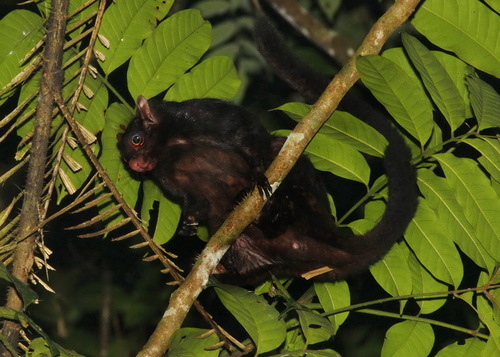
Likely displays a mix of brownish, grayish, or reddish fur typical of the Callosciurus genus, though specific coloration details for this species are not well documented. The common name suggests a whitish or pale element to its coloration, possibly on the underside or face.
Size
Estimated body length of 20-25 cm, with a tail of similar or slightly greater length, typical for medium-sized Callosciurus species
Weight
Estimated weight range of 250-350 grams, consistent with similarly sized Callosciurus species
Distinctive features
Distinguished from mainland Callosciurus species primarily by its isolated island distribution and subtle differences in fur coloration and patterning, though detailed morphological comparisons are limited in scientific literature.
Behaviour and diet of the Kloss's Squirrel
Likely solitary or living in small family groups, consistent with typical Callosciurus social behavior, though specific studies on this species' social structure are lacking
When it is active
Presumed diurnal, active during daylight hours for foraging, consistent with other tree squirrels in the genus Callosciurus
Diet
Likely omnivorous, feeding on fruits, seeds, nuts, tree bark, and possibly insects, similar to other Callosciurus species inhabiting tropical forests
How it feeds and hunts
Forages opportunistically in tree canopies and understory vegetation, using dexterous forepaws to manipulate food items such as fruits and nuts
Communication
Likely uses vocalizations such as chirps and alarm calls, along with scent marking and tail signaling, similar to communication methods observed in related Callosciurus species
Interactions with other species
Potential predators may include birds of prey, snakes, and small carnivorous mammals present on Simeulue Island; specific predator-prey relationships are undocumented
Role in its ecosystem
Likely plays a role in seed dispersal and forest regeneration through its foraging habits, contributing to the ecological dynamics of Simeulue Island's forest ecosystem
Reproduction and lifecycle
Reproductive biology is poorly documented; likely follows the pattern of other Callosciurus species with possible year-round breeding in tropical climates and litters of 1-3 young
Raising the young
Presumed that females provide primary care for offspring in a nest or tree hollow, nursing and protecting young until weaning, consistent with typical sciurid parental behavior
Maturity and lifespan
Sexual maturity likely reached around 1 year of age; lifespan estimated at 5-8 years in the wild, based on comparable Callosciurus species, with no specific data available for captivity
Taxonomy and naming of the Kloss's Squirrel
Classification
Class Mammalia > Order Rodentia > Family Sciuridae > Genus Callosciurus > Species Callosciurus albescens
Scientific synonyms
Formerly considered a subspecies of Callosciurus nigrovittatus or Callosciurus prevostii by some authors; sometimes referred to as Sciurus albescens in older literature
What research says
Recent studies
No major recent studies specifically focused on Callosciurus albescens have been identified; it remains one of the lesser-studied members of the Callosciurus genus
Compared with similar species
Closely related to other Sundaic Callosciurus species such as Callosciurus notatus and Callosciurus nigrovittatus, but distinguished by its unique island endemism on Simeulue rather than mainland Sumatra distribution
The Kloss's Squirrel and people
Kloss's Squirrel is one of relatively few mammal species entirely endemic to the small island of Simeulue, highlighting the island's unique biogeography. It remains so poorly studied that basic details about its size and coloration are still not fully documented in scientific literature.
Where and how to see it
Best observed in remaining forested areas of Simeulue Island during daylight hours; however, due to limited accessibility and scientific documentation, organized wildlife tourism for this species is minimal to nonexistent.
Risks to humans
No notable risk to humans
Countries where the Kloss's Squirrel is recorded
The 1 countries named in the range description of its IUCN Red List assessment.
Questions about the Kloss's Squirrel
Where does the Kloss's Squirrel live?
The Kloss's Squirrel is recorded in Indonesia across Asia. These countries come from the range description of its IUCN Red List assessment, and they are what place the species on the interactive map.
Is the Kloss's Squirrel endangered?
The IUCN Red List assesses the Kloss's Squirrel as Data Deficient. There is not enough information to judge the risk of extinction, usually because the species is rarely seen or has never been surveyed. It is not a reassuring category: several species were Data Deficient right up to the point they were found to be Critically Endangered.
How many are left in the wild?
No reliable population estimate exists; population trend is unknown due to lack of dedicated surveys and monitoring programs This figure comes from the species assessment on the IUCN Red List; population estimates for wild mammals are ranges, not counts, and are revised at each assessment.
What habitat does the Kloss's Squirrel live in?
Primarily inhabits lowland tropical rainforest and possibly secondary forest and forest edges on Simeulue Island.
What is the scientific name of the Kloss's Squirrel?
The Kloss's Squirrel is Callosciurus albescens, in the family Sciuridae, order Rodentia.
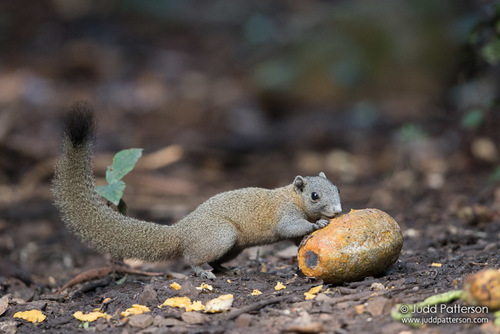
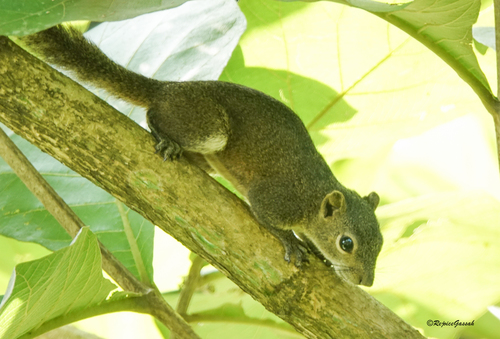
Other species in the genus Callosciurus
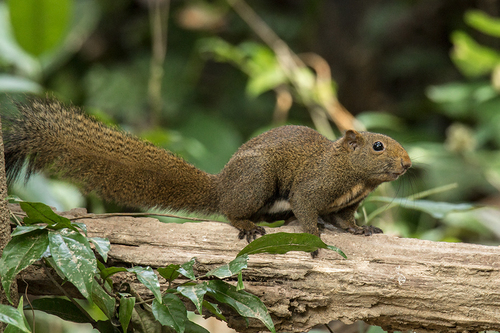
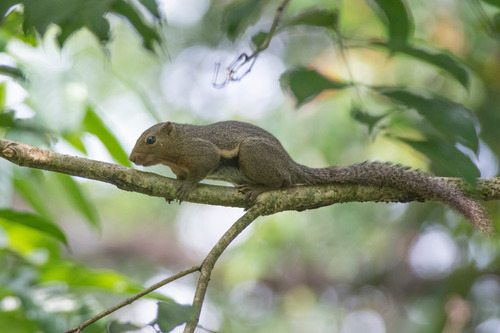
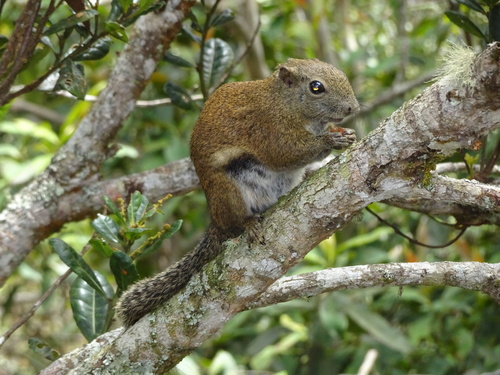
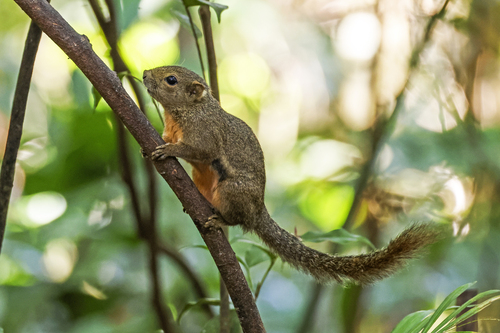
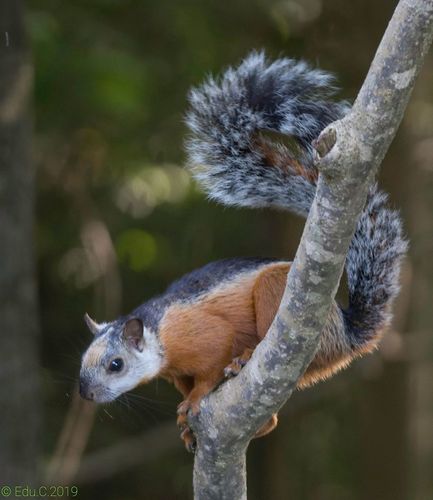
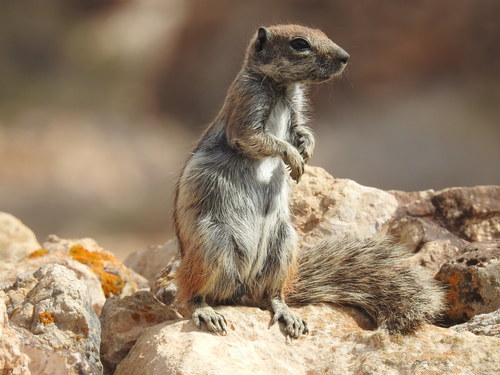
Other species in the family Sciuridae
Sources
Conservation status, range description and population estimate come from the IUCN Red List assessment for Callosciurus albescens. Countries are derived from that range description, not from a mapped country list. Last refreshed on .
The distribution map is drawn from the IUCN Red List spatial data compiled in 2008. IUCN (International Union for Conservation of Nature)