
Juliana's Golden Mole
Neamblysomus julianae
Red List assessment
Endangeredon the IUCN Red List
- EXExtinct
- EWExtinct in the Wild
- CRCritically Endangered
- ENEndangered
- VUVulnerable
- NTNear Threatened
- LCLeast Concern
The Juliana's Golden Mole is recorded in one country, South Africa across Africa. The IUCN Red List assesses the Juliana's Golden Mole as Endangered. No reliable population census exists; the global population is estimated to number in the low hundreds to at most a few thousand individuals, based on the extremely restricted and fragmented range.
- Family
- Chrysochloridae
- Order
- Afrosoricida
- Genus
- Neamblysomus
- Countries recorded
- 1
- Continents
- Africa
- Red List category
- Endangered
- Data updated
- August 9, 2026
What is the Juliana's Golden Mole?
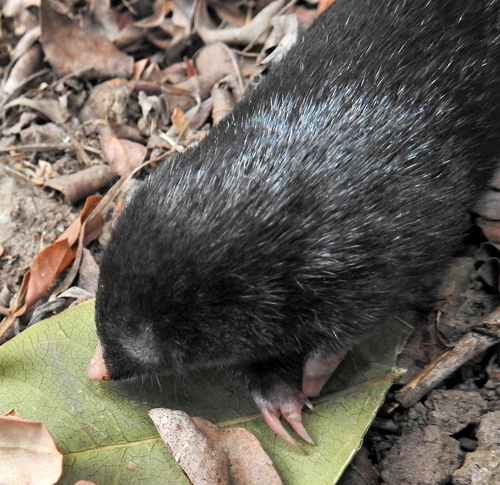
Juliana's Golden Mole is a small, highly fossorial insectivore endemic to the sandy soils of the Pretoria region in South Africa's Gauteng Province. It is one of the most geographically restricted golden moles on the African continent, known from only a few localities within an increasingly urbanized landscape. Like all members of the family Chrysochloridae, it possesses vestigial eyes covered by fused eyelids and skin, no visible external ears, a leathery rhinarium, and powerful forelimbs bearing pick-like claws adapted for burrowing. Its dense, velvety fur shimmers with iridescent bronze and gold tones — one of the most striking features of the entire golden mole family.
Where does the Juliana's Golden Mole live?
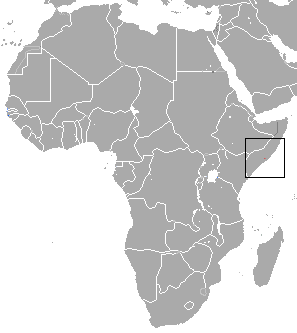
Endemic to South Africa; known only from a handful of sandy-soil localities in and around the city of Pretoria (Tshwane), Gauteng Province, with a potentially isolated population reported near Bela-Bela (formerly Warmbaths) in Limpopo Province.
The species is endemic to South Africa with an extremely restricted range centered on Pretoria (Tshwane) in Gauteng Province. Core known localities include Magnolia Dell and several other sandy-soil patches within and around the Pretoria metropolitan area. A possibly isolated population has been recorded near Bela-Bela in Limpopo Province, roughly 100 km north of Pretoria, but its taxonomic status relative to the nominate population requires further study.
Altitude and depth
Occurs on the Highveld plateau at approximately 1,000–1,500 m above sea level. It spends almost its entire life underground, typically burrowing within the uppermost 5–30 cm of the soil profile, occasionally deeper in dry conditions.
Seasonal movements
No seasonal migration is known; the species is resident year-round within its burrow networks. Activity levels and surface movements are believed to increase during and shortly after rainfall events, which soften sandy soils and bring invertebrate prey closer to the surface.
Habitat of the Juliana's Golden Mole
Juliana's Golden Mole is strictly associated with loose, well-drained sandy soils that allow the construction and maintenance of burrow systems. Suitable microhabitats include sandy bushveld, open woodland with sandy substrate, and suburban gardens where sandy soils remain intact. It is entirely absent from compacted, clay-rich, or rocky substrates that impede burrowing.
Adaptations to its environment
The vestigial eyes, covered by skin and fused eyelids, are a clear adaptation to permanent subterranean life. The enlarged, curved forefeet claws function as digging picks, while the hindfeet push excavated material backward through the tunnel. The leathery, hairless rhinarium protects the sensitive nose during digging. The dense velvety fur lies in any direction, minimizing friction when the animal reverses in narrow tunnels. Prey detection relies primarily on tactile sensitivity in the rhinarium and the ability to sense low-frequency seismic vibrations transmitted through the soil.
Conservation status and numbers
Endangered (EN) on the IUCN Red List, assessed under criteria B1ab(i,ii,iii). The species qualifies for this status due to an estimated extent of occurrence of well under 500 km², an extremely small number of known subpopulations (fewer than five), and a continuing decline in both the extent and quality of suitable sandy-soil habitat driven by urban expansion around Pretoria.
Estimated population
No reliable population census exists; the global population is estimated to number in the low hundreds to at most a few thousand individuals, based on the extremely restricted and fragmented range. The population trend is considered declining in line with ongoing habitat loss from urban sprawl.
What threatens the Juliana's Golden Mole?
The dominant threat is rapid urbanization and residential development in the Pretoria/Tshwane metropolitan area, which physically destroys sandy-soil habitats and burrow systems through construction and landscaping. Secondary threats include compaction of sandy soils, predation by domestic cats and dogs in suburban habitats, road mortality during surface movements, and the indirect reduction of invertebrate prey through the widespread use of pesticides, insecticides, and lawn chemicals.
Diseases and parasites
No specific diseases or parasites have been formally documented for Neamblysomus julianae. By analogy with related golden moles and small insectivores, it likely hosts ectoparasites such as mites and fleas, and potentially endoparasitic helminths, but no published records exist.
What is being done to protect it?
The species is legally protected under South Africa's National Environmental Management: Biodiversity Act (NEMBA, Act 10 of 2004), which prohibits harm, disturbance, or collection without a permit. Some individuals occur within botanical gardens and urban green spaces in Pretoria that provide incidental protection. The Endangered Wildlife Trust (EWT) and the South African National Biodiversity Institute (SANBI) have contributed to survey work and monitoring for this and other threatened South African golden moles.
Recommended actions
Priority actions include systematic field surveys to fully map remaining populations and identify critical sandy-soil refugia; integration of the species into environmental impact assessment protocols for all development projects in the Pretoria area; legal protection and management of key habitat patches; public-awareness campaigns targeting suburban residents and domestic pet owners; and research into captive husbandry to underpin any future emergency breeding program.
What the Juliana's Golden Mole looks like
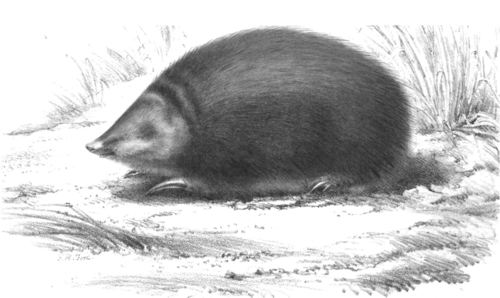
The body is covered in short, dense, velvety fur with an iridescent sheen ranging from bronze to greenish-gold, caused by the microscopic structure of flattened, overlapping hair shafts rather than pigmentation. The face terminates in a prominent, hardened, hairless leathery nose pad. There are no visible eyes or external ear pinnae. The forefeet bear three large, strongly curved digging claws.
Size
Total body length approximately 85–105 mm; the tail is vestigial, measuring less than 5 mm. The body is compact and cylindrical with no discernible neck — a classic golden mole silhouette.
Weight
Approximately 18–30 g; reliable sex-specific weight data are not available in the literature.
Distinctive features
Distinguished from the widespread Hottentot Golden Mole (Amblysomus hottentotus) by its restricted sandy Highveld distribution, smaller size, and molecular divergence. Separated from its closest congener, Gunning's Golden Mole (Neamblysomus gunningi) of the Nylsvley region, by geographic range and subtle differences in skull morphology and dentition; the two species are most reliably distinguished by molecular analysis.
Differences between males and females
Sexual dimorphism has not been documented in this species; males and females appear externally identical in size and coloration, consistent with the broader pattern across Chrysochloridae.
Behaviour and diet of the Juliana's Golden Mole
Strictly solitary outside the breeding season. Each individual defends its own network of foraging tunnels and a deeper nest chamber. Encounters between adults are likely agonistic, and the species shows no evidence of cooperative or colonial behavior.
When it is active
Primarily active during nocturnal and crepuscular hours, though subterranean foraging may occur at any time of day. Above-ground surface activity is rare, brief, and generally nocturnal, most frequently observed on warm humid nights after rainfall.
Diet
A specialist insectivore and invertivore; the diet is dominated by earthworms, scarabaeid beetle larvae, termites, and other soil-dwelling invertebrates. Small geckos or other invertebrates may be taken opportunistically, as documented in related golden mole species, though this appears incidental.
How it feeds and hunts
Forages by burrowing through loose sandy soil and probing with the sensitive rhinarium to locate prey by touch and vibration. In shallow, soft substrates it employs 'sand-swimming' locomotion, pushing just beneath the soil surface and leaving characteristic raised ridges visible from above. Prey is seized and consumed rapidly within the tunnel.
Communication
Detailed communication studies have not been conducted on this species. Golden moles are understood to detect and likely produce seismic vibrations transmitted through the ground, used for both prey detection and intraspecific communication. Scent glands and urine likely play a role in territorial demarcation; aerial vocalizations are presumably minimal given the subterranean lifestyle.
Interactions with other species
Natural predators include owls, nocturnal snakes, and mongooses; in suburban settings, domestic cats and dogs represent a significant mortality source. As a consumer of soil invertebrates, the species competes indirectly with other insectivorous mammals and birds. Its burrowing activity loosens and aerates the soil, potentially benefiting plant communities and functioning as a soil ecosystem engineer.
Role in its ecosystem
Juliana's Golden Mole occupies the role of a soil-dwelling insectivore and predator of macro-invertebrates, helping to regulate populations of earthworms, beetle larvae, and termites. Its tunneling aerates sandy soils and improves drainage and water infiltration. It is an integral, if cryptic, component of the Highveld sandy-soil ecosystem.
Reproduction and lifecycle
Reproductive biology is poorly documented for this species. Breeding is assumed to be seasonal, likely during the warmer, wetter austral spring and summer months (October–February). Litter size is estimated at 1–2 young, consistent with reproductive patterns observed in related chrysochlorids.
Raising the young
Young are born in a grass-lined nest chamber within the burrow system. The mother provides sole parental care; the duration of nursing and weaning is unknown but is estimated at several weeks, after which juveniles disperse to establish independent burrow systems.
Maturity and lifespan
Age at sexual maturity and wild lifespan are unknown for this species. Related golden mole species are thought to reach sexual maturity within their first year of life; wild lifespans for chrysochlorids are typically estimated at 2–5 years, with potentially greater longevity under controlled captive conditions.
Taxonomy and naming of the Juliana's Golden Mole
Classification
Mammalia > Afrosoricida > Chrysochloridae > Neamblysomus > Neamblysomus julianae
Scientific synonyms
Amblysomus julianae Meester, 1972 (original description); previously placed in genus Amblysomus before molecular and morphological evidence supported its transfer to Neamblysomus.
What research says
Recent studies
Recent survey work in the Pretoria/Tshwane metropolitan area has attempted to clarify the current distribution and assess the extent of remaining sandy-soil habitat. Broader molecular systematics studies of the Chrysochloridae have reinforced the distinctness of Neamblysomus as a genus and highlighted the vulnerability of narrowly endemic golden mole species to habitat loss.
Genome and DNA
No published chromosome count or genome sequence is available specifically for Neamblysomus julianae. Mitochondrial and nuclear gene phylogenies have confirmed the separation of the genus Neamblysomus from Amblysomus and placed golden moles within the superorder Afrotheria alongside tenrecs, elephants, and hyraxes.
Compared with similar species
Juliana's Golden Mole is most closely related to Gunning's Golden Mole (Neamblysomus gunningi), which is known from a few localities near Nylsvley in Limpopo Province — both share the genus Neamblysomus and are distinguished from Amblysomus by skull and molar characters. Compared to the ecologically similar but far more widespread Hottentot Golden Mole (Amblysomus hottentotus), N. julianae has an immeasurably more restricted range and a much stronger dependence on sandy substrates. Among the 21 species of Chrysochloridae, N. julianae is considered one of the most threatened due to the overlap of its tiny range with one of South Africa's fastest-growing urban centres.
The Juliana's Golden Mole and people
The golden iridescence of Juliana's Golden Mole fur is not produced by any pigment but by the microscopic structure of flattened, scale-like hair shafts that refract and scatter light — a structural coloration mechanism analogous to the shimmer of a butterfly's wing. Despite being functionally blind, it can detect the faint seismic vibrations of an earthworm moving through soil several centimetres away. The species was only formally described by science in 1972 and remains among the least-studied mammals in southern Africa, with much of its biology still completely unknown.
Where and how to see it
Juliana's Golden Mole is extraordinarily difficult to observe directly due to its subterranean lifestyle and brief, nocturnal surface excursions. The best evidence of its presence is the characteristic shallow ridge of raised sandy soil created by 'sand-swimming' near the surface, most visible after rainfall. Contacting SANBI, the Endangered Wildlife Trust, or local mammalogical societies in Pretoria is the most reliable way to learn about current survey sites; spotlighting sandy garden borders in known localities on warm, humid nights offers the best — though still slim — chance of a sighting.
Risks to humans
No notable risk to humans. Juliana's Golden Mole is a tiny, inoffensive insectivore with no venom, no known zoonotic disease associations, and no defensive behavior beyond attempting to escape.
Countries where the Juliana's Golden Mole is recorded
The 1 countries named in the range description of its IUCN Red List assessment.
Questions about the Juliana's Golden Mole
Where does the Juliana's Golden Mole live?
The Juliana's Golden Mole is recorded in South Africa across Africa. These countries come from the range description of its IUCN Red List assessment, and they are what place the species on the interactive map.
Is the Juliana's Golden Mole endangered?
Yes. The IUCN Red List assesses the Juliana's Golden Mole as Endangered, one of the three threatened categories. The species faces a very high risk of extinction in the wild — a step below Critically Endangered, but still on a trajectory that ends badly without intervention.
How many are left in the wild?
No reliable population census exists; the global population is estimated to number in the low hundreds to at most a few thousand individuals, based on the extremely restricted and fragmented range. This figure comes from the species assessment on the IUCN Red List; population estimates for wild mammals are ranges, not counts, and are revised at each assessment.
What habitat does the Juliana's Golden Mole live in?
Juliana's Golden Mole is strictly associated with loose, well-drained sandy soils that allow the construction and maintenance of burrow systems.
What is the scientific name of the Juliana's Golden Mole?
The Juliana's Golden Mole is Neamblysomus julianae, in the family Chrysochloridae, order Afrosoricida.
Other species in the genus Neamblysomus

Other species in the family Chrysochloridae



Species that share its range
Sources
Conservation status, range description and population estimate come from the IUCN Red List assessment for Neamblysomus julianae. Countries are derived from that range description, not from a mapped country list. Last refreshed on .
The distribution map is drawn from the IUCN Red List spatial data compiled in 2015. Gary Bronner; IUCN (International Union for Conservation of Nature)