
African Savanna Elephant
Loxodonta africana
Red List assessment
Endangeredon the IUCN Red List
- EXExtinct
- EWExtinct in the Wild
- CRCritically Endangered
- ENEndangered
- VUVulnerable
- NTNear Threatened
- LCLeast Concern
The African Savanna Elephant is recorded in 8 countries across Africa. The IUCN Red List assesses the African Savanna Elephant as Endangered. Approximately 350,000-400,000 individuals remaining in the wild, with populations declining in many regions though some southern African populations are stable or increasing
- Family
- Elephantidae
- Order
- Proboscidea
- Genus
- Loxodonta
- Countries recorded
- 8
- Continents
- Africa
- Red List category
- Endangered
- Data updated
- August 9, 2026
What is the African Savanna Elephant?
The African Savanna Elephant is the largest living terrestrial animal, inhabiting grasslands, woodlands, and savannas across sub-Saharan Africa. Known for its massive size, long tusks, and large fan-shaped ears, it plays a crucial ecological role as a keystone species. Highly intelligent and social, these elephants live in complex matriarchal family groups and are essential for shaping their ecosystems through foraging and seed dispersal.
Where does the African Savanna Elephant live?
Sub-Saharan Africa, primarily Eastern and Southern Africa including Botswana, Tanzania, Kenya, Zimbabwe, South Africa, and Namibia
Found across Eastern and Southern Africa, with major populations in Botswana, Tanzania, Zimbabwe, Kenya, South Africa, Namibia, Zambia, and Mozambique; fragmented populations also exist in parts of West and Central Africa
Altitude and depth
Sea level to approximately 4,000 meters, though most populations occur below 2,000 meters in lowland savanna habitats
Seasonal movements
Seasonal migrations occur in response to water and food availability, with movements between wet and dry season ranges often covering large distances, particularly in areas like the Serengeti-Mara ecosystem
Habitat of the African Savanna Elephant
Savannas, grasslands, open woodlands, and semi-arid scrublands; also found in floodplains and marshy areas near water sources. Requires access to large territories with sufficient vegetation and water.
Adaptations to its environment
Large ears help dissipate heat through blood vessel cooling; trunk serves multiple functions including feeding, drinking, and social communication; thick skin protects against sun and insects while wallowing in mud provides additional protection.
Conservation status and numbers
Endangered (EN) according to IUCN Red List as of 2021 assessment, reflecting significant population declines primarily due to poaching for ivory and habitat loss over recent decades
Estimated population
Approximately 350,000-400,000 individuals remaining in the wild, with populations declining in many regions though some southern African populations are stable or increasing
What threatens the African Savanna Elephant?
Poaching for ivory trade, habitat loss and fragmentation due to agricultural expansion, human-elephant conflict, and climate change affecting water and food availability
Diseases and parasites
Susceptible to elephant endotheliotropic herpesvirus (EEHV), anthrax, tuberculosis, and various internal and external parasites including ticks and intestinal worms
What is being done to protect it?
Protected areas such as Kruger National Park, Serengeti, and Chobe National Park; CITES trade restrictions on ivory; anti-poaching units; community-based conservation programs; and transboundary conservation initiatives like KAZA
Recommended actions
Strengthen anti-poaching enforcement, expand and connect protected habitats through wildlife corridors, reduce human-elephant conflict through community engagement, and maintain strict international ivory trade bans
What the African Savanna Elephant looks like
Grey wrinkled skin, large fan-shaped ears larger than forest elephant relatives, long curved tusks (more prominent in males), and a long muscular trunk with two finger-like projections at the tip
Size
Shoulder height 2.5-4 meters; body length 6-7.5 meters including trunk; males typically larger than females
Weight
Males: 4,000-6,300 kg; Females: 2,400-3,500 kg, making them the largest land mammals on Earth
Distinctive features
Larger body size and larger, more triangular ears compared to the African Forest Elephant; convex back shape versus the forest elephant's straighter back; larger and more curved tusks
Differences between males and females
Males are significantly larger and heavier than females, with notably larger tusks; males also have a more pronounced forehead and thicker overall build
Behaviour and diet of the African Savanna Elephant
Highly social, living in matriarchal herds of related females and their offspring, typically 8-100 individuals; adult males are usually solitary or form small bachelor groups outside breeding season
When it is active
Primarily active during cooler parts of the day (early morning and late afternoon/evening), resting during the hottest midday hours; capable of both diurnal and nocturnal activity depending on temperature and human disturbance
Diet
Herbivorous, consuming grasses, leaves, bark, fruits, and roots; can eat up to 150-300 kg of vegetation daily and require access to significant water sources
Communication
Complex communication through infrasonic rumbles (below human hearing range) that can travel several kilometers, trumpeting calls, body language, and chemical signals through scent glands and urine/feces
Interactions with other species
Adult elephants have few natural predators due to their size, though lions and hyenas may target calves; elephants interact with numerous species as ecosystem engineers, creating water holes and clearings used by other wildlife
Role in its ecosystem
Keystone species and ecosystem engineer that shapes vegetation structure through browsing and trampling, disperses seeds over long distances, creates water holes, and maintains savanna-woodland balance
Reproduction and lifecycle
Breeding occurs year-round with peaks during rainy seasons; gestation period is approximately 22 months (longest of any mammal), typically resulting in a single calf, with births occurring every 4-6 years
Raising the young
Calves are raised communally within the herd, with mothers and related females providing extensive care; weaning occurs around 2 years but calves remain dependent on the herd for social learning until adolescence
Maturity and lifespan
Females reach sexual maturity around 10-12 years, males around 12-15 years though social maturity comes later; lifespan is 60-70 years in the wild, similar or slightly less in captivity
Taxonomy and naming of the African Savanna Elephant
Classification
Class Mammalia > Order Proboscidea > Family Elephantidae > Genus Loxodonta > Species Loxodonta africana
Subspecies
No universally recognized subspecies; historically some regional populations were described but genetic studies suggest a clinal variation rather than distinct subspecies across savanna range
Scientific synonyms
Elephas africanus (Blumenbach, 1797), formerly considered same species as forest elephant before genetic split into Loxodonta africana and Loxodonta cyclotis
What research says
Recent studies
Recent research has focused on elephant cognition, complex problem-solving abilities, self-awareness, and genetic studies revealing surprisingly low cancer rates linked to multiple copies of tumor-suppressor genes
Genome and DNA
Diploid chromosome number of 56; genome sequencing has revealed insights into evolutionary divergence from Asian elephants approximately 6-8 million years ago and unique adaptations related to cancer resistance
Compared with similar species
Larger overall size and bigger ears distinguish savanna elephants from African forest elephants; compared to Asian elephants, African savanna elephants have larger ears, more pronounced tusks in both sexes, and a more sloping back profile
The African Savanna Elephant and people
Elephants can recognize themselves in mirrors, demonstrating self-awareness rare among animals; they can communicate through seismic vibrations detected by their feet; and they display behaviors suggesting grief and mourning for deceased herd members
Where and how to see it
Best observed in protected reserves such as Amboseli National Park, Kruger National Park, or the Okavango Delta during dry season (June-October) when animals congregate near water sources; early morning and late afternoon offer optimal viewing
Risks to humans
Can be dangerous if provoked or when protecting young, capable of causing serious injury or death through charging or trampling; human-elephant conflict occurs frequently in agricultural areas near elephant range
Human uses
Historically hunted for ivory tusks used in carvings and jewelry (now illegal under international law); ecotourism generates significant revenue for conservation and local economies; some cultural uses in traditional ceremonies
Myths and legends
Elephants feature prominently in African folklore as symbols of wisdom, strength, and memory; they appear in creation myths and are considered sacred in various African cultures, often associated with royalty and power
Countries where the African Savanna Elephant is recorded
The 8 countries named in the range description of its IUCN Red List assessment.
Questions about the African Savanna Elephant
Where does the African Savanna Elephant live?
The African Savanna Elephant is recorded in Botswana, Kenya, Mozambique, Namibia and South Africa, among 8 countries in total across Africa. These countries come from the range description of its IUCN Red List assessment, and they are what place the species on the interactive map.
Is the African Savanna Elephant endangered?
Yes. The IUCN Red List assesses the African Savanna Elephant as Endangered, one of the three threatened categories. The species faces a very high risk of extinction in the wild — a step below Critically Endangered, but still on a trajectory that ends badly without intervention.
How many are left in the wild?
Approximately 350,000-400,000 individuals remaining in the wild, with populations declining in many regions though some southern African populations are stable or increasing This figure comes from the species assessment on the IUCN Red List; population estimates for wild mammals are ranges, not counts, and are revised at each assessment.
What habitat does the African Savanna Elephant live in?
Savannas, grasslands, open woodlands, and semi-arid scrublands; also found in floodplains and marshy areas near water sources.
What is the scientific name of the African Savanna Elephant?
The African Savanna Elephant is Loxodonta africana, in the family Elephantidae, order Proboscidea.
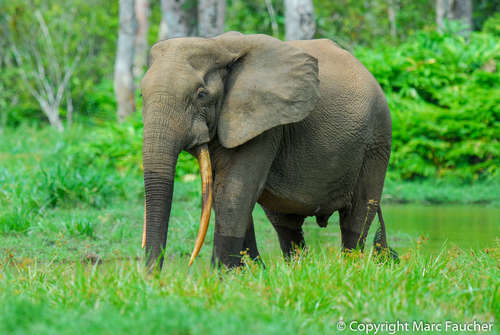
Other species in the genus Loxodonta
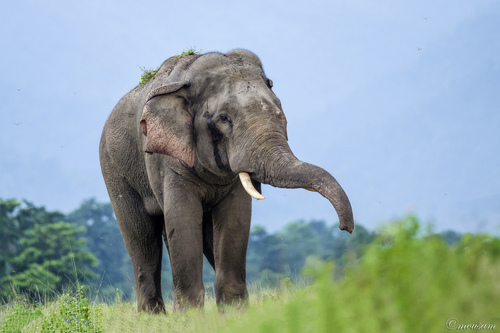
Other species in the family Elephantidae
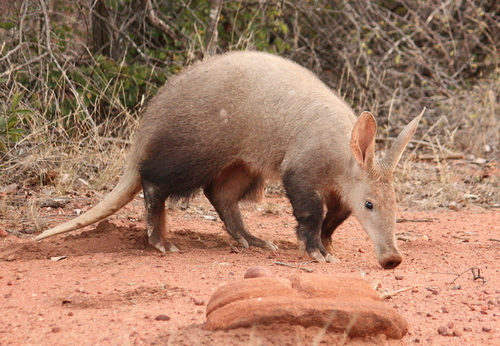
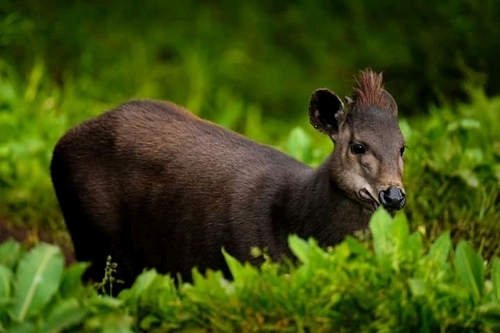
Species that share its range

Sources
Conservation status, range description and population estimate come from the IUCN Red List assessment for Loxodonta africana. Countries are derived from that range description, not from a mapped country list. Last refreshed on .
The distribution map is drawn from the IUCN Red List spatial data compiled in 2021. IUCN SSC African Elephant Specialist Group