
Hoffmann's Two-toed Sloth
Choloepus hoffmanni
Red List assessment
Least Concernon the IUCN Red List
- EXExtinct
- EWExtinct in the Wild
- CRCritically Endangered
- ENEndangered
- VUVulnerable
- NTNear Threatened
- LCLeast Concern
The Hoffmann's Two-toed Sloth is recorded in 9 countries across North America and South America. The IUCN Red List assesses the Hoffmann's Two-toed Sloth as Least Concern. No precise global population figure exists, but the species is considered common within its range; overall trend is believed to be stable to slowly declining due to habitat loss
- Family
- Megalonychidae
- Order
- Pilosa
- Genus
- Choloepus
- Countries recorded
- 9
- Continents
- North America and South America
- Red List category
- Least Concern
- Data updated
- August 9, 2026
What is the Hoffmann's Two-toed Sloth?
Hoffmann's Two-toed Sloth is a slow-moving arboreal mammal native to the rainforests of Central and South America. It is one of two species of two-toed sloths, distinguished by having only two claws on its forelimbs. Remarkably adapted to a life spent almost entirely in trees, it has an extremely low metabolic rate and moves at a leisurely pace to conserve energy. This species is nocturnal and solitary, spending up to 15-20 hours per day resting or sleeping in the forest canopy.
Where does the Hoffmann's Two-toed Sloth live?
Central and South America, including Costa Rica, Nicaragua, Honduras, Panama, Colombia, Ecuador, Peru, Bolivia, and Brazil
Found from Honduras and Nicaragua through Costa Rica and Panama in Central America, extending south through Colombia, Ecuador, Peru, and into western Brazil and Bolivia in South America. The range spans both Atlantic and Pacific slopes in Central America.
Altitude and depth
Sea level up to approximately 3,300 meters, though most commonly found below 2,400 meters
Seasonal movements
No true migration or hibernation; sloths remain in relatively small home ranges year-round with minimal seasonal behavioral changes, though breeding may show slight seasonal peaks
Habitat of the Hoffmann's Two-toed Sloth
Tropical and subtropical moist lowland and montane forests, including primary and secondary growth forests, cloud forests, and forest edges. They prefer areas with continuous canopy cover for easy arboreal movement.
Adaptations to its environment
Long limbs and curved claws allow efficient suspension and movement in tree canopies while minimizing energy expenditure. A very low metabolic rate and body temperature reduce caloric needs, complementing a low-nutrient leaf diet. Specialized gut bacteria aid in digesting tough, fibrous leaves over extended periods.
Conservation status and numbers
Least Concern (LC) according to IUCN, as the species has a wide distribution and is relatively common in suitable habitat across its range, though local populations face pressure from habitat loss
Estimated population
No precise global population figure exists, but the species is considered common within its range; overall trend is believed to be stable to slowly declining due to habitat loss
What threatens the Hoffmann's Two-toed Sloth?
Deforestation and habitat fragmentation due to agriculture and urban development, road mortality, electrocution on power lines, and illegal pet trade
Diseases and parasites
Susceptible to various ectoparasites including mites, ticks, and specialized sloth moths; can also carry endoparasites such as nematodes, though generally show resilience to many pathogens
What is being done to protect it?
Protected in various national parks and reserves throughout its range, such as Costa Rica's Corcovado National Park; sloth rescue and rehabilitation centers, particularly in Costa Rica, work to treat injured individuals and educate the public
Recommended actions
Preserve and connect forest habitats through wildlife corridors, install sloth-safe power line insulation, enforce anti-poaching and pet trade laws, and continue public education on coexistence
What the Hoffmann's Two-toed Sloth looks like
Long, shaggy fur ranging from beige to brown, often with a greenish tinge caused by symbiotic algae growth. They have a rounded head, small eyes, and a short snout with a face that appears perpetually calm. Long forelimbs are noticeably longer than hind limbs, aiding their unique hanging locomotion.
Size
Body length typically 54-72 cm (21-28 inches)
Weight
Adults typically weigh between 4-8 kg (9-17.6 lbs), variable across the range
Distinctive features
Distinguished from three-toed sloths by having only two claws on the forefeet (though three on hind feet), a more pronounced snout, and generally larger body size. Unlike three-toed sloths, they lack visible external tails and have a different facial structure without the 'mask' pattern.
Differences between males and females
Minimal sexual dimorphism; males and females are similar in size and appearance, making visual sex determination difficult without close examination
Behaviour and diet of the Hoffmann's Two-toed Sloth
Solitary and territorial, with individuals maintaining separate home ranges that may overlap slightly. Social interactions are rare, occurring mainly during mating encounters or occasional territorial disputes.
When it is active
Primarily nocturnal, though some diurnal activity occurs; spends the majority of each day sleeping or resting motionless in tree canopies, becoming active mainly at night to feed and move
Diet
Omnivorous, though predominantly folivorous, feeding on leaves, buds, and fruits from a variety of tree species. Unlike three-toed sloths, they occasionally consume insects, small lizards, and carrion, showing more dietary flexibility.
How it feeds and hunts
Not a hunter in the traditional sense; forages slowly through the canopy, using keen smell to locate preferred leaves and fruits, occasionally opportunistically consuming small animal matter
Communication
Communication is limited and includes soft hissing or bleating sounds, especially between mothers and offspring; scent marking via feces and urine may play a role in territory and mate signaling
Interactions with other species
Natural predators include harpy eagles, jaguars, ocelots, and large snakes; sloths host a unique ecosystem of algae, moths, and beetles in their fur that benefit from the sloth's slow movement and provide some camouflage benefit in return
Role in its ecosystem
Plays a role in seed dispersal and nutrient cycling within forest ecosystems; their fur ecosystem supports specialized invertebrates and algae, making them a unique microhabitat within the rainforest
Reproduction and lifecycle
Breeding can occur year-round with no strict season; gestation lasts approximately 11.5 months (unusually long for their size), and females typically give birth to a single offspring
Raising the young
Mothers carry and nurse their single offspring for several months, with the baby clinging to the mother's belly fur. Weaning occurs around 9 months, though the young may stay near the mother's home range afterward.
Maturity and lifespan
Sexual maturity reached around 3-5 years; lifespan in the wild is estimated at 12-20 years, while captive individuals can live up to 30+ years with proper care
Taxonomy and naming of the Hoffmann's Two-toed Sloth
Classification
Class Mammalia > Order Pilosa > Family Megalonychidae > Genus Choloepus > Species Choloepus hoffmanni
Subspecies
Two recognized subspecies: C. h. hoffmanni (Central America, from Honduras to Panama) and C. h. agustinus (northern South America, including Colombia, Ecuador, Peru, and Bolivia)
Scientific synonyms
Bradypus hoffmanni (original combination by Peters, 1858)
What research says
Recent studies
Recent research has focused on the sloth's unique gut microbiome and its role in digesting toxic leaves, as well as studies on their surprisingly complex sleep patterns which differ significantly between wild and captive individuals
Genome and DNA
Diploid chromosome number is 2n=50 or 2n=51 depending on subspecies variation; genomic studies have highlighted unique adaptations related to low metabolic rate and slow locomotion
Compared with similar species
Compared to the Linnaeus's two-toed sloth (Choloepus didactylus), Hoffmann's sloth has a slightly different geographic range and subtle morphological differences; compared to three-toed sloths (Bradypus species), two-toed sloths are generally larger, faster-moving, and have a broader diet including some animal matter
The Hoffmann's Two-toed Sloth and people
Sloths can rotate their heads up to 270 degrees due to extra neck vertebrae; they only defecate about once a week, descending to the forest floor in a vulnerable but ecologically significant ritual; their fur hosts an entire miniature ecosystem including algae that gives them a greenish camouflage tint
Where and how to see it
Best observed in protected rainforest reserves such as Costa Rica's Cahuita or Manuel Antonio National Parks, ideally with a guide skilled at spotting camouflaged animals in the canopy; dawn and dusk offer higher chances due to increased activity during these twilight periods
Risks to humans
No notable risk to humans under normal circumstances, though their sharp claws can cause injury if handled improperly or if the animal feels threatened
Human uses
Historically hunted by some indigenous groups for meat, though this practice has significantly declined; today, sloths are primarily valued for ecotourism, drawing wildlife enthusiasts to rainforest destinations across Central and South America
Myths and legends
In some Central American folklore, sloths are seen as symbols of patience and tranquility; indigenous stories occasionally depict them as spirit guides due to their slow, deliberate movements and seemingly peaceful demeanor
Countries where the Hoffmann's Two-toed Sloth is recorded
The 9 countries named in the range description of its IUCN Red List assessment.
Questions about the Hoffmann's Two-toed Sloth
Where does the Hoffmann's Two-toed Sloth live?
The Hoffmann's Two-toed Sloth is recorded in Bolivia, Brazil, Colombia, Costa Rica and Ecuador, among 9 countries in total across North America and South America. These countries come from the range description of its IUCN Red List assessment, and they are what place the species on the interactive map.
Is the Hoffmann's Two-toed Sloth endangered?
The IUCN Red List assesses the Hoffmann's Two-toed Sloth as Least Concern. The species is widespread and abundant enough not to qualify for any threatened category. It does not mean the species is safe forever, only that nothing in the current data raises an alarm.
How many are left in the wild?
No precise global population figure exists, but the species is considered common within its range; overall trend is believed to be stable to slowly declining due to habitat loss This figure comes from the species assessment on the IUCN Red List; population estimates for wild mammals are ranges, not counts, and are revised at each assessment.
What habitat does the Hoffmann's Two-toed Sloth live in?
Tropical and subtropical moist lowland and montane forests, including primary and secondary growth forests, cloud forests, and forest edges.
What is the scientific name of the Hoffmann's Two-toed Sloth?
The Hoffmann's Two-toed Sloth is Choloepus hoffmanni, in the family Megalonychidae, order Pilosa.
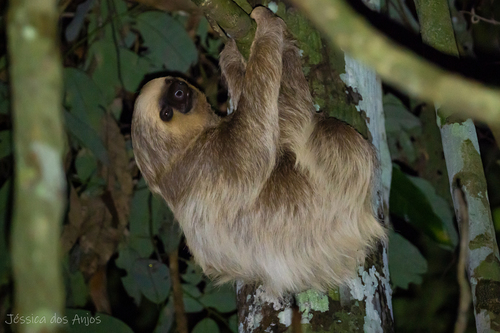
Other species in the genus Choloepus
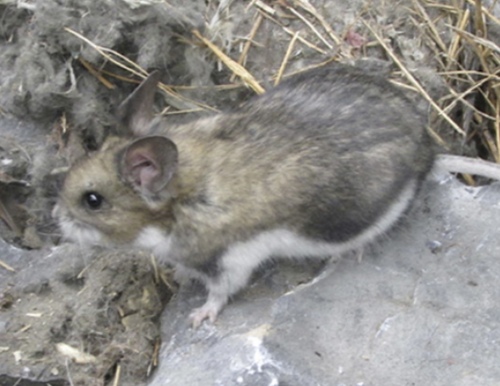
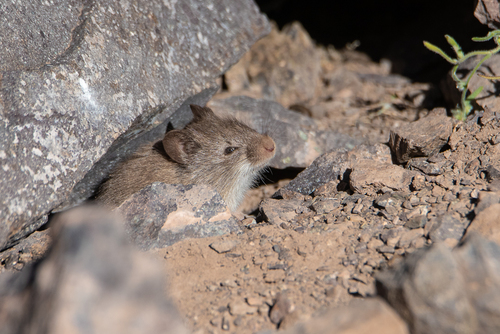
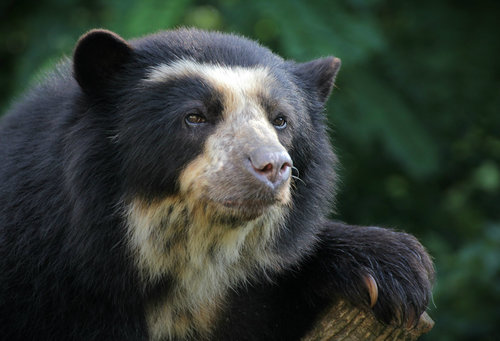
Species that share its range


Sources
Conservation status, range description and population estimate come from the IUCN Red List assessment for Choloepus hoffmanni. Countries are derived from that range description, not from a mapped country list. Last refreshed on .
The distribution map is drawn from the IUCN Red List spatial data compiled in 2022. IUCN (International Union for Conservation of Nature)