
Gudaur Snow Vole
Chionomys gud
Red List assessment
Least Concernon the IUCN Red List
- EXExtinct
- EWExtinct in the Wild
- CRCritically Endangered
- ENEndangered
- VUVulnerable
- NTNear Threatened
- LCLeast Concern
The Gudaur Snow Vole is recorded in 4 countries across Asia and Europe. The IUCN Red List assesses the Gudaur Snow Vole as Least Concern. Population size not precisely quantified, but considered stable; the species is relatively common within its specific rocky alpine habitat niche throughout the Caucasus range.
- Family
- Cricetidae
- Order
- Rodentia
- Genus
- Chionomys
- Countries recorded
- 4
- Continents
- Asia and Europe
- Red List category
- Least Concern
- Data updated
- August 9, 2026
What is the Gudaur Snow Vole?
The Gudaur Snow Vole is a small rodent endemic to the high-altitude regions of the Caucasus Mountains, closely related to the more widespread European Snow Vole. It is remarkable for its specialized adaptation to alpine and subalpine rocky habitats, surviving in harsh, cold environments year-round. This species plays an important role in Caucasian montane ecosystems as both a seed disperser and prey species for various predators.
Where does the Gudaur Snow Vole live?
Caucasus region, primarily Georgia, Russia (North Caucasus), Armenia, Azerbaijan, and northeastern Turkey
Endemic to the Caucasus Mountains, with populations found in Georgia, southern Russia (Caucasus republics), Armenia, Azerbaijan, and extending into northeastern Turkey; distribution is patchy and tied to suitable high-altitude rocky habitat.
Altitude and depth
1800-3600 meters above sea level, with highest population densities typically found between 2200-3200 meters
Seasonal movements
Active year-round without true hibernation, though activity levels decrease significantly during harsh winter months; the species relies on subnivean (under-snow) spaces for movement and foraging during winter.
Habitat of the Gudaur Snow Vole
Rocky alpine and subalpine meadows, scree slopes, and boulder fields with sparse vegetation; also found in rock crevices and areas near permanent snow patches at high elevations.
Adaptations to its environment
Dense, soft fur provides insulation against extreme cold; compact body shape minimizes heat loss; strong claws and flexible body allow navigation through rocky crevices and boulder fields; ability to remain active under snow cover in winter.
Conservation status and numbers
Least Concern (LC) according to IUCN, as the species has a relatively stable population and occupies a substantial range within the Caucasus ecoregion without evidence of significant decline.
Estimated population
Population size not precisely quantified, but considered stable; the species is relatively common within its specific rocky alpine habitat niche throughout the Caucasus range.
What threatens the Gudaur Snow Vole?
Climate change affecting alpine habitat availability, potential habitat degradation from grazing livestock, and localized threats from tourism development in some mountain areas.
Diseases and parasites
Susceptible to various ectoparasites including fleas and mites, as well as endoparasitic helminths; specific disease studies for this species are limited in scientific literature.
What is being done to protect it?
Some populations occur within protected areas including national parks and nature reserves in Georgia, Russia, and Armenia; no species-specific conservation programs currently exist as the species is not considered threatened.
Recommended actions
Continued monitoring of alpine habitat changes due to climate warming, protection of high-altitude ecosystems from overgrazing, and further taxonomic research to clarify subspecies boundaries and population genetics.
What the Gudaur Snow Vole looks like
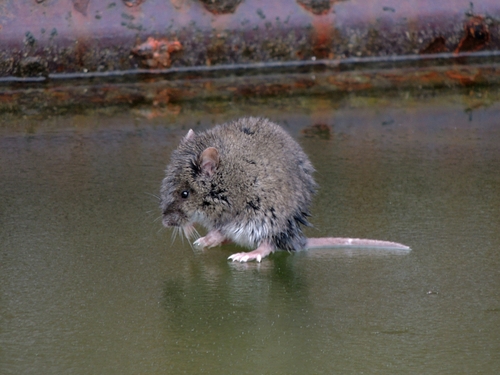
Grayish-brown to grayish-buff dorsal fur with lighter, grayish-white underparts; relatively long tail compared to body size for a vole; rounded ears partially covered by fur; small dark eyes.
Size
Body length 9-12 cm, with tail length of 5-7 cm
Weight
20-45 grams
Distinctive features
Distinguished from the closely related Chionomys nivalis by subtle differences in skull morphology, dental characteristics, and genetic markers; slightly smaller body size and specific coloration patterns endemic to Caucasus populations.
Differences between males and females
Minimal sexual dimorphism; males and females are similar in size and coloration, with only slight size differences favoring males in some populations.
Behaviour and diet of the Gudaur Snow Vole
Generally solitary or living in loose family groups; individuals maintain small home ranges among rocks, with some tolerance for neighboring individuals, especially related family members.
When it is active
Primarily diurnal and crepuscular, with activity patterns adjusted seasonally; more active during daylight hours in summer and utilizing subnivean tunnels during winter months.
Diet
Herbivorous, feeding on a variety of alpine plants including grasses, sedges, mosses, lichens, and seeds; diet shifts seasonally based on plant availability at high altitudes.
Communication
Uses vocalizations including squeaks and chirps for alarm and social interaction; scent marking through urine and glandular secretions helps establish territory boundaries and individual recognition.
Interactions with other species
Preyed upon by various raptors (buzzards, eagles), mustelids (weasels, martens), and foxes native to Caucasus mountain ecosystems; may compete with other small rodents for limited food resources in alpine zones.
Role in its ecosystem
Functions as an important prey species supporting Caucasus predator populations; contributes to seed dispersal for alpine plant species and helps aerate soil through burrowing activities in rocky substrates.
Reproduction and lifecycle
Breeding season typically occurs from late spring through summer (May-August); gestation period lasts approximately 20-24 days, with litters of 2-6 young; weaning occurs after 3-4 weeks.
Raising the young
Female provides primary care including nursing and nest protection; young become independent relatively quickly, reaching sexual maturity within 2-3 months, allowing potentially multiple litters per breeding season.
Maturity and lifespan
Sexual maturity reached at approximately 2-3 months of age; lifespan in the wild is typically 1-2 years, though some individuals may survive longer in favorable conditions.
Taxonomy and naming of the Gudaur Snow Vole
Classification
Class Mammalia > Order Rodentia > Family Cricetidae > Genus Chionomys > Species Chionomys gud
Subspecies
Several subspecies have been proposed based on regional populations across the Caucasus, though taxonomic status of some remains debated; Chionomys gud gud is typically considered the nominate form from the central Caucasus.
Scientific synonyms
Microtus gud (original combination), Chionomys nivalis gud (sometimes treated as subspecies of Chionomys nivalis in older literature)
What research says
Recent studies
Recent phylogenetic and molecular studies have helped refine understanding of species boundaries within the Chionomys genus in the Caucasus, though comprehensive ecological studies remain relatively limited compared to more widespread rodent species.
Genome and DNA
Diploid chromosome number reported as 2n=54; genetic studies have helped clarify phylogenetic relationships within the genus Chionomys and distinguish this species from closely related Chionomys nivalis.
Compared with similar species
Closely related to Chionomys nivalis (European Snow Vole) and Chionomys roberti (Robert's Snow Vole), with which it shares similar alpine habitat preferences; distinguished primarily through genetic analysis and subtle morphological differences in skull structure.
The Gudaur Snow Vole and people
This vole can remain active throughout winter by tunneling through snow to access vegetation, essentially creating an insulated subnivean world; it is one of several snow vole species that demonstrate remarkable convergent adaptation to high-altitude rocky habitats across different mountain ranges.
Where and how to see it
Best observed during summer months (June-August) in high-altitude rocky areas of the Caucasus, particularly in Georgia's Svaneti region or similar alpine zones; early morning or late afternoon offers best viewing chances near boulder fields and scree slopes.
Risks to humans
No notable risk to humans; this species poses no direct threat and is not known to be a significant disease vector for humans.
Countries where the Gudaur Snow Vole is recorded
The 4 countries named in the range description of its IUCN Red List assessment.
Questions about the Gudaur Snow Vole
Where does the Gudaur Snow Vole live?
The Gudaur Snow Vole is recorded in Armenia, Azerbaijan, Georgia and Russia across Asia and Europe. These countries come from the range description of its IUCN Red List assessment, and they are what place the species on the interactive map.
Is the Gudaur Snow Vole endangered?
The IUCN Red List assesses the Gudaur Snow Vole as Least Concern. The species is widespread and abundant enough not to qualify for any threatened category. It does not mean the species is safe forever, only that nothing in the current data raises an alarm.
How many are left in the wild?
Population size not precisely quantified, but considered stable; the species is relatively common within its specific rocky alpine habitat niche throughout the Caucasus range. This figure comes from the species assessment on the IUCN Red List; population estimates for wild mammals are ranges, not counts, and are revised at each assessment.
What habitat does the Gudaur Snow Vole live in?
Rocky alpine and subalpine meadows, scree slopes, and boulder fields with sparse vegetation; also found in rock crevices and areas near permanent snow patches at high elevations.
What is the scientific name of the Gudaur Snow Vole?
The Gudaur Snow Vole is Chionomys gud, in the family Cricetidae, order Rodentia.
Other species in the genus Chionomys
Other species in the family Cricetidae
Species that share its range
Sources
Conservation status, range description and population estimate come from the IUCN Red List assessment for Chionomys gud. Countries are derived from that range description, not from a mapped country list. Last refreshed on .
The distribution map is drawn from the IUCN Red List spatial data compiled in 2008. IUCN (International Union for Conservation of Nature)