
Gregarious Short-tailed Rat
Brachyuromys ramirohitra
Red List assessment
Least Concernon the IUCN Red List
- EXExtinct
- EWExtinct in the Wild
- CRCritically Endangered
- ENEndangered
- VUVulnerable
- NTNear Threatened
- LCLeast Concern
The Gregarious Short-tailed Rat is recorded in one country, Madagascar across Africa. The IUCN Red List assesses the Gregarious Short-tailed Rat as Least Concern. No precise population figures exist, but the species is considered locally common in suitable habitat; overall population trend is believed to be stable or slowly declining due to habitat loss.
- Family
- Nesomyidae
- Order
- Rodentia
- Genus
- Brachyuromys
- Countries recorded
- 1
- Continents
- Africa
- Red List category
- Least Concern
- Data updated
- August 9, 2026
What is the Gregarious Short-tailed Rat?
The Gregarious Short-tailed Rat is a small nesomyid rodent endemic to Madagascar, notable for its short tail relative to body length, an unusual trait among Malagasy rodents. It inhabits marshy grasslands and sphagnum bogs in the highlands, often living in loose colonies. Its relatively restricted but adaptable habitat use and stable populations have earned it a Least Concern status, making it one of the more secure endemic rodents of Madagascar.
Where does the Gregarious Short-tailed Rat live?
Endemic to Madagascar, primarily found in the central and eastern highlands and mid-altitude regions of the island.
Endemic to Madagascar, with records concentrated in the central highlands and eastern humid forest margins, including areas around Ankaratra, Andringitra, and other high-plateau wetland zones.
Altitude and depth
Typically found between 800 and 2000 meters above sea level, favoring montane and highland wetland habitats.
Seasonal movements
No long-distance migration is known; however, breeding activity likely intensifies during the warmer, wetter austral summer months (November to March).
Habitat of the Gregarious Short-tailed Rat
Primarily found in humid grasslands, marshes, and sphagnum bogs, often at the edges of degraded or secondary vegetation near forest margins. It tolerates some habitat disturbance better than many other Malagasy small mammals.
Adaptations to its environment
Its short tail and compact body reduce heat loss in cooler highland climates, while its burrowing and nesting behavior in dense marsh vegetation provides protection from predators and temperature extremes. It is well adapted to saturated, boggy soils uncommon among other Malagasy rodents.
Conservation status and numbers
Listed as Least Concern (LC) by the IUCN due to a relatively wide distribution across suitable highland wetland habitats and no evidence of rapid population decline, despite ongoing habitat degradation.
Estimated population
No precise population figures exist, but the species is considered locally common in suitable habitat; overall population trend is believed to be stable or slowly declining due to habitat loss.
What threatens the Gregarious Short-tailed Rat?
Main threats include wetland drainage for agriculture, burning of grasslands, and general habitat degradation from expanding human settlement and cattle grazing in highland areas.
Diseases and parasites
Specific data on diseases or parasites is limited, but like other Malagasy rodents it likely hosts external parasites such as fleas and mites, and may carry zoonotic pathogens typical of small mammals.
What is being done to protect it?
The species occurs within some protected areas of Madagascar's highlands, including parts of Ankaratra and Andringitra protected zones, though it is not the direct target of specific conservation programs.
Recommended actions
Recommended actions include better protection of highland marsh and bog ecosystems, monitoring of population trends outside protected areas, and inclusion in broader Malagasy wetland conservation initiatives.
What the Gregarious Short-tailed Rat looks like
The fur is generally brownish-gray on the dorsal side and paler grayish-white on the ventral side, with a soft, dense coat suited to cooler highland climates. The tail is notably short and sparsely haired compared to related Malagasy rodents.
Size
Body length (head and body) typically ranges from 100 to 140 mm, with a notably short tail of about 60-80 mm, shorter than the body length.
Weight
Adults typically weigh between 30 and 60 grams.
Distinctive features
Distinguished from its sister species Brachyuromys betsileoensis by subtle differences in tail length, cranial measurements, and pelage coloration; the short tail relative to body size is a key diagnostic feature within the genus.
Differences between males and females
Sexual dimorphism is minimal, with males and females showing similar size and coloration.
Behaviour and diet of the Gregarious Short-tailed Rat
Considered relatively gregarious for a Malagasy rodent, often found in loose aggregations or colonies within suitable marsh habitat, unlike many solitary nesomyids.
When it is active
Primarily nocturnal to crepuscular, being most active during dusk and nighttime hours when foraging in dense grass and marsh vegetation.
Diet
Herbivorous, feeding mainly on grasses, sedges, and other marsh vegetation, along with occasional seeds and soft plant shoots.
Communication
Communication likely involves scent marking and short vocalizations typical of small rodents, used for social cohesion within colonies and mate attraction, though detailed studies are lacking.
Interactions with other species
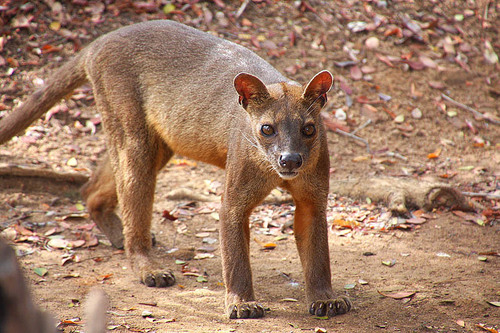
Preyed upon by native Malagasy carnivores such as the fossa and various raptors, as well as introduced predators like feral cats; it may also compete with other small rodents for marsh resources.
Role in its ecosystem
Plays a role in highland wetland ecosystems as a seed disperser and prey species, contributing to nutrient cycling in marsh and bog habitats.
Reproduction and lifecycle
Breeding likely occurs during the warmer, wetter months, with females producing small litters of a few altricial young after a gestation period typical of small nesomyid rodents (approximately 20-25 days, though exact figures are not well documented).
Raising the young
Females are the primary caregivers, nursing and sheltering young within nests built in dense marsh grass until weaning, which likely occurs within a few weeks of birth.
Maturity and lifespan
Sexual maturity is likely reached within a few months of birth, as in related small rodents; lifespan in the wild is probably around 1-2 years, with limited data on captive longevity.
Taxonomy and naming of the Gregarious Short-tailed Rat
Classification
Class Mammalia > Order Rodentia > Family Nesomyidae > Genus Brachyuromys > Species Brachyuromys ramirohitra
Scientific synonyms
Brachytarsomys ramirohitra (original combination by Major, 1896); occasionally referenced under older Nesomyinae classifications.
What research says
Recent studies
Recent taxonomic and phylogenetic studies on Nesomyidae have helped clarify the relationships between Brachyuromys species and other Malagasy endemic rodents, though the genus remains understudied compared to lemurs and other charismatic Malagasy fauna.
Compared with similar species
Compared to its closest relative, Brachyuromys betsileoensis, this species has a proportionally shorter tail and differs slightly in habitat preference, favoring more open marshy grasslands rather than denser forest-edge habitats.
The Gregarious Short-tailed Rat and people
Despite its common name suggesting sociability, gregarious behavior in this rodent is unusual among Malagasy nesomyids, most of which are solitary. It is also one of the few Malagasy rodents specialized for boggy, waterlogged habitats.
Where and how to see it
Best observed during dusk in highland marsh and bog habitats of central Madagascar, such as areas near Ankaratra, using quiet observation near dense grass cover; patience is required due to its small size and nocturnal habits.
Risks to humans
No notable risk to humans.
Countries where the Gregarious Short-tailed Rat is recorded
The 1 countries named in the range description of its IUCN Red List assessment.
Questions about the Gregarious Short-tailed Rat
Where does the Gregarious Short-tailed Rat live?
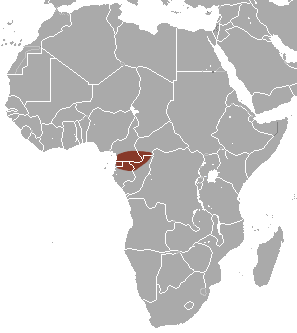
The Gregarious Short-tailed Rat is recorded in Madagascar across Africa. These countries come from the range description of its IUCN Red List assessment, and they are what place the species on the interactive map.
Is the Gregarious Short-tailed Rat endangered?
The IUCN Red List assesses the Gregarious Short-tailed Rat as Least Concern. The species is widespread and abundant enough not to qualify for any threatened category. It does not mean the species is safe forever, only that nothing in the current data raises an alarm.
How many are left in the wild?
No precise population figures exist, but the species is considered locally common in suitable habitat; overall population trend is believed to be stable or slowly declining due to habitat loss. This figure comes from the species assessment on the IUCN Red List; population estimates for wild mammals are ranges, not counts, and are revised at each assessment.
What habitat does the Gregarious Short-tailed Rat live in?
Primarily found in humid grasslands, marshes, and sphagnum bogs, often at the edges of degraded or secondary vegetation near forest margins.
What is the scientific name of the Gregarious Short-tailed Rat?
The Gregarious Short-tailed Rat is Brachyuromys ramirohitra, in the family Nesomyidae, order Rodentia.
Other species in the genus Brachyuromys

Other species in the family Nesomyidae
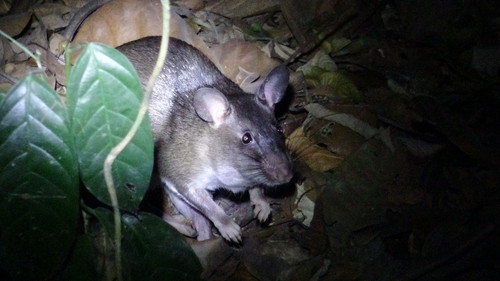
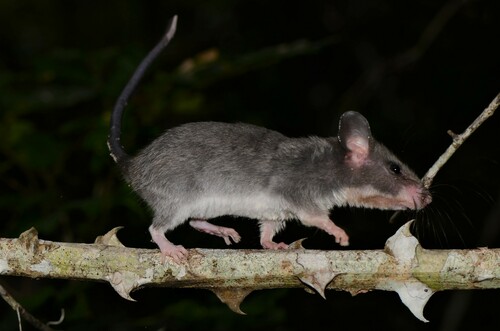
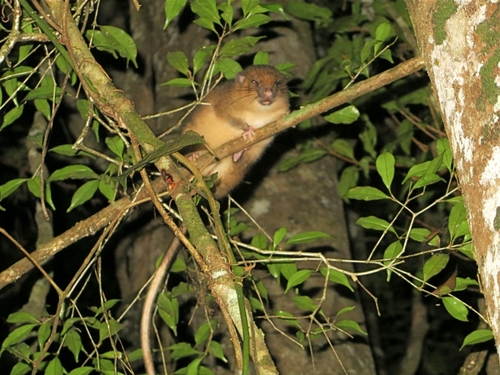
Species that share its range
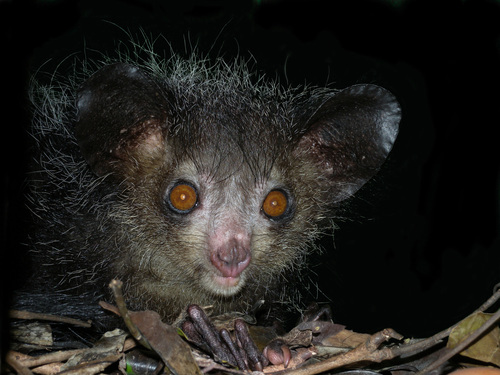

Sources
Conservation status, range description and population estimate come from the IUCN Red List assessment for Brachyuromys ramirohitra. Countries are derived from that range description, not from a mapped country list. Last refreshed on .
The distribution map is drawn from the IUCN Red List spatial data compiled in 2016. IUCN (International Union for Conservation of Nature)