
Giant Panda
Ailuropoda melanoleuca
Red List assessment
Vulnerableon the IUCN Red List
- EXExtinct
- EWExtinct in the Wild
- CRCritically Endangered
- ENEndangered
- VUVulnerable
- NTNear Threatened
- LCLeast Concern
The Giant Panda is recorded in 3 countries across Asia. The IUCN Red List assesses the Giant Panda as Vulnerable. The 2015–2016 Chinese national survey estimated approximately 1,864 individuals in the wild, with an additional 600+ in managed care worldwide.
- Family
- Ursidae
- Order
- Carnivora
- Genus
- Ailuropoda
- Countries recorded
- 3
- Continents
- Asia
- Red List category
- Vulnerable
- Data updated
- August 9, 2026
What is the Giant Panda?
The giant panda is a large, iconic bear endemic to the temperate mountain forests of central China, instantly recognizable by its bold black-and-white coat. Despite belonging to the order Carnivora, it has evolved an almost exclusively herbivorous diet based on bamboo, consuming up to 38 kg per day. It possesses a remarkable anatomical adaptation — an enlarged radial sesamoid bone acting as a pseudo-thumb — that allows precise manipulation of bamboo stems. It is one of the world's most recognized symbols of wildlife conservation and serves as the flagship species of the WWF.
Where does the Giant Panda live?
Central and southwestern China, primarily in Sichuan, Shaanxi, and Gansu provinces
Strictly endemic to China. Currently restricted to six isolated mountain ranges: Qinling (Shaanxi), Minshan, Qionglai, Liangshan, Daxiangling, and Xiaoxiangling (all mainly in Sichuan, with small parts in Gansu and Shaanxi). Historical range once extended across much of southern and eastern China, Vietnam, and Myanmar.
Altitude and depth
Typically found between 1,200 and 3,500 m above sea level, with core activity often at 1,500–2,500 m. They move to lower elevations in winter to track bamboo availability and warmer temperatures.
Seasonal movements
Giant pandas do not hibernate. They undertake seasonal altitudinal migrations — descending to lower elevations in winter and ascending in summer to follow the phenology of preferred bamboo species. Breeding activity peaks in spring (March–May). No long-distance migrations occur.
Habitat of the Giant Panda
Temperate broadleaf, mixed, and coniferous montane forests with dense bamboo understory. Giant pandas require intact, large-patch forests with multiple bamboo species available to buffer against periodic bamboo die-offs. They favor cool, moist environments with high rainfall and frequent cloud cover.
Adaptations to its environment
The enlarged radial sesamoid bone (pseudo-thumb) enables dexterous bamboo manipulation. Broad, flat molars and powerful jaw muscles are adapted for crushing tough bamboo culms. Their digestive tract retains carnivore characteristics (short gut, no rumen), compensated by high intake volume and a specialized gut microbiome. Dense, oily fur provides insulation in cold, wet mountain conditions. A low basal metabolic rate (~37% of expected for their size) conserves energy on a nutrient-poor diet.
Conservation status and numbers
Vulnerable (VU) on the IUCN Red List since 2016, downlisted from Endangered following verified population increases resulting from intensive conservation efforts. The species still qualifies as Vulnerable due to small total population size, fragmented range, and projected 35% habitat loss from climate-driven bamboo range shifts over the next 80 years. Listed on CITES Appendix I.
Estimated population
The 2015–2016 Chinese national survey estimated approximately 1,864 individuals in the wild, with an additional 600+ in managed care worldwide. The trend is increasing, with the wild population having grown by roughly 17% since the late 1980s, largely attributed to reserve expansion and reforestation programs.
What threatens the Giant Panda?
Habitat loss and fragmentation from agricultural expansion, logging, and infrastructure development remain the primary threats. Climate change models project severe loss of suitable bamboo habitat by 2080. Low natural reproductive rate limits recovery speed. Historically, poaching and illegal trade were serious threats, though now largely controlled. Inbreeding in isolated subpopulations reduces genetic diversity.
Diseases and parasites
Known parasites include nematodes (Ascaris, Baylisascaris schroederi), tapeworms, and various protozoa. Viral threats include canine distemper virus and parvovirus. Toxoplasma gondii infections have been documented in captive animals. Dental disease and gut infections represent significant health risks in captive populations. Parasitic roundworm infections are considered a natural mortality factor in the wild.
What is being done to protect it?
China maintains 67+ panda nature reserves covering approximately 1.4 million hectares. The Giant Panda National Park, established in 2021, integrates existing reserves into a unified 2.7 million-hectare corridor. Major captive breeding centers (Chengdu Research Base of Giant Panda Breeding, China Conservation and Research Center for Giant Panda at Bifengxia and Wolong) have mastered artificial insemination and cub-rearing. International panda loan agreements fund conservation through 'panda diplomacy.' China's Biodiversity Conservation Strategy provides legislative protection.
Recommended actions
Establishing and maintaining habitat corridors between fragmented subpopulations to promote gene flow. Accelerating bamboo corridor reforestation to link isolated reserves. Developing climate-resilient bamboo planting strategies at higher elevations. Continuing genetic management of captive populations and carefully managed reintroductions. Expanding community-based ecotourism to align local livelihoods with conservation. Monitoring and mitigating the effects of climate change on bamboo availability.
What the Giant Panda looks like
The giant panda has a stout, bear-like body covered in thick, coarse fur that is predominantly white on the torso, head, and rump, with bold black patches covering the eyes, ears, muzzle, neck (forming a saddle), and all four limbs. The face is broad and rounded with small, dark eyes. The Qinling subspecies displays brown and light-cream coloration instead of black and white.
Size
Body length 120–190 cm; shoulder height 60–90 cm; tail length 10–15 cm (vestigial). Males are notably larger than females.
Weight
Males: 85–125 kg; females: 70–100 kg. Wild individuals are typically leaner than captive ones.
Distinctive features
The distinctive bicolor pattern and round face immediately separate the giant panda from all other bears. The pseudo-thumb (visible as a fleshy pad on the inner forepaw) is unique among bears. It is far larger and more robustly built than the unrelated red panda (Ailurus fulgens), with which it shares a name and some range.
Differences between males and females
Males are approximately 10–20% heavier and longer than females on average, but external differences are subtle. No differences in coloration or structural ornamentation. Sex is difficult to determine by observation alone outside the breeding season.
Behaviour and diet of the Giant Panda
Giant pandas are largely solitary animals outside the breeding season, each individual maintaining a home range of 4–15 km² marked with scent. Ranges of males and females may overlap substantially, but direct social interactions are uncommon. No persistent social bonds or group structures exist beyond mother-offspring pairs.
When it is active
Primarily crepuscular and diurnal, with peak foraging activity in the early morning and late afternoon. Pandas spend 10–16 hours per day eating and devote several hours to resting to conserve energy. Activity patterns adjust seasonally with bamboo availability and temperature.
Diet
Approximately 99% of the diet consists of bamboo — leaves, shoots, and culms of multiple species (notably Fargesia and Bashania genera). Occasional opportunistic consumption of small mammals, birds, fish, carrion, honey, or other plants has been recorded. Daily intake is 12–38 kg of bamboo depending on the plant part consumed. Bamboo shoots are highly preferred when seasonally available due to higher protein content.
How it feeds and hunts
Not an active hunter. Giant pandas forage methodically, using the pseudo-thumb to strip bamboo stalks, bite off sections, and peel away outer sheaths before eating the inner pith. They select specific bamboo species and plant parts based on seasonal nutritional content, demonstrating selective foraging intelligence.
Communication
Giant pandas have a rich vocal repertoire of at least 11 distinct calls including bleats, honks, barks, squeals, and chirps used for contact, mating, and distress. Scent marking is the primary means of territorial communication — individuals rub anal scent glands, urine, and claw marks on trees and rocks. Posture and facial expressions convey social status and mood during rare encounters.
Interactions with other species
Snow leopards (Panthera uncia) are the most plausible natural predator of adult pandas; dholes (Cuon alpinus) and Asiatic black bears (Ursus thibetanus) may threaten cubs or compete for resources. Giant pandas share their range with species such as red pandas, golden snub-nosed monkeys, and takins. As seed dispersers and bamboo browsers, they play a modest role in shaping forest understory structure.
Role in its ecosystem
Giant pandas function as umbrella and keystone species: protecting their habitat preserves biodiversity across dozens of other endemic species. As bamboo consumers, they influence stand structure and can promote forest regeneration following bamboo die-offs. Their role as seed dispersers is minor but includes seeds of fruit consumed opportunistically. The giant panda's conservation acts as an effective conservation surrogate for entire montane ecosystems.
Reproduction and lifecycle
The breeding season spans March to May, with females experiencing an extremely narrow window of estrus (24–72 hours) once per year. Mating is promiscuous; males compete for access to females. Gestation lasts 95–160 days due to embryonic diapause (delayed implantation), resulting in birth in late summer (July–September). Litters of 1–2 cubs are born, but in the wild, the mother typically raises only one. Cubs weigh just 90–200 g at birth — among the smallest neonates relative to maternal mass of any placental mammal.
Raising the young
Females alone provide parental care. Cubs are born altricial (blind, hairless, helpless) and require continuous warming and nursing. The mother holds the cub almost constantly for the first weeks, barely eating herself. Cubs begin eating bamboo at around 6 months and are weaned at 8–9 months, but may remain with the mother for up to 1.5–2 years. Females reproduce every 2–3 years.
Maturity and lifespan
Sexual maturity is reached at 4–8 years of age. In the wild, typical lifespan is estimated at 15–20 years. In captivity, individuals routinely live 25–35 years; the oldest known captive panda, Jia Jia at Hong Kong Ocean Park, reached 38 years.
Taxonomy and naming of the Giant Panda
Classification
Mammalia > Carnivora > Ursidae > Ailuropoda > Ailuropoda melanoleuca
Subspecies
Two recognized subspecies: Ailuropoda melanoleuca melanoleuca (nominate, Sichuan and Gansu) and Ailuropoda melanoleuca qinlingensis (Qinling panda, Shaanxi; smaller, with brown-and-white rather than black-and-white coloration and a proportionally larger molar tooth).
Scientific synonyms
Ursus melanoleucus (A. David, 1869); Ailuropus melanoleucus; formerly placed in its own family Ailuropodidae before molecular studies confirmed its placement within Ursidae.
What research says
Recent studies
Recent gut microbiome research (2015–2023) revealed seasonal bacterial community shifts that help maximize protein and energy extraction from bamboo shoots. Studies using GPS collaring have refined understanding of home range overlap and mating system complexity. Climate modeling studies (2012–2022) project that up to two-thirds of current bamboo habitat in the Qinling and Minshan ranges could be lost by 2080 without significant emissions reductions. A 2020 study confirmed that the Giant Panda National Park successfully links previously isolated subpopulations.
Genome and DNA
Giant pandas have 2n = 42 chromosomes. The full genome (~2.4 billion base pairs) was sequenced in 2009 by a Chinese-led consortium, revealing a fully intact chemoreceptor gene set for detecting meat flavors despite bamboo specialization. Genomic studies have confirmed the Qinling population as genetically distinct and identified ongoing inbreeding concerns in fragmented subpopulations.
Compared with similar species
Within Ursidae, the giant panda diverged earliest (~18–22 million years ago) from other bear lineages, making it the most basal living bear. It differs from brown bears and polar bears by its specialized bamboo diet, pseudo-thumb, and unique bicolor coloration. The spectacled bear (Tremarctos ornatus) of South America is its closest living relative among extant bears. The unrelated red panda (Ailurus fulgens, family Ailuridae) independently evolved some similar dietary adaptations to bamboo and a convergent pseudo-thumb.
The Giant Panda and people
A giant panda newborn is roughly 1/900th the size of its mother — one of the most extreme size ratios at birth of any placental mammal. Despite having the digestive tract of a carnivore, giant pandas pass bamboo through so rapidly (~8 hours transit time) that they must eat nearly constantly to survive. Giant pandas were historically used by Chinese emperors as diplomatic gifts — China formalized 'panda diplomacy' in the modern era from the 1950s onwards, lending pandas to allied nations as powerful symbols of goodwill.
Where and how to see it
The Chengdu Research Base of Giant Panda Breeding in Sichuan offers the most reliable and accessible panda viewing opportunity year-round, with best observation in the cooler morning hours (8:00–10:00 AM) when pandas are most active. The Bifengxia Panda Base near Ya'an and the Wolong National Nature Reserve offer semi-wild settings. Wild sightings are extremely rare and are best attempted with specialist guides in Minshan or Qinling reserves during spring bamboo shoot season. Patience, silence, and early starts are essential.
Risks to humans
Giant pandas are generally non-aggressive toward humans but are powerful animals capable of inflicting serious bite and claw wounds if cornered, surprised, or provoked. Several zookeeper injuries have been recorded. They carry no known zoonotic diseases of significant human health risk. Wild encounters are extremely rare. Overall risk to humans is low but should not be underestimated.
Human uses
Giant pandas are not farmed or hunted for commercial purposes; all international trade is prohibited under CITES Appendix I. Their primary economic value is through 'panda diplomacy' — China loans pandas to foreign zoos under agreements worth approximately USD 1 million per pair annually, funding conservation programs. They generate substantial ecotourism revenue in China. Traditional Chinese medicine has historically referenced pandas, but this is no longer practiced or legally permitted. The species serves as an irreplaceable flagship for global conservation fundraising and public engagement.
Myths and legends
In ancient Chinese mythology, the panda's black-and-white markings were said to have originated when a young panda died protecting a girl from a leopard; her friends wept at the funeral, and wiping their tear-stained faces with their arms, they smeared black onto the panda's white fur, where the markings have remained ever since. The giant panda has been a symbol of peace in China for centuries — historical records from the Tang Dynasty (618–907 AD) document gifting pandas to Japan. Today it is the official symbol of the WWF and is widely regarded as a global symbol of biodiversity conservation.
Countries where the Giant Panda is recorded
The 3 countries named in the range description of its IUCN Red List assessment.
Questions about the Giant Panda
Where does the Giant Panda live?
The Giant Panda is recorded in China, Myanmar and Vietnam across Asia. These countries come from the range description of its IUCN Red List assessment, and they are what place the species on the interactive map.
Is the Giant Panda endangered?
Yes. The IUCN Red List assesses the Giant Panda as Vulnerable, one of the three threatened categories. The species faces a high risk of extinction in the wild. It is the first of the three threatened categories: numbers are falling, the range is shrinking, or the population is small enough that a single bad event could do lasting damage.
How many are left in the wild?
The 2015–2016 Chinese national survey estimated approximately 1,864 individuals in the wild, with an additional 600+ in managed care worldwide. This figure comes from the species assessment on the IUCN Red List; population estimates for wild mammals are ranges, not counts, and are revised at each assessment.
What habitat does the Giant Panda live in?
Temperate broadleaf, mixed, and coniferous montane forests with dense bamboo understory.
What is the scientific name of the Giant Panda?
The Giant Panda is Ailuropoda melanoleuca, in the family Ursidae, order Carnivora.
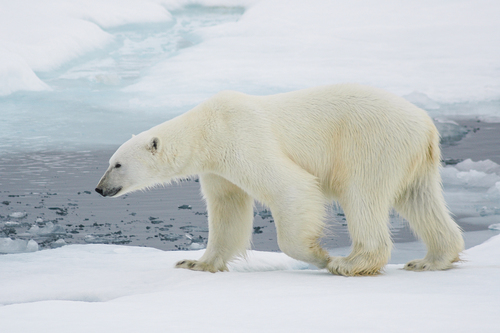
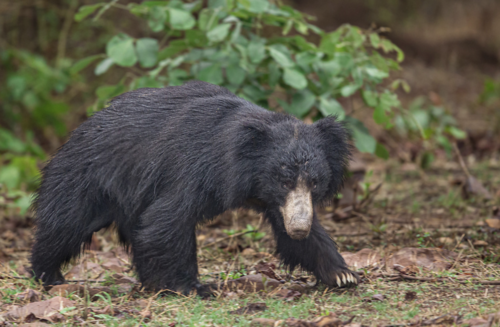
Other species in the family Ursidae
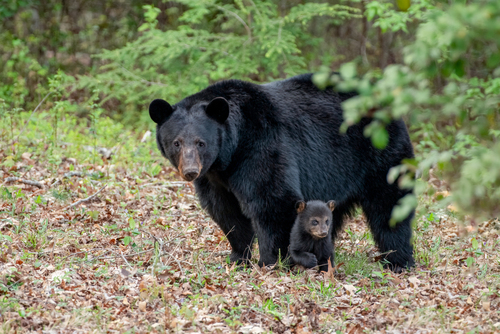
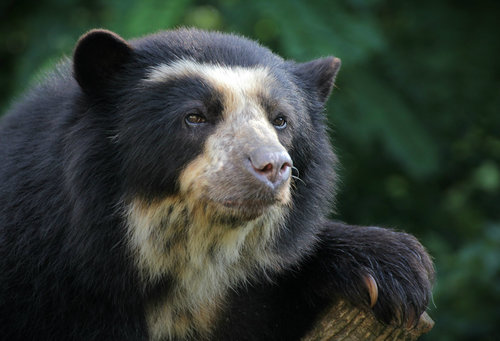
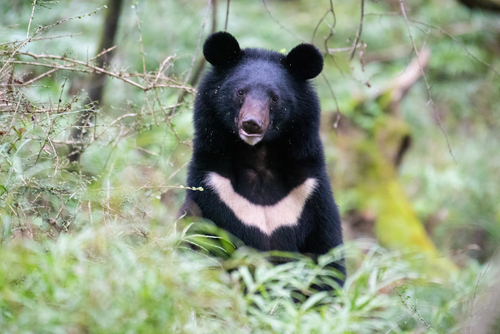
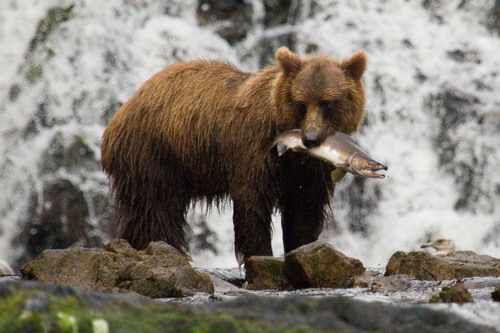
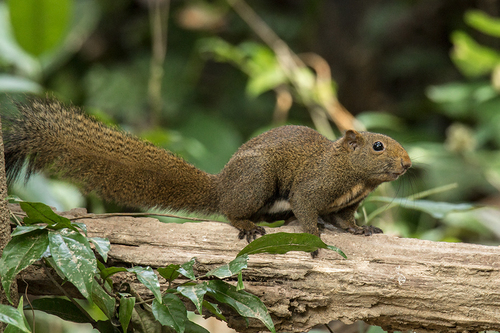
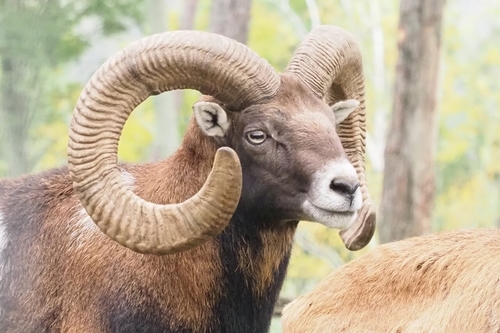
Species that share its range
Sources
Conservation status, range description and population estimate come from the IUCN Red List assessment for Ailuropoda melanoleuca. Countries are derived from that range description, not from a mapped country list. Last refreshed on .
The distribution map is drawn from the IUCN Red List spatial data compiled in 2016. Dajun Wang