
Brown Bear
Ursus arctos
Red List assessment
Least Concernon the IUCN Red List
- EXExtinct
- EWExtinct in the Wild
- CRCritically Endangered
- ENEndangered
- VUVulnerable
- NTNear Threatened
- LCLeast Concern
The Brown Bear is recorded in 5 countries across Asia, Europe and North America. The IUCN Red List assesses the Brown Bear as Least Concern. Approximately 200,000 individuals worldwide, with roughly 100,000 in Russia alone; population trend is stable globally though declining in fragmented Southern European and Asian populations.
- Family
- Ursidae
- Order
- Carnivora
- Genus
- Ursus
- Countries recorded
- 5
- Continents
- Asia, Europe and North America
- Red List category
- Least Concern
- Data updated
- August 9, 2026
What is the Brown Bear?
The brown bear is one of the largest terrestrial carnivorans, found across a vast Holarctic range spanning Eurasia and North America. Highly adaptable, it inhabits forests, tundra, mountains, and coastal areas. Known for its massive size, powerful build, and shoulder hump of muscle, it is both a symbol of wilderness and a keystone species in many ecosystems.
Where does the Brown Bear live?
Northern Eurasia (Russia, Scandinavia, Eastern Europe, Central Asia) and North America (Alaska, Western Canada, parts of the continental US)
Found across Russia, Scandinavia, the Carpathians, the Balkans, parts of Central Asia, China, Japan (Hokkaido), and North America from Alaska through Western Canada into the northwestern United States (Montana, Wyoming, Idaho, Washington).
Altitude and depth
0-3000m; found from sea level coastal habitats up to alpine zones in mountainous regions
Seasonal movements
Hibernates in winter dens for 5-7 months depending on latitude and food availability; females give birth during hibernation. Highly active in summer/fall building fat reserves (hyperphagia) before denning.
Habitat of the Brown Bear
Occupies diverse habitats including boreal and temperate forests, alpine meadows, tundra, coastal areas, and river valleys. Prefers areas with dense vegetation for cover combined with open areas for foraging. Coastal populations rely heavily on salmon-rich rivers.
Adaptations to its environment
Thick fur and fat layers provide insulation for cold climates; powerful claws and shoulder muscles enable digging for roots and excavating dens; excellent sense of smell (better than dogs) aids in locating food across large territories.
Conservation status and numbers
Least Concern globally due to large overall population and range, though some regional populations (e.g., in Europe, parts of Asia) are threatened or locally extinct. Population trend is stable overall but declining in fragmented southern range areas.
Estimated population
Approximately 200,000 individuals worldwide, with roughly 100,000 in Russia alone; population trend is stable globally though declining in fragmented Southern European and Asian populations.
What threatens the Brown Bear?
Habitat loss and fragmentation from human development, poaching and illegal trade in bear parts, human-bear conflict often resulting in retaliatory killing, and climate change affecting food sources like salmon runs and hibernation patterns.
Diseases and parasites
Susceptible to trichinosis, giardia, various internal parasites (roundworms, tapeworms), and external parasites like ticks and fleas; can also contract rabies in rare cases.
What is being done to protect it?
Protected under CITES Appendix II; numerous national parks and protected areas across range countries; reintroduction programs in parts of Europe (e.g., Pyrenees, Alps); legal protections in most range states including hunting quotas and habitat corridors.
Recommended actions
Maintain and expand habitat connectivity corridors, strengthen anti-poaching enforcement, implement effective human-bear conflict mitigation (bear-proof waste management, livestock protection), and support transboundary population monitoring.
What the Brown Bear looks like
Fur color varies widely from blonde to dark brown to nearly black, often with grizzled silver-tipped guard hairs giving a 'grizzled' appearance. Distinctive muscular hump over shoulders used for digging power. Large head with rounded ears and long claws (up to 10cm) adapted for digging.
Size
Body length 1.7-2.8m; shoulder height 0.9-1.5m when standing on all fours; can stand up to 2.5-3m when upright on hind legs
Weight
Males typically 135-545kg depending on subspecies and region; females smaller at 80-250kg; coastal Kodiak bears are among the largest, males reaching up to 680kg
Distinctive features
Distinguished from black bears by prominent shoulder hump, longer and straighter claws, concave (dished) facial profile, and generally larger body size. Also lacks the more pointed snout typical of polar bears.
Differences between males and females
Males are significantly larger and heavier than females, sometimes by 50-100%, with more robust skulls and musculature; no notable color differences between sexes
Behaviour and diet of the Brown Bear
Generally solitary except during mating season or when females are raising cubs; can congregate in large numbers at abundant food sources like salmon runs, establishing temporary dominance hierarchies based on size and age.
When it is active
Primarily crepuscular and diurnal but can be active at any time; activity patterns shift to more nocturnal behavior in areas with high human presence to avoid conflict.
Diet
Omnivorous with diet varying by region and season: includes grasses, berries, roots, insects, fish (especially salmon), small mammals, and occasionally large ungulates like elk or moose calves; also scavenges carrion.
How it feeds and hunts
Uses powerful sense of smell to locate food; digs for roots, tubers, and burrowing rodents; ambushes ungulate calves in spring; wades into rivers to catch spawning salmon using paws and jaws; occasionally chases down prey over short distances.
Communication
Communicates through vocalizations (huffs, growls, moans), body language (standing, head movements), and extensive scent marking via tree rubbing, urine, and claw marks to establish territory and reproductive status.
Interactions with other species
Apex predator with few natural enemies aside from other bears (including intraspecific predation on cubs) and occasionally wolves in disputes over carcasses; competes with wolves and other predators for prey; commensal relationships exist with scavenging birds like ravens and eagles that follow bears to kills.
Role in its ecosystem
Functions as both apex predator and important seed disperser through consumption of berries and fruit; nutrient transfer from marine to terrestrial ecosystems via salmon carcasses significantly enriches forest soil and vegetation in coastal regions.
Reproduction and lifecycle
Mating occurs in late spring to early summer (May-July); implements delayed implantation so embryo development begins in fall; gestation totals 6-8 months with cubs born during winter hibernation, typically 1-4 cubs per litter (usually 2).
Raising the young
Mothers provide sole parental care, nursing cubs in the den through winter and for 1.5-2.5 years total; cubs stay with mother learning foraging and survival skills before becoming independent; males play no role in rearing and may pose threat to cubs.
Maturity and lifespan
Sexual maturity reached at 4-6 years for females, slightly later for males; wild lifespan typically 20-30 years, with captive individuals sometimes living past 35 years.
Taxonomy and naming of the Brown Bear
Classification
Class Mammalia > Order Carnivora > Family Ursidae > Genus Ursus > Species Ursus arctos
Subspecies
Includes Ursus arctos arctos (Eurasian brown bear), Ursus arctos horribilis (Grizzly bear, North America), Ursus arctos middendorffi (Kodiak bear, Kodiak Island), Ursus arctos beringianus (Kamchatka brown bear), Ursus arctos syriacus (Syrian brown bear, Middle East), among others - taxonomy of subspecies remains debated.
Scientific synonyms
Ursus horribilis, Ursus middendorffi, Ursus beringianus (now generally considered subspecies rather than separate species)
What research says
Recent studies
Recent studies focus on hibernation metabolism for potential human medical applications (muscle atrophy prevention, insulin resistance), genetic connectivity between fragmented European populations, and climate change impacts on denning behavior and food availability.
Genome and DNA
Diploid chromosome number is 74; genome has been sequenced and used in studies of bear evolution, hibernation physiology, and conservation genetics to track population structure and inbreeding.
Compared with similar species
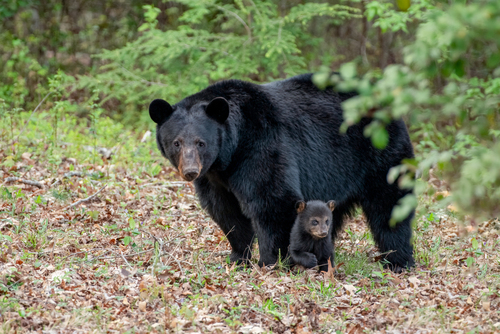
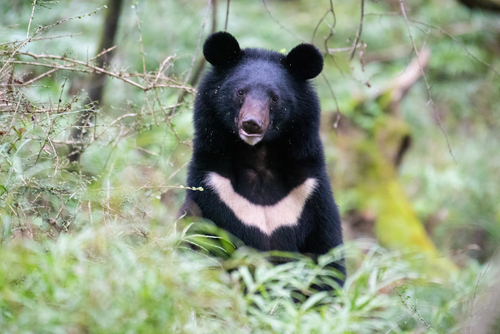
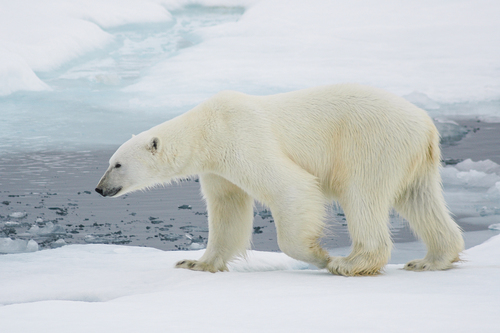
Larger and more robust than the American black bear (Ursus americanus), with a shoulder hump and straighter claws; smaller than polar bears (Ursus maritimus), which are more specialized for marine hunting and lack the hump; brown bears also have a more varied omnivorous diet compared to the largely carnivorous polar bear.
The Brown Bear and people
Brown bears can run up to 50 km/h despite their bulky appearance; they possess a sense of smell estimated to be seven times stronger than a bloodhound's; some coastal populations gain over 180kg in a single season before hibernation.
Where and how to see it
Best observed in Alaska's Katmai National Park during salmon runs (July-September), Kamchatka Peninsula in Russia, or Finland's boreal forests in summer; early morning and evening are optimal viewing times when bears are most active and visible at a safe distance.
Risks to humans
Can pose serious risk to humans particularly when surprised, protecting cubs, or habituated to human food sources; attacks are rare but can be fatal, making proper food storage and bear safety protocols essential in bear country.
Human uses
Historically hunted for fur, meat, and gallbladders used in traditional Asian medicine; currently a major ecotourism attraction generating significant revenue in places like Alaska and Kamchatka; also legally hunted in regulated seasons in parts of North America and Europe.
Myths and legends
Revered in numerous indigenous cultures across Siberia and North America as a spiritual figure symbolizing strength and wisdom; featured prominently in European folklore and heraldry, and considered sacred by many Sami and Native American tribes who performed bear ceremonies.
Countries where the Brown Bear is recorded
The 5 countries named in the range description of its IUCN Red List assessment.
Questions about the Brown Bear
Where does the Brown Bear live?
The Brown Bear is recorded in Canada, China, Japan, Russia and United States across Asia, Europe and North America. These countries come from the range description of its IUCN Red List assessment, and they are what place the species on the interactive map.
Is the Brown Bear endangered?
The IUCN Red List assesses the Brown Bear as Least Concern. The species is widespread and abundant enough not to qualify for any threatened category. It does not mean the species is safe forever, only that nothing in the current data raises an alarm.
How many are left in the wild?
Approximately 200,000 individuals worldwide, with roughly 100,000 in Russia alone; population trend is stable globally though declining in fragmented Southern European and Asian populations. This figure comes from the species assessment on the IUCN Red List; population estimates for wild mammals are ranges, not counts, and are revised at each assessment.
What habitat does the Brown Bear live in?
Occupies diverse habitats including boreal and temperate forests, alpine meadows, tundra, coastal areas, and river valleys.
What is the scientific name of the Brown Bear?
The Brown Bear is Ursus arctos, in the family Ursidae, order Carnivora.
Other species in the genus Ursus
Other species in the family Ursidae
Species that share its range

Sources
Conservation status, range description and population estimate come from the IUCN Red List assessment for Ursus arctos. Countries are derived from that range description, not from a mapped country list. Last refreshed on .
The distribution map is drawn from the IUCN Red List spatial data compiled in 2017. IUCN and IBA