
Fiery Spiny Mouse
Acomys ignitus
Red List assessment
Least Concernon the IUCN Red List
- EXExtinct
- EWExtinct in the Wild
- CRCritically Endangered
- ENEndangered
- VUVulnerable
- NTNear Threatened
- LCLeast Concern
The Fiery Spiny Mouse is recorded in 5 countries across Africa. The IUCN Red List assesses the Fiery Spiny Mouse as Least Concern. No precise global population estimate is available.
- Family
- Muridae
- Order
- Rodentia
- Genus
- Acomys
- Countries recorded
- 5
- Continents
- Africa
- Red List category
- Least Concern
- Data updated
- August 9, 2026
What is the Fiery Spiny Mouse?
The Fiery Spiny Mouse (Acomys ignitus) is a small rodent endemic to the rocky semi-arid and savanna landscapes of East Africa, named for its vivid reddish-orange dorsal coloration (Latin ignitus: fiery, ignited). Like all members of the genus Acomys, it bears modified stiff, spine-like hairs on its back that deter predators. It is primarily nocturnal, sheltering in rock crevices and under boulders by day. The species is of scientific interest as part of a genus celebrated for near-unique mammalian wound regeneration abilities.
Where does the Fiery Spiny Mouse live?
East Africa, primarily Kenya, northern Tanzania, Uganda, and possibly southern Ethiopia and parts of Somalia
Centered on the East African plateau, with records from central and eastern Kenya (including the foothills of Mount Kenya and the Rift Valley regions), northern Tanzania, and Uganda. Possibly extends into southern Ethiopia and parts of Somalia, though range limits require further survey.
Altitude and depth
Typically found between 500 and 2,500 meters above sea level in East African highlands, with most records from intermediate altitudes of 800–1,800 m.
Seasonal movements
No seasonal migration or hibernation documented. Food foraging activity may intensify during the dry season when resources are more concentrated around rocky refugia. The species is a year-round resident throughout its range.
Habitat of the Fiery Spiny Mouse
Rocky outcrops (inselbergs), dry savanna, thornbush scrubland, and semi-arid grasslands. It shows a strong preference for areas with exposed boulders, rock crevices, and scree slopes that provide refuge from predators and shelter from temperature extremes.
Adaptations to its environment
The stiff spine-like dorsal hairs are a mechanical deterrent against predator grip. Large, prominent eyes and ears are adapted for nocturnal activity and early detection of threats in open rocky environments. A concentrated urine system reduces water loss in semi-arid conditions. Like the genus broadly, it likely possesses cutaneous wound regeneration capacity, regrowing full-thickness skin without scarring.
Conservation status and numbers
Least Concern (LC) on the IUCN Red List. The species has a sufficiently broad range in East Africa, tolerates varied semi-arid and montane habitats, and no major population declines meeting threatened thresholds have been identified. Population trend is considered stable.
Estimated population
No precise global population estimate is available. The species is considered stable with no documented significant population decline across its range.
What threatens the Fiery Spiny Mouse?
Habitat degradation from overgrazing by livestock, agricultural expansion into rocky savanna, and conversion of semi-arid scrubland. Localized predation pressure from domestic cats near human settlements. Climate-driven aridification in parts of East Africa may reduce habitat suitability over the longer term.
Diseases and parasites
Likely hosts ectoparasites typical of African rodents including ticks (Haemaphysalis spp.), mites, and fleas, as well as endoparasites such as helminths. Specific parasitological and epidemiological records for A. ignitus are sparse in the literature.
What is being done to protect it?
Passively protected within East African national parks and game reserves in Kenya and Tanzania (e.g., areas around Tsavo, Amboseli, and smaller conservancies). Incorporated into general small-mammal biodiversity monitoring programs in the region.
Recommended actions
Regular population monitoring using live-trapping grids across its range; dedicated field surveys to clarify its northern and eastern range limits; habitat protection in rocky savanna landscapes; studies on the impact of land-use change and invasive predators on local populations.
What the Fiery Spiny Mouse looks like
Dorsal fur is a distinctive reddish-orange to rusty-red color, producing the vivid 'fiery' appearance for which the species is named. The belly and underparts are whitish to pale grey. The back bears interspersed stiff, flattened spine-like hairs among softer pelage. The ears are large, rounded, and nearly naked; the eyes are large and dark. The tail is slender, sparsely haired, and similar in length to the body.
Size
Head-body length approximately 85–125 mm; tail length approximately 90–130 mm (roughly equal to body length). Overall similar in size to other East African Acomys.
Weight
Typically 25–60 g; no significant reported sexual dimorphism in body mass.
Distinctive features
The intense reddish-orange dorsal coloration is the primary distinguishing feature from sympatric East African spiny mice such as Acomys wilsoni (which is more brownish-grey) and Acomys percivali (paler, more ochre tones). The Latin epithet ignitus directly references this exceptional coloration.
Differences between males and females
Minimal sexual dimorphism; males and females are similar in size and coloration. Females possess multiple pairs of mammary glands to support precocial litters.
Behaviour and diet of the Fiery Spiny Mouse
Social and gregarious, forming small family groups or loose colonies within rock crevices. Cooperative behaviors including communal sheltering and alloparental care are typical of the genus. Dominance hierarchies within groups are generally mild.
When it is active
Primarily nocturnal to crepuscular, becoming active at dusk and foraging through the night. During daylight hours, individuals retreat into rock crevices, root tangles, or dense thornbush.
Diet
Omnivorous; the diet includes seeds, dry plant material, invertebrates (beetles, larvae, termites), and occasionally small vertebrates or carrion. Foraging is opportunistic and adjusts seasonally to local resource availability.
How it feeds and hunts
Forages actively on the ground and along rock faces at night, using its large eyes and sensitive olfaction to locate seeds and prey. Invertebrates are captured by active pursuit or rapid pouncing; seeds are located by smell and cached in rocky crevices.
Communication
Uses ultrasonic vocalizations for mother-pup contact and intragroup coordination. Scent marking via urine, feces, and specialized glands signals territory and reproductive status. Tactile interactions including allogrooming reinforce social bonds.
Interactions with other species
Predated upon by barn owls, spotted eagle-owls, African rock pythons, sand boas, slender mongooses, and monitor lizards. Competes with other granivorous small rodents (gerbils, Mus species) for seeds. May share rocky refugia with agamid lizards and other small mammals.
Role in its ecosystem
Plays a role as a seed disperser and secondary consumer of invertebrates in rocky savanna ecosystems. As a small-bodied prey species, it is an important energy link between plant and invertebrate communities and medium-sized predators such as raptors and small carnivores.
Reproduction and lifecycle
Breeding can occur year-round under favorable conditions, potentially peaking following wet-season resource pulses. Gestation lasts approximately 35–40 days — notably long for a small rodent. Litter size is typically 1–4 young. Neonates are precocial: born fully furred with eyes open and capable of limited locomotion within hours.
Raising the young
Primary maternal care is provided by the female; communal nursing by multiple females within a group has been documented across the genus Acomys. Young are weaned at approximately 3–4 weeks. Alloparental care (non-parents assisting with pup care) is a notable behavioral trait of the genus.
Maturity and lifespan
Sexual maturity is reached at approximately 6–10 weeks of age, consistent with genus norms. Lifespan in the wild is estimated at 2–4 years; captive individuals in the genus have lived up to 5–6 years.
Taxonomy and naming of the Fiery Spiny Mouse
Classification
Mammalia > Rodentia > Muridae > Acomys > Acomys ignitus. Described by Dollman in 1911.
Scientific synonyms
No widely accepted taxonomic synonyms; originally described as Acomys ignitus by Dollman (1911). Phylogenetic revisions of the genus have confirmed its status as a distinct species.
What research says
Recent studies
Molecular phylogenetic revisions of East African Acomys (2010s–2020s) have helped clarify species boundaries within the region. Genus-wide research on wound healing and scarless regeneration, published in Nature (Seifert et al., 2012), has elevated interest in all Acomys species as biomedical models, though A. ignitus specifically remains understudied.
Genome and DNA
Karyotype has not been precisely documented for A. ignitus. Across the genus, diploid chromosome numbers range from 2n=36 to 66 depending on species. The genus has attracted significant genomic research following the 2012 discovery of scarless regeneration, with whole-genome sequencing conducted for related species (notably A. cahirinus).
Compared with similar species
Most closely related to other East African spiny mice including Acomys wilsoni (Wilson's Spiny Mouse) and Acomys percivali (Percival's Spiny Mouse). A. ignitus is distinguished by markedly more intense reddish-orange dorsal coloration compared to the brownish-grey A. wilsoni. It differs from the North African A. cahirinus and Middle Eastern A. russatus by geographic range, coloration, and molecular characters.
The Fiery Spiny Mouse and people
1. Its scientific name ignitus means 'set on fire' in Latin — a reference to its remarkable reddish-orange fur that resembles a flame among brown savanna rocks. 2. Members of the Acomys genus can regenerate full-thickness skin wounds — including hair follicles, sebaceous glands, and cartilage — completely without scarring, a capacity virtually unique among placental mammals and of intense interest for regenerative medicine research. 3. Unlike almost all other small rodents, spiny mouse neonates are born precocial — fully furred, eyes open, and mobile within hours of birth — making them far more developmentally advanced at birth than rats or mice.
Where and how to see it
Best observed at night around rocky outcrops and inselbergs in East African semi-arid savanna, particularly in central and eastern Kenya and northern Tanzania. A red-filtered headlamp minimizes disturbance to nocturnal behavior. Patience near rock faces after dusk is the most effective technique; the species is locally common around suitable rocky habitats in Kenya's Tsavo ecosystem and Rift Valley margins.
Risks to humans
No notable risk under normal circumstances. Like all rodents, it may bite if mishandled, and theoretically could carry zoonotic pathogens or ectoparasites, but it poses no significant health or safety threat to humans.
Human uses
Not commercially exploited or farmed. The genus Acomys has been adopted as a biomedical model organism for wound healing and regenerative medicine research; however, A. ignitus specifically is not a commonly used laboratory species, with A. cahirinus and A. kempi being the primary research subjects.
Countries where the Fiery Spiny Mouse is recorded
The 5 countries named in the range description of its IUCN Red List assessment.
Questions about the Fiery Spiny Mouse
Where does the Fiery Spiny Mouse live?
The Fiery Spiny Mouse is recorded in Ethiopia, Kenya, Somalia, Tanzania and Uganda across Africa. These countries come from the range description of its IUCN Red List assessment, and they are what place the species on the interactive map.
Is the Fiery Spiny Mouse endangered?
The IUCN Red List assesses the Fiery Spiny Mouse as Least Concern. The species is widespread and abundant enough not to qualify for any threatened category. It does not mean the species is safe forever, only that nothing in the current data raises an alarm.
How many are left in the wild?
No precise global population estimate is available. This figure comes from the species assessment on the IUCN Red List; population estimates for wild mammals are ranges, not counts, and are revised at each assessment.
What habitat does the Fiery Spiny Mouse live in?
Rocky outcrops (inselbergs), dry savanna, thornbush scrubland, and semi-arid grasslands.
What is the scientific name of the Fiery Spiny Mouse?
The Fiery Spiny Mouse is Acomys ignitus, in the family Muridae, order Rodentia.
Other species in the genus Acomys
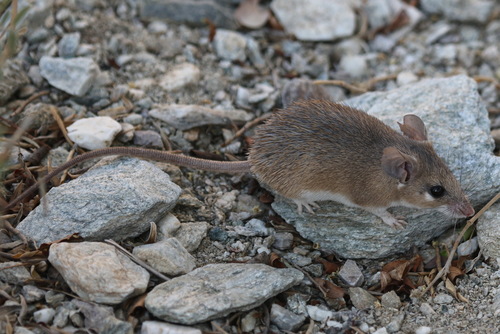
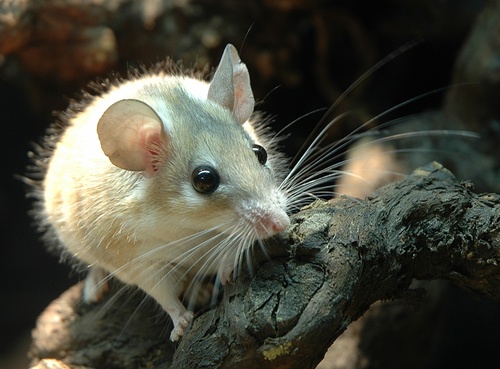
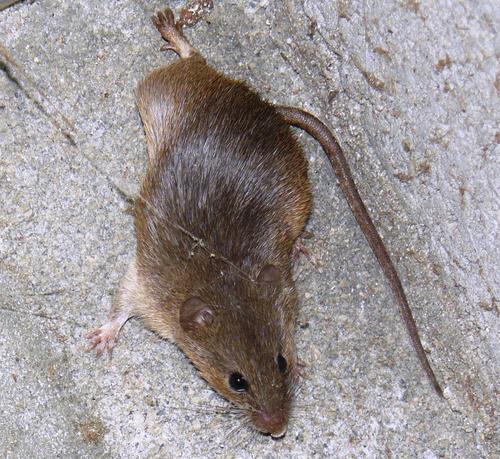
Other species in the family Muridae
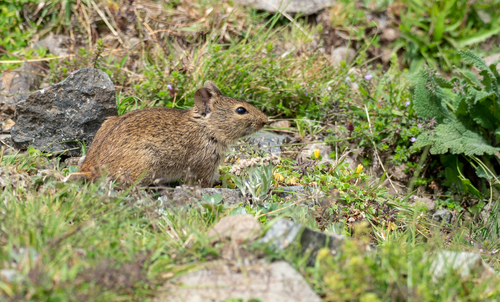
Sources
Conservation status, range description and population estimate come from the IUCN Red List assessment for Acomys ignitus. Countries are derived from that range description, not from a mapped country list. Last refreshed on .
The distribution map is drawn from the IUCN Red List spatial data compiled in 2008. IUCN (International Union for Conservation of Nature)