
Fennec Fox
Vulpes zerda
Red List assessment
Least Concernon the IUCN Red List
- EXExtinct
- EWExtinct in the Wild
- CRCritically Endangered
- ENEndangered
- VUVulnerable
- NTNear Threatened
- LCLeast Concern
The Fennec Fox is recorded in 11 countries across Africa. The IUCN Red List assesses the Fennec Fox as Least Concern. Exact population numbers are unknown due to its elusive nocturnal nature, but it is considered common within suitable desert habitat; overall trend is believed to be stable.
- Family
- Canidae
- Order
- Carnivora
- Genus
- Vulpes
- Countries recorded
- 11
- Continents
- Africa
- Red List category
- Least Concern
- Data updated
- August 9, 2026
What is the Fennec Fox?
The Fennec Fox is the smallest canid in the world, instantly recognizable by its enormous ears and pale sandy coat. It is superbly adapted to life in the hyper-arid Sahara Desert, where it survives extreme heat and scarce water. Its charismatic appearance has made it a popular exotic pet and a cultural icon representing desert wildlife.
Where does the Fennec Fox live?
Sahara Desert and surrounding arid regions of North Africa, including Morocco, Algeria, Tunisia, Libya, Egypt, Sudan, Niger, Chad, and Mali.
Found across the Sahara Desert and Sinai Peninsula, spanning North African countries such as Morocco, Algeria, Tunisia, Libya, Egypt, Western Sahara, Mauritania, Mali, Niger, Chad, and Sudan.
Altitude and depth
Typically found at low elevations from sea level up to around 1000 meters in desert plains and dune systems.
Seasonal movements
No migration or hibernation; however, activity patterns shift seasonally, with foxes being more active at dusk and dawn during hot summer months to avoid extreme daytime heat.
Habitat of the Fennec Fox
Arid and hyper-arid sandy deserts, semi-desert scrubland, and stabilized sand dunes; prefers areas with sparse vegetation for burrowing and cover.
Adaptations to its environment
Enormous ears (up to 15 cm) dissipate heat and enhance hearing to detect prey underground; thick fur insulates against both heat and cold desert nights; furred paw pads protect from hot sand; kidneys are highly efficient, allowing the fox to survive with minimal water intake, often obtaining moisture solely from food.
Conservation status and numbers
Listed as Least Concern (LC) by the IUCN due to its wide distribution and relatively stable population, though local declines occur from trapping and habitat disturbance.
Estimated population
Exact population numbers are unknown due to its elusive nocturnal nature, but it is considered common within suitable desert habitat; overall trend is believed to be stable.
What threatens the Fennec Fox?
Illegal capture for the exotic pet trade, habitat degradation from human expansion, occasional hunting for fur, and vehicle collisions in areas near human settlements.
Diseases and parasites
Susceptible to rabies, canine distemper, and various internal/external parasites such as fleas, ticks, and intestinal worms, particularly in captivity or areas near human settlements.
What is being done to protect it?
Protected under CITES Appendix II, regulating international trade; present in various North African protected desert reserves; some countries have restrictions on capture and trade of wild specimens.
Recommended actions
Strengthen enforcement against illegal pet trade, monitor population trends through further field studies, and preserve desert habitat from encroaching agriculture and urbanization.
What the Fennec Fox looks like
Pale cream to sandy-colored fur that blends with desert sand, with a white underbelly and a black-tipped tail; large triangular ears; dark eyes ringed with fur that may help reduce sun glare.
Size
Body length of 24-41 cm plus a tail of 18-31 cm; shoulder height around 20 cm, making it the smallest fox species.
Weight
Typically weighs between 0.7 and 1.6 kg, with males slightly larger than females on average.
Distinctive features
Distinguished from other foxes by its disproportionately large ears relative to body size and its notably small stature, the smallest of all canid species.
Differences between males and females
Minimal sexual dimorphism; males are marginally larger and heavier than females, but coloring and ear size are similar between sexes.
Behaviour and diet of the Fennec Fox
Social and monogamous, often living in small family groups or pairs with their offspring; may form larger communal burrow systems with multiple entrances shared by related individuals.
When it is active
Primarily nocturnal, resting in burrows during the intense daytime heat and emerging at night to forage, socialize, and travel across the desert.
Diet
Omnivorous, feeding on insects, small rodents, birds, eggs, reptiles, and plant matter such as roots, fruits, and desert plants when available.
How it feeds and hunts
Uses acute hearing to detect prey moving underground or in vegetation, then digs rapidly to capture insects and small burrowing animals; opportunistic and adaptable forager.
Communication
Uses a variety of vocalizations including barks, whines, and growls; also relies on body language, scent marking with urine, and physical contact within family groups for social bonding.
Interactions with other species
Faces predation from larger desert predators such as jackals, eagle owls, and occasionally domestic dogs; competes with other small desert carnivores for food resources like rodents and insects.
Role in its ecosystem
Plays a role as a small predator controlling insect and rodent populations in desert ecosystems, while also serving as prey for larger carnivores and raptors, contributing to the desert food web balance.
Reproduction and lifecycle
Breeding season occurs once yearly, typically in winter; gestation lasts about 50-52 days, resulting in litters of 2-5 kits, which are weaned around 8-10 weeks.
Raising the young
Both parents participate in raising young; the male provides food to the female and pups, defends the den, and juveniles remain with the family group until they reach maturity around 9-11 months.
Maturity and lifespan
Reaches sexual maturity around 9-11 months; lifespan in the wild is typically 10 years, while in captivity individuals can live up to 12-16 years with proper care.
Taxonomy and naming of the Fennec Fox
Classification
Class Mammalia > Order Carnivora > Family Canidae > Genus Vulpes > Species Vulpes zerda
Subspecies
No universally recognized subspecies; some authors note minor regional variation but taxonomy remains monotypic across its range.
Scientific synonyms
Canis zerda (Zimmermann, 1780), Megalotis zerda, Fennecus zerda (formerly placed in its own genus Fennecus before being reclassified into Vulpes).
What research says
Recent studies
Recent research has focused on its physiological adaptations for water conservation and thermoregulation, as well as genetic studies clarifying its evolutionary relationship to other fox species within Vulpes.
Genome and DNA
Diploid chromosome number is 2n=64; genetic studies have helped confirm its placement within the genus Vulpes rather than a separate genus (Fennecus).
Compared with similar species
Compared to other foxes like the Red Fox (Vulpes vulpes), the Fennec Fox is much smaller and paler, with proportionally larger ears adapted for heat dissipation rather than the more moderate ears of temperate fox species.
The Fennec Fox and people
The Fennec Fox has the largest ear-to-body ratio of any canid; it can survive without direct drinking water, obtaining all necessary moisture from its food; and its thick fur allows it to endure both scorching days and freezing desert nights.
Where and how to see it
Best observed in early evening or nighttime hours in desert regions of Morocco or Tunisia, often near dune systems using red-light spotting techniques to avoid disturbing their nocturnal behavior; guided desert tours increase chances of sightings.
Risks to humans
No notable risk to humans; they are shy, non-aggressive animals, though wild-caught individuals may carry parasites or diseases transmissible if handled improperly.
Human uses
Popular in the exotic pet trade due to their small size and appealing appearance; historically, some local communities have used fennec fur, though this practice has declined significantly due to conservation awareness.
Myths and legends
In some North African folklore, the Fennec Fox symbolizes cunning and adaptability to harsh environments, and it has become a beloved cultural mascot, including being the national animal of Algeria.
Countries where the Fennec Fox is recorded
The 11 countries named in the range description of its IUCN Red List assessment.
Questions about the Fennec Fox
Where does the Fennec Fox live?
The Fennec Fox is recorded in Algeria, Chad, Egypt, Libya and Mali, among 11 countries in total across Africa. These countries come from the range description of its IUCN Red List assessment, and they are what place the species on the interactive map.
Is the Fennec Fox endangered?
The IUCN Red List assesses the Fennec Fox as Least Concern. The species is widespread and abundant enough not to qualify for any threatened category. It does not mean the species is safe forever, only that nothing in the current data raises an alarm.
How many are left in the wild?
Exact population numbers are unknown due to its elusive nocturnal nature, but it is considered common within suitable desert habitat; overall trend is believed to be stable. This figure comes from the species assessment on the IUCN Red List; population estimates for wild mammals are ranges, not counts, and are revised at each assessment.
What habitat does the Fennec Fox live in?
Arid and hyper-arid sandy deserts, semi-desert scrubland, and stabilized sand dunes; prefers areas with sparse vegetation for burrowing and cover.
What is the scientific name of the Fennec Fox?
The Fennec Fox is Vulpes zerda, in the family Canidae, order Carnivora.
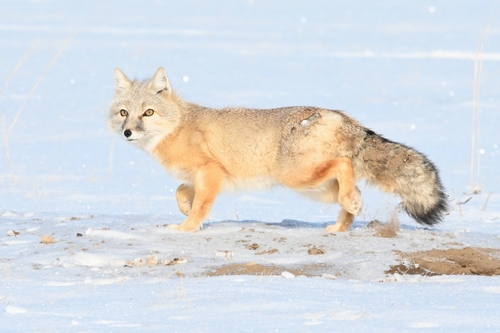
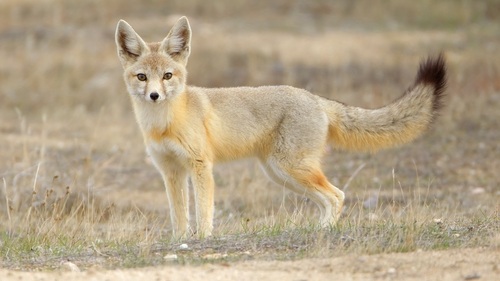
Other species in the genus Vulpes
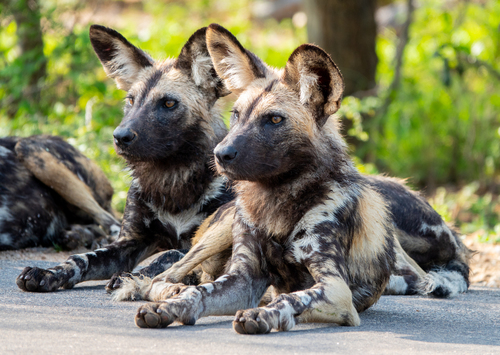
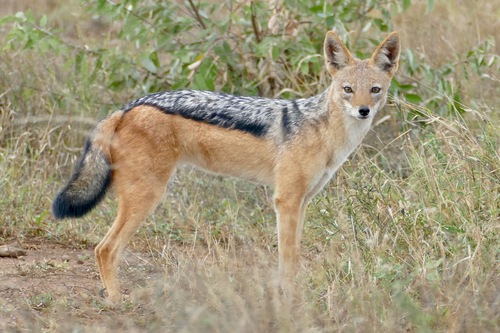
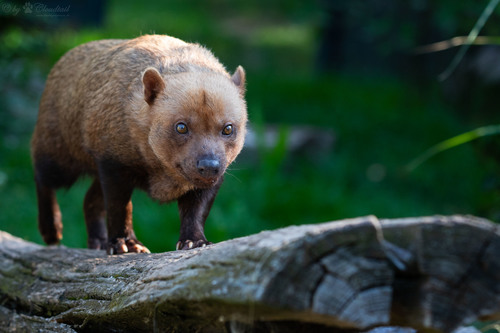
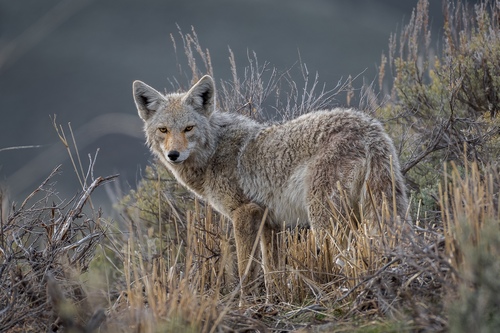
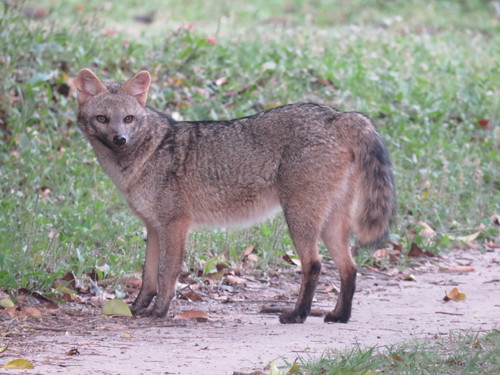
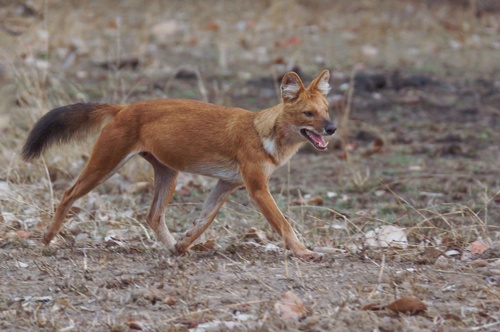
Other species in the family Canidae
Sources
Conservation status, range description and population estimate come from the IUCN Red List assessment for Vulpes zerda. Countries are derived from that range description, not from a mapped country list. Last refreshed on .
The distribution map is drawn from the IUCN Red List spatial data compiled in 2015. International Union for the Conservation of Nature