
Cuban Fruit-eating Bat
Brachyphylla nana
Red List assessment
Least Concernon the IUCN Red List
- EXExtinct
- EWExtinct in the Wild
- CRCritically Endangered
- ENEndangered
- VUVulnerable
- NTNear Threatened
- LCLeast Concern
The Cuban Fruit-eating Bat is recorded in 3 countries across North America. The IUCN Red List assesses the Cuban Fruit-eating Bat as Least Concern. No precise global population estimate exists, but the species is considered common and locally abundant across its range; overall population trend is believed to be stable.
- Family
- Phyllostomidae
- Order
- Chiroptera
- Genus
- Brachyphylla
- Countries recorded
- 3
- Continents
- North America
- Red List category
- Least Concern
- Data updated
- August 9, 2026
What is the Cuban Fruit-eating Bat?
Brachyphylla nana, the Cuban fruit-eating bat, is a medium-sized phyllostomid bat native to the Greater Antilles, particularly Cuba and Hispaniola. It is a highly adaptable species that roosts in large colonies in caves and feeds on fruit, nectar, and pollen. It plays a key ecological role as a pollinator and seed disperser in Caribbean forest ecosystems, making it important for forest regeneration.
Where does the Cuban Fruit-eating Bat live?
Cuba, the Isle of Youth, Cayman Islands, and Hispaniola (Haiti and the Dominican Republic)
Found throughout Cuba (including the Isle of Youth), the Cayman Islands, and the island of Hispaniola shared by Haiti and the Dominican Republic. It is one of the most widespread bat species in the Greater Antilles.
Altitude and depth
Occurs from sea level up to approximately 1000 meters elevation, though most populations are concentrated in lowland and mid-elevation karst regions.
Seasonal movements
No long-distance migration is known; the species is a permanent resident, though local movements between roosts may occur in response to fruiting and flowering seasonality of food plants.
Habitat of the Cuban Fruit-eating Bat
Occupies tropical dry and moist forests, karst limestone areas with caves, agricultural landscapes, and urban gardens where fruiting trees are available. Caves and cave-like structures are essential as diurnal roosting sites.
Adaptations to its environment
Possesses a broad, robust dentition allowing it to process fruit pulp and lap nectar, along with strong flight muscles for navigating dense forest canopy. Its ability to roost in large cave colonies buffers it from temperature extremes and predation, and its dietary flexibility allows survival in disturbed and agricultural habitats.
Conservation status and numbers
Listed as Least Concern (LC) by the IUCN due to its wide distribution, tolerance of habitat disturbance, and presumed large population, though localized declines from cave disturbance are noted.
Estimated population
No precise global population estimate exists, but the species is considered common and locally abundant across its range; overall population trend is believed to be stable.
What threatens the Cuban Fruit-eating Bat?
Main threats include disturbance and destruction of cave roosts (tourism, guano mining, vandalism), deforestation and agricultural conversion of native forest, and pesticide use affecting food plants and insect prey.
Diseases and parasites
Like many bats, it can host ectoparasites such as mites and bat flies, and may carry certain bat-associated viruses, though no major disease outbreaks specific to this species have been documented.
What is being done to protect it?
Some cave roosts are protected within national parks and protected areas in Cuba and the Dominican Republic; broader Caribbean bat conservation initiatives include roost monitoring and public education about the ecological value of bats.
Recommended actions
Priority actions include protecting key cave roosts from disturbance, promoting sustainable land use near roosting sites, and expanding public education to reduce persecution of bats in the region.
What the Cuban Fruit-eating Bat looks like
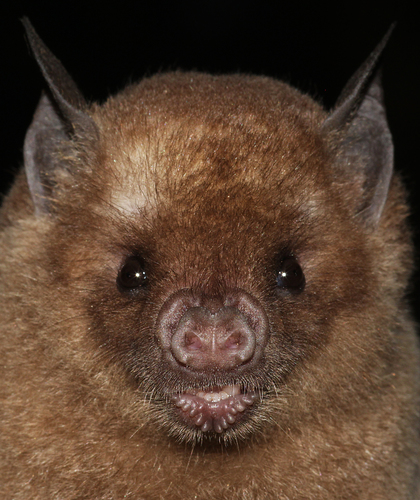
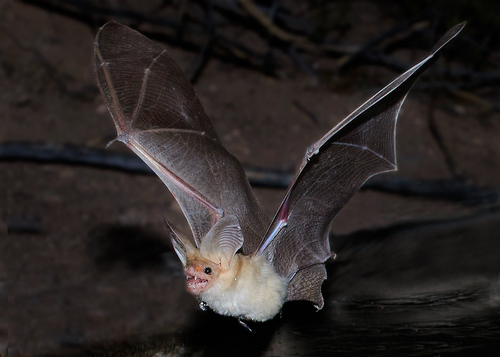
The fur is generally brown to grayish-brown, sometimes with a slightly frosted appearance on the back. It has a short, blunt muzzle, small eyes, and a reduced, inconspicuous tail, typical of frugivorous phyllostomids.
Size
Forearm length ranges from about 55-63 mm; total body length is approximately 75-95 mm, excluding the reduced tail.
Weight
Adults typically weigh between 25 and 45 grams, with some variation between subspecies and populations.
Distinctive features
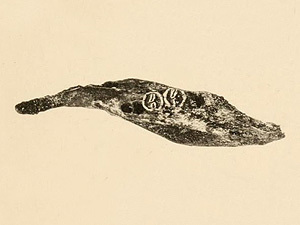
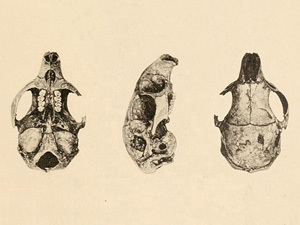
Distinguished from related Brachyphylla cavernarum by generally smaller body size and skull dimensions, as well as subtle differences in dental morphology and geographic range (Greater Antilles vs. Lesser Antilles/Puerto Rico).
Differences between males and females
Sexual dimorphism is minimal; males and females are similar in size and coloration, though females may be marginally larger in some populations.
Behaviour and diet of the Cuban Fruit-eating Bat
Highly social, roosting in dense colonies that can number in the hundreds to thousands of individuals within caves, often alongside other bat species.
When it is active
Nocturnal, emerging from cave roosts at dusk to forage on fruit, nectar, and pollen, returning before dawn.
Diet
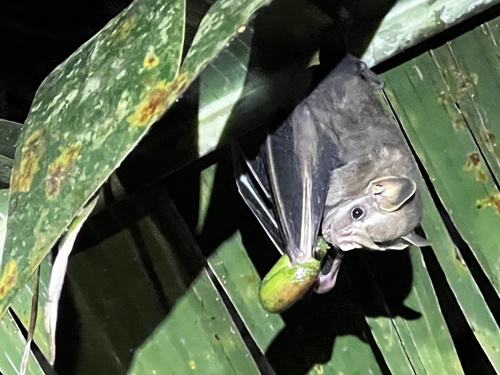
Primarily frugivorous and nectarivorous, feeding on a wide variety of native and cultivated fruits (such as figs and guavas) as well as flower nectar and pollen; opportunistically consumes some insects.
How it feeds and hunts
Forages by flying through forest understory and canopy gaps, locating ripe fruit and flowers using both vision and echolocation; often makes repeated visits to productive fruiting or flowering trees.
Communication
Uses echolocation calls for spatial orientation and possibly social communication, along with vocalizations for maintaining contact within dense roosting colonies.
Interactions with other species
Shares cave roosts with other Caribbean bat species and is preyed upon by owls, snakes, and introduced predators such as cats and mongooses near roost entrances; it also competes with other frugivorous bats for fruiting resources.
Role in its ecosystem
Serves as an important pollinator and seed disperser for numerous native Caribbean plant species, contributing to forest regeneration and maintaining plant diversity in its range.
Reproduction and lifecycle
Breeding appears to occur seasonally, with births often timed to periods of peak fruit and flower availability; females typically give birth to a single pup per breeding event after a gestation of a few months.
Raising the young
Females carry and nurse a single pup, which clings to the mother during early development; young are left in maternity roosts within the cave while mothers forage, returning periodically to nurse.
Maturity and lifespan
Sexual maturity is generally reached within the first year of life; lifespan in the wild is estimated at several years, potentially exceeding a decade, consistent with other similarly sized phyllostomid bats.
Taxonomy and naming of the Cuban Fruit-eating Bat
Classification
Mammalia > Chiroptera > Phyllostomidae > Brachyphylla > Brachyphylla nana
Subspecies
Brachyphylla nana nana (Cuba, Isle of Youth, Cayman Islands) and Brachyphylla nana pumila (Hispaniola).
Scientific synonyms
Brachyphylla pumila (sometimes treated as a full species, now generally considered a subspecies of B. nana).
What research says
Recent studies
Recent molecular phylogenetic studies have examined the taxonomic status of Brachyphylla subspecies, helping refine understanding of gene flow and divergence between Cuban and Hispaniolan populations.
Genome and DNA
Specific genome sequencing data for Brachyphylla nana is limited, though phylogenetic studies using mitochondrial DNA have helped clarify its relationship to Brachyphylla cavernarum and other Caribbean phyllostomids.
Compared with similar species
Compared to its closest relative, Brachyphylla cavernarum (found in the Lesser Antilles and Puerto Rico), B. nana is generally smaller in cranial and forearm measurements and occupies a distinct, non-overlapping geographic range.
The Cuban Fruit-eating Bat and people
Despite its name, this bat also feeds heavily on nectar and pollen, effectively functioning as a bat-pollinator for several Caribbean plants; it can form some of the largest bat colonies in Cuban caves, numbering in the thousands.
Where and how to see it
Best observed at dusk near known cave roosts in Cuba or the Dominican Republic, particularly around fruiting trees close to cave entrances; guided cave ecotourism visits in protected karst areas offer good opportunities.
Risks to humans
No notable risk to humans; like other bats, individuals should not be handled due to the general low risk of disease transmission (such as rabies) associated with direct contact.
Human uses
Not commercially utilized by humans, but valued indirectly for its ecological services in pollination and seed dispersal, which support local agriculture and forest health.
Myths and legends
Bats in Cuban and Hispaniolan folklore are sometimes associated with caves and the underworld, though no specific legend is uniquely tied to Brachyphylla nana.
Countries where the Cuban Fruit-eating Bat is recorded
The 3 countries named in the range description of its IUCN Red List assessment.
Questions about the Cuban Fruit-eating Bat
Where does the Cuban Fruit-eating Bat live?
The Cuban Fruit-eating Bat is recorded in Cuba, Dominican Republic and Haiti across North America. These countries come from the range description of its IUCN Red List assessment, and they are what place the species on the interactive map.
Is the Cuban Fruit-eating Bat endangered?
The IUCN Red List assesses the Cuban Fruit-eating Bat as Least Concern. The species is widespread and abundant enough not to qualify for any threatened category. It does not mean the species is safe forever, only that nothing in the current data raises an alarm.
How many are left in the wild?
No precise global population estimate exists, but the species is considered common and locally abundant across its range; overall population trend is believed to be stable. This figure comes from the species assessment on the IUCN Red List; population estimates for wild mammals are ranges, not counts, and are revised at each assessment.
What habitat does the Cuban Fruit-eating Bat live in?
Occupies tropical dry and moist forests, karst limestone areas with caves, agricultural landscapes, and urban gardens where fruiting trees are available.
What is the scientific name of the Cuban Fruit-eating Bat?
The Cuban Fruit-eating Bat is Brachyphylla nana, in the family Phyllostomidae, order Chiroptera.
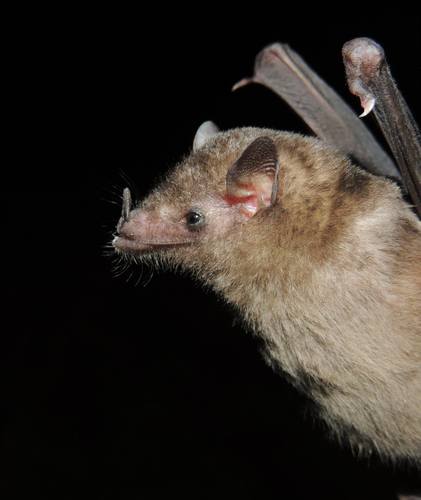
Other species in the genus Brachyphylla
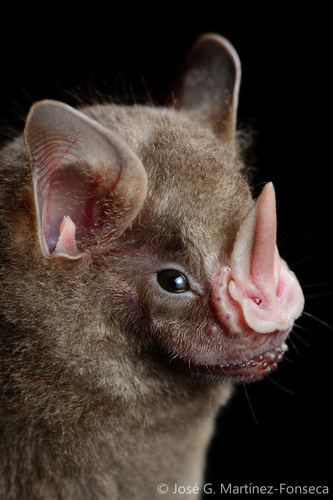
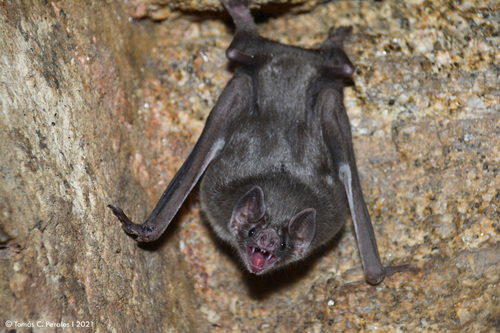
Other species in the family Phyllostomidae
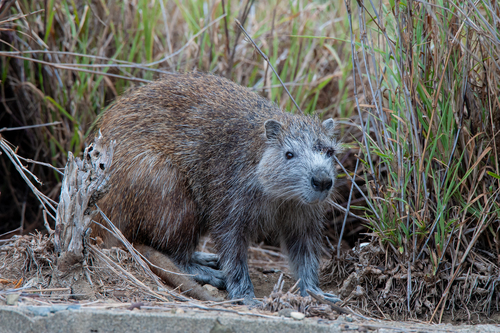
Species that share its range
Sources
Conservation status, range description and population estimate come from the IUCN Red List assessment for Brachyphylla nana. Countries are derived from that range description, not from a mapped country list. Last refreshed on .
The distribution map is drawn from the IUCN Red List spatial data compiled in 2008. IUCN (International Union for Conservation of Nature)