
Oriente Cave Rat
Boromys offella
Red List assessment
Extincton the IUCN Red List
- EXExtinct
- EWExtinct in the Wild
- CRCritically Endangered
- ENEndangered
- VUVulnerable
- NTNear Threatened
- LCLeast Concern
The Oriente Cave Rat is recorded in one country, Cuba across North America. The IUCN Red List assesses the Oriente Cave Rat as Extinct. Extinct; no living population remains.
- Family
- Echimyidae
- Order
- Rodentia
- Genus
- Boromys
- Countries recorded
- 1
- Continents
- North America
- Red List category
- Extinct
- Data updated
- August 9, 2026
What is the Oriente Cave Rat?
Boromys offella was a small, extinct spiny rat endemic to eastern Cuba, known almost exclusively from subfossil bone deposits found in caves and kitchen middens. It belonged to a now largely extinct radiation of Antillean echimyid rodents that diversified across Cuba and neighboring islands. Its extinction is thought to have occurred sometime after European colonization, likely linked to introduced predators. The species is remarkable as one of several endemic Cuban cave rodents that vanished within the last few centuries, illustrating the vulnerability of island faunas.
Where does the Oriente Cave Rat live?
Eastern Cuba, historically the former Oriente Province (now split into several provinces including Santiago de Cuba, Holguín, and Guantánamo)
Endemic to Cuba, restricted to the eastern region historically known as Oriente Province, in the Greater Antilles of the Caribbean.
Altitude and depth
Likely occurred from near sea level up to a few hundred meters in karst hill country, though precise altitudinal range is unknown due to lack of live observations.
Habitat of the Oriente Cave Rat
Believed to have inhabited limestone karst areas with caves, rocky outcrops, and adjacent forested or scrubby lowland habitats typical of eastern Cuba.
Adaptations to its environment
As a cave-dwelling and karst-associated rodent, it likely had adaptations for climbing rocky substrates and navigating cave environments, though specific morphological adaptations are poorly documented due to the fragmentary fossil record.
Conservation status and numbers
Classified as Extinct (EX) by the IUCN; the species has not been recorded alive and is known only from subfossil remains, with no confirmed sightings in the historical record.
Estimated population
Extinct; no living population remains.
What threatens the Oriente Cave Rat?
Predation and competition from introduced species such as black rats (Rattus rattus), feral cats, and the small Indian mongoose (Herpestes javanicus), along with habitat alteration following European colonization.
What is being done to protect it?
No conservation programs exist as the species is extinct; paleontological and archaeological research continues to study its remains to better understand Antillean rodent extinctions.
Recommended actions
Continued taxonomic and paleoecological research on subfossil remains to clarify extinction timing and causes; broader conservation of surviving Cuban endemic rodents to prevent similar extinctions.
What the Oriente Cave Rat looks like
Presumed to have had a robust, rat-like body with coarse or spiny fur typical of echimyid rodents, though coloration and exact fur texture remain unknown due to absence of preserved skins.
Size
Estimated body length around 15-20 cm based on comparable echimyid rodents, though exact measurements are uncertain due to fragmentary skeletal remains.
Weight
Estimated body weight likely in the range of 100-200 grams, inferred from related extinct Antillean echimyids.
Distinctive features
Distinguished from related species like Boromys torrei primarily through subtle differences in dental and cranial morphology observed in fossil specimens.
Behaviour and diet of the Oriente Cave Rat
Unknown, but many related cave-dwelling rodents show small family groups or solitary behavior.
When it is active
Likely nocturnal or crepuscular, consistent with many small rodents adapted to cave and rocky habitats.
Diet
Presumed omnivorous or herbivorous diet including fruits, seeds, and plant material, based on dental morphology typical of echimyid rodents.
Communication
Unknown; likely used vocalizations and scent marking similar to related rodent species.
Interactions with other species
Likely preyed upon by native raptors and snakes historically, with introduced predators such as cats and mongooses playing a major role in its extinction.
Role in its ecosystem
As a small omnivorous/herbivorous rodent, it likely played a role in seed dispersal and was part of the prey base for native and introduced predators in Cuban ecosystems.
Reproduction and lifecycle
No direct data available; likely followed a reproductive pattern typical of small rodents with multiple litters per year and short gestation periods.
Raising the young
Unknown, but likely involved maternal care typical of altricial rodent offspring.
Maturity and lifespan
Unknown; likely reached sexual maturity within a few months and had a lifespan of 1-3 years, typical of small rodents.
Taxonomy and naming of the Oriente Cave Rat
Classification
Class Mammalia > Order Rodentia > Family Echimyidae > Genus Boromys > Species Boromys offella
Scientific synonyms
Originally described by Gerrit S. Miller in 1916; no widely recognized synonyms, though some early classifications placed it within Capromyidae before echimyid affinities were confirmed
What research says
Recent studies
Recent paleontological studies using radiocarbon dating of cave deposits have helped refine estimates of when Boromys offella and other Cuban endemic rodents went extinct, pointing to post-Columbian extinction events.
Compared with similar species
Closely related to Boromys torrei, another extinct Cuban cave rat, with differences mainly in dental characteristics; both belong to a broader group of extinct Antillean echimyids alongside genera like Brotomys and Heteropsomys.
The Oriente Cave Rat and people
Boromys offella is known almost entirely from bones found in cave deposits and pre-Columbian kitchen middens, meaning much of what we know comes from ancient human food refuse. It represents part of a wave of small mammal extinctions in the Caribbean following European contact.
Where and how to see it
Cannot be observed as it is extinct; interested individuals can view subfossil remains in paleontological collections or natural history museums specializing in Caribbean fauna.
Risks to humans
No notable risk; the species is extinct.
Human uses
No direct historical use documented, though its remains found in kitchen middens suggest it may have been consumed by pre-Columbian indigenous peoples of Cuba.
Countries where the Oriente Cave Rat is recorded
The 1 countries named in the range description of its IUCN Red List assessment.
Questions about the Oriente Cave Rat
Where does the Oriente Cave Rat live?
The Oriente Cave Rat is recorded in Cuba across North America. These countries come from the range description of its IUCN Red List assessment, and they are what place the species on the interactive map.
Is the Oriente Cave Rat endangered?
The IUCN Red List assesses the Oriente Cave Rat as Extinct. No reasonable doubt remains that the last individual has died. A species is only declared Extinct after exhaustive surveys of its known range, at the times and in the seasons it would be expected to appear, have failed to record it.
How many are left in the wild?
Extinct; no living population remains. This figure comes from the species assessment on the IUCN Red List; population estimates for wild mammals are ranges, not counts, and are revised at each assessment.
What habitat does the Oriente Cave Rat live in?
Believed to have inhabited limestone karst areas with caves, rocky outcrops, and adjacent forested or scrubby lowland habitats typical of eastern Cuba.
What is the scientific name of the Oriente Cave Rat?
The Oriente Cave Rat is Boromys offella, in the family Echimyidae, order Rodentia.
Other species in the genus Boromys
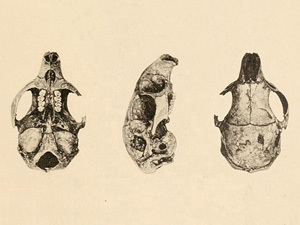
Other species in the family Echimyidae
Species that share its range
Sources
Conservation status, range description and population estimate come from the IUCN Red List assessment for Boromys offella. Countries are derived from that range description, not from a mapped country list. Last refreshed on .