
Grey Wolf
Canis lupus
Red List assessment
Least Concernon the IUCN Red List
- EXExtinct
- EWExtinct in the Wild
- CRCritically Endangered
- ENEndangered
- VUVulnerable
- NTNear Threatened
- LCLeast Concern
The Grey Wolf is recorded in 7 countries across Asia, Europe and North America. The IUCN Red List assesses the Grey Wolf as Least Concern. Global population estimated at 200,000-250,000 individuals, with stable to increasing trends in North America and parts of Europe due to conservation efforts, though some regional populations remain small and fragile.
- Family
- Canidae
- Order
- Carnivora
- Genus
- Canis
- Countries recorded
- 7
- Continents
- Asia, Europe and North America
- Red List category
- Least Concern
- Data updated
- August 9, 2026
What is the Grey Wolf?
The Grey Wolf is the largest wild member of the Canidae family, a highly adaptable apex predator found across the Northern Hemisphere from Arctic tundra to temperate forests and deserts. It is remarkable for its complex social structure, cooperative hunting behavior, and status as ancestor to the domestic dog. Wolves play a critical ecological role in regulating prey populations and maintaining ecosystem balance.
Where does the Grey Wolf live?
North America (Canada, Alaska, northern USA), Europe (Scandinavia, Eastern Europe, Italy, Spain), Asia (Russia, Mongolia, Middle East, India)
Historically found across most of the Northern Hemisphere, wolves now persist mainly in Canada, Alaska, parts of the continental USA, Russia, Eastern Europe, Scandinavia, Mongolia, Central Asia, and scattered populations in Western Europe and the Middle East. Populations have been extirpated from much of Western Europe and the contiguous United States but are recovering in some regions through reintroduction and natural recolonization.
Altitude and depth
0-3500m; wolves can be found from sea level in Arctic coastal regions up to alpine meadows and mountain ranges.
Seasonal movements
Wolves do not hibernate or migrate long distances but may shift territory seasonally following migratory prey like caribou; breeding is strictly seasonal, occurring once per year in winter.
Habitat of the Grey Wolf
Wolves inhabit a wide range of habitats including Arctic tundra, boreal and temperate forests, grasslands, mountains, and even semi-arid deserts. Their adaptability allows them to thrive in diverse climates as long as sufficient prey and territory are available.
Adaptations to its environment
Thick double-layered fur provides insulation against extreme cold, while large paws act as natural snowshoes for travel through snow. Wolves have powerful jaws (up to 1500 psi bite force) and keen senses of smell and hearing suited for long-distance hunting and communication.
Conservation status and numbers
Listed as Least Concern globally by IUCN due to large overall population and wide range, though some regional and national populations remain endangered or extirpated, such as the Mexican wolf and certain European populations.
Estimated population
Global population estimated at 200,000-250,000 individuals, with stable to increasing trends in North America and parts of Europe due to conservation efforts, though some regional populations remain small and fragile.
What threatens the Grey Wolf?
Habitat loss and fragmentation, human-wildlife conflict (livestock predation leading to retaliatory killing), illegal hunting and poaching, and in some regions, hybridization with domestic dogs.
Diseases and parasites
Susceptible to rabies, canine distemper, parvovirus, mange (caused by Sarcoptes scabiei mites), and various internal parasites including tapeworms and heartworms.
What is being done to protect it?
Protected under various national laws (e.g., US Endangered Species Act for some populations, EU Habitats Directive), reintroduction programs (Yellowstone National Park, Mexican wolf recovery program), and international agreements like CITES Appendix II for some populations.
Recommended actions
Strengthen habitat connectivity, implement effective livestock protection measures to reduce conflict, enforce anti-poaching laws, and continue genetic monitoring to prevent inbreeding in isolated populations.
What the Grey Wolf looks like
Wolves have a robust build with long legs, large paws, a broad head, and erect triangular ears. Fur coloration varies widely from white (Arctic wolves) to grey, brown, black, or reddish, often with mixed shading for camouflage.
Size
Body length 100-160cm (excluding tail), shoulder height 60-90cm; tail length 30-50cm.
Weight
Males typically 30-80kg, females 23-55kg, with significant variation by subspecies and region (Arctic wolves generally larger than southern subspecies).
Distinctive features
Distinguished from coyotes and jackals by larger size, broader snout, larger paws, and more rounded ears; distinguished from domestic dogs by longer legs, larger skull, and less curled tail.
Differences between males and females
Males are generally 20-30% larger and heavier than females, though coloration and markings are similar between sexes.
Behaviour and diet of the Grey Wolf
Highly social, living in packs typically of 5-12 individuals organized around a breeding alpha pair and their offspring, with cooperative hunting, pup-rearing, and territory defense.
When it is active
Primarily crepuscular and nocturnal, though activity patterns can shift to diurnal in areas with low human disturbance.
Diet
Carnivorous, preying primarily on large ungulates such as deer, elk, moose, caribou, and wild boar, supplemented by smaller mammals, birds, and occasionally carrion or livestock.
How it feeds and hunts
Wolves hunt cooperatively in packs, using stamina-based pursuit to tire prey over long distances, coordinated group tactics to isolate weak or vulnerable individuals, and strategic ambush in some terrains.
Communication
Wolves communicate through howling (long-distance contact and territory assertion), body language (posture, tail position, facial expressions), scent marking (urine and feces to mark territory), and direct vocalizations like growls and barks.
Interactions with other species
Wolves compete with other large predators such as bears and cougars for prey, occasionally kill coyotes to reduce competition, and their predation pressure influences prey behavior and vegetation patterns (trophic cascade effects, as seen in Yellowstone).
Role in its ecosystem
As an apex predator, the wolf plays a keystone role in ecosystems by regulating herbivore populations, which in turn affects vegetation structure and biodiversity, exemplified by trophic cascades following wolf reintroduction in Yellowstone.
Reproduction and lifecycle
Mating occurs once yearly typically in late winter (January-March), with gestation lasting about 62-63 days, resulting in litters of 4-6 pups born in a den.
Raising the young
Both parents and other pack members participate in raising pups, providing food via regurgitation, protection, and teaching hunting skills; pups are weaned around 8-10 weeks but remain dependent on the pack for over a year.
Maturity and lifespan
Sexual maturity reached at 2-3 years; lifespan in the wild averages 6-8 years, while captive wolves can live 12-16 years.
Taxonomy and naming of the Grey Wolf
Classification
Class Mammalia > Order Carnivora > Family Canidae > Genus Canis > Species Canis lupus
Subspecies
Numerous subspecies recognized including Canis lupus arctos (Arctic wolf, High Arctic Canada), Canis lupus occidentalis (Northwestern wolf, Canada/Alaska), Canis lupus lupus (Eurasian wolf), Canis lupus italicus (Italian wolf), and Canis lupus baileyi (Mexican wolf, southwestern USA/Mexico).
Scientific synonyms
Canis lycaon (formerly considered synonym, now often treated as separate Eastern wolf species), Canis niger (historical synonym)
What research says
Recent studies
Recent genomic research has refined understanding of wolf-dog domestication timelines and identified distinct ancestral wolf populations contributing to different dog breeds; studies also document rapid ecological effects of wolf reintroduction on ecosystem trophic cascades.
Genome and DNA
Diploid chromosome number is 78 (2n=78); extensive genomic studies have clarified wolf-dog divergence around 15,000-40,000 years ago and revealed genetic diversity patterns across subspecies.
Compared with similar species
Compared to coyotes, wolves are larger with broader skulls and more powerful builds suited for hunting large prey; compared to domestic dogs, wolves retain more primitive traits, greater wariness of humans, and stronger pack cohesion behaviors.
The Grey Wolf and people
Wolves can travel up to 50km in a single day while hunting or patrolling territory; their howls can be heard up to 10km away in favorable conditions; individual wolves have unique howl 'voices' recognizable to other pack members.
Where and how to see it
Best observed in protected areas like Yellowstone National Park (USA), Algonquin Provincial Park (Canada), or Białowieża Forest (Poland/Belarus), typically at dawn or dusk during winter months when visibility is higher and wolves are more active.
Risks to humans
Wolves rarely attack humans and generally avoid human contact; risk is low but can increase in cases of habituation, rabies infection, or when wolves are protecting a den with pups.
Human uses
Historically hunted for fur and as livestock protection measure; wolves are also central to ecotourism industries in regions with viewing programs, and their reintroduction has scientific value for studying ecosystem restoration.
Myths and legends
Wolves feature prominently in mythology and folklore worldwide, from the Roman legend of Romulus and Remus raised by a she-wolf to Norse mythology's Fenrir, and are often symbolically cast as both feared villains (as in European fairy tales) and revered spiritual guides (in many Native American cultures).
Countries where the Grey Wolf is recorded
The 7 countries named in the range description of its IUCN Red List assessment.
Questions about the Grey Wolf
Where does the Grey Wolf live?
The Grey Wolf is recorded in Canada, India, Italy, Mongolia and Russia, among 7 countries in total across Asia, Europe and North America. These countries come from the range description of its IUCN Red List assessment, and they are what place the species on the interactive map.
Is the Grey Wolf endangered?
The IUCN Red List assesses the Grey Wolf as Least Concern. The species is widespread and abundant enough not to qualify for any threatened category. It does not mean the species is safe forever, only that nothing in the current data raises an alarm.
How many are left in the wild?
Global population estimated at 200,000-250,000 individuals, with stable to increasing trends in North America and parts of Europe due to conservation efforts, though some regional populations remain small and fragile. This figure comes from the species assessment on the IUCN Red List; population estimates for wild mammals are ranges, not counts, and are revised at each assessment.
What habitat does the Grey Wolf live in?
Wolves inhabit a wide range of habitats including Arctic tundra, boreal and temperate forests, grasslands, mountains, and even semi-arid deserts.
What is the scientific name of the Grey Wolf?
The Grey Wolf is Canis lupus, in the family Canidae, order Carnivora.
Other species in the genus Canis
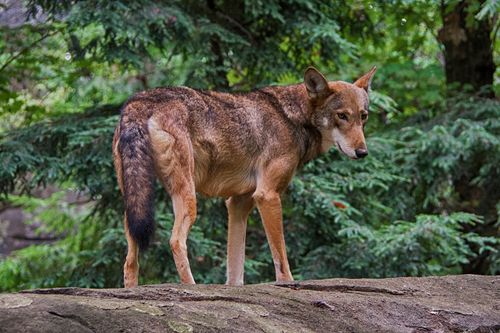
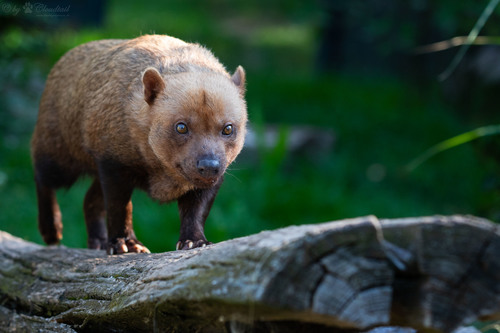
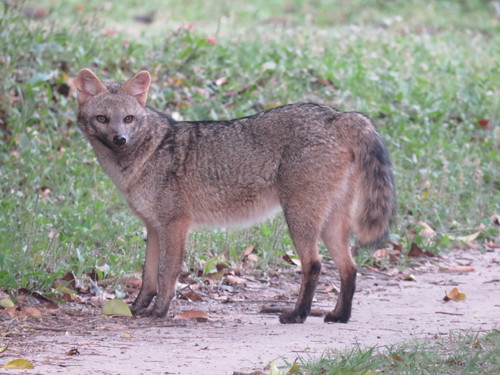
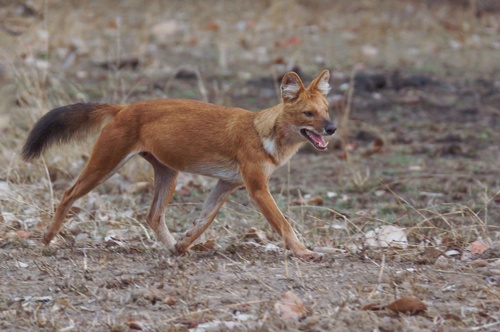
Other species in the family Canidae
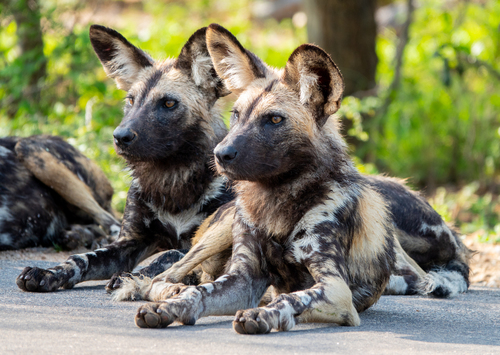
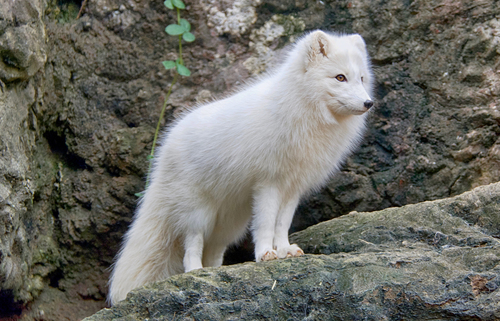
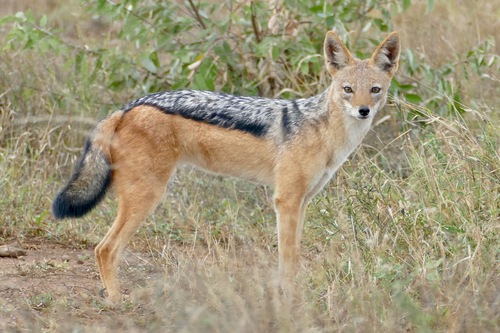
Species that share its range
Sources
Conservation status, range description and population estimate come from the IUCN Red List assessment for Canis lupus. Countries are derived from that range description, not from a mapped country list. Last refreshed on .
The distribution map is drawn from the IUCN Red List spatial data compiled in 2026. IUCN (International Union for Conservation of Nature)