
Chilean Dolphin
Cephalorhynchus eutropia
Red List assessment
Near Threatenedon the IUCN Red List
- EXExtinct
- EWExtinct in the Wild
- CRCritically Endangered
- ENEndangered
- VUVulnerable
- NTNear Threatened
- LCLeast Concern
The Chilean Dolphin is recorded in one country, Chile across South America. The IUCN Red List assesses the Chilean Dolphin as Near Threatened. Estimated total population is likely in the low thousands (possibly 5,000-10,000 individuals), though precise estimates are difficult due to limited survey coverage; trend is believed to be declining due to ongoing bycatch pressure.
- Family
- Delphinidae
- Order
- Cetartiodactyla
- Genus
- Cephalorhynchus
- Countries recorded
- 1
- Continents
- South America
- Red List category
- Near Threatened
- Data updated
- August 9, 2026
What is the Chilean Dolphin?
The Chilean dolphin, also known as the black dolphin, is a small, robust cetacean endemic to the coastal waters of Chile. It is one of the smallest dolphin species in the world and is notable for its dark gray to black coloration and rounded dorsal fin lacking a pronounced hook. This species inhabits shallow, cold coastal waters including fjords, channels, and estuaries of the Chilean coast, making it highly vulnerable to human activities in nearshore environments.
Where does the Chilean Dolphin live?
Coastal waters of Chile, from Valparaíso region south to Tierra del Fuego
Endemic to Chile, ranging along the Pacific coast from approximately Valparaíso (33°S) in the north to the Strait of Magellan and Tierra del Fuego (55°S) in the south, including the intricate fjord and channel systems of Patagonia.
Altitude and depth
Primarily found in shallow waters less than 200 meters deep, typically within 0-50 meters depth range close to shore
Seasonal movements
Some populations show seasonal inshore-offshore movements, moving closer to shore in summer months, though patterns vary by region and are not fully understood
Habitat of the Chilean Dolphin
Shallow coastal waters, fjords, channels, estuaries, and kelp beds; often found near river mouths where fresh and salt water mix. Prefers turbid, nutrient-rich waters close to shore, typically within a few kilometers of the coastline.
Adaptations to its environment
Small compact body size reduces heat loss in cold Patagonian waters; countercurrent heat exchange systems in flippers and dorsal fin conserve body heat. Rounded dorsal fin (lacking sharp hook) may reduce drag in shallow, kelp-filled waters, and echolocation allows navigation in turbid coastal environments.
Conservation status and numbers
Near Threatened (NT) according to IUCN, with concern due to its restricted range, small population size, and high susceptibility to bycatch mortality in fishing gear throughout its limited distribution along the Chilean coast.
Estimated population
Estimated total population is likely in the low thousands (possibly 5,000-10,000 individuals), though precise estimates are difficult due to limited survey coverage; trend is believed to be declining due to ongoing bycatch pressure.
What threatens the Chilean Dolphin?
Bycatch in gillnet fisheries is the primary threat, along with habitat degradation from salmon aquaculture, pollution, boat traffic, and potential competition with expanding fisheries for prey resources.
Diseases and parasites
Limited specific data available, though like other small cetaceans it may be susceptible to morbillivirus infections and various endoparasites including nematodes and cestodes
What is being done to protect it?
Protected under Chilean law prohibiting directed hunting; included in CITES Appendix II; some marine protected areas exist within its range, though enforcement and coverage remain limited. Research programs monitor bycatch rates and population genetics.
Recommended actions
Expand marine protected areas in critical habitat zones, implement stricter gillnet regulations and bycatch mitigation measures, increase population monitoring surveys, and regulate salmon farming expansion in coastal waters.
What the Chilean Dolphin looks like
Dark gray to black dorsal coloration with lighter gray to white patches on the throat, belly, and genital area; small rounded head without a pronounced beak; short, rounded dorsal fin positioned mid-back.
Size
Body length typically 1.2-1.7 meters, making it one of the smallest dolphin species
Weight
Approximately 30-65 kg, with males and females showing similar weight ranges
Distinctive features
Distinguished from other Cephalorhynchus species by its dark coloration (versus the black-and-white patterns of Commerson's dolphin) and rounded, non-falcate dorsal fin shape unique among dolphins.
Differences between males and females
Minimal sexual dimorphism; males and females are similar in size and coloration, though males may be marginally larger
Behaviour and diet of the Chilean Dolphin
Typically found in small groups of 2-10 individuals, though larger aggregations of up to 50+ have been observed; social structure appears fluid with groups often including mixed age classes.
When it is active
Diurnal activity patterns are most commonly observed, though the species may also be active during twilight hours; behavior includes surfacing, feeding, and occasional bow-riding.
Diet
Carnivorous, feeding primarily on small schooling fish (such as sardines and anchovies) and cephalopods including squid; diet varies regionally based on local prey availability.
How it feeds and hunts
Uses echolocation to detect prey in turbid coastal waters; often hunts cooperatively in small groups, herding schools of fish into shallow areas for easier capture.
Communication
Communicates through high-frequency echolocation clicks used primarily for navigation and prey detection; limited whistle production compared to other dolphin species, likely an adaptation to avoid predator detection.
Interactions with other species
Potential predators include large sharks and possibly killer whales, though documented predation events are rare; may compete with pinnipeds and seabirds for shared fish resources in coastal ecosystems.
Role in its ecosystem
Functions as a mid-level predator in coastal marine food webs, helping regulate populations of small schooling fish and cephalopods; its presence indicates healthy nearshore marine ecosystems.
Reproduction and lifecycle
Breeding season appears to peak in austral summer (December-February); gestation lasts approximately 10-11 months, with females typically giving birth to a single calf every 2-3 years.
Raising the young
Calves are nursed for approximately 1 year and remain closely associated with their mothers during this period, learning foraging and social behaviors; extended maternal care is typical of small delphinids.
Maturity and lifespan
Sexual maturity is reached at approximately 5-9 years of age; lifespan in the wild is estimated at 15-20 years, with limited data from captivity as the species is rarely held in aquariums.
Taxonomy and naming of the Chilean Dolphin
Classification
Class Mammalia > Order Cetartiodactyla (Cetacea) > Family Delphinidae > Genus Cephalorhynchus > Species Cephalorhynchus eutropia
Scientific synonyms
Delphinus eutropia (original combination by Gray, 1846); also historically referred to as 'black dolphin' or 'tonina'
What research says
Recent studies
Recent studies have used photo-identification and genetic sampling to assess population structure, revealing potential genetic differentiation between northern and southern populations, informing conservation management units.
Genome and DNA
Limited genomic studies available; genetic research has focused primarily on population structure and connectivity among coastal subpopulations along the Chilean coastline
Compared with similar species
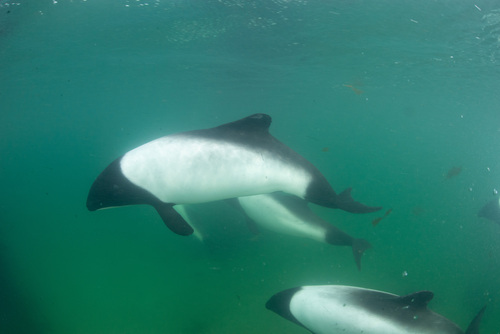
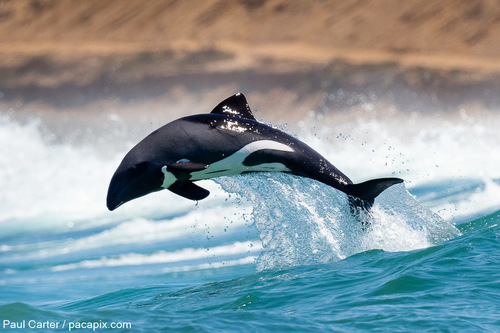
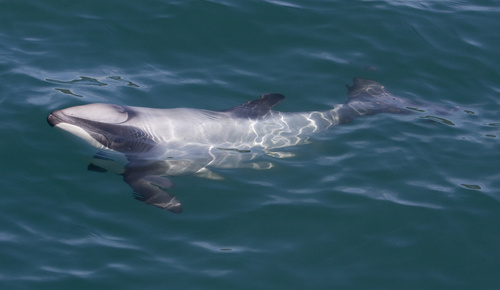
Closely related to Commerson's dolphin (C. commersonii) but distinguished by uniform dark coloration versus the striking black-and-white pattern; also compared to Hector's dolphin (C. hectori) of New Zealand, sharing similar small body size and coastal habitat preference.
The Chilean Dolphin and people
The Chilean dolphin is one of only four species in the genus Cephalorhynchus, all found in the Southern Hemisphere; it is sometimes called 'black dolphin' due to its dark coloration, and despite its small size, it can dive to considerable depths relative to its body length while foraging.
Where and how to see it
Best observed via boat tours in the fjords and channels of southern Chile, particularly around Chiloé Island and the Los Lagos region; early morning hours in calm coastal waters offer the best viewing opportunities.
Risks to humans
No notable risk to humans; the species is not aggressive and poses no direct threat
Human uses
No significant direct human use; historically may have been subject to opportunistic hunting, now primarily valued for ecotourism and scientific research purposes
Myths and legends
Limited documented folklore specific to this species, though indigenous coastal communities in Chile have traditional knowledge of local marine life that may include references to this dolphin
Countries where the Chilean Dolphin is recorded
The 1 countries named in the range description of its IUCN Red List assessment.
Questions about the Chilean Dolphin
Where does the Chilean Dolphin live?
The Chilean Dolphin is recorded in Chile across South America. These countries come from the range description of its IUCN Red List assessment, and they are what place the species on the interactive map.
Is the Chilean Dolphin endangered?
The IUCN Red List assesses the Chilean Dolphin as Near Threatened. The species does not qualify as threatened today, but it is close to the thresholds and likely to cross them soon. It is the category that most often changes at the next assessment.
How many are left in the wild?
Estimated total population is likely in the low thousands (possibly 5,000-10,000 individuals), though precise estimates are difficult due to limited survey coverage; trend is believed to be declining due to ongoing bycatch pressure. This figure comes from the species assessment on the IUCN Red List; population estimates for wild mammals are ranges, not counts, and are revised at each assessment.
What habitat does the Chilean Dolphin live in?
Shallow coastal waters, fjords, channels, estuaries, and kelp beds; often found near river mouths where fresh and salt water mix.
What is the scientific name of the Chilean Dolphin?
The Chilean Dolphin is Cephalorhynchus eutropia, in the family Delphinidae, order Cetartiodactyla.
Other species in the genus Cephalorhynchus
Other species in the family Delphinidae
Species that share its range
Sources
Conservation status, range description and population estimate come from the IUCN Red List assessment for Cephalorhynchus eutropia. Countries are derived from that range description, not from a mapped country list. Last refreshed on .
The distribution map is drawn from the IUCN Red List spatial data compiled in 2013. IUCN (International Union for Conservation of Nature)