
Buffy-headed Marmoset
Callithrix flaviceps
Red List assessment
Critically Endangeredon the IUCN Red List
- EXExtinct
- EWExtinct in the Wild
- CRCritically Endangered
- ENEndangered
- VUVulnerable
- NTNear Threatened
- LCLeast Concern
The Buffy-headed Marmoset is recorded in one country, Brazil across South America. The IUCN Red List assesses the Buffy-headed Marmoset as Critically Endangered. Population estimated at fewer than 2,500 mature individuals, with a continuing declining trend due to ongoing habitat loss.
- Family
- Callitrichidae
- Order
- Primates
- Genus
- Callithrix
- Countries recorded
- 1
- Continents
- South America
- Red List category
- Critically Endangered
- Data updated
- August 9, 2026
What is the Buffy-headed Marmoset?
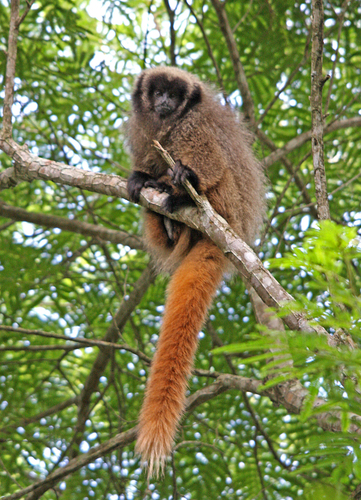
The buffy-headed marmoset is a small New World primate endemic to a tiny fragmented region of the Brazilian Atlantic Forest. It is easily recognized by its golden-yellow crown and ear tufts contrasting with darker body fur. Highly restricted in range, it is one of the most endangered primates in Brazil due to severe habitat loss. Its survival depends almost entirely on a handful of forest fragments and protected reserves.
Where does the Buffy-headed Marmoset live?
Southeastern Brazil, restricted to the state of Espírito Santo and adjacent parts of Minas Gerais
Endemic to a very small area of southeastern Brazil, primarily in the state of Espírito Santo and marginally into Minas Gerais, within the highly fragmented Atlantic Forest biome.
Altitude and depth
Occurs from near sea level up to approximately 1200 meters in elevation within Atlantic Forest habitats.
Seasonal movements
No true migration; however, feeding behavior and ranging patterns shift seasonally with fruit and gum availability, particularly during the drier months.
Habitat of the Buffy-headed Marmoset
Inhabits lowland and montane Atlantic Forest, including primary and secondary tropical rainforest with dense canopy cover. It prefers areas with abundant gum-producing trees and a mix of forest strata for foraging and shelter.
Adaptations to its environment
Possesses specialized incisors for gouging tree bark to stimulate gum flow, an important dietary adaptation shared with other marmosets. Its small body size and agile climbing ability allow it to exploit fine branches and dense understory vegetation inaccessible to larger primates.
Conservation status and numbers
Classified as Critically Endangered (CR) by the IUCN due to extreme habitat fragmentation, small and declining population, and a range reduced to less than 5% of its original extent.
Estimated population
Population estimated at fewer than 2,500 mature individuals, with a continuing declining trend due to ongoing habitat loss.
What threatens the Buffy-headed Marmoset?
Major threats include deforestation for agriculture and urban expansion, habitat fragmentation, hybridization with introduced marmoset species, and illegal pet trade.
Diseases and parasites
Susceptible to parasitic infections from gastrointestinal helminths and ectoparasites; hybridization with invasive marmosets may also introduce novel pathogens.
What is being done to protect it?
Protected under Brazilian law and found in a few reserves such as Augusto Ruschi Biological Reserve; conservation breeding and habitat restoration programs are underway through Brazilian research institutions and NGOs.
Recommended actions
Priority actions include expanding protected habitat corridors, controlling hybridization with invasive marmoset species, strengthening anti-poaching enforcement, and community-based conservation education.
What the Buffy-headed Marmoset looks like
The fur is predominantly blackish or grizzled dark brown on the body with a distinctive golden-yellow to buffy crown and ear tufts. The tail is long, bushy, and ringed, aiding balance during arboreal locomotion.
Size
Body length ranges from about 19 to 23 cm, with a tail adding another 30 to 35 cm.
Weight
Adults typically weigh between 350 and 450 grams, with little difference between males and females.
Distinctive features
Distinguished from other Callithrix species by its unique buffy-yellow head coloration contrasting sharply with the darker body fur and prominent ear tufts.
Behaviour and diet of the Buffy-headed Marmoset
Lives in small cooperative family groups of 2 to 15 individuals, typically consisting of a breeding pair and their offspring from multiple generations. Group members cooperate in infant care and territory defense.
When it is active
Diurnal, active during daylight hours foraging, socializing, and resting in tree cavities or dense foliage at night.
Diet
Omnivorous diet consisting mainly of plant gum and exudates, supplemented with fruits, flowers, nectar, and small invertebrates such as insects and spiders.
How it feeds and hunts
Insects are captured opportunistically by stalking and quick hand-grabbing during foraging; gum is obtained by gouging bark with specialized lower incisors.
Communication
Communicates through high-pitched vocalizations, scent marking with glandular secretions, and visual displays such as tuft and tail postures.
Interactions with other species
Faces competition and hybridization risk from introduced marmoset species like Callithrix jacchus and Callithrix penicillata; natural predators include raptors and small carnivores.
Role in its ecosystem
Plays an important ecological role as a seed disperser and contributes to forest regeneration by consuming fruits and dispersing seeds across its habitat.
Reproduction and lifecycle
Breeding can occur year-round but often peaks with seasonal food abundance; gestation lasts about 140-150 days, usually resulting in twins.
Raising the young
Parental care is cooperative, with the father and older siblings carrying and helping feed infants, while the mother nurses them; this alloparental care is essential to infant survival.
Maturity and lifespan
Reaches sexual maturity around 18 months to 2 years of age; lifespan in the wild is about 10 years, while captive individuals can live up to 16 years.
Taxonomy and naming of the Buffy-headed Marmoset
Classification
Mammalia > Primates > Callitrichidae > Callithrix > Callithrix flaviceps
Scientific synonyms
Hapale flaviceps (Thomas, 1903)
What research says
Recent studies
Recent genetic and ecological studies have focused on hybridization threats between C. flaviceps and non-native marmosets, providing crucial data for conservation prioritization.
Genome and DNA
Has a diploid chromosome number of 2n=46, typical of Callithrix species; genetic studies have been used to assess hybridization levels with introduced marmoset species.
Compared with similar species
Similar in size and social structure to other Callithrix marmosets, but distinguished by its buffy-yellow head coloring, unlike the white-tufted appearance of the common marmoset (Callithrix jacchus).
The Buffy-headed Marmoset and people
This species has one of the smallest ranges of any primate in the world, confined to a fragment of forest in a single Brazilian state. Its golden crown gives it a striking, almost regal appearance among marmosets.
Where and how to see it
Best observed early morning in protected Atlantic Forest reserves such as Augusto Ruschi Biological Reserve in Espírito Santo, where guided tours may help spot small family groups foraging in the canopy.
Risks to humans
No notable risk to humans.
Human uses
Not used commercially, though historically some individuals were captured for the illegal pet trade.
Countries where the Buffy-headed Marmoset is recorded
The 1 countries named in the range description of its IUCN Red List assessment.
Questions about the Buffy-headed Marmoset
Where does the Buffy-headed Marmoset live?
The Buffy-headed Marmoset is recorded in Brazil across South America. These countries come from the range description of its IUCN Red List assessment, and they are what place the species on the interactive map.
Is the Buffy-headed Marmoset endangered?
Yes. The IUCN Red List assesses the Buffy-headed Marmoset as Critically Endangered, one of the three threatened categories. The species faces an extremely high risk of extinction in the wild. This is the last category before extinction, and it is reached through a very small or steeply declining population, a tiny range, or both.
How many are left in the wild?
Population estimated at fewer than 2,500 mature individuals, with a continuing declining trend due to ongoing habitat loss. This figure comes from the species assessment on the IUCN Red List; population estimates for wild mammals are ranges, not counts, and are revised at each assessment.
What habitat does the Buffy-headed Marmoset live in?
Inhabits lowland and montane Atlantic Forest, including primary and secondary tropical rainforest with dense canopy cover.
What is the scientific name of the Buffy-headed Marmoset?
The Buffy-headed Marmoset is Callithrix flaviceps, in the family Callitrichidae, order Primates.
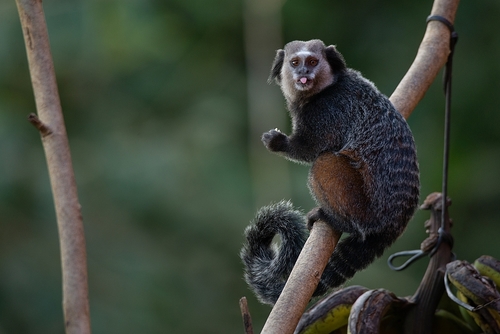
Other species in the genus Callithrix
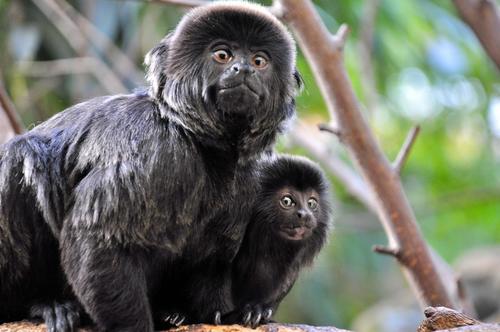
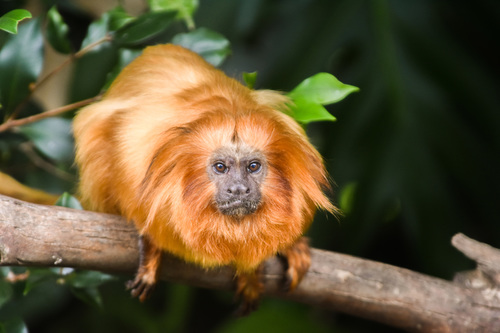
Other species in the family Callitrichidae
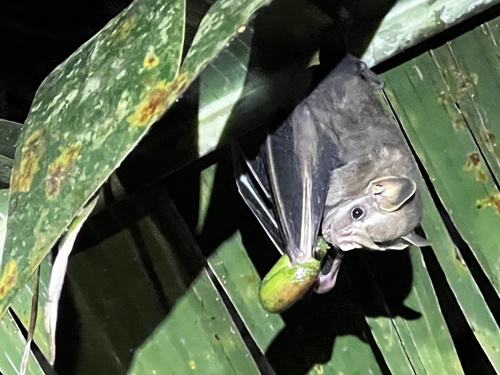
Species that share its range


Sources
Conservation status, range description and population estimate come from the IUCN Red List assessment for Callithrix flaviceps. Countries are derived from that range description, not from a mapped country list. Last refreshed on .
The distribution map is drawn from the IUCN Red List spatial data compiled in 2008. Biodiversitas Brazil