
White Rhinoceros
Ceratotherium simum
Red List assessment
Near Threatenedon the IUCN Red List
- EXExtinct
- EWExtinct in the Wild
- CRCritically Endangered
- ENEndangered
- VUVulnerable
- NTNear Threatened
- LCLeast Concern
The White Rhinoceros is recorded in 6 countries across Africa. The IUCN Red List assesses the White Rhinoceros as Near Threatened. Approximately 15,000-18,000 Southern White Rhinos remain in the wild, with population trends showing recent declines due to intensified poaching after a period of recovery and growth.
- Family
- Rhinocerotidae
- Order
- Perissodactyla
- Genus
- Ceratotherium
- Countries recorded
- 6
- Continents
- Africa
- Red List category
- Near Threatened
- Data updated
- August 9, 2026
What is the White Rhinoceros?
The White Rhinoceros is the largest living species of rhinoceros and one of the largest land mammals after elephants. It inhabits grasslands and savannas of southern and eastern Africa, grazing primarily on grasses with its distinctive wide, flat mouth. Despite its name, its skin is grey, not white; the name likely derives from the Afrikaans word 'wyd' meaning wide, referring to its mouth shape. It is remarkable for its conservation success story, having been brought back from near extinction in the early 20th century through dedicated protection efforts.
Where does the White Rhinoceros live?
Southern and East Africa, primarily South Africa, Namibia, Zimbabwe, Kenya, and Botswana
Primarily found in South Africa (over 90% of the population, especially in Kruger National Park and private reserves), with smaller populations in Namibia, Zimbabwe, Kenya, Botswana, and Uganda through reintroduction programs. Historically ranged more widely across sub-Saharan Africa.
Altitude and depth
0-2000m, typically found in lowland savanna habitats
Seasonal movements
No true migration, but movements may shift seasonally in response to water and grass availability, particularly during dry versus wet seasons.
Habitat of the White Rhinoceros
Open grasslands, savannas, and shrublands with access to water sources. Prefers areas with short grass for grazing and requires shade and mud for thermoregulation and parasite control.
Adaptations to its environment
Wide, flat lips adapted for grazing short grasses; thick skin protects against thorns and insect bites; wallowing in mud helps regulate body temperature and deter parasites. Their large body size and relatively low metabolic rate suit them to a grass-based diet.
Conservation status and numbers
Near Threatened (NT) according to IUCN, though the Southern subspecies has recovered significantly from near extinction; the Northern subspecies is functionally extinct with only two females alive, both unable to reproduce naturally.
Estimated population
Approximately 15,000-18,000 Southern White Rhinos remain in the wild, with population trends showing recent declines due to intensified poaching after a period of recovery and growth.
What threatens the White Rhinoceros?
Poaching for horn (used in traditional medicine and status symbols in Asia), habitat loss, and political instability in range countries affecting law enforcement and conservation funding.
Diseases and parasites
Susceptible to ticks, internal parasites, and occasionally anthrax; also vulnerable to injuries from poaching-related trauma and stress-related diseases in captivity.
What is being done to protect it?
Extensive protected area networks including Kruger National Park, private game reserves, anti-poaching units, dehorning programs, translocation to safer areas, and international trade bans under CITES. Southern White Rhino conservation is considered one of the great success stories in wildlife conservation.
Recommended actions
Strengthen anti-poaching enforcement, reduce demand for rhino horn in consumer countries, expand secure habitat and translocation programs, and increase community engagement and benefit-sharing to support conservation efforts.
What the White Rhinoceros looks like
Grey skin with sparse hair, a large hump on the back of the neck, and two horns on the snout, with the front horn being larger and sometimes reaching over 1 meter. Its distinctive wide, square-shaped mouth is adapted for grazing.
Size
Body length 3.4-4.2m, shoulder height 1.5-1.85m
Weight
Males typically weigh 2000-2300 kg, females 1600-1700 kg, making this one of the heaviest land mammals.
Distinctive features
Distinguished from the Black Rhino by its wider, flatter mouth (for grazing rather than browsing), larger size, more prominent shoulder hump, and less pointed lip shape.
Differences between males and females
Males are generally larger and heavier than females, with thicker necks and often larger horns, though horn size varies individually rather than strictly by sex.
Behaviour and diet of the White Rhinoceros
Generally solitary or found in small groups, particularly females with calves or bachelor groups of young males. Adult males are often territorial, while females may form loose associations called 'crashes.'
When it is active
Primarily active during early morning and late afternoon (crepuscular), resting in shade during the hottest parts of the day.
Diet
Strict herbivore, grazing almost exclusively on short grasses using its wide, flat lips to crop vegetation close to the ground.
Communication
Communicate through vocalizations such as snorts, grunts, and bellows, as well as scent marking via dung piles (middens) and urine spraying, and body postures to signal dominance or threat.
Interactions with other species
Adult rhinos have few natural predators due to their size, though calves may be vulnerable to lions and hyenas. They share grazing habitat with other herbivores like zebras and antelopes and have a mutualistic relationship with oxpeckers that feed on ticks from their skin.
Role in its ecosystem
As large grazers, White Rhinos play an important role in shaping grassland ecosystems by maintaining short grass swards, which benefits other grazing species and influences vegetation structure and fire dynamics.
Reproduction and lifecycle
Breeding occurs year-round with no strict seasonality; gestation lasts about 16-18 months, and females typically give birth to a single calf every 2-3 years.
Raising the young
Calves are cared for exclusively by the mother, nursing for about a year and staying with her for 2-3 years until the birth of the next calf. Mothers are highly protective and calves closely follow their mothers.
Maturity and lifespan
Females reach sexual maturity around 5-7 years, males around 10-12 years; lifespan in the wild is typically 40-50 years, similar or slightly longer in captivity with good care.
Taxonomy and naming of the White Rhinoceros
Classification
Class Mammalia > Order Perissodactyla > Family Rhinocerotidae > Genus Ceratotherium > Species Ceratotherium simum
Subspecies
Southern White Rhino (Ceratotherium simum simum) found mainly in South Africa, Namibia, Zimbabwe and Botswana; Northern White Rhino (Ceratotherium simum cottoni) historically in Central Africa, now functionally extinct with only two known individuals remaining in captivity.
Scientific synonyms
Rhinoceros simus (original name given by Burchell in 1817)
What research says
Recent studies
Recent research includes advanced reproductive technologies such as in-vitro fertilization and stem cell techniques aimed at reviving the Northern White Rhino subspecies using stored genetic material and surrogate Southern White Rhino females.
Genome and DNA
Diploid chromosome number is 82; genetic studies have focused on population diversity monitoring and assisted reproduction techniques for the critically endangered Northern subspecies.
Compared with similar species
Compared to the Black Rhino (Diceros bicornis), the White Rhino is larger, has a wider mouth adapted for grazing rather than browsing, and generally has a calmer temperament, though both species face similar poaching pressures.
The White Rhinoceros and people
Despite their name, White Rhinos are grey; the name comes from a mistranslation of the Afrikaans word for 'wide' referring to their mouth. They are the second-largest land mammal after elephants, and a group of rhinos is sometimes called a 'crash.'
Where and how to see it
Best observed in protected reserves such as Kruger National Park, Hluhluwe-iMfolozi Park, or private game reserves in South Africa, typically during early morning or late afternoon game drives when rhinos are most active.
Risks to humans
Generally low risk to humans if unprovoked, but can be dangerous if threatened or startled due to their size and speed; encounters should be managed carefully by trained guides.
Human uses
Historically hunted for sport and horn trade; today primarily valued for ecotourism revenue in protected areas, though illegal horn trade for traditional medicine and status symbols continues to drive poaching.
Myths and legends
Rhino horn has long been falsely believed in some traditional medicine practices to have healing or aphrodisiac properties, despite being composed of keratin, the same material as human fingernails, driving much of the illegal poaching trade.
Countries where the White Rhinoceros is recorded
The 6 countries named in the range description of its IUCN Red List assessment.
Questions about the White Rhinoceros
Where does the White Rhinoceros live?
The White Rhinoceros is recorded in Botswana, Kenya, Namibia, South Africa and Uganda, among 6 countries in total across Africa. These countries come from the range description of its IUCN Red List assessment, and they are what place the species on the interactive map.
Is the White Rhinoceros endangered?
The IUCN Red List assesses the White Rhinoceros as Near Threatened. The species does not qualify as threatened today, but it is close to the thresholds and likely to cross them soon. It is the category that most often changes at the next assessment.
How many are left in the wild?
Approximately 15,000-18,000 Southern White Rhinos remain in the wild, with population trends showing recent declines due to intensified poaching after a period of recovery and growth. This figure comes from the species assessment on the IUCN Red List; population estimates for wild mammals are ranges, not counts, and are revised at each assessment.
What habitat does the White Rhinoceros live in?
Open grasslands, savannas, and shrublands with access to water sources.
What is the scientific name of the White Rhinoceros?
The White Rhinoceros is Ceratotherium simum, in the family Rhinocerotidae, order Perissodactyla.
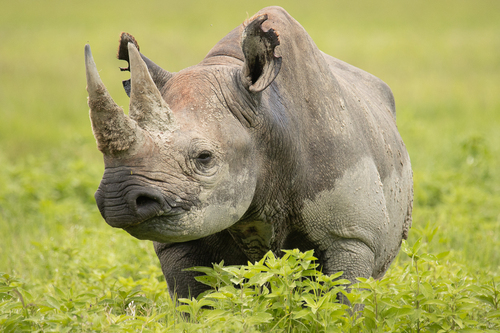
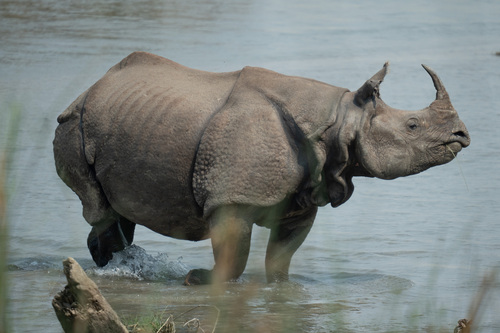
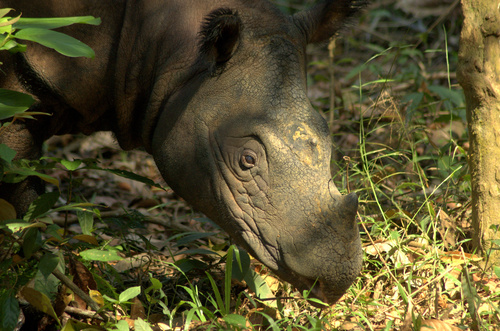
Other species in the family Rhinocerotidae

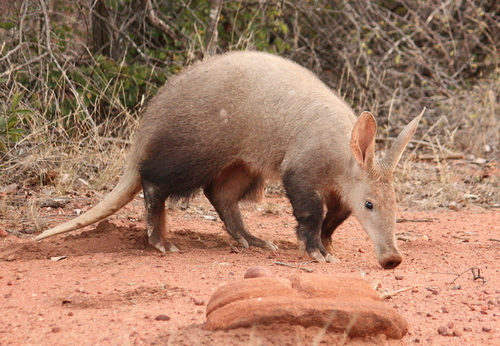
Species that share its range

Sources
Conservation status, range description and population estimate come from the IUCN Red List assessment for Ceratotherium simum. Countries are derived from that range description, not from a mapped country list. Last refreshed on .
The distribution map is drawn from the IUCN Red List spatial data compiled in 2020. IUCN (International Union for Conservation of Nature)