
Black Rhinoceros
Diceros bicornis
Red List assessment
Critically Endangeredon the IUCN Red List
- EXExtinct
- EWExtinct in the Wild
- CRCritically Endangered
- ENEndangered
- VUVulnerable
- NTNear Threatened
- LCLeast Concern
The Black Rhinoceros is recorded in 8 countries across Africa. The IUCN Red List assesses the Black Rhinoceros as Critically Endangered. Approximately 6,195 individuals as of 2021 estimates, representing a slow but steady increase from a low of around 2,410 in 1995, though still critically low compared to historic populations exceeding 65,000 in the 1970s.
- Family
- Rhinocerotidae
- Order
- Perissodactyla
- Genus
- Diceros
- Countries recorded
- 8
- Continents
- Africa
- Red List category
- Critically Endangered
- Data updated
- August 9, 2026
What is the Black Rhinoceros?
The Black Rhinoceros is a large, browsing herbivore native to eastern and southern Africa, distinguished by its hooked upper lip adapted for feeding on leaves and shrubs. Despite its name, its skin color is actually grey, similar to the White Rhino, with the name likely derived from mud wallowing habits. This species is critically endangered due to decades of intense poaching for its horn, though numbers have stabilized somewhat through intensive conservation efforts. It is a keystone species that shapes vegetation structure in its savanna habitat.
Where does the Black Rhinoceros live?
Southern and Eastern Africa, primarily South Africa, Namibia, Kenya, Zimbabwe, and Tanzania
Historically ranged across most of sub-Saharan Africa; now fragmented populations exist mainly in South Africa, Namibia, Kenya, Zimbabwe, Tanzania, and small reintroduced populations in Botswana, Zambia, and Malawi. The largest populations are concentrated in South Africa and Namibia.
Altitude and depth
0-2,700m, with populations found from lowland savanna to montane forest habitats in East Africa
Habitat of the Black Rhinoceros
Inhabits a wide variety of habitats including savanna grasslands, semi-desert scrubland, montane forests, and dense woodland thickets. Prefers areas with sufficient shrub and bush cover for browsing, along with access to water and mud wallows for thermoregulation.
Adaptations to its environment
The prehensile, hooked upper lip is a key adaptation allowing selective browsing on twigs, leaves, and branches up to 1.5cm thick. Thick, wrinkled skin protects against thorny vegetation and biting insects, while wallowing in mud helps regulate body temperature and deter parasites.
Conservation status and numbers
Listed as Critically Endangered (CR) by IUCN due to a population decline of approximately 96% between 1970 and 1992, primarily from poaching. Despite recent population increases through intensive protection, numbers remain far below historic levels and the species faces ongoing poaching pressure.
Estimated population
Approximately 6,195 individuals as of 2021 estimates, representing a slow but steady increase from a low of around 2,410 in 1995, though still critically low compared to historic populations exceeding 65,000 in the 1970s.
What threatens the Black Rhinoceros?
Poaching for horn (used in traditional Asian medicine and as status symbols) remains the primary threat, driven by high black-market value. Habitat loss and fragmentation from agricultural expansion, along with limited genetic diversity in small isolated populations, also threaten long-term viability.
Diseases and parasites
Susceptible to various tick-borne diseases, anthrax, and skin conditions; also hosts numerous ectoparasites including ticks that are managed through symbiotic relationships with oxpecker birds. Stress-related health issues can arise in captive or translocated individuals.
What is being done to protect it?
Intensive anti-poaching operations including armed ranger patrols, dehorning programs, and rhino monitoring using ear-notching and radio collars are widespread. CITES Appendix I listing bans international trade, while translocation programs establish new populations in secure sanctuaries and private reserves across range states.
Recommended actions
Continued investment in anti-poaching technology and ranger capacity, expansion of secure sanctuary networks, community engagement programs that provide economic incentives for conservation, and demand-reduction campaigns in horn consumer countries like Vietnam and China.
What the Black Rhinoceros looks like
Grey skin (despite the common name) that appears brownish or yellowish when covered in mud, with a relatively hairless, thick-folded hide. Two horns made of keratin protrude from the snout, with the front horn typically longer (50-140cm) than the rear horn.
Size
Shoulder height of 140-180cm, body length of 3-3.75m including the tail
Weight
800-1,400kg, with males typically 5-10% heavier than females on average
Distinctive features
Distinguished from the White Rhino primarily by its pointed, prehensile upper lip (versus the White Rhino's square lip), smaller overall body size, and more aggressive temperament. Black Rhinos also carry their heads higher and browse rather than graze.
Differences between males and females
Minimal sexual dimorphism; males are slightly larger and heavier than females, and males may have thicker necks, but horn size and shape do not reliably differ between sexes.
Behaviour and diet of the Black Rhinoceros
Primarily solitary animals except for mothers with calves or temporary associations between males and females during mating; adult males are territorial and mark territories with dung piles and urine spraying. Home ranges of males may overlap with several females but they generally avoid direct competition except during breeding.
When it is active
Primarily active during cooler parts of the day—early morning, late afternoon, and night—resting in shade or wallows during the hottest midday hours. This crepuscular/nocturnal pattern helps them avoid heat stress in their often arid habitats.
Diet
Strict herbivore/browser, feeding on a diverse range of woody plants, shrubs, and forbs including acacia, euphorbia, and other thorny vegetation. Can consume over 200 different plant species and derives most water needs from vegetation, though will drink daily when water is available.
Communication
Communicates through vocalizations including snorts, grunts, bellows, and high-pitched screams during aggressive encounters or distress. Scent marking via dung middens, urine spraying, and horn/foot dragging on the ground conveys territorial and reproductive information to other rhinos.
Interactions with other species
Adult rhinos have few natural predators due to their size, though lions and hyenas may occasionally prey on unguarded calves. Oxpecker birds form a mutualistic relationship, removing ticks and parasites from the rhino's skin while alerting them to approaching danger.
Role in its ecosystem
As a large browser, the Black Rhino plays an important role in shaping vegetation structure and maintaining open habitat mosaics within savanna ecosystems. Their feeding activity creates pathways and clearings used by other wildlife, and their dung contributes to nutrient cycling and seed dispersal.
Reproduction and lifecycle
Breeding occurs year-round without a strict seasonal pattern, though births may peak during wetter months when forage is abundant. Gestation lasts approximately 15-16 months, resulting in a single calf weighing 35-50kg at birth.
Raising the young
Calves are cared for exclusively by the mother, staying with her for 2-4 years before becoming independent. Mothers are highly protective and calves closely follow behind or beside the mother, learning foraging behaviors and territory navigation during this extended dependency period.
Maturity and lifespan
Females reach sexual maturity around 4-5 years, males slightly later at 7-8 years. Lifespan in the wild is typically 35-40 years, with captive individuals sometimes living slightly longer under managed care.
Taxonomy and naming of the Black Rhinoceros
Classification
Class Mammalia > Order Perissodactyla > Family Rhinocerotidae > Genus Diceros > Species D. bicornis
Subspecies
Four extant subspecies recognized: D. b. michaeli (Eastern black rhino, Kenya/Tanzania), D. b. minor (South-central black rhino, Zimbabwe/Tanzania/Mozambique), D. b. bicornis (South-western black rhino, Namibia/South Africa), and D. b. longipes (Western black rhino) which was declared extinct in 2011.
Scientific synonyms
Rhinoceros bicornis (original Linnaean classification, 1758)
What research says
Recent studies
Recent research has focused on using genomic tools to guide translocation and breeding programs to maximize genetic diversity, as well as studies on stress hormones to improve welfare during dehorning and relocation procedures. Advances in anti-poaching technology, including satellite tracking and AI-powered surveillance, are also active areas of applied research.
Genome and DNA
Diploid chromosome number of 2n=84; genetic studies have revealed significant loss of genetic diversity in surviving populations due to historic population bottlenecks, informing management strategies for maintaining genetic health in small, isolated groups.
Compared with similar species
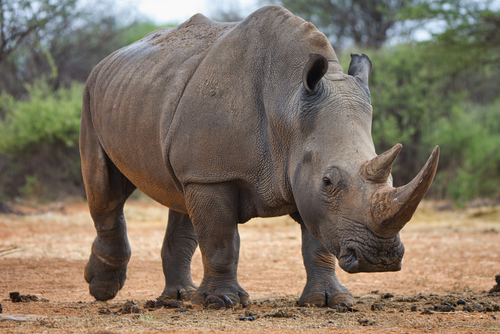
Compared to the White Rhino (Ceratotherium simum), the Black Rhino is smaller, has a pointed rather than square lip, and is a browser rather than a grazer. It is also generally more solitary and considered more aggressive/unpredictable than its white counterpart.
The Black Rhinoceros and people
Black Rhinos can run at speeds up to 55 km/h despite their bulky build, and can be surprisingly agile in dense brush. Their horns are made of keratin (the same protein as human fingernails and hair) rather than bone, and continue growing throughout their lives.
Where and how to see it
Best observed in well-protected reserves such as Etosha National Park (Namibia), Ol Pejeta Conservancy (Kenya), or private reserves in South Africa, typically during early morning or late afternoon game drives. Guided tracking with experienced rangers increases chances of sightings given the species' elusive and often solitary nature.
Risks to humans
Can be dangerous if provoked or surprised, capable of charging at high speed with potentially fatal force due to their size and horn; however, unprovoked attacks on humans are rare. Most risk occurs when humans approach too closely or startle the animal in dense vegetation.
Human uses
Historically and illegally hunted for horn used in traditional medicine (particularly in Vietnam and China) and as carved ornamental status symbols in some Middle Eastern countries. Legal ecotourism generates significant revenue for conservation and local communities in range states.
Myths and legends
The rhino horn holds significant cultural mythology in parts of Asia, where it is falsely believed to possess medicinal properties for treating ailments ranging from fever to cancer, despite having no proven pharmacological effect since it is composed of keratin. This unfounded belief continues to drive the illegal horn trade.
Countries where the Black Rhinoceros is recorded
The 8 countries named in the range description of its IUCN Red List assessment.
Questions about the Black Rhinoceros
Where does the Black Rhinoceros live?
The Black Rhinoceros is recorded in Botswana, Kenya, Malawi, Namibia and South Africa, among 8 countries in total across Africa. These countries come from the range description of its IUCN Red List assessment, and they are what place the species on the interactive map.
Is the Black Rhinoceros endangered?
Yes. The IUCN Red List assesses the Black Rhinoceros as Critically Endangered, one of the three threatened categories. The species faces an extremely high risk of extinction in the wild. This is the last category before extinction, and it is reached through a very small or steeply declining population, a tiny range, or both.
How many are left in the wild?
Approximately 6,195 individuals as of 2021 estimates, representing a slow but steady increase from a low of around 2,410 in 1995, though still critically low compared to historic populations exceeding 65,000 in the 1970s. This figure comes from the species assessment on the IUCN Red List; population estimates for wild mammals are ranges, not counts, and are revised at each assessment.
What habitat does the Black Rhinoceros live in?
Inhabits a wide variety of habitats including savanna grasslands, semi-desert scrubland, montane forests, and dense woodland thickets.
What is the scientific name of the Black Rhinoceros?
The Black Rhinoceros is Diceros bicornis, in the family Rhinocerotidae, order Perissodactyla.
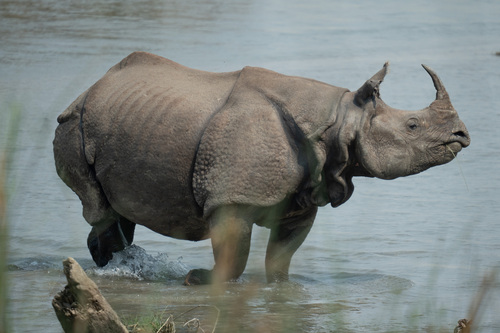
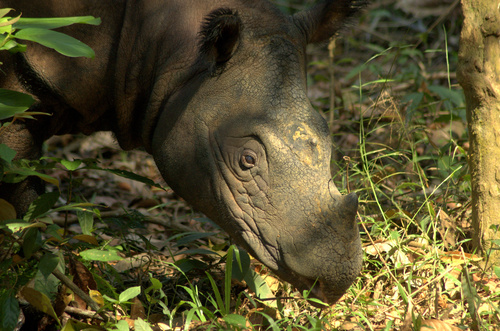
Other species in the family Rhinocerotidae

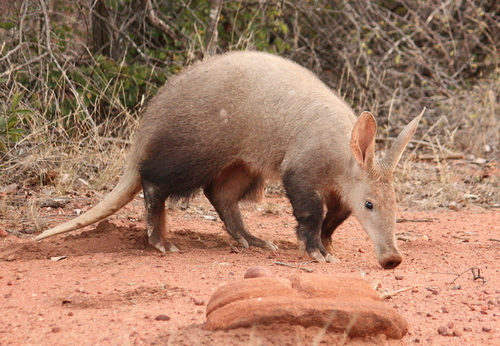
Species that share its range

Sources
Conservation status, range description and population estimate come from the IUCN Red List assessment for Diceros bicornis. Countries are derived from that range description, not from a mapped country list. Last refreshed on .
The distribution map is drawn from the IUCN Red List spatial data compiled in 2020. IUCN (International Union for Conservation of Nature)