
Visagie's Golden Mole
Chrysochloris visagiei
Red List assessment
Data Deficienton the IUCN Red List
- EXExtinct
- EWExtinct in the Wild
- CRCritically Endangered
- ENEndangered
- VUVulnerable
- NTNear Threatened
- LCLeast Concern
Data Deficient has no position on the scale above — it records the absence of an assessment, not a degree of risk.
The Visagie's Golden Mole is recorded in one country, South Africa across Africa. The IUCN Red List records the Visagie's Golden Mole as Data Deficient. Unknown; no reliable population estimate exists due to the species being known from only a handful of historical specimens, with no confirmed recent sightings.
- Family
- Chrysochloridae
- Order
- Afrosoricida
- Genus
- Chrysochloris
- Countries recorded
- 1
- Continents
- Africa
- Red List category
- Data Deficient
- Data updated
- August 9, 2026
What is the Visagie's Golden Mole?
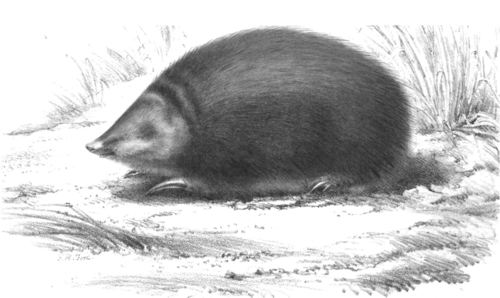
Visagie's Golden Mole is an extremely poorly known, small subterranean mammal known only from a single or very few specimens collected in the Western Cape of South Africa. It belongs to the golden mole family, a group of insectivorous burrowers with iridescent fur and highly specialized adaptations for underground life. Its rarity and lack of recent confirmed sightings make it one of the most enigmatic mammals in Africa. Because so little data exists, its ecology, behavior, and true distribution remain largely speculative, based mainly on comparisons with closely related Chrysochloris species.
Where does the Visagie's Golden Mole live?
South Africa (Western Cape, restricted to a small area in the vicinity of Robertson/Worcester in the Breede River Valley)
Known only from the type locality near Vanrhynsdorp/Worcester area in the Western Cape Province of South Africa; no confirmed records exist outside this very limited area. The species' true range is unknown due to the paucity of specimens and survey effort.
Altitude and depth
Likely occurs at low to moderate altitudes (roughly 100-500m) in surface soil layers, with subterranean burrowing typically within the top 10-30 cm of soil.
Habitat of the Visagie's Golden Mole
Presumed to inhabit sandy or loamy soils in fynbos or semi-arid shrubland typical of the Breede River Valley region, similar to habitats used by other Chrysochloris species. Golden moles generally favor friable, well-drained soils that facilitate tunneling.
Adaptations to its environment
Like other golden moles, it likely possesses a streamlined, muscular body, reduced eyes covered by skin, and a leathery nose pad for pushing through soil. Dense, water-repellent fur and powerful clawed forelimbs would aid in efficient burrowing and protection from abrasive soil particles.
Conservation status and numbers
Listed as Data Deficient (DD) by the IUCN due to the extreme scarcity of records and lack of recent confirmed observations, making it impossible to assess population trends or extinction risk accurately. It may be Critically Endangered or even possibly extinct, but insufficient data prevents a definitive classification.
Estimated population
Unknown; no reliable population estimate exists due to the species being known from only a handful of historical specimens, with no confirmed recent sightings.
What threatens the Visagie's Golden Mole?
Potential threats include habitat loss from agricultural expansion (vineyards, orchards) in the Breede River Valley, urbanization, and soil degradation, though these are inferred rather than confirmed. Climate change affecting soil moisture could also impact suitable habitat.
What is being done to protect it?
No specific conservation programs target this species directly, though it may benefit incidentally from broader Cape Floristic Region conservation initiatives and protected areas in the Western Cape. Renewed survey efforts have been called for by researchers to clarify its status.
Recommended actions
Urgent taxonomic and field surveys are needed in the type locality and surrounding areas to confirm the species' continued existence and clarify its distribution. Habitat protection and soil surveys in the Breede River Valley region would also be beneficial precautionary measures.
What the Visagie's Golden Mole looks like
Presumed to have the characteristic golden mole appearance: dense, iridescent fur ranging from bronze to dark brown, a wedge-shaped head with no external ears or visible eyes, and a tough, leathery nose pad.
Size
Estimated body length of approximately 8-11 cm, consistent with other small Chrysochloris golden mole species.
Weight
Estimated weight range of roughly 20-50 grams, based on similar-sized golden mole species.
Distinctive features
Distinguished from related Chrysochloris species primarily by subtle skull and dental morphology noted in original taxonomic descriptions, though overall external appearance is very similar to other Cape golden moles.
Behaviour and diet of the Visagie's Golden Mole
Presumed solitary, as is typical for golden moles, with individuals maintaining separate burrow systems and minimal social interaction outside of mating.
When it is active
Likely active both day and night within subterranean tunnels, as golden moles generally show cathemeral (irregular) activity patterns unaffected much by surface light-dark cycles.
Diet
Presumed insectivorous, feeding primarily on soil-dwelling invertebrates such as earthworms, insect larvae, and other small arthropods encountered while tunneling.
How it feeds and hunts
Likely locates prey using acute vibrational and tactile senses through its snout and specialized inner ear adaptations, as it forages blindly underground.
Communication
Likely relies on limited vocalizations and possibly seismic or vibrational signaling through tunnel walls, though no specific studies exist for this species.
Interactions with other species
Likely predated upon by owls, snakes, and small carnivorous mammals when occasionally surfacing; may compete with other burrowing insectivores for soil invertebrate prey.
Role in its ecosystem
As a soil-dwelling insectivore, it likely plays a role in soil aeration and invertebrate population regulation within its ecosystem, similar to other golden mole species.
Reproduction and lifecycle
No specific data available; likely similar to other golden moles with a small litter size (1-2 young) and underground nesting, though breeding season and gestation length are unknown.
Raising the young
Unknown, but presumably the female raises offspring alone in a burrow nest, as is typical for golden mole species.
Maturity and lifespan
Unknown; related golden mole species reach maturity within about a year and may live several years in the wild, but no specific data exists for this species.
Taxonomy and naming of the Visagie's Golden Mole
Classification
Mammalia > Afrosoricida > Chrysochloridae > Chrysochloris > Chrysochloris visagiei
What research says
Recent studies
Recent taxonomic reviews of Chrysochloridae have questioned the validity of several golden mole species including C. visagiei, with some researchers suggesting it may be a synonym of another Chrysochloris species pending genetic analysis.
Compared with similar species
Very similar in size and appearance to Chrysochloris asiatica (Cape golden mole), differing mainly in subtle cranial characteristics noted by the original describers; genetic studies are needed to clarify its taxonomic distinctiveness.
The Visagie's Golden Mole and people
This species is known from possibly only a single type specimen, making it one of the rarest and most mysterious mammals ever described. Despite being named after a person (Visagie), very little else is documented about its life or even its continued existence in the wild.
Where and how to see it
Observation is essentially impossible given the species' extreme rarity and lack of confirmed sightings; any fieldwork would need to focus on systematic soil trapping surveys in the Breede River Valley area of the Western Cape.
Risks to humans
No notable risk
Countries where the Visagie's Golden Mole is recorded
The 1 countries named in the range description of its IUCN Red List assessment.
Questions about the Visagie's Golden Mole
Where does the Visagie's Golden Mole live?
The Visagie's Golden Mole is recorded in South Africa across Africa. These countries come from the range description of its IUCN Red List assessment, and they are what place the species on the interactive map.
Is the Visagie's Golden Mole endangered?
The IUCN Red List assesses the Visagie's Golden Mole as Data Deficient. There is not enough information to judge the risk of extinction, usually because the species is rarely seen or has never been surveyed. It is not a reassuring category: several species were Data Deficient right up to the point they were found to be Critically Endangered.
How many are left in the wild?
Unknown; no reliable population estimate exists due to the species being known from only a handful of historical specimens, with no confirmed recent sightings. This figure comes from the species assessment on the IUCN Red List; population estimates for wild mammals are ranges, not counts, and are revised at each assessment.
What habitat does the Visagie's Golden Mole live in?
Presumed to inhabit sandy or loamy soils in fynbos or semi-arid shrubland typical of the Breede River Valley region, similar to habitats used by other Chrysochloris species.
What is the scientific name of the Visagie's Golden Mole?
The Visagie's Golden Mole is Chrysochloris visagiei, in the family Chrysochloridae, order Afrosoricida.
Other species in the genus Chrysochloris
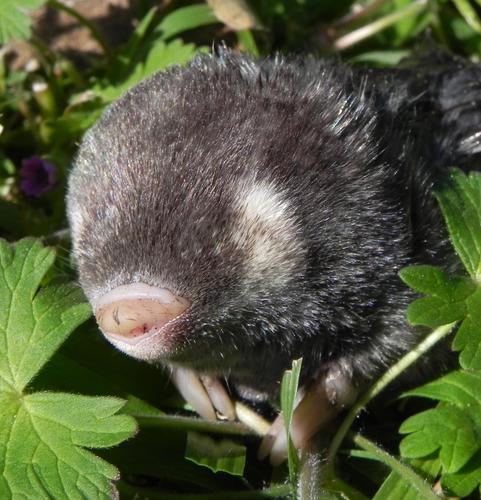
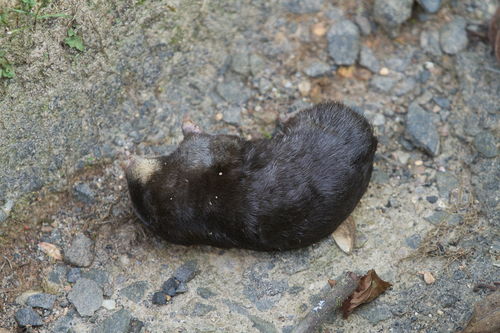
Other species in the family Chrysochloridae

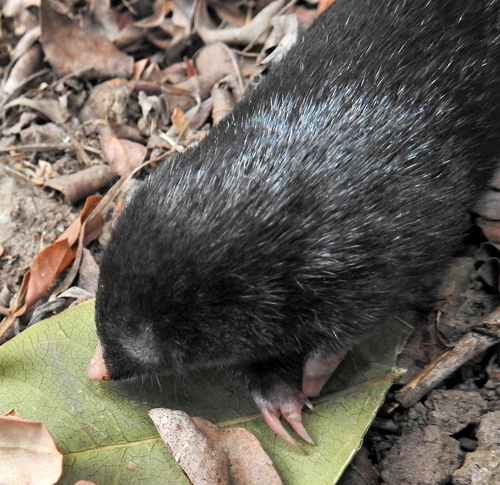


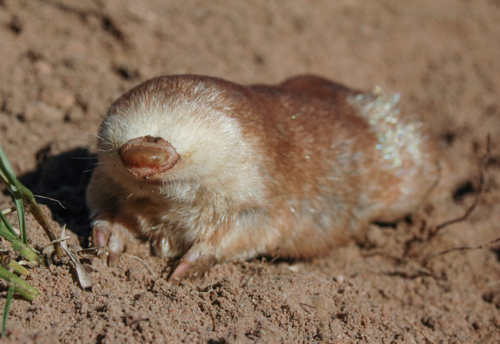
Species that share its range
Sources
Conservation status, range description and population estimate come from the IUCN Red List assessment for Chrysochloris visagiei. Countries are derived from that range description, not from a mapped country list. Last refreshed on .
The distribution map is drawn from the IUCN Red List spatial data compiled in 2008. IUCN (International Union for Conservation of Nature)